Filters

152 filtered results

Clear all filters
Favorites
With answer key
Interactive

152 filtered results

Difficulty Level

Grade


Check out this FREE Trial Lesson on Addition & Subtraction for age 3-6!

Act Out and Add

Favorites
With answer key
Interactive
  • 3-6
  • Counting skills
  • Addition & Subtraction
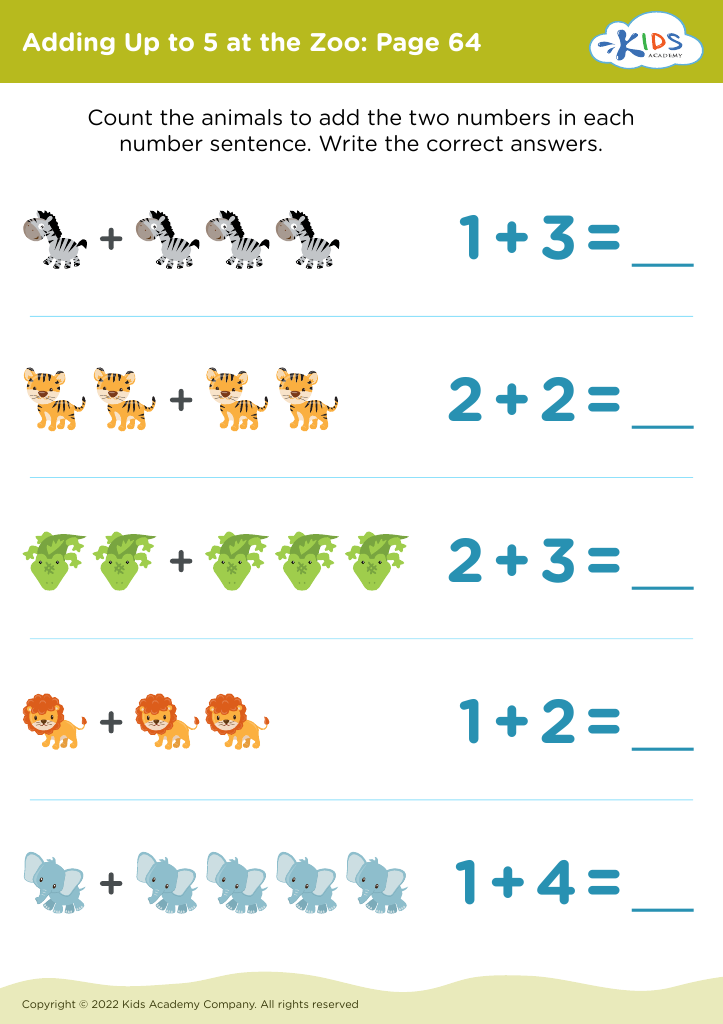
Adding Up to 5 at the Zoo: Page 64
Worksheet
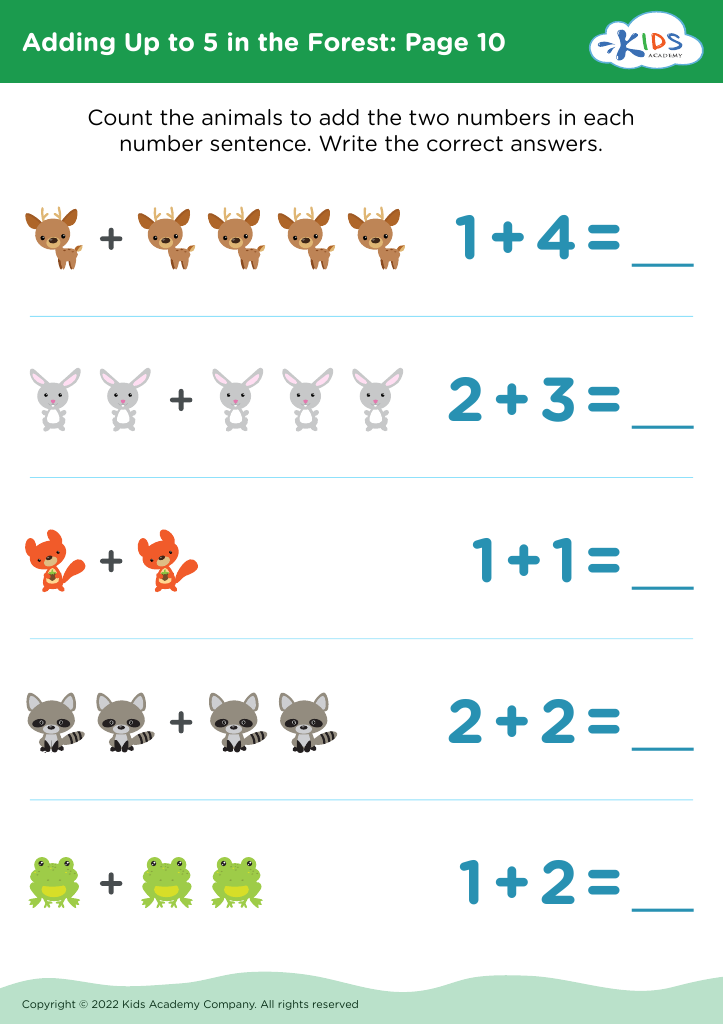
Adding Up to 5 in the Forest: Page 10
Worksheet
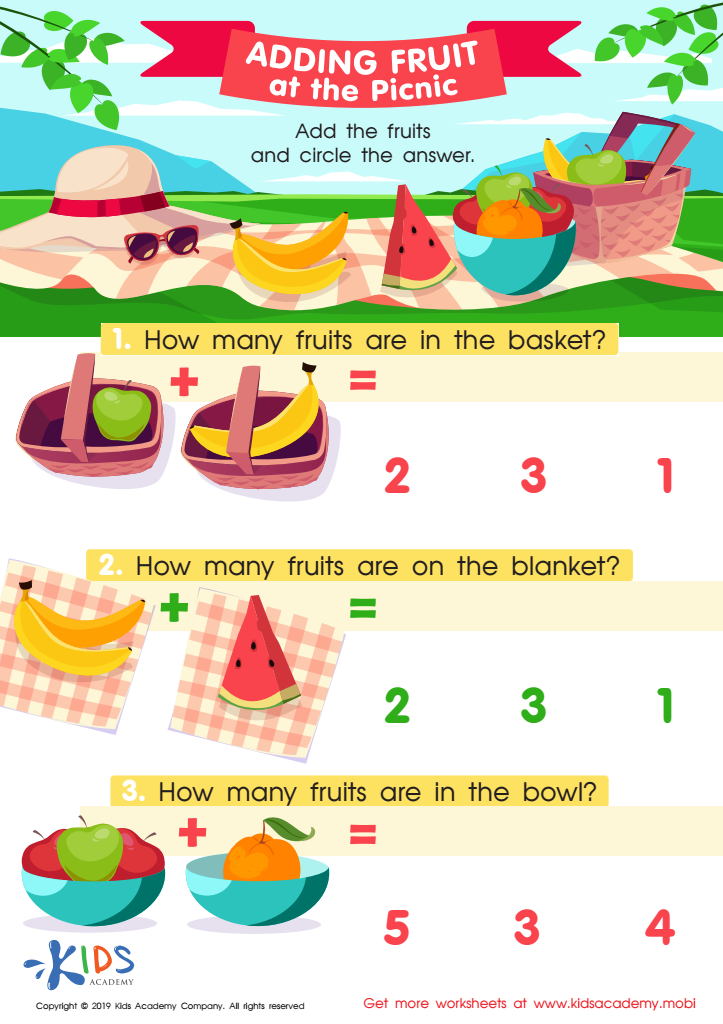
Adding Fruit at the Picnic Worksheet

Adding Fruit at the Picnic Worksheet

Picnics are a great way for the family to enjoy a fun day in the sun! Get your kids involved by having them help load the picnic basket and do this worksheet to practice their math skills while they get ready. Identify the fruits in the picture, add them up, and circle the correct answer.
Adding Fruit at the Picnic Worksheet
Worksheet
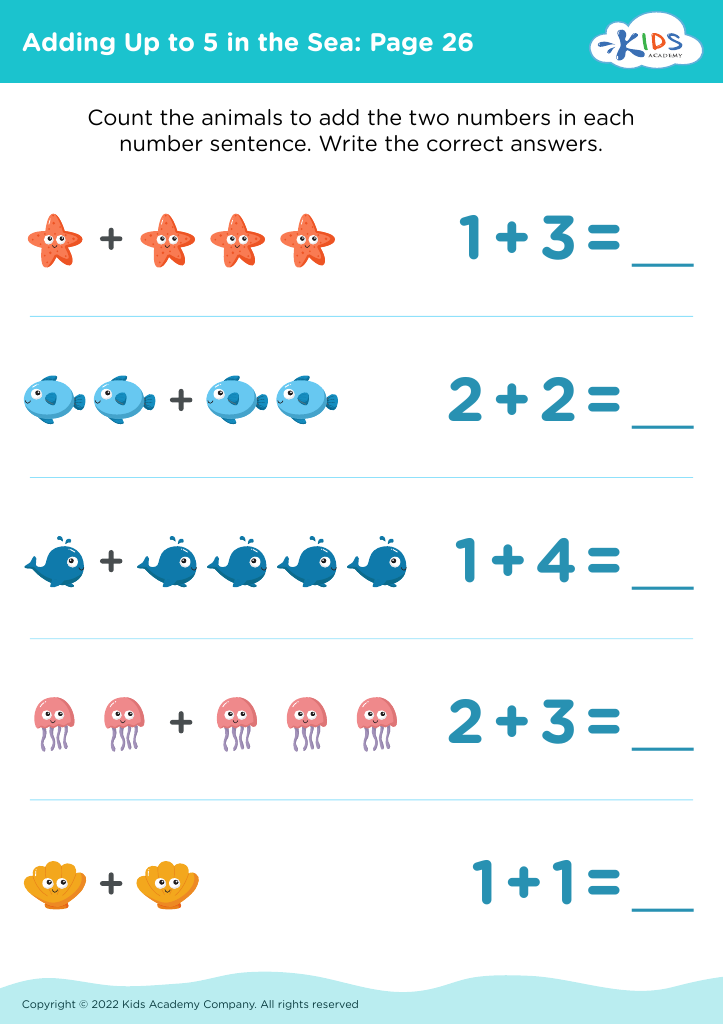
Adding Up to 5 in the Sea: Page 26
Worksheet
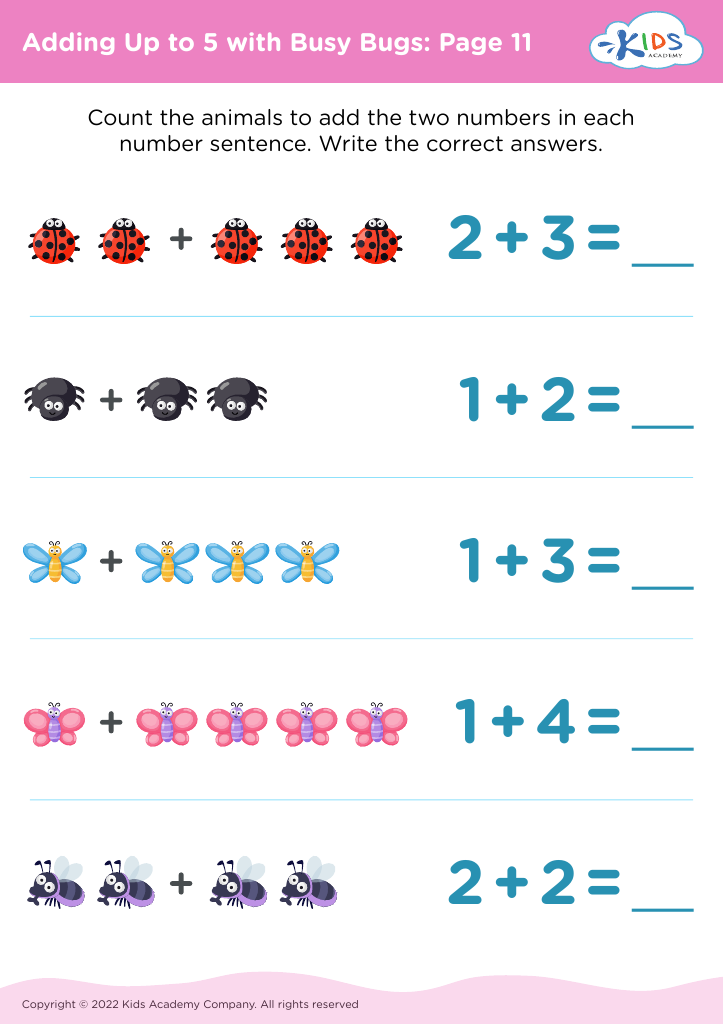
Adding Up to 5 with Busy Bugs: Page 11
Worksheet
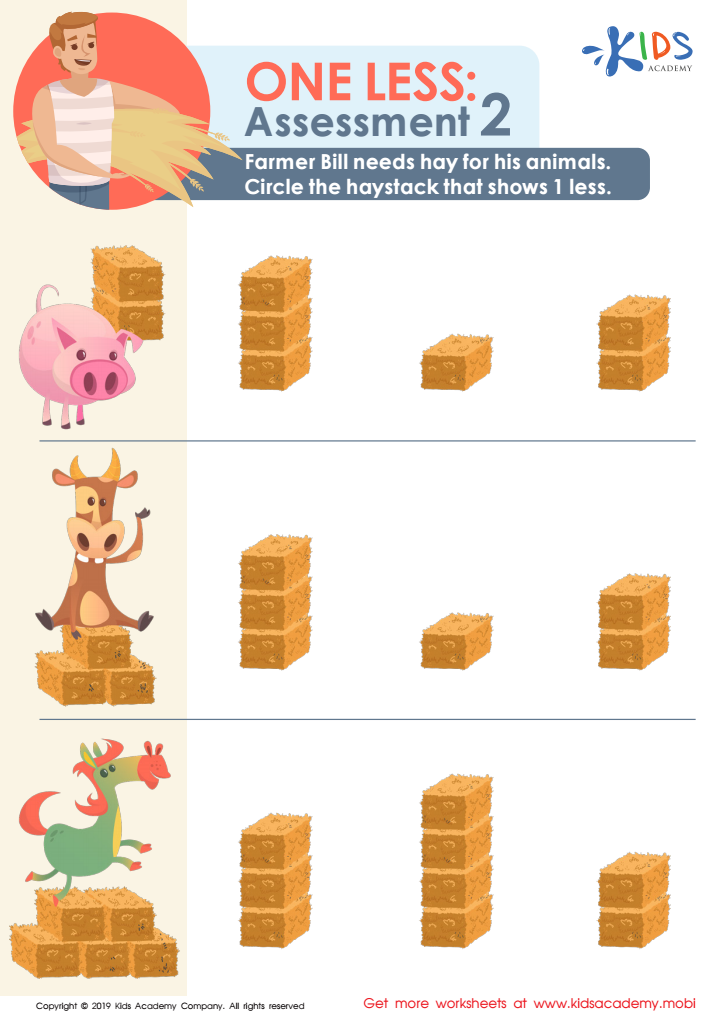
One Less: Assessment 2 Worksheet


One Less: Assessment 2 Worksheet

Farmers are vital to our community. They raise animals and crops which provide us with food. Kids can learn a lot by visiting a farm—ask them to name the animals and crops they saw! Farmer Bill in this worksheet needs hay. Point to the haystacks, and ask your child to circle the one with 1 less.
One Less: Assessment 2 Worksheet

Worksheet
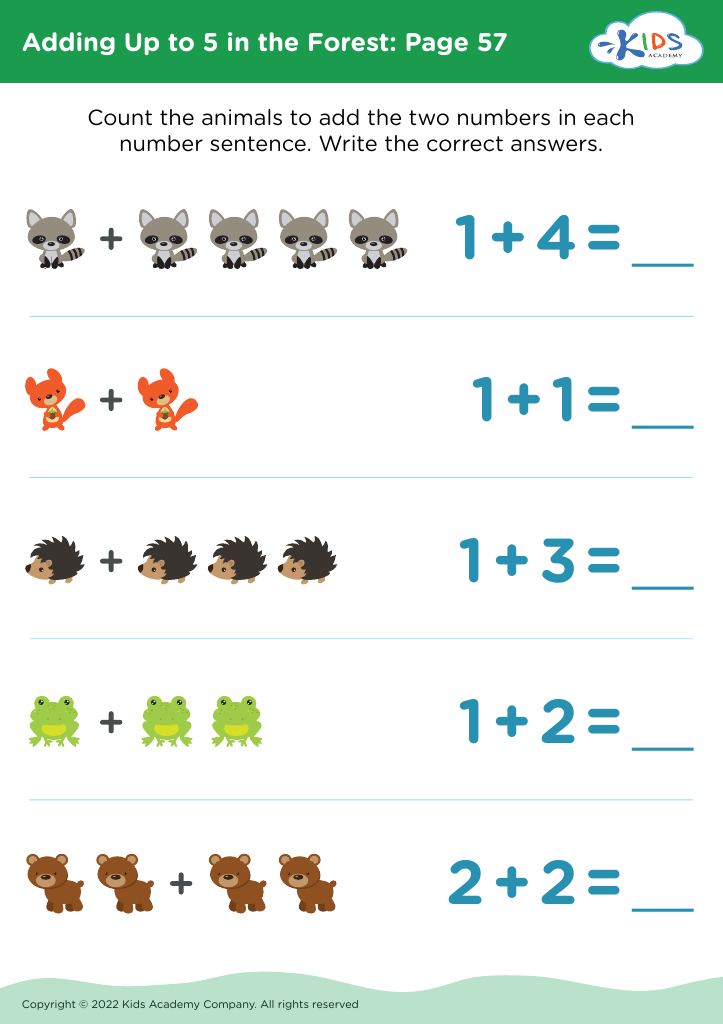
Adding Up to 5 in the Forest: Page 57
Worksheet
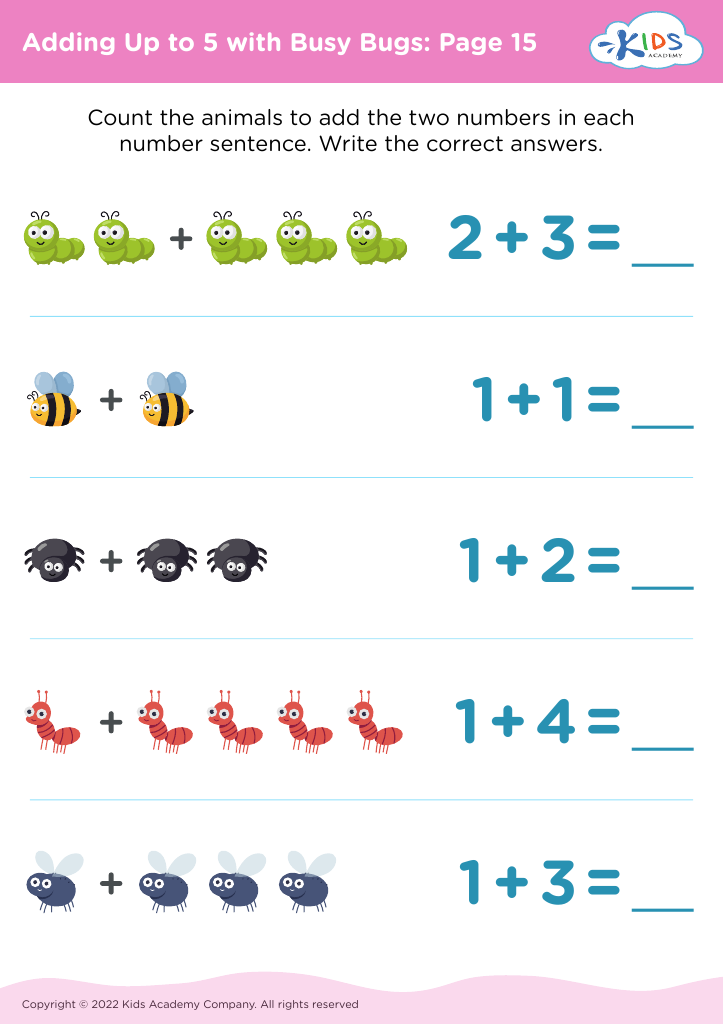
Adding Up to 5 with Busy Bugs: Page 15
Worksheet


... 6 7

Counting skills and the foundational concepts of addition and subtraction are crucial for children aged 3-6, and parents and teachers should prioritize these skills for several reasons.

Firstly, counting serves as the building block of all mathematical understanding. When children can count, they develop numeric fluency, which is essential for secondary math skills. This competence allows for smoother transitions into more complex topics like multiplication and division.

Secondly, adding and subtracting instills logical thinking and problem-solving abilities. As children learn these operations, they begin to conceptualize relationships between numbers, fostering critical thinking and analytical skills.

Moreover, these mathematical skills enhance children's confidence. Mastering counting, addition, and subtraction gives them a sense of achievement, encouraging a positive attitude toward mathematics that can last a lifetime.

Additionally, early exposure to these concepts helps children apply math in everyday situations. An understanding of counting and basic operations enables them to manage time, quantities, and money, empowering them in real-life scenarios.

Lastly, engaging parents and teachers in the learning process creates a supportive environment. Collaborative activities can strengthen relationships while reinforcing these essential skills, emphasizing the importance of community in a child’s education.