Filters

152 filtered results

Clear all filters
Favorites
With answer key
Interactive

152 filtered results

Difficulty Level

Grade


Check out this FREE Trial Lesson on Addition & Subtraction for age 3-6!

Writing Equations Addition

Favorites
With answer key
Interactive
  • 3-6
  • Counting skills
  • Addition & Subtraction
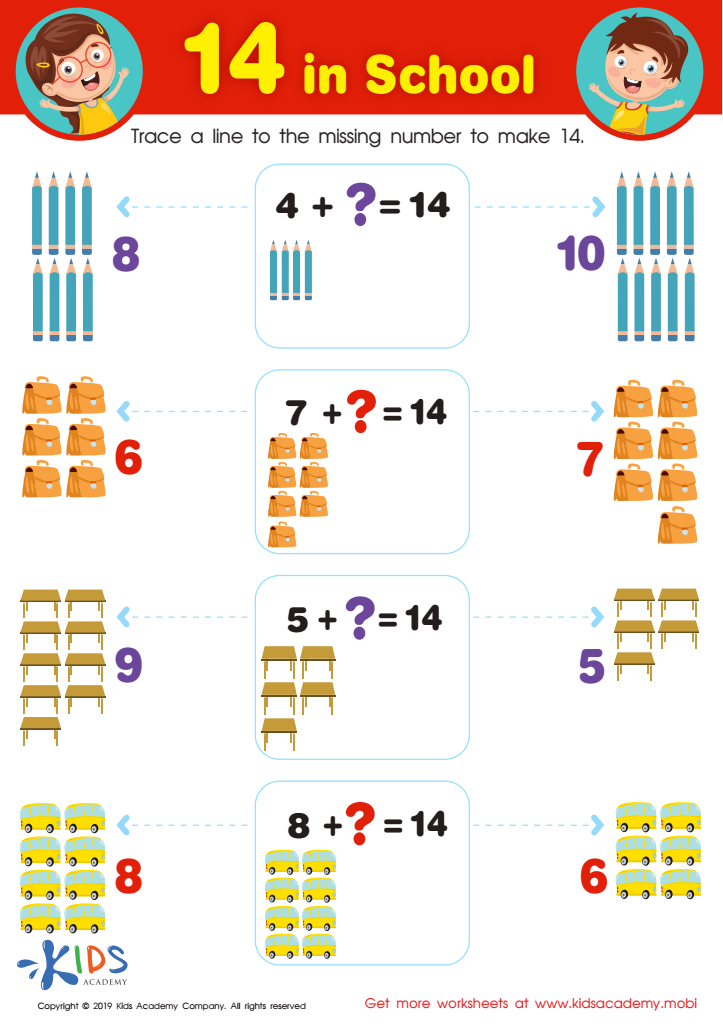
14 in School Worksheet

14 in School Worksheet

Remind your kids that adding different sets of numbers can give the same total (e.g. 2+3=5, 4+1=5). Ask them for more examples. Afterwards, work through the exercise. Help them count the objects and trace a line to the missing number that makes the total 14.
14 in School Worksheet
Worksheet
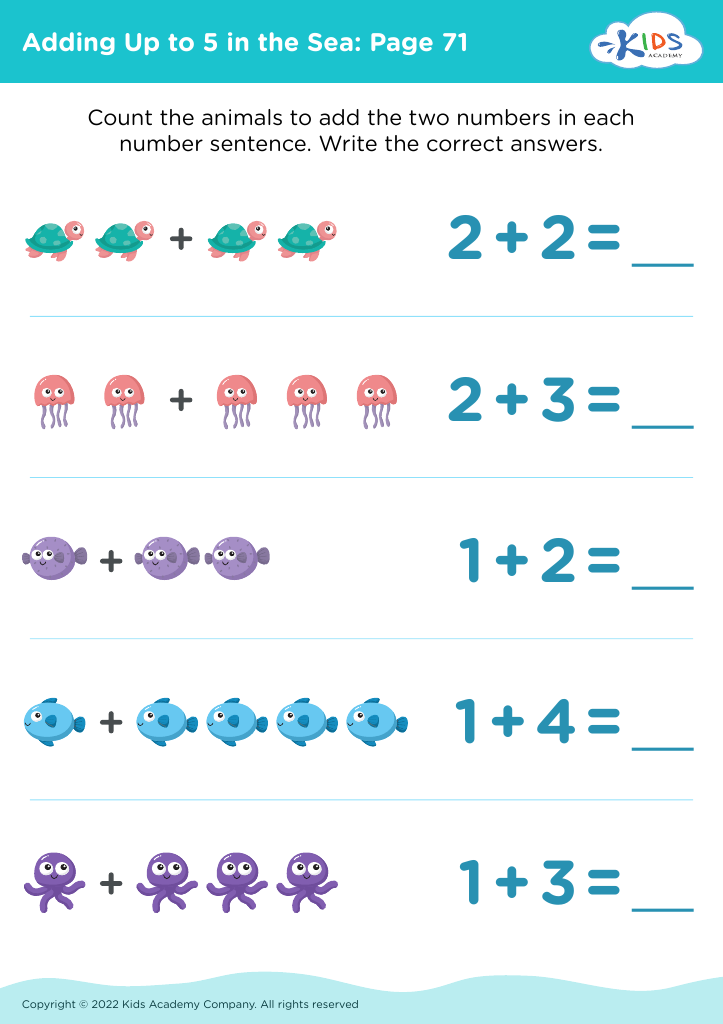
Adding Up to 5 in the Sea: Page 71
Worksheet
Adding Instruments with Addison Worksheet
Adding Instruments with Addison Worksheet
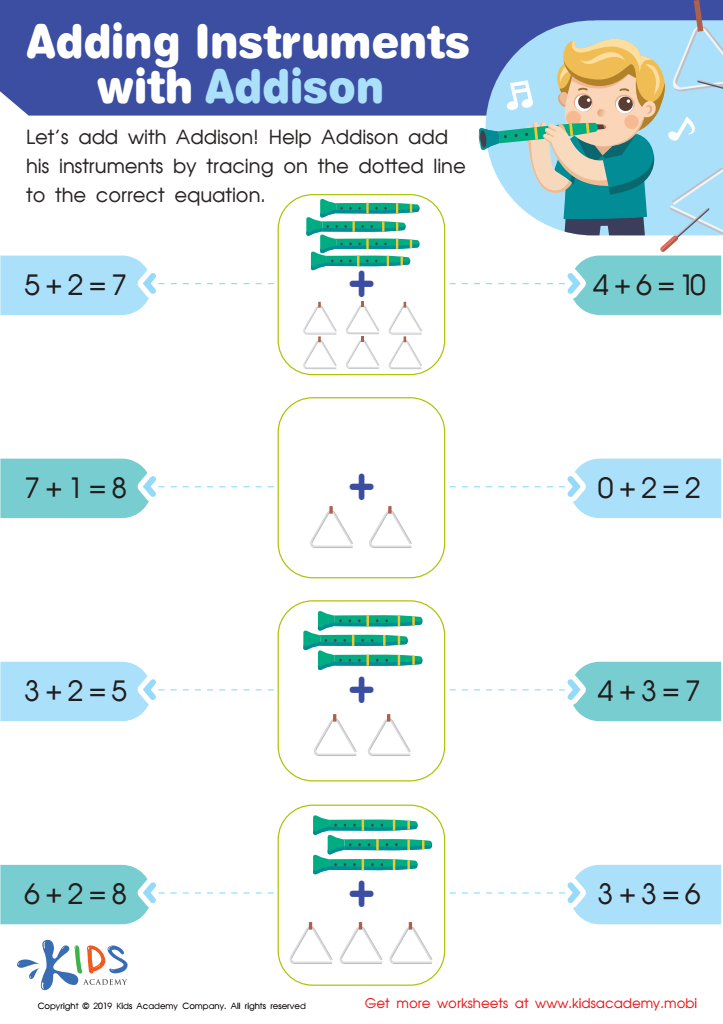
Your math stars will enjoy assisting Addison as he adds his instruments. This worksheet has 10 basic addition problems with pictures of instruments to aid children. They match the pics and sentences, then connect them to the correct problem using the lines. A fun way to learn and practice addition!
Adding Instruments with Addison Worksheet
Worksheet
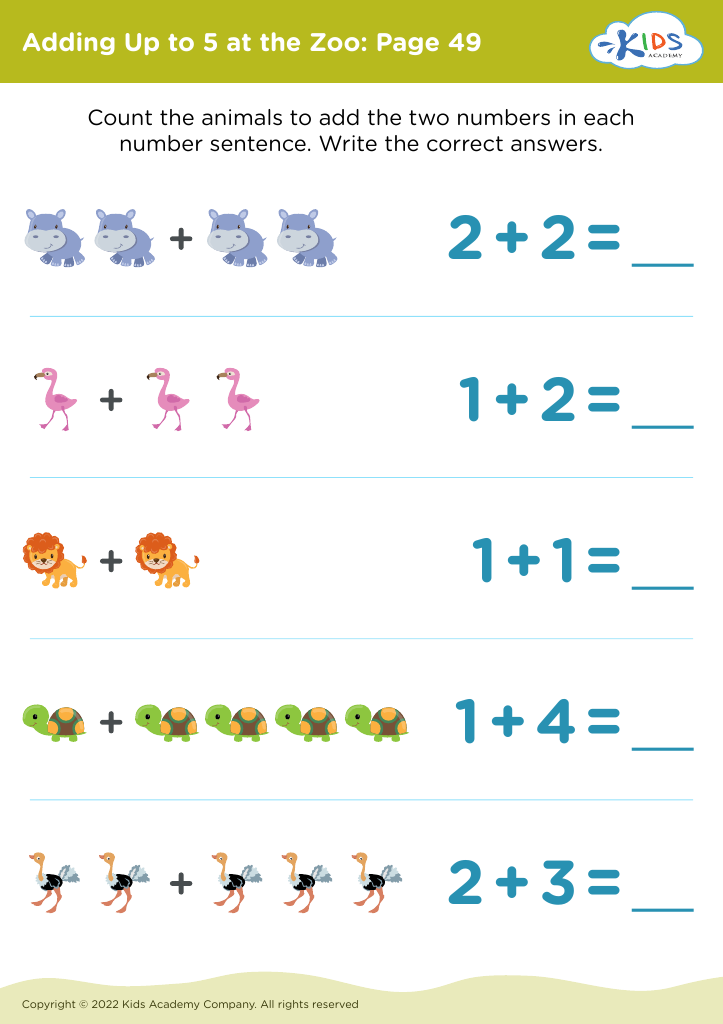
Adding Up to 5 at the Zoo: Page 49
Worksheet
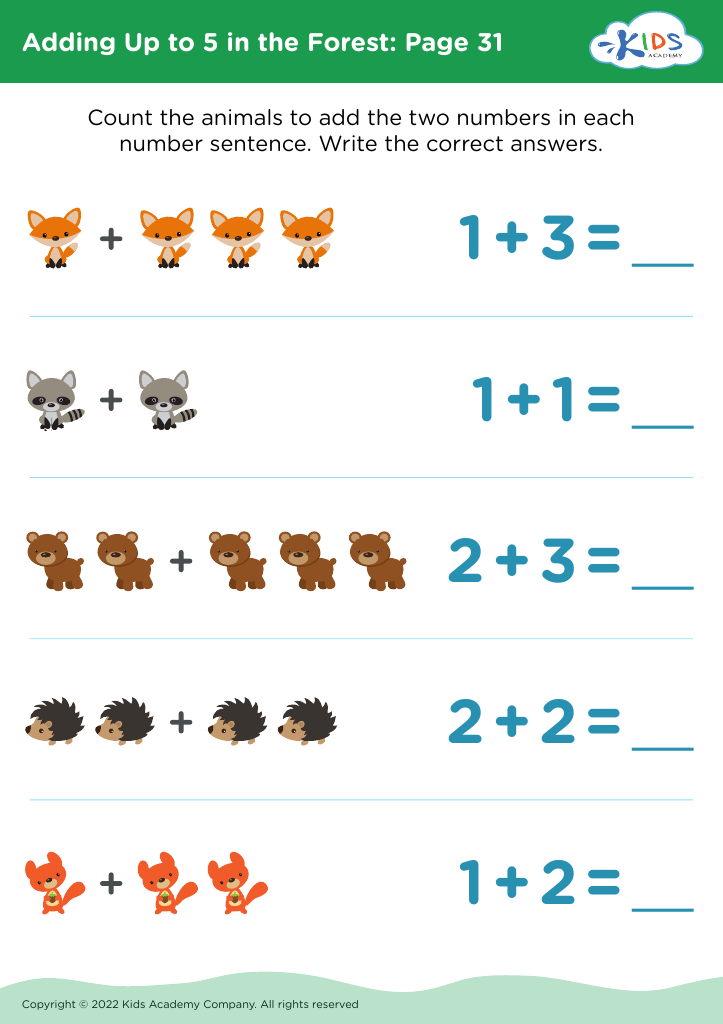
Adding Up to 5 in the Forest: Page 31
Worksheet
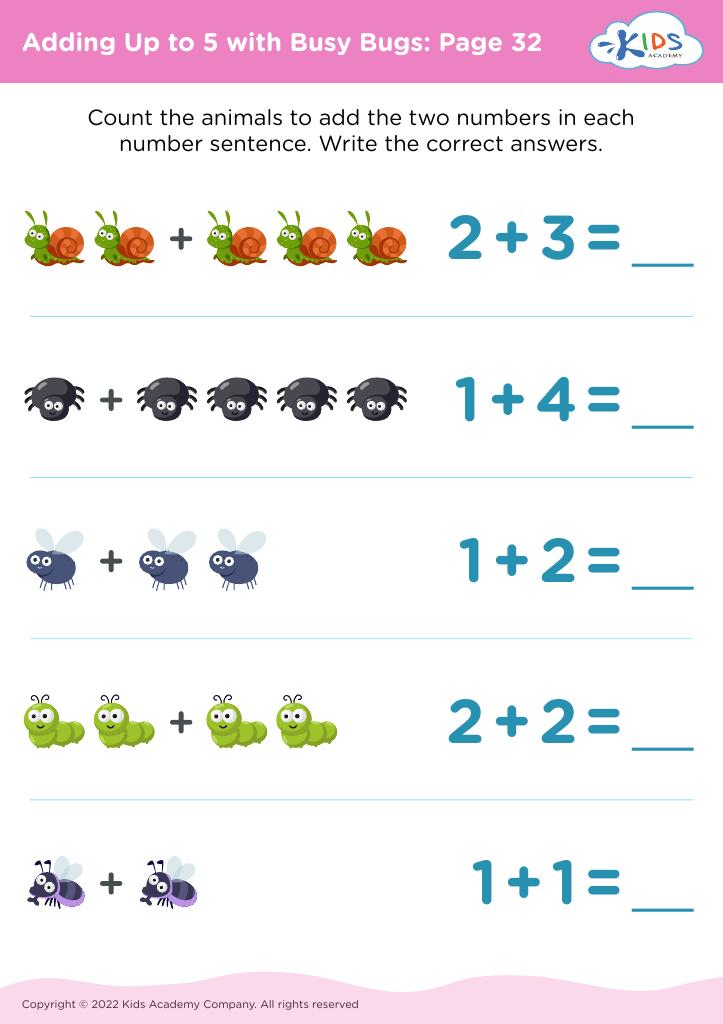
Adding Up to 5 with Busy Bugs: Page 32
Worksheet
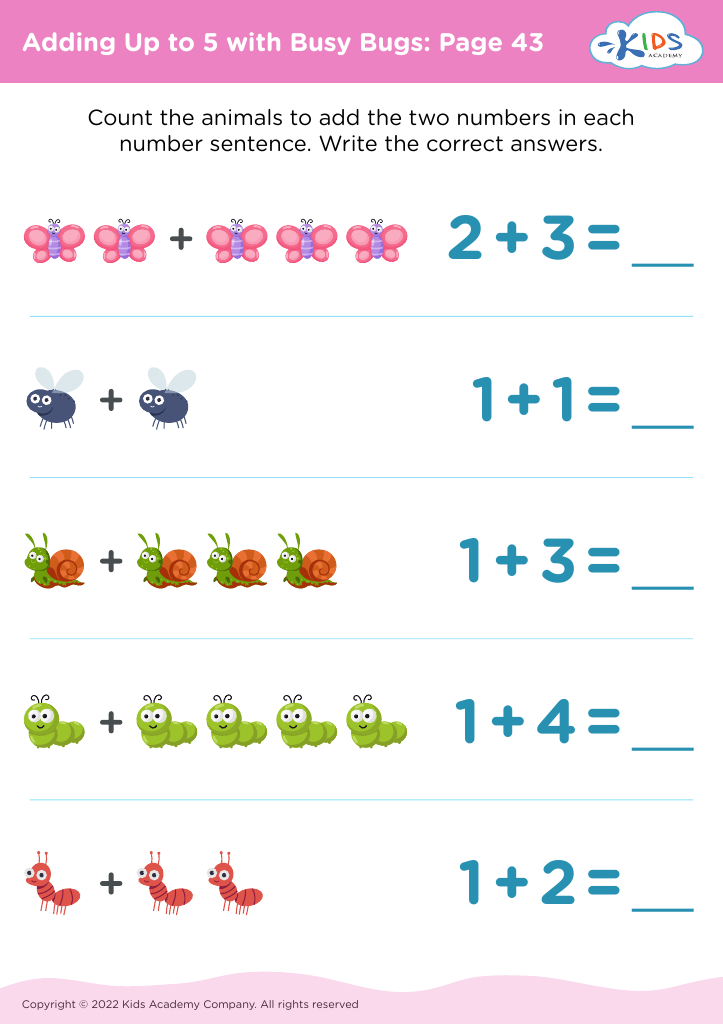
Adding Up to 5 with Busy Bugs: Page 43
Worksheet
Animal Addition Worksheet
Animal Addition Worksheet
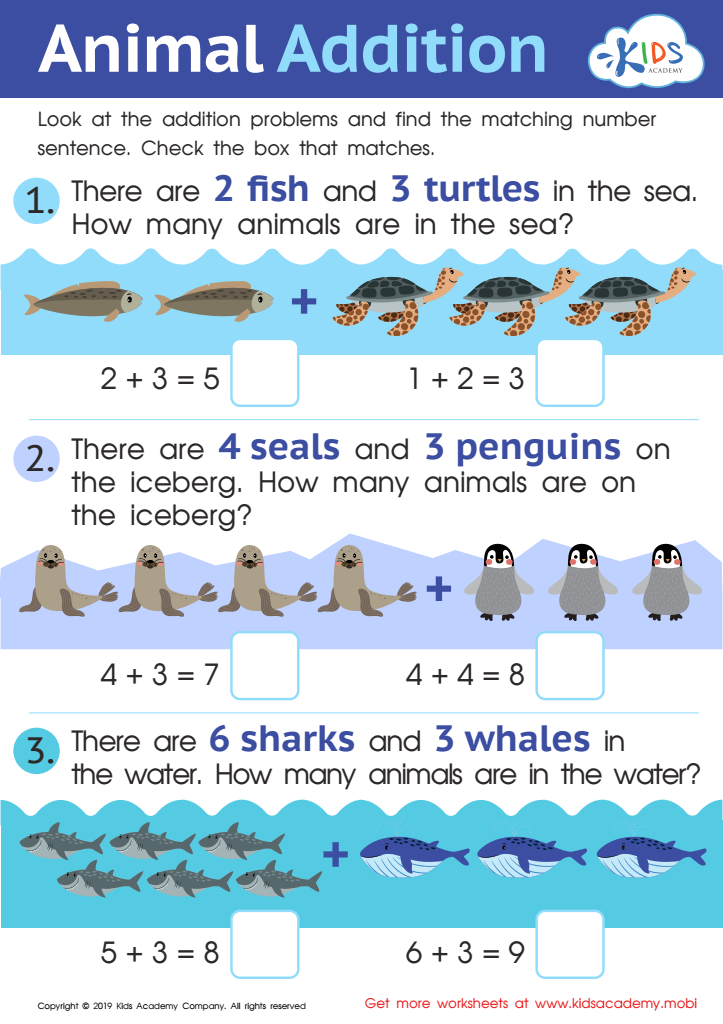
Get your kids learning addition and subtraction with this fun worksheet! Show them that solving equations can be enjoyable and help them match number sentences to the correct boxes. By doing this together, you'll create a positive learning experience that your kids won't forget.
Animal Addition Worksheet
Worksheet
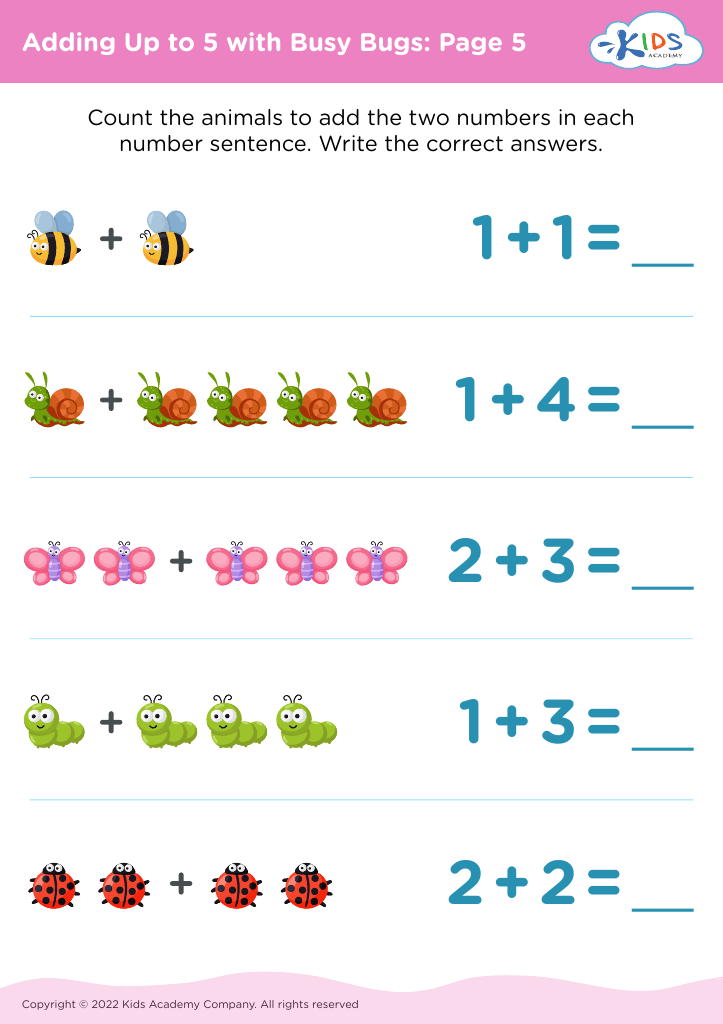
Adding Up to 5 with Busy Bugs: Page 5
Worksheet
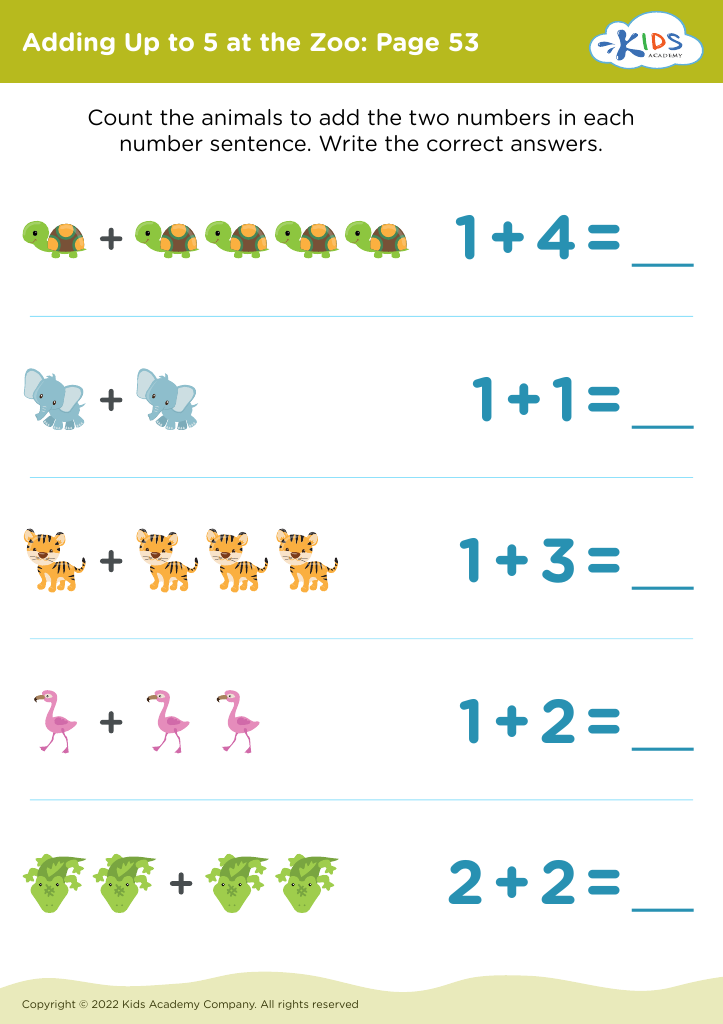
Adding Up to 5 at the Zoo: Page 53
Worksheet
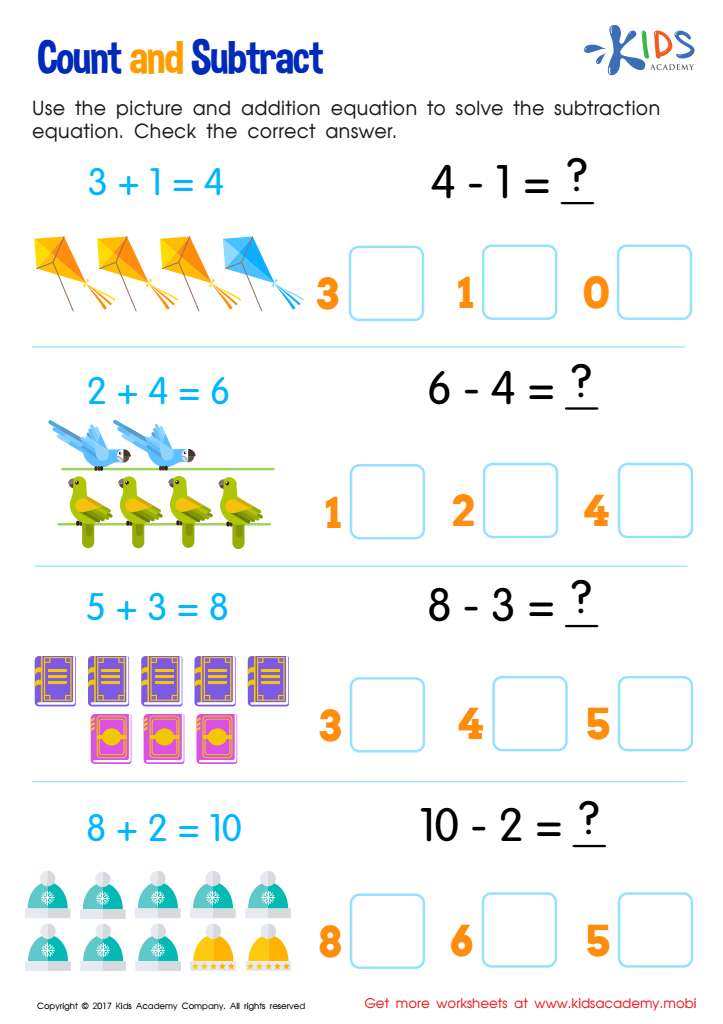
Count and Subtract Worksheet
Count and Subtract Worksheet

This worksheet helps your child learn math via colorful pictures and equations. Count the items together, adding and subtracting as necessary. Your child will be challenged to get the correct total, thereby developing their math skills.
Count and Subtract Worksheet
Worksheet
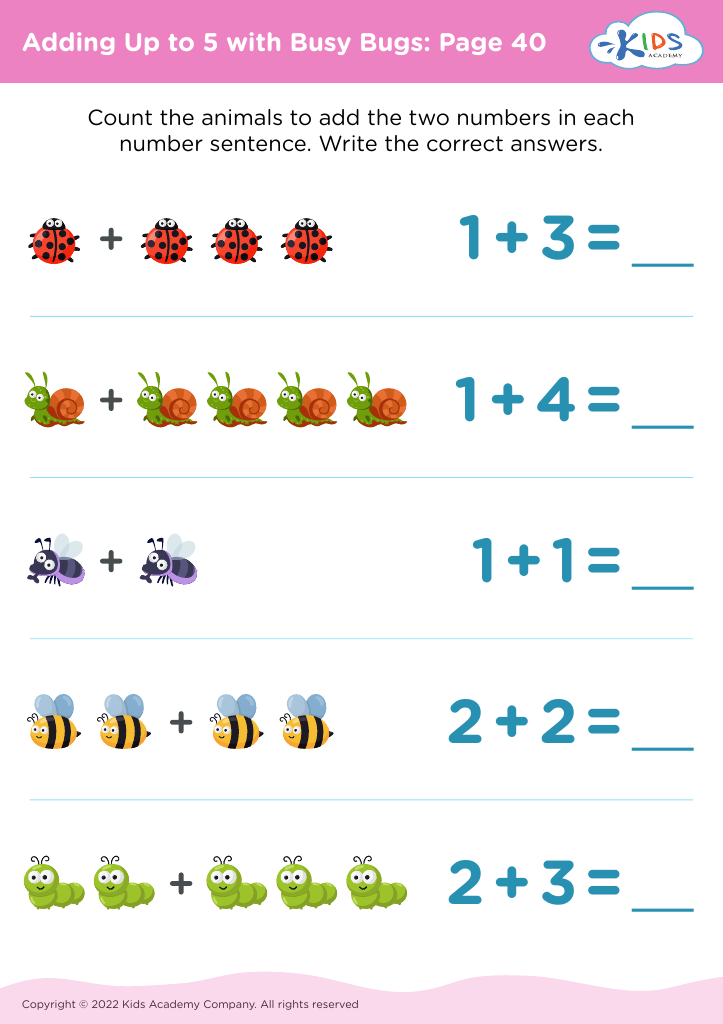
Adding Up to 5 with Busy Bugs: Page 40
Worksheet
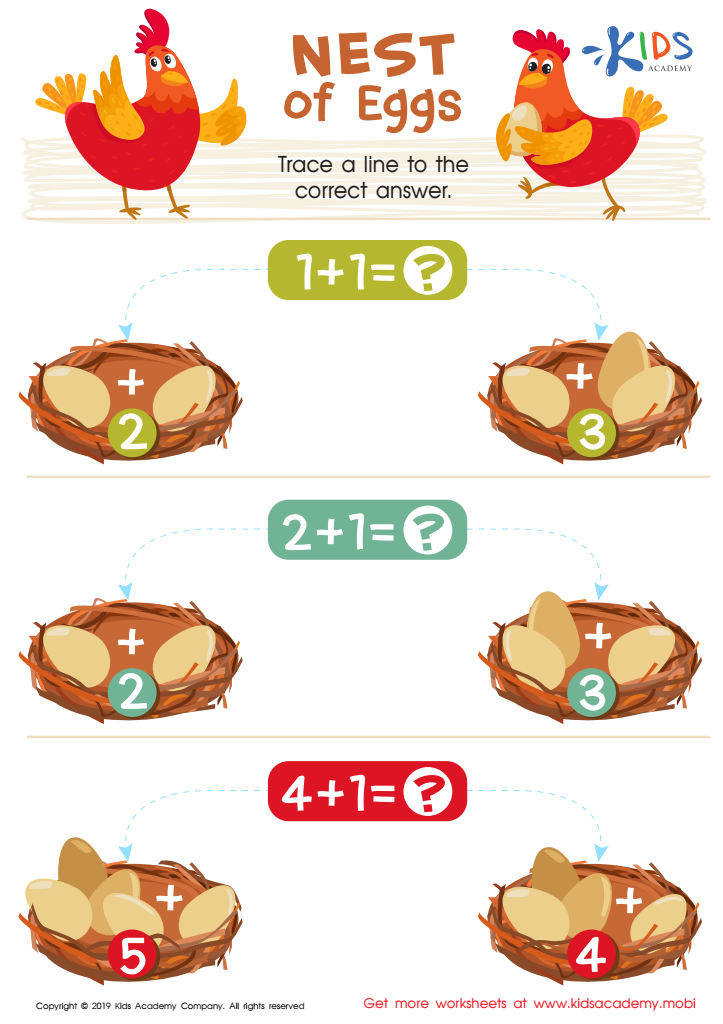
Nest of Eggs Worksheet

Nest of Eggs Worksheet

Help your kids learn math with this worksheet. First discuss the picture with them and then work through the three equations. Encourage them to trace the correct answer afterwards. With your assistance, they'll soon be able to confidently add numbers.
Nest of Eggs Worksheet
Worksheet
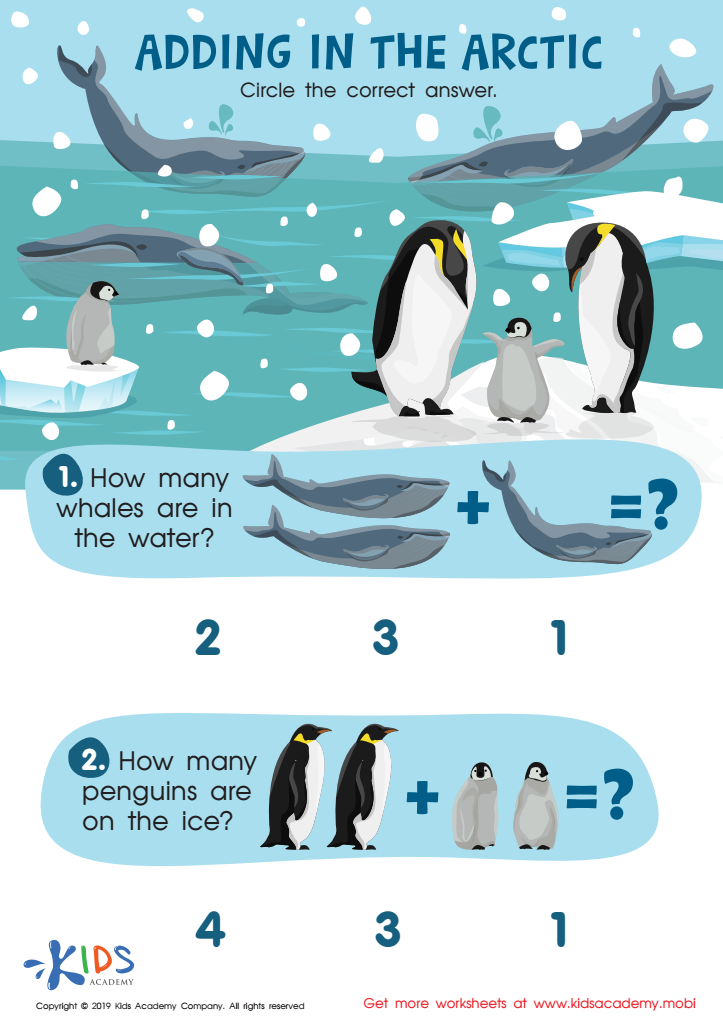
Adding in the Arctic Worksheet
Adding in the Arctic Worksheet
Introduce your kids to the Arctic with this worksheet. Let them look at the pictures, teach them the name of the animals, and help them add up the correct number. Ask your kids to tell you some of the animals found there and what the weather is like. It's a fun and educational way to learn more about the Arctic.
Adding in the Arctic Worksheet
Worksheet
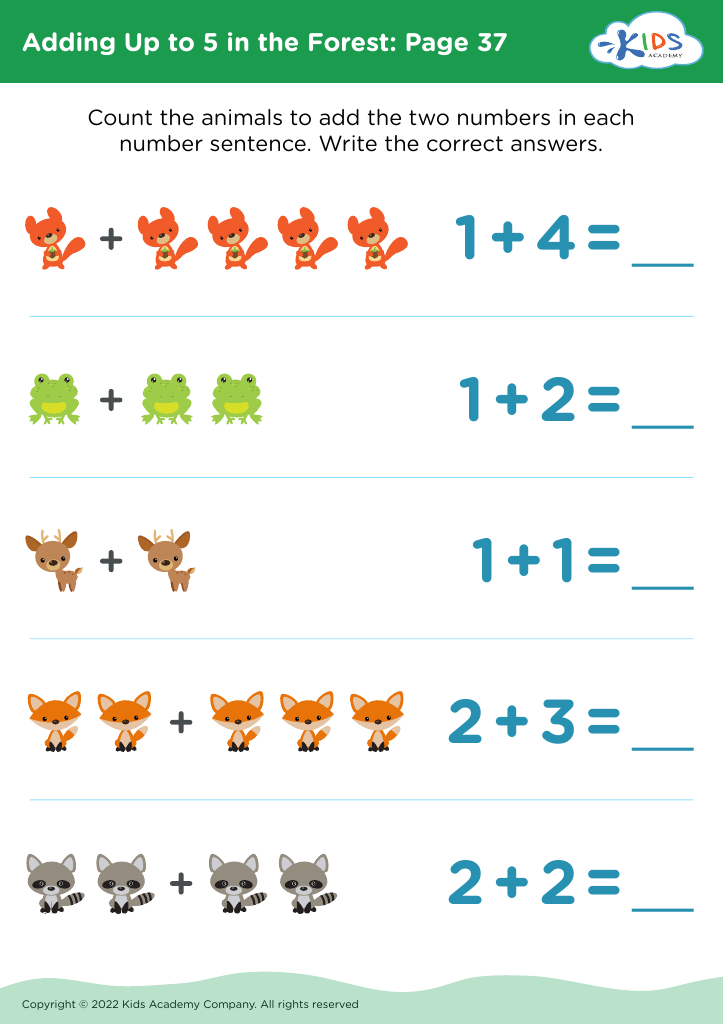
Adding Up to 5 in the Forest: Page 37
Worksheet
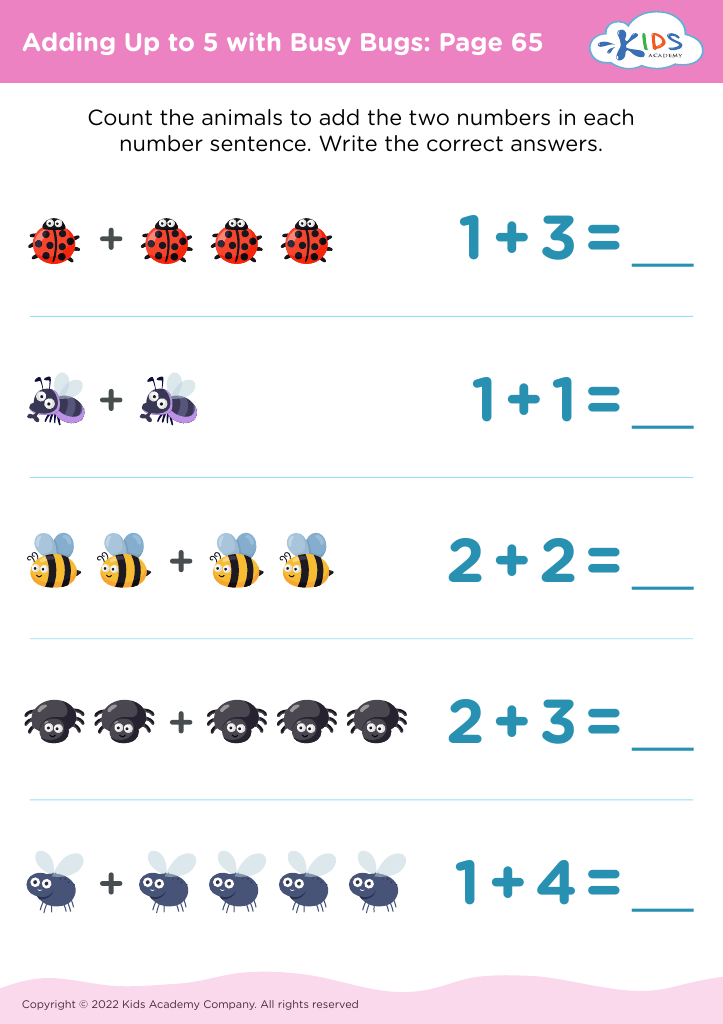
Adding Up to 5 with Busy Bugs: Page 65
Worksheet
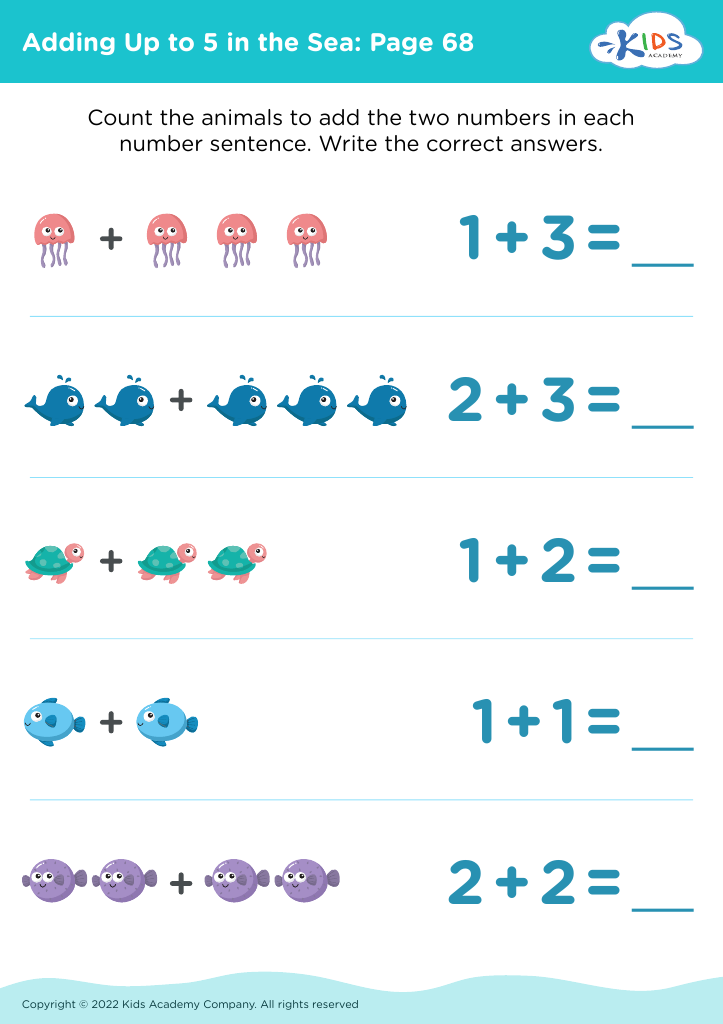
Adding Up to 5 in the Sea: Page 68
Worksheet
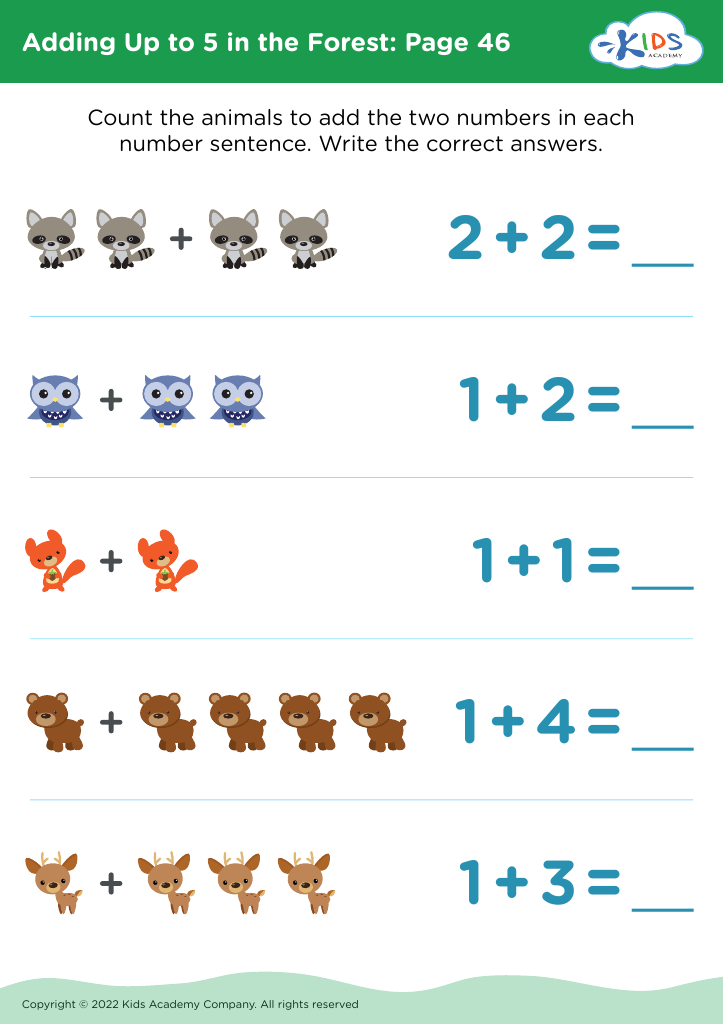
Adding Up to 5 in the Forest: Page 46
Worksheet
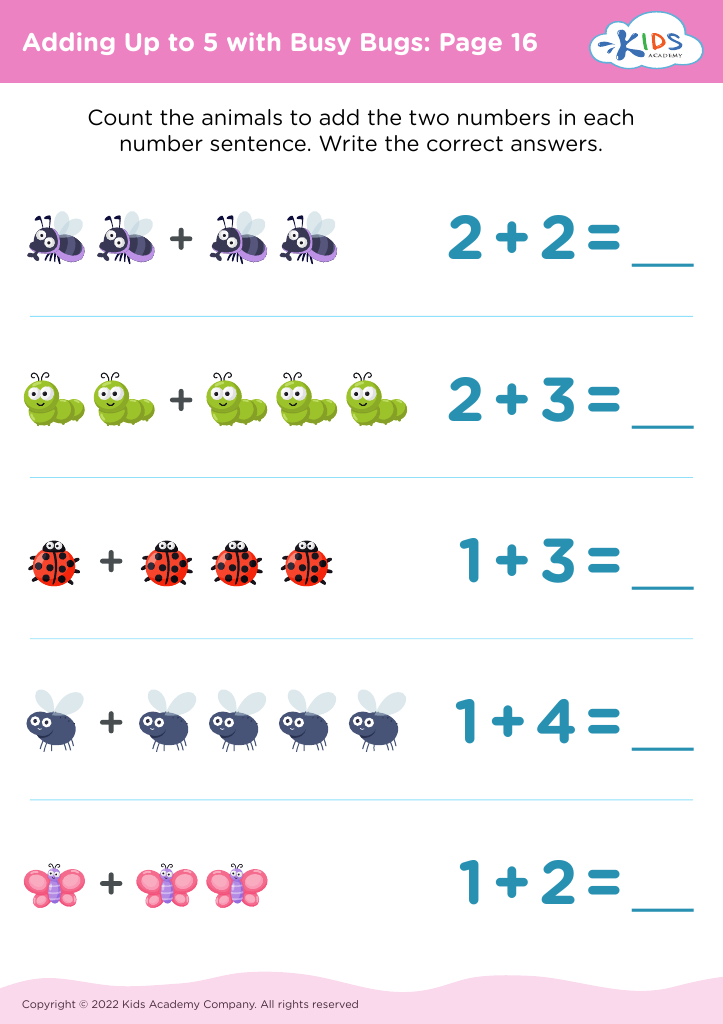
Adding Up to 5 with Busy Bugs: Page 16
Worksheet
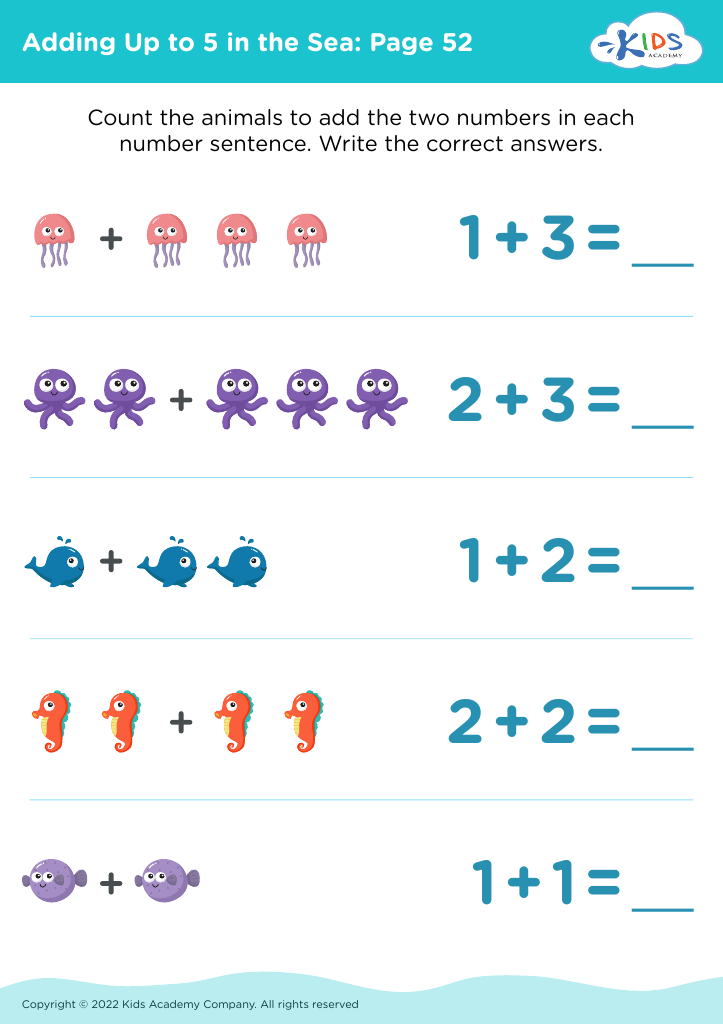
Adding Up to 5 in the Sea: Page 52
Worksheet
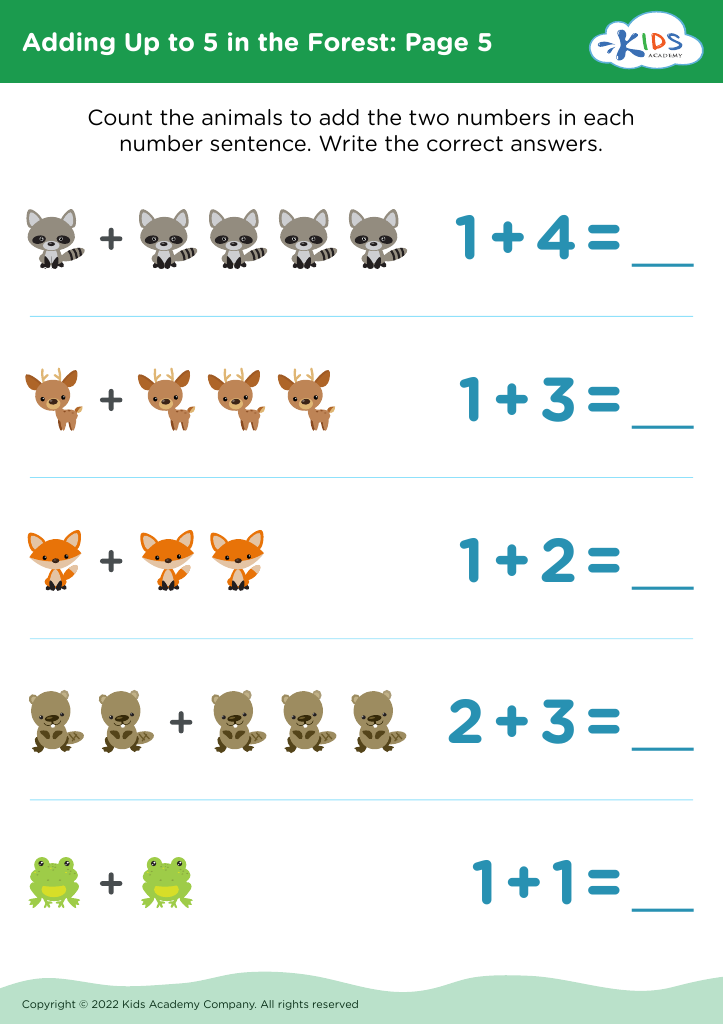
Adding Up to 5 in the Forest: Page 5
Worksheet
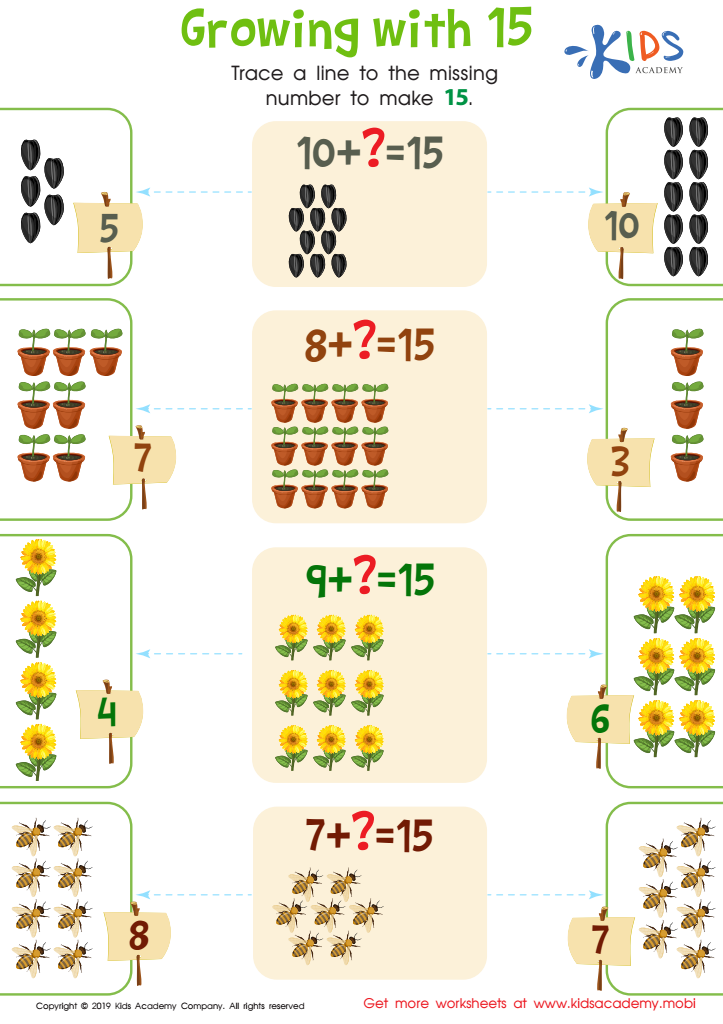
Growing with 15 Worksheet
Growing with 15 Worksheet

Remind your kids that adding different sets of numbers can give the same total (e.g. 2+3=5, 4+1=5). Test their understanding by asking them for more examples. Move onto the worksheet: count objects, then trace the line to the number making a total of 15.
Growing with 15 Worksheet
Worksheet
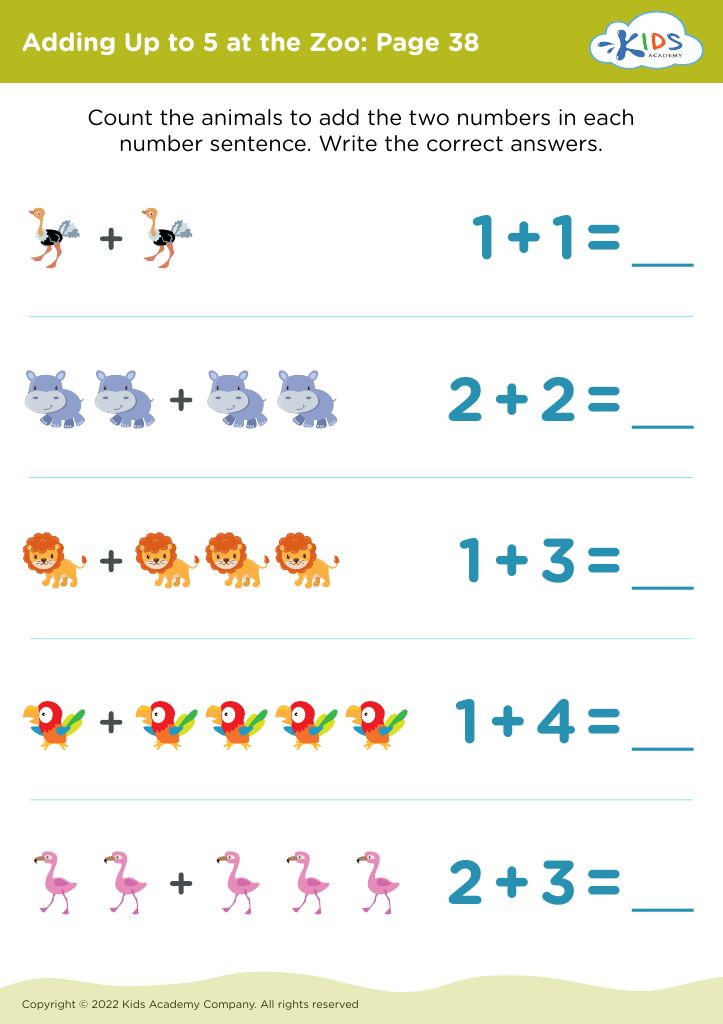
Adding Up to 5 at the Zoo: Page 38
Worksheet
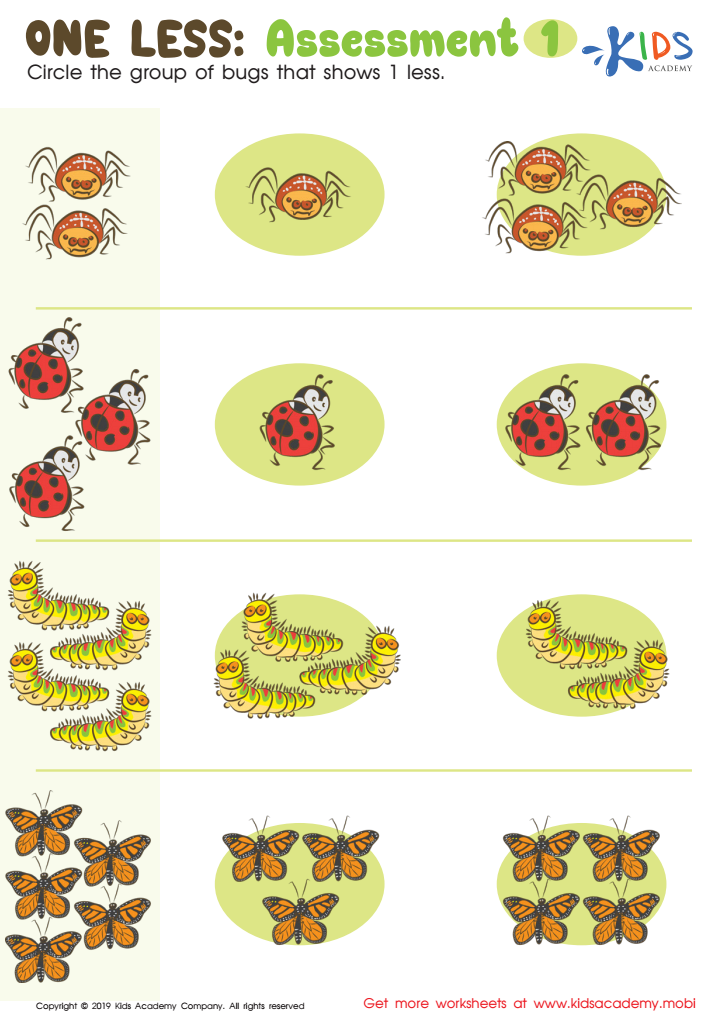
One Less: Assessment 1 Worksheet


One Less: Assessment 1 Worksheet

Help your kids with counting using this worksheet that has pictures of bugs! There are four different bugs and insects. Show them each one and ask them to count, then circle the group that has 1 less than the previous group. Don't worry if your kids don't like bugs - it's just a picture!
One Less: Assessment 1 Worksheet

Worksheet


Counting skills and the foundational concepts of addition and subtraction are crucial for children aged 3-6, and parents and teachers should prioritize these skills for several reasons.

Firstly, counting serves as the building block of all mathematical understanding. When children can count, they develop numeric fluency, which is essential for secondary math skills. This competence allows for smoother transitions into more complex topics like multiplication and division.

Secondly, adding and subtracting instills logical thinking and problem-solving abilities. As children learn these operations, they begin to conceptualize relationships between numbers, fostering critical thinking and analytical skills.

Moreover, these mathematical skills enhance children's confidence. Mastering counting, addition, and subtraction gives them a sense of achievement, encouraging a positive attitude toward mathematics that can last a lifetime.

Additionally, early exposure to these concepts helps children apply math in everyday situations. An understanding of counting and basic operations enables them to manage time, quantities, and money, empowering them in real-life scenarios.

Lastly, engaging parents and teachers in the learning process creates a supportive environment. Collaborative activities can strengthen relationships while reinforcing these essential skills, emphasizing the importance of community in a child’s education.