Counting proficiency Addition Worksheets for Ages 3-6
11 filtered results
-
From - To
Boost your child's counting skills with our engaging Counting Proficiency Addition Worksheets designed for ages 3-6! These interactive worksheets provide a fun way for young learners to enhance their numerical understanding while mastering basic addition concepts. Each worksheet encourages hands-on practice through colorful illustrations and age-appropriate exercises that make learning enjoyable. As children progress, they’ll develop confidence in their math abilities, essential for their academic journey. Perfect for homeschooling, classrooms, or supplemental practice, these worksheets help cultivate a strong foundation in math that will support future learning. Explore our diverse collection and watch your little ones excel in their counting skills today!
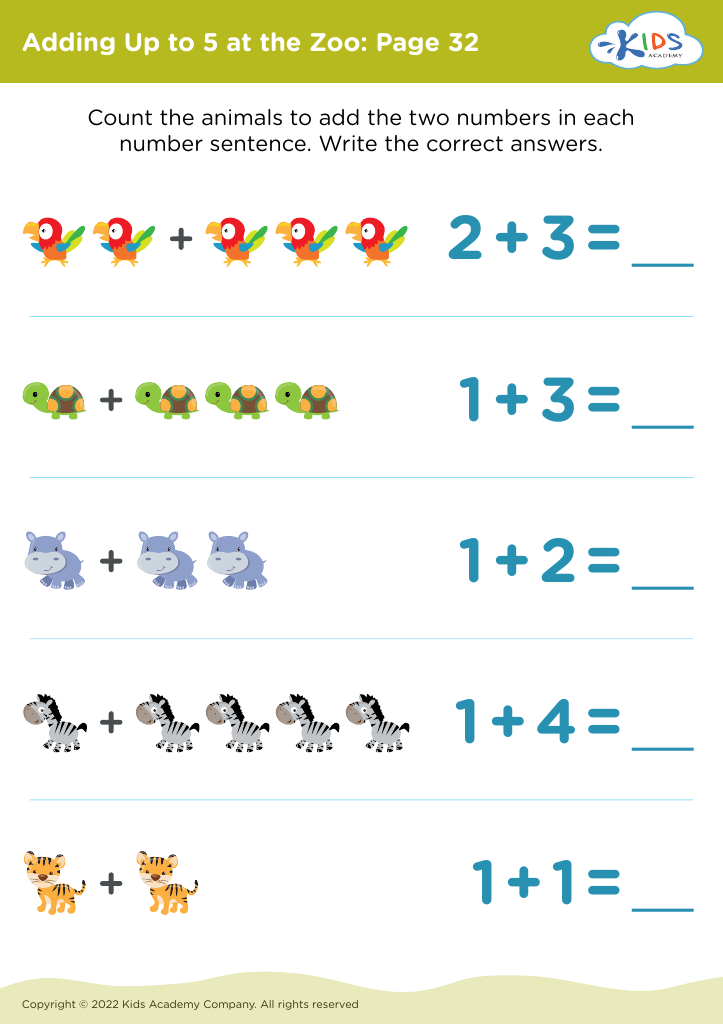
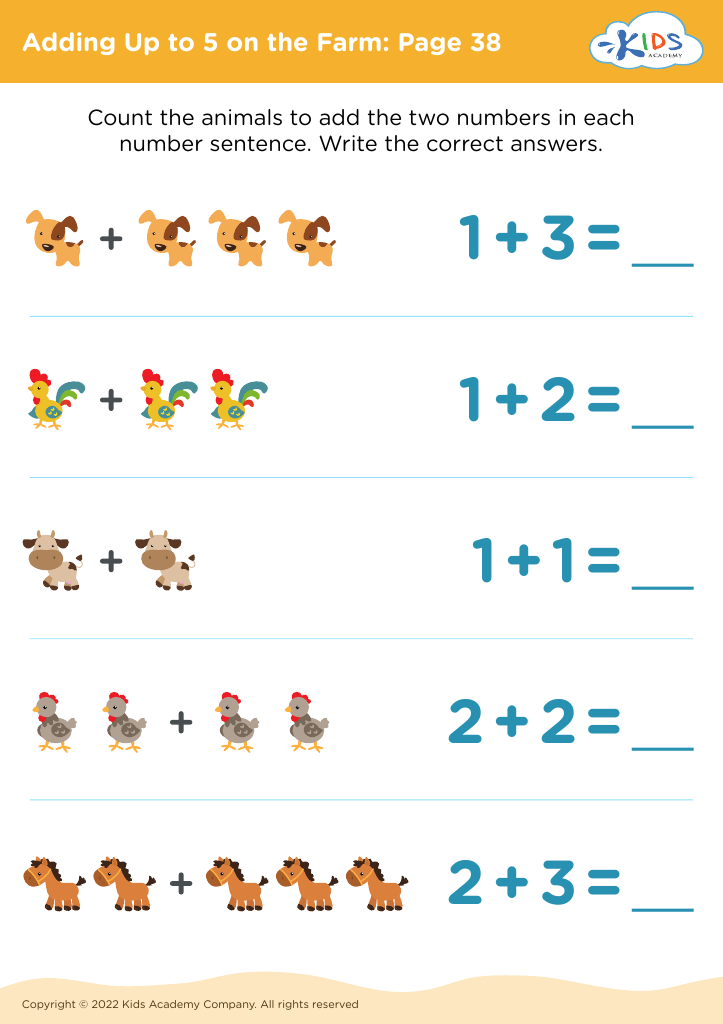
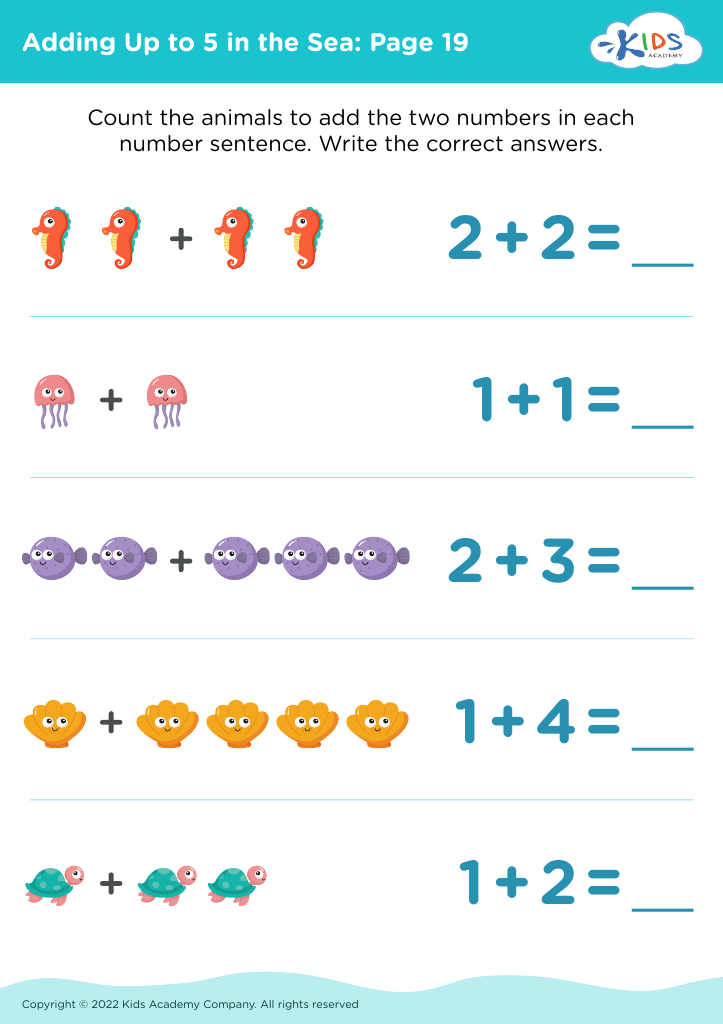
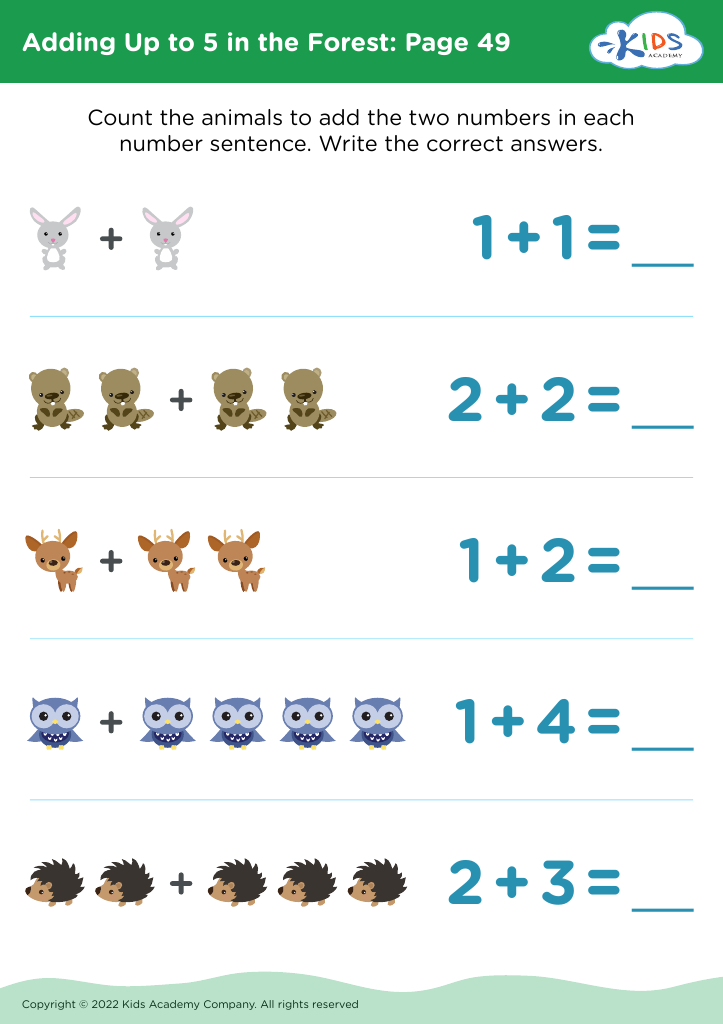
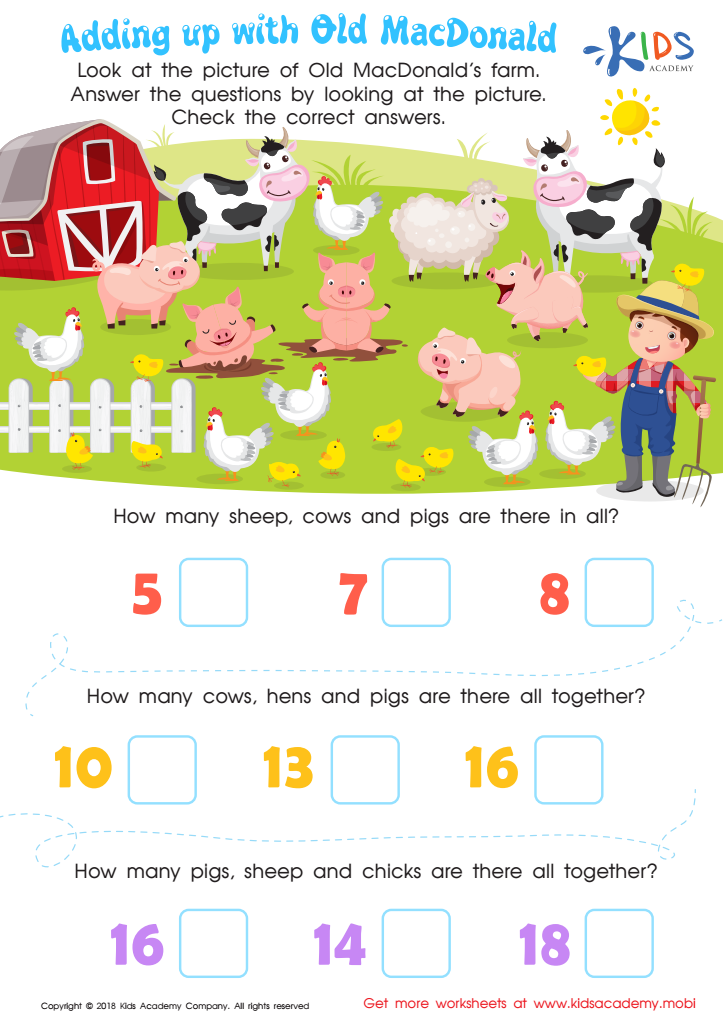
Adding Up with Old MacDonald Worksheet
 Assign to My Students
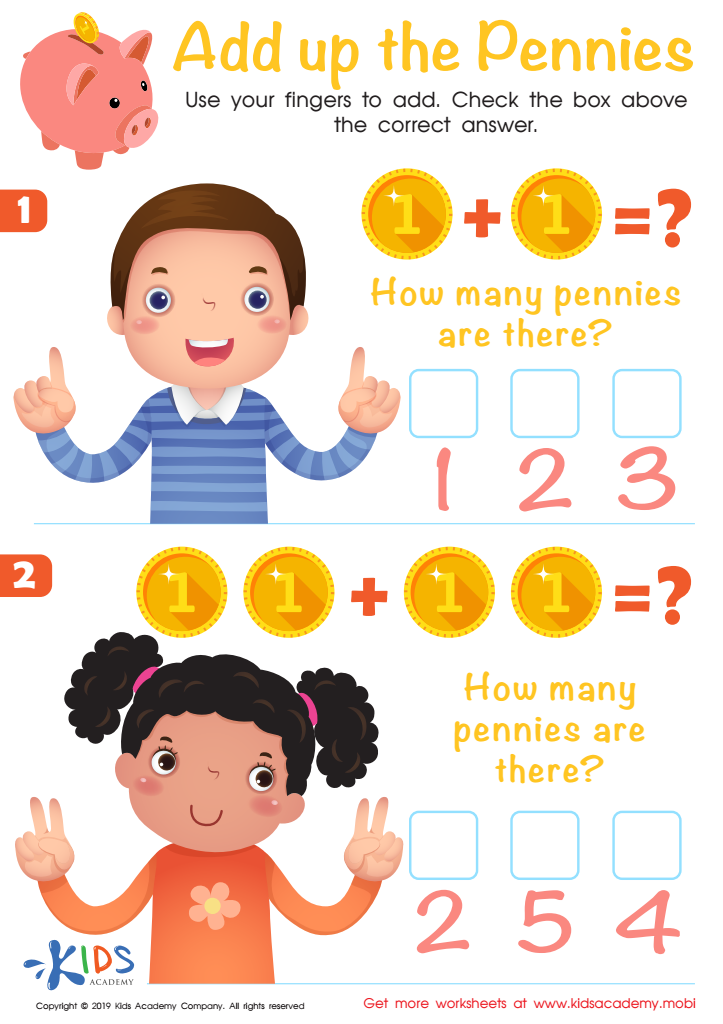
Add up the Pennies Worksheet
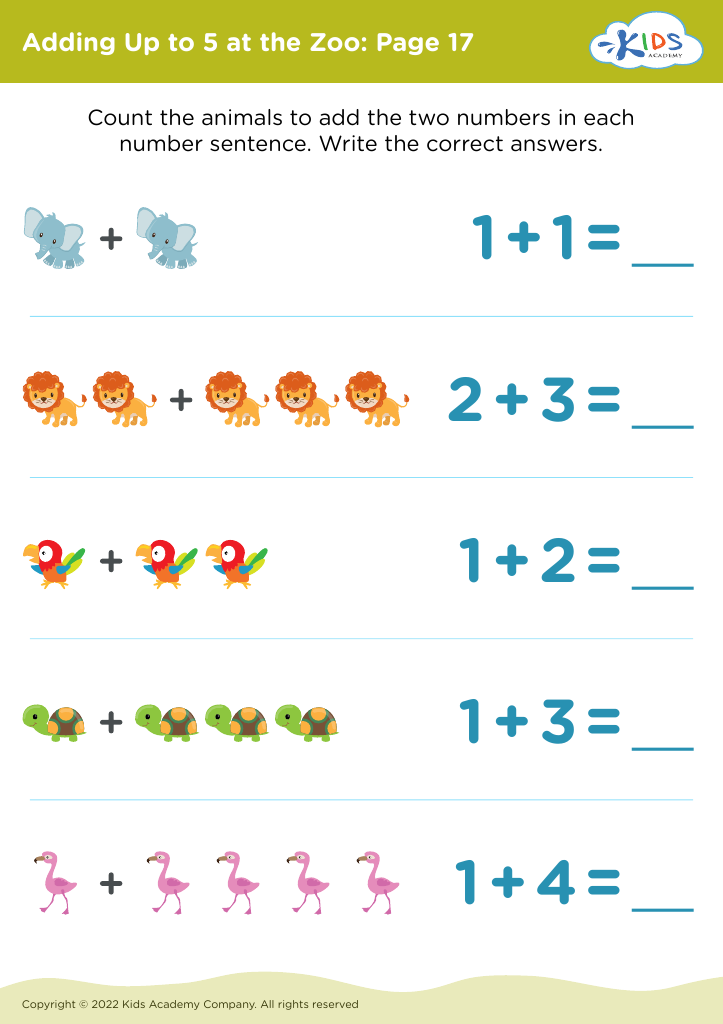
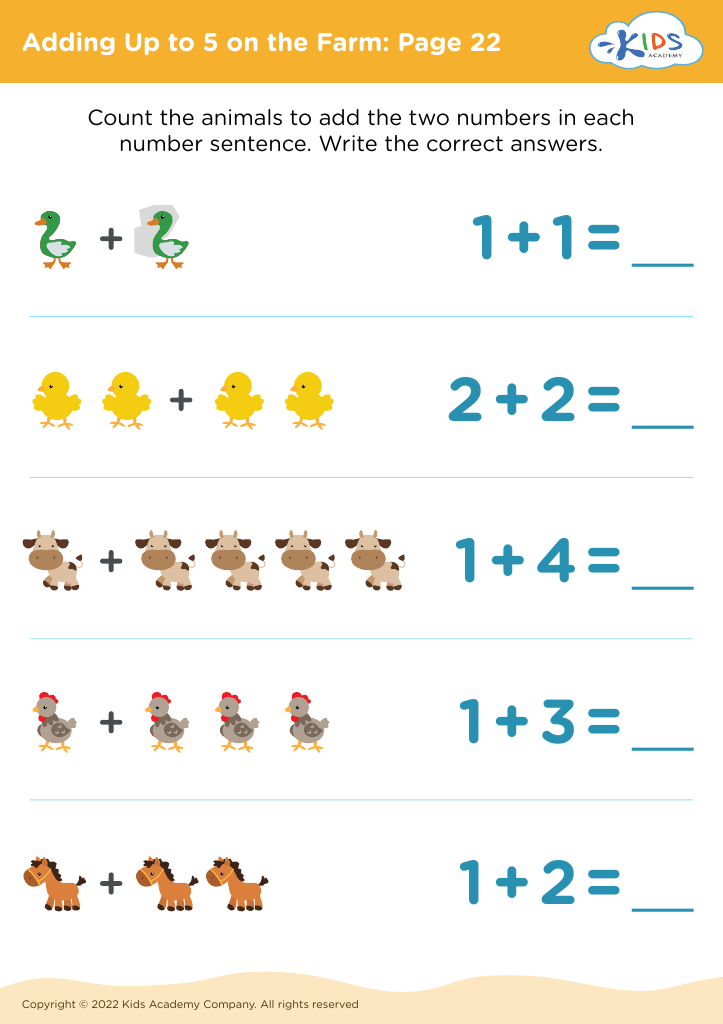
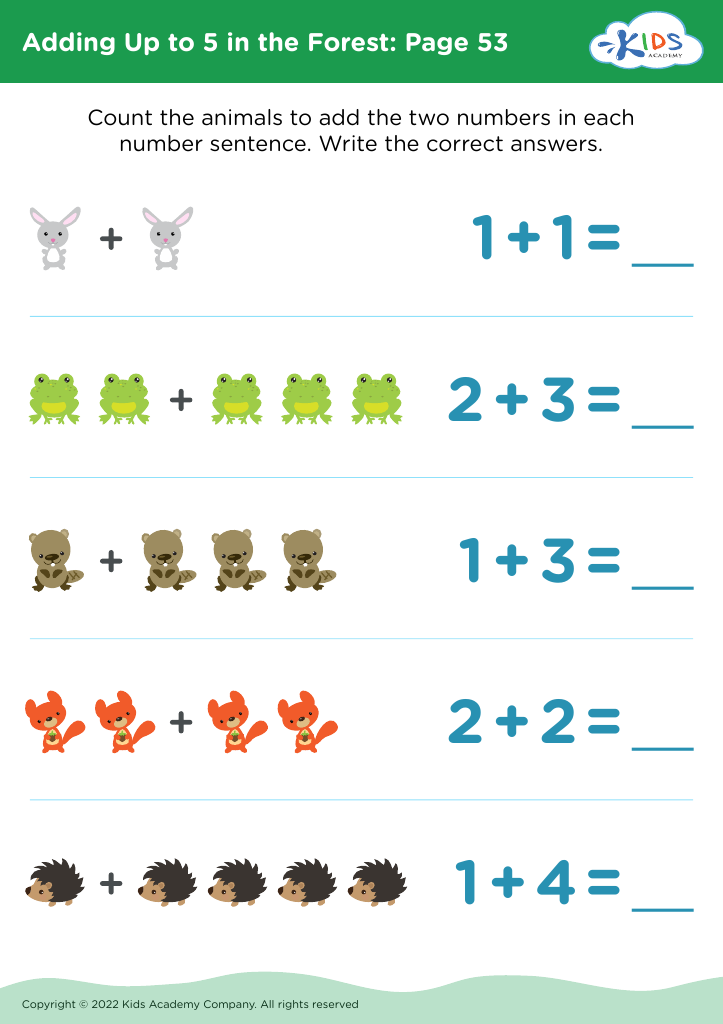
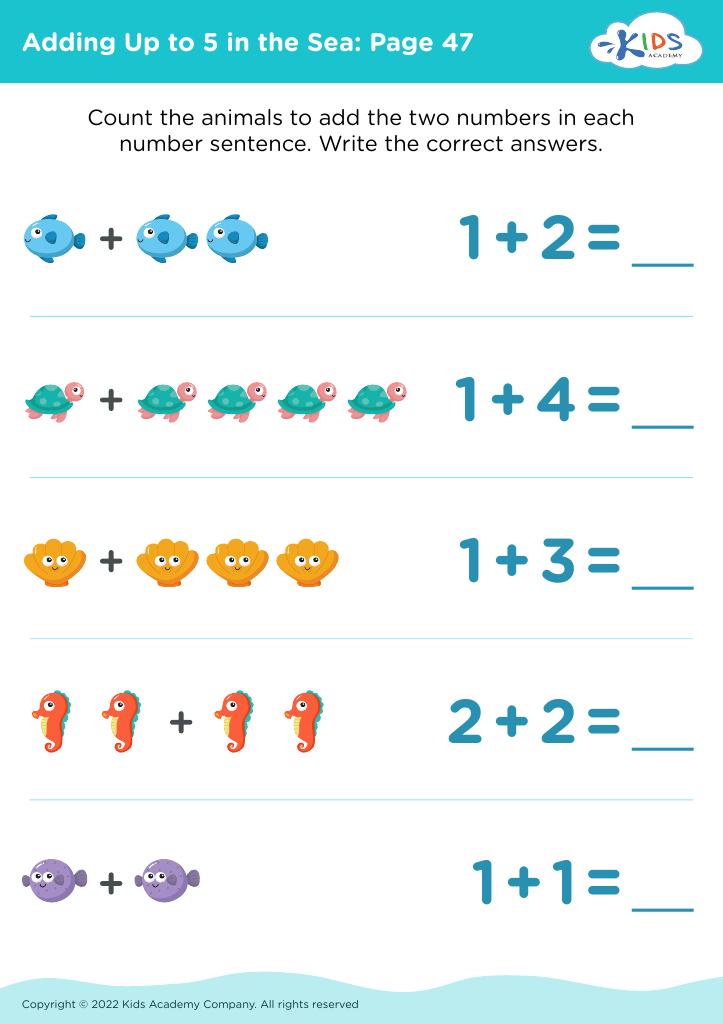
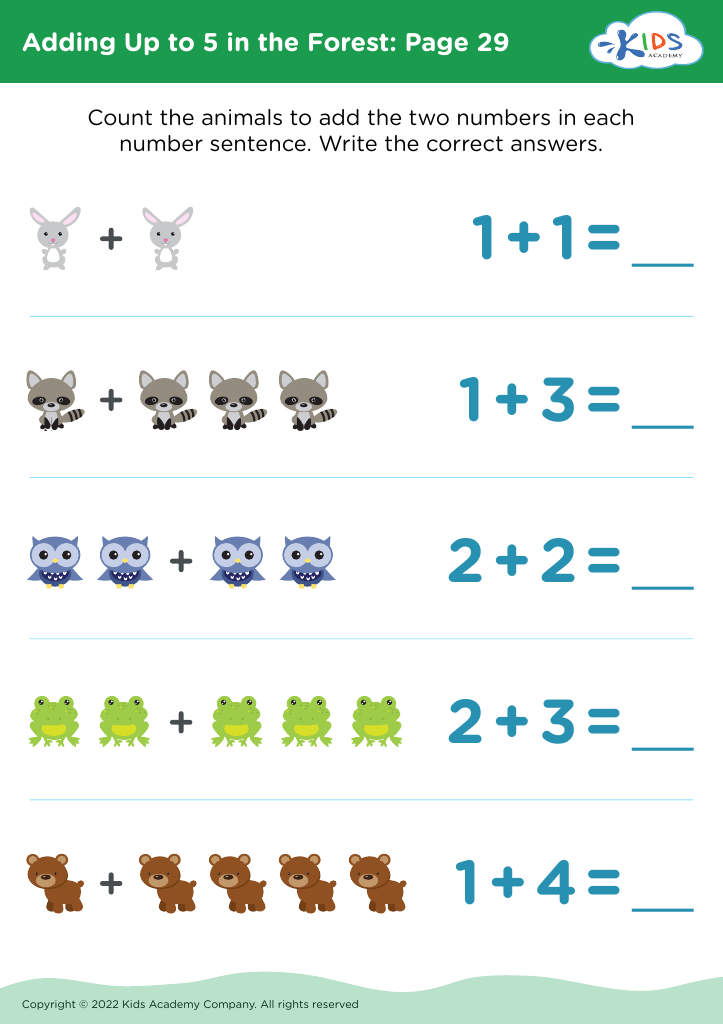








Counting proficiency, particularly in addition, is a foundational skill that sets the stage for mathematical understanding in young children aged 3-6. Parents and teachers should care about this developmental milestone because it is deeply connected to a child's overall cognitive growth and future academic success. Mastery of counting and basic addition helps children develop critical thinking skills, pattern recognition, and problem-solving abilities.
Moreover, early numeracy skills influence a child's confidence and attitude towards mathematics later in life. When children can easily count and perform simple addition, they are more likely to engage positively with math-related concepts. This early fluency can prevent future struggles with mathematics, as children who lack these foundational skills often find advanced concepts daunting.
Additionally, counting and addition can be integrated into everyday activities, making learning engaging and enjoyable. This approach promotes a strong cooperative bond between parents and children, as they can learn together through play and daily routines.
Finally, by emphasizing counting proficiency and addition, parents and teachers can better prepare children for school by ensuring they have the necessary skills to tackle more complex mathematical concepts as they progress in their education.








