Shape Recognition Comparison Worksheets for Ages 3-6
3 filtered results
-
From - To
Discover our Shape Recognition Comparison Worksheets designed for children ages 3-6! These engaging and interactive resources help young learners identify and compare different shapes while enhancing their cognitive and visual skills. With vibrant visuals and age-appropriate exercises, children will enjoy sorting, matching, and differentiating between various shapes—such as circles, squares, and triangles. Our worksheets not only stimulate critical thinking but also encourage early math skills through fun comparisons and activities. Perfect for classrooms or home learning, these worksheets are an excellent tool to make shape learning enjoyable and effective. Equip your little ones with essential foundational skills today!
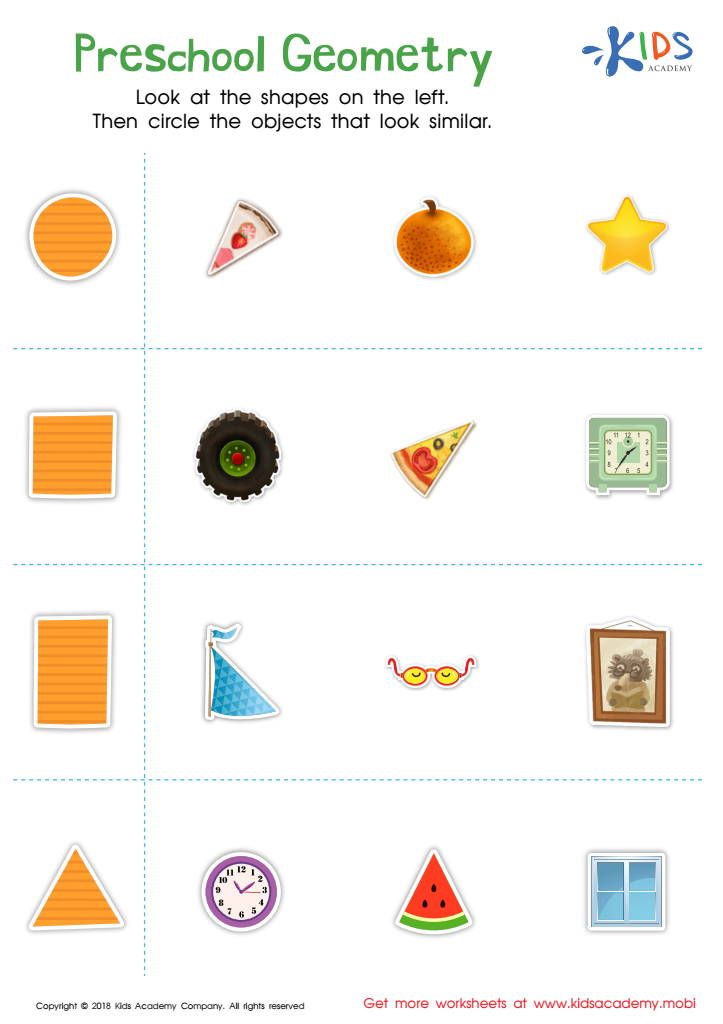
Preschool Geometry Worksheet
 Assign to My Students
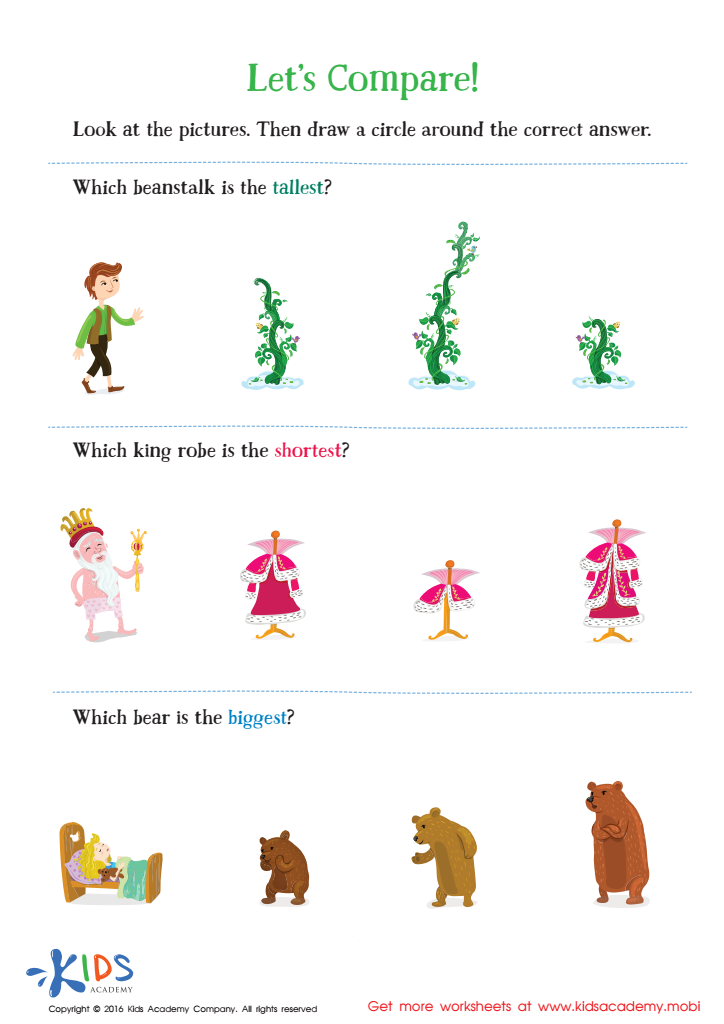
Fairy Tale Worksheet: Let's Compare
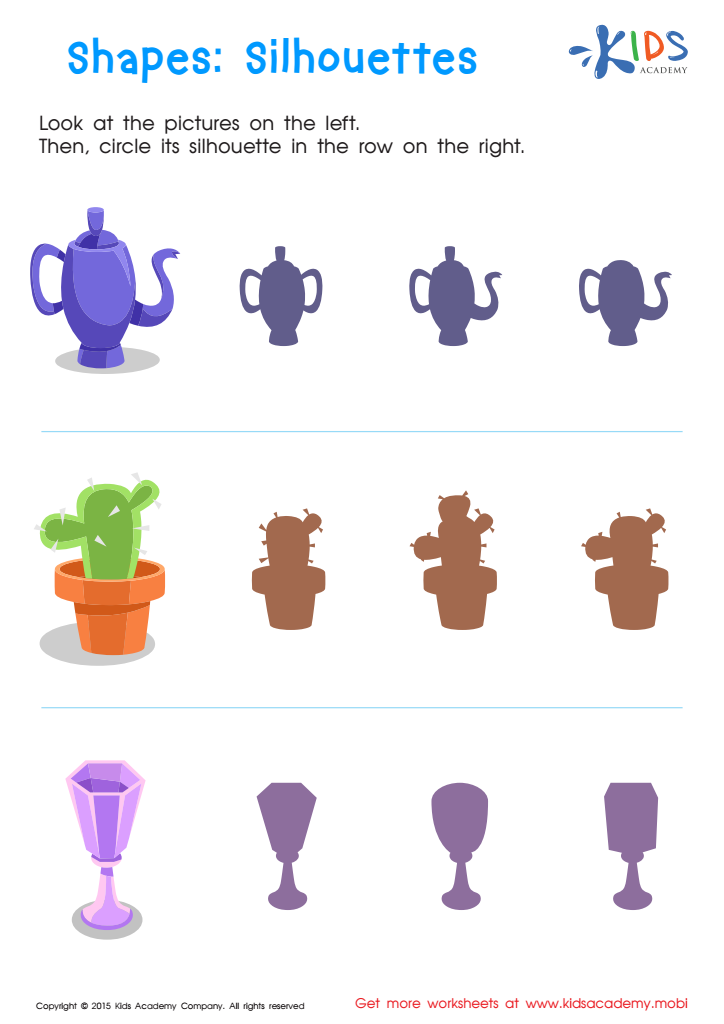
Silhouettes – Shapes Worksheet








Shape recognition is a foundational skill for children aged 3-6 that supports their cognitive development and enhances various learning areas. Understanding shapes fosters critical thinking and problem-solving abilities as children learn to identify, compare, and categorize different forms. This skill lays the groundwork for future mathematical concepts, such as geometry, while also improving spatial awareness, which is crucial for everyday tasks and activities.
For parents and teachers, investing time in shape recognition comparison can significantly impact a child’s early learning experience. Engaging kids in shape-related activities, such as sorting or matching, encourages their curiosity and promotes active learning. These interactions can lead to increased vocabulary as children learn the names and properties of different shapes. Moreover, comparing shapes can enhance their observational skills and help them to make connections within their environment.
Early educators can implement fun games and daily routines that incorporate shape recognition, making learning enjoyable and memorable. By fostering this essential skill, parents and teachers not only support a child’s academic journey but also empower them with confidence in problem-solving and reasoning, skills that will benefit them well beyond the classroom. Overall, prioritizing shape recognition is an integral step in nurturing a child's overall development.








