Critical Thinking Geometry Worksheets for Ages 3-6
5 filtered results
-
From - To
Introduce young learners to the world of shapes and spatial reasoning with our engaging Critical Thinking Geometry Worksheets for ages 3-6. Designed to stimulate curious minds, these printable activities foster essential math skills and critical thinking. Children will explore concepts such as pattern recognition, shape identification, and spatial awareness through fun and interactive exercises. Our worksheets are perfect for home or classroom settings, offering opportunities for early learning and cognitive development. Empower your child's mathematical journey and prepare them for future academic success with our carefully crafted geometry worksheets.
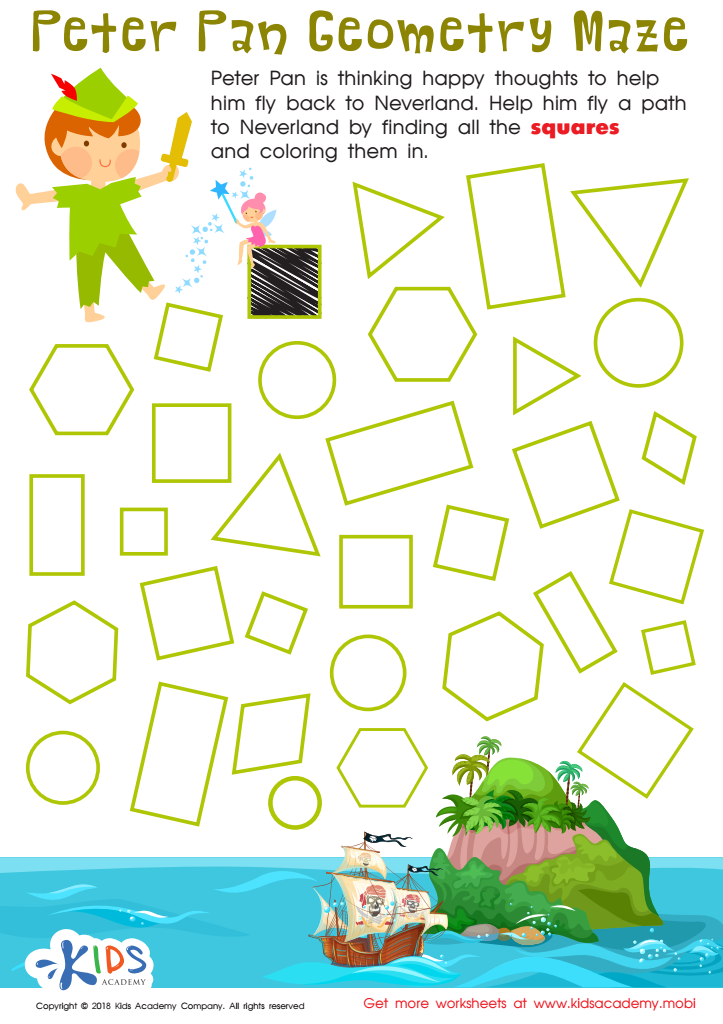
Peter Pan Worksheet
 Assign to My Students











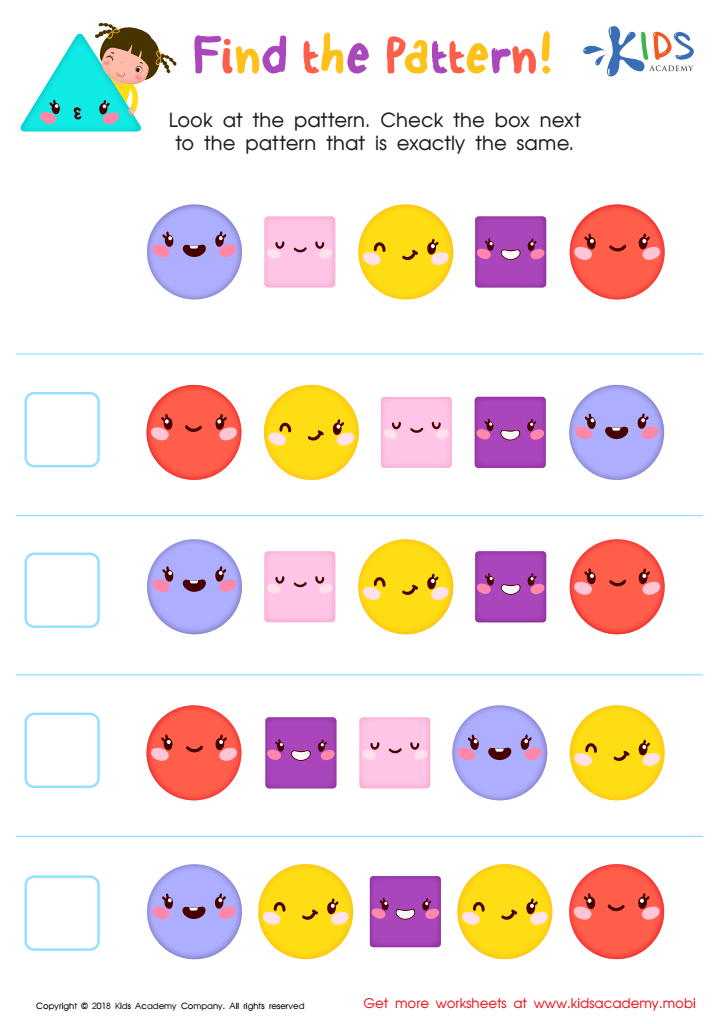
Find the Pattern Worksheet
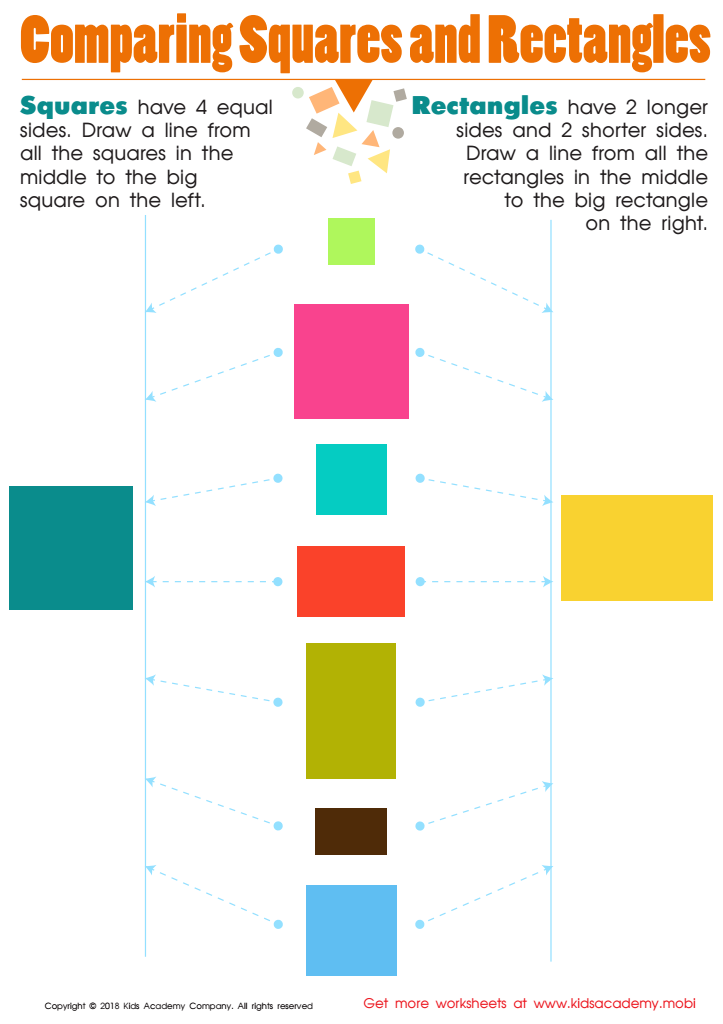
Comparing Squares Rectangles Worksheet
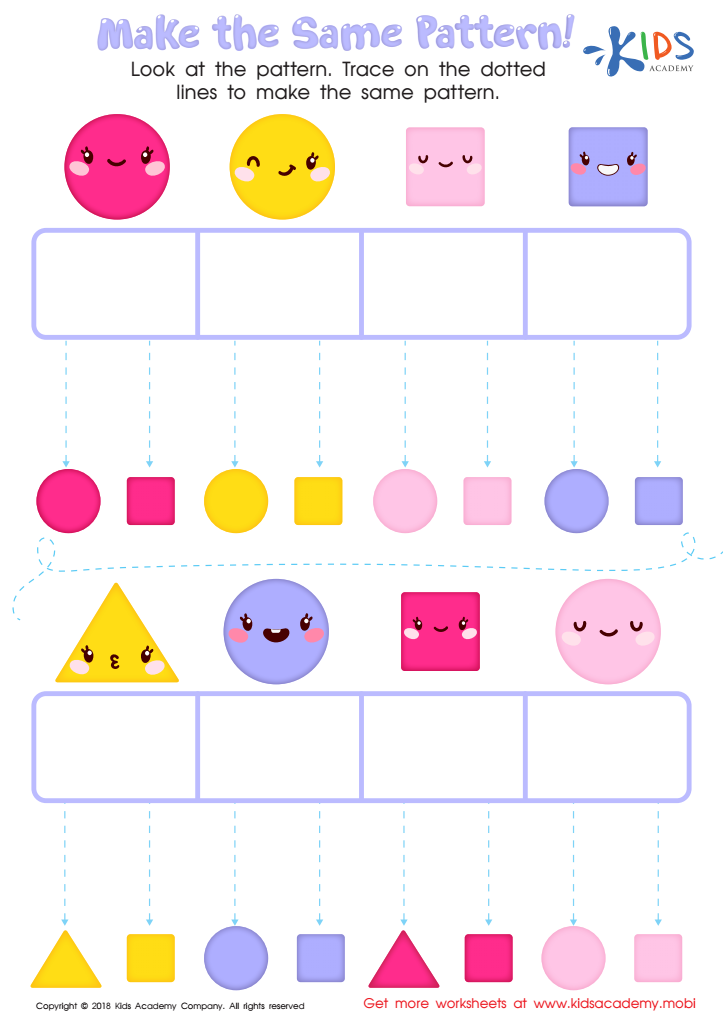
Make the Same Pattern Worksheet
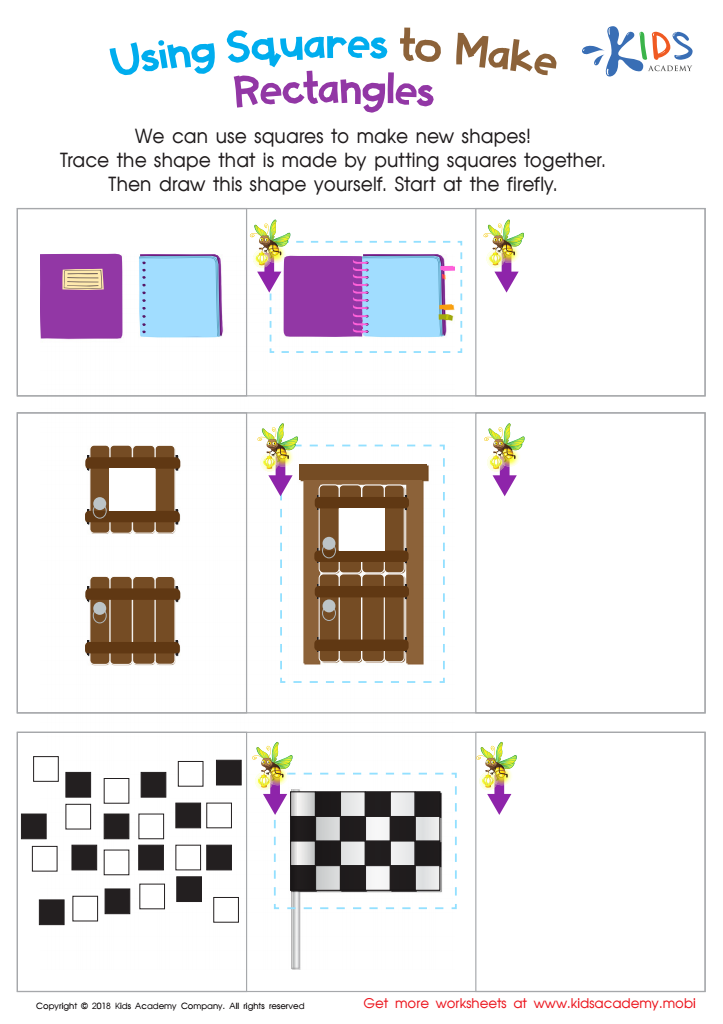
Using Squares to Make Rectangles Worksheet








Critical thinking geometry for children ages 3-6 is essential for fostering foundational cognitive and problem-solving skills. During these formative years, introducing geometric concepts nurtures spatial awareness, enabling children to perceive and interpret the world around them more effectively. Activities like sorting shapes, recognizing patterns, and basic puzzles stimulate curiosity and enhance their ability to think logically and analytically.
Geometry at this early stage works like a bridge, connecting abstract concepts with tangible experiences. For instance, identifying and classifying shapes such as circles, squares, and triangles lays the groundwork for more complex mathematical and scientific reasoning in later years.
Additionally, discussing geometric ideas encourages language development. When children describe shapes, positions, and sizes, they learn new vocabulary and structures, bolstering their communication skills.
Engaging young minds in critical thinking geometry also promotes perseverance and attention to detail. Solving geometric problems requires focus and the ability to approach tasks methodically, skills that are invaluable across different subjects and everyday life.
Ultimately, parents and teachers should care about critical thinking geometry for young children because it builds a robust educational foundation, stimulates intellectual curiosity, and cultivates essential life skills that contribute to holistic development and future academic success.








