Improving math skills Numbers Worksheets for Ages 3-6
4 filtered results
-
From - To
Boost your child’s early math abilities with our engaging "Improving Math Skills" Numbers Worksheets designed for ages 3-6. Tailored to make learning fun, these worksheets introduce young learners to essential math concepts through vivid, interactive activities. From counting and number recognition to basic addition and subtraction, our resources foster a strong mathematical foundation. Perfectly suited for preschoolers and kindergartners, these printables enhance critical thinking and problem-solving skills. Ideal for both classroom settings and home practice, our expertly crafted worksheets ensure your child confidently and joyfully embarks on their educational journey. Empower their potential with Kids Academy today!
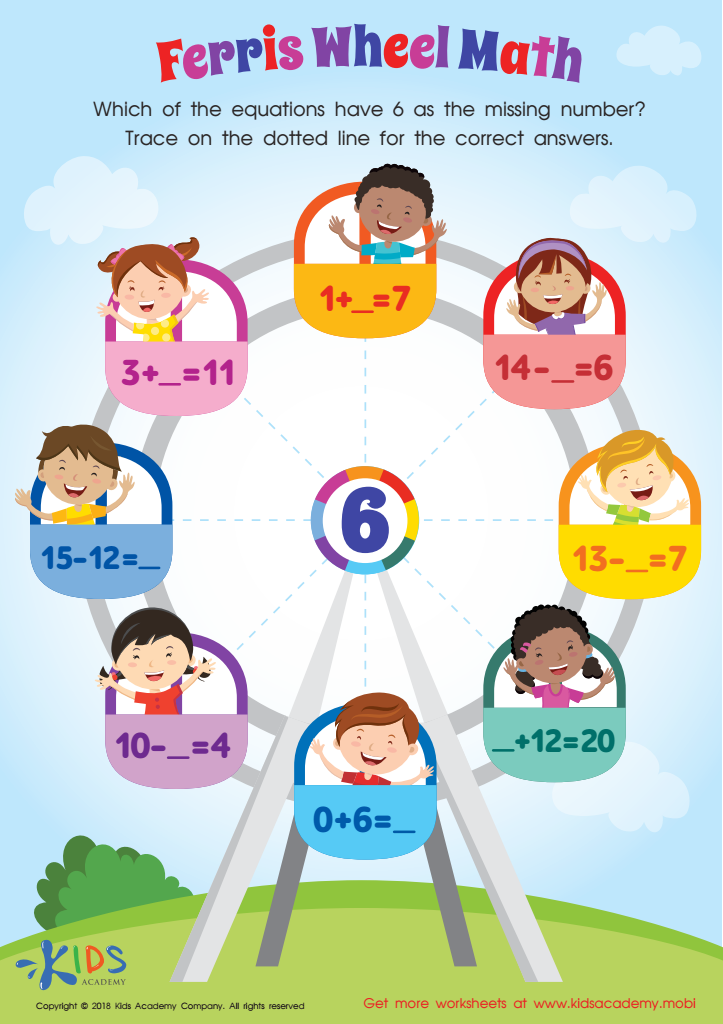
Missing Number: Ferris Wheel Math Worksheet
 Assign to My Students
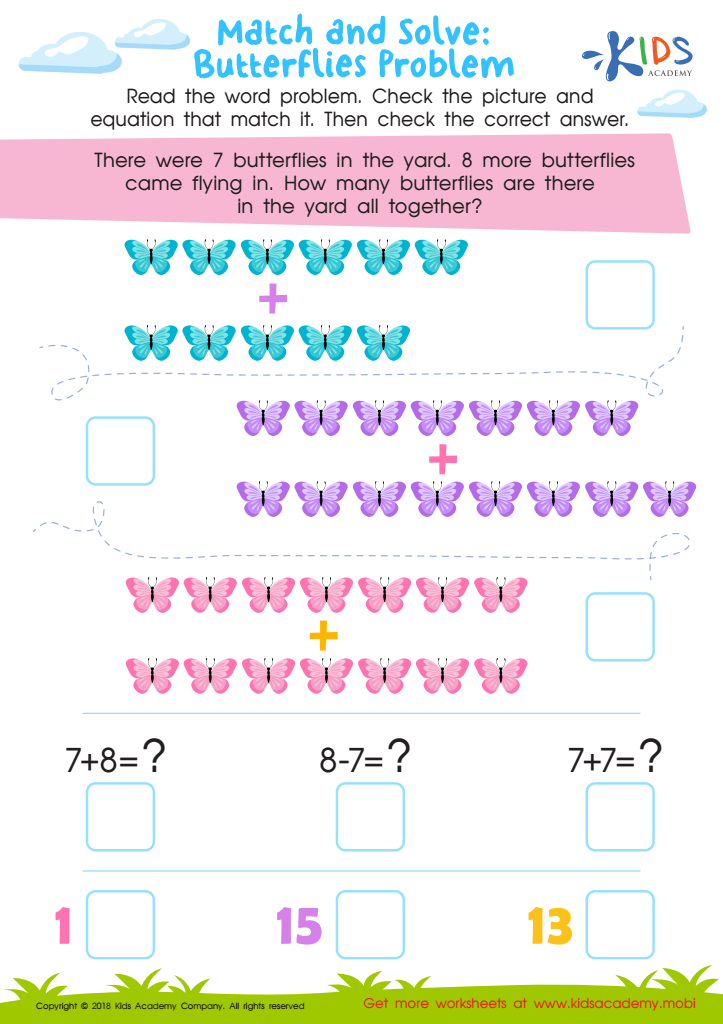
Match and Solve: Butterfly Problem Worksheet
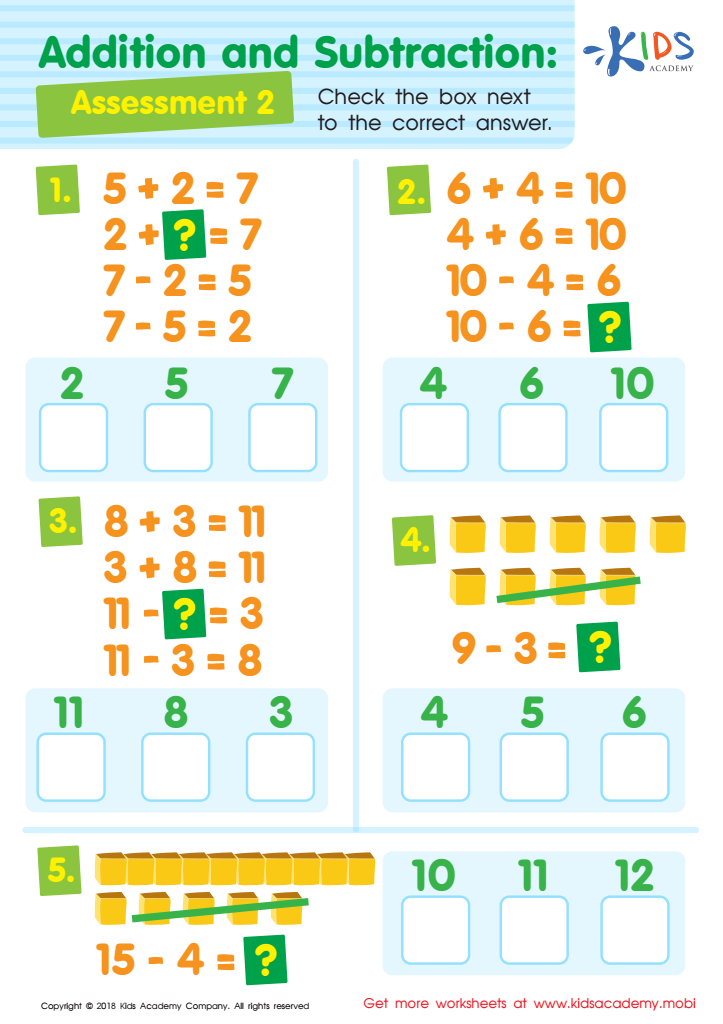
Addition and Subtraction Assessment 2 Worksheet
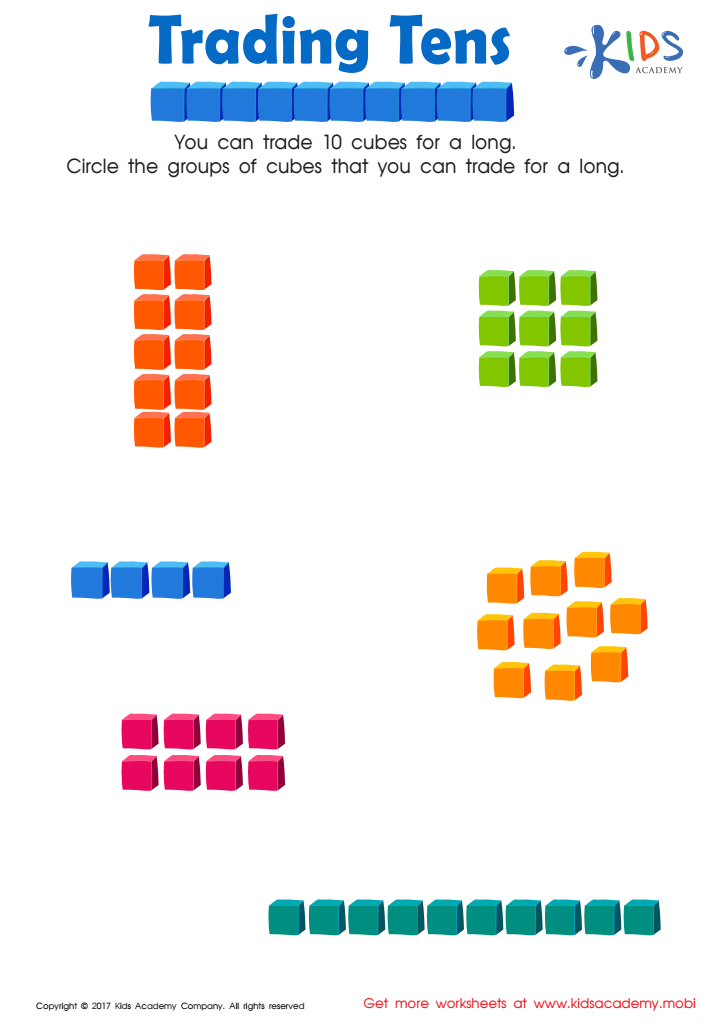
Trading Tens Worksheet







Improving math skills in children ages 3-6 is crucial for their cognitive and academic development. During these formative years, children's brains are exceptionally receptive to learning, making it an ideal time to introduce fundamental math concepts. Early math skills encompass counting, recognizing numbers, understanding basic addition and subtraction, and grasping simple patterns. These skills form a foundation for more complex mathematical reasoning that children will encounter in later grades.
For parents and teachers, investing time and effort in enhancing kids' math abilities provides multiple benefits. Firstly, a strong math foundation promotes problem-solving skills and logical thinking, which are valuable in everyday life. Secondly, math proficiency is linked to higher performance in other academic areas, such as reading and science, as it enhances critical thinking and analytical skills.
Moreover, early math success can boost a child's confidence and foster a positive attitude toward learning. Activities like counting games, number puzzles, and interactive math stories can make learning enjoyable, thereby cultivating a lifelong love for math.
In summary, parents and teachers should prioritize improving math skills in young children to ensure their academic success, enhance their cognitive development, and instill a positive attitude toward learning.








