
Number Matching Numbers Worksheets for Ages 3-6
3 filtered results
Difficulty Level
Grade
Age
-
From - To
Subject
Activity
Standards
Enhance your child's early math skills with our engaging Number Matching Worksheets designed for ages 3-6! These worksheets provide a fun and interactive way for young learners to associate numbers with their corresponding quantities. Featuring vibrant illustrations and easy-to-follow activities, children will enjoy practicing number recognition and matching. Our resources foster cognitive development while making learning enjoyable. Ideal for homeschools or classrooms, these worksheets are perfect for reinforcing essential math skills. Download your free worksheets today and watch your little ones blossom into confident math enthusiasts! Empower their learning journey with our thoughtfully crafted number matching activities.
Favorites
With answer key
Interactive
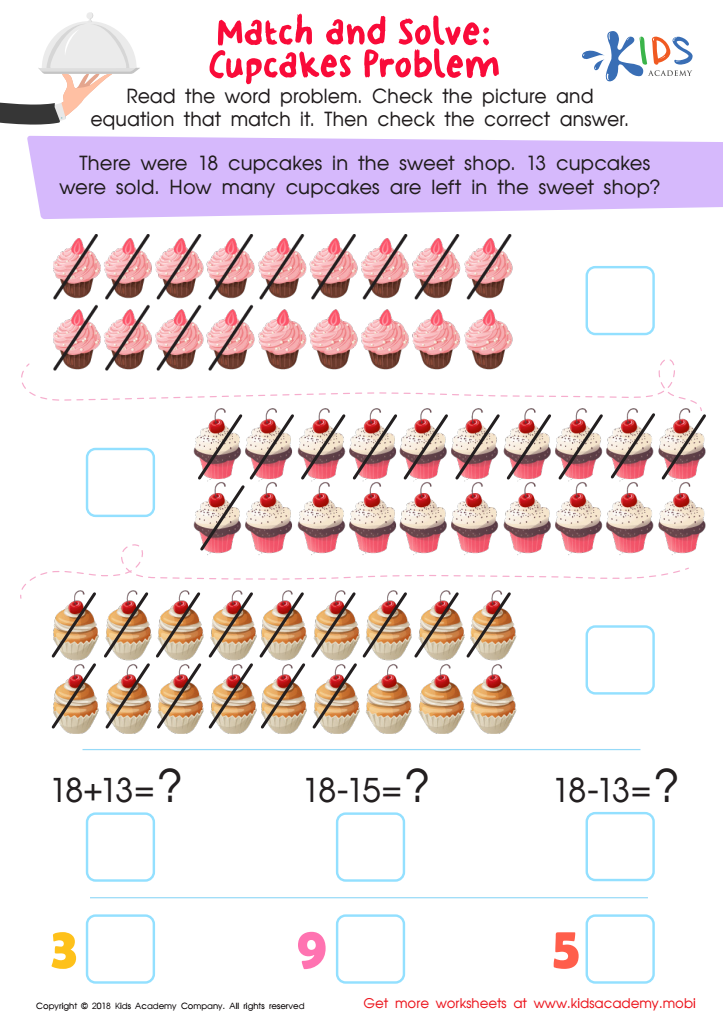
Match and Solve: Cupcakes Problem Worksheet
This math worksheet will excite your kid! Read the word problem and look at the cupcakes; the slashes mean some are being taken away. Select the picture that matches the text, then complete the equation to find the solution!
 Assign to My Students
Match and Solve: Cupcakes Problem Worksheet
Worksheet
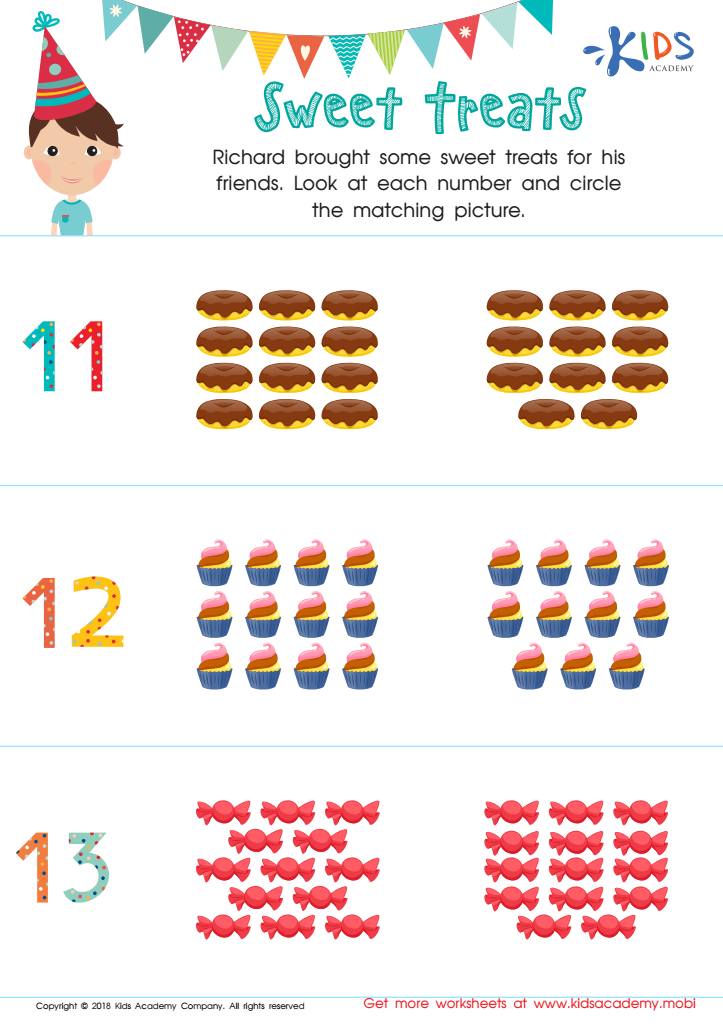
Kindergarten Math Worksheet Matching Numbers
Counting is fun with these kindergarten math worksheets! Richard brought cupcakes and candy - help your child count each treat and circle the picture that matches the number. Let the party begin!
Kindergarten Math Worksheet Matching Numbers
Worksheet
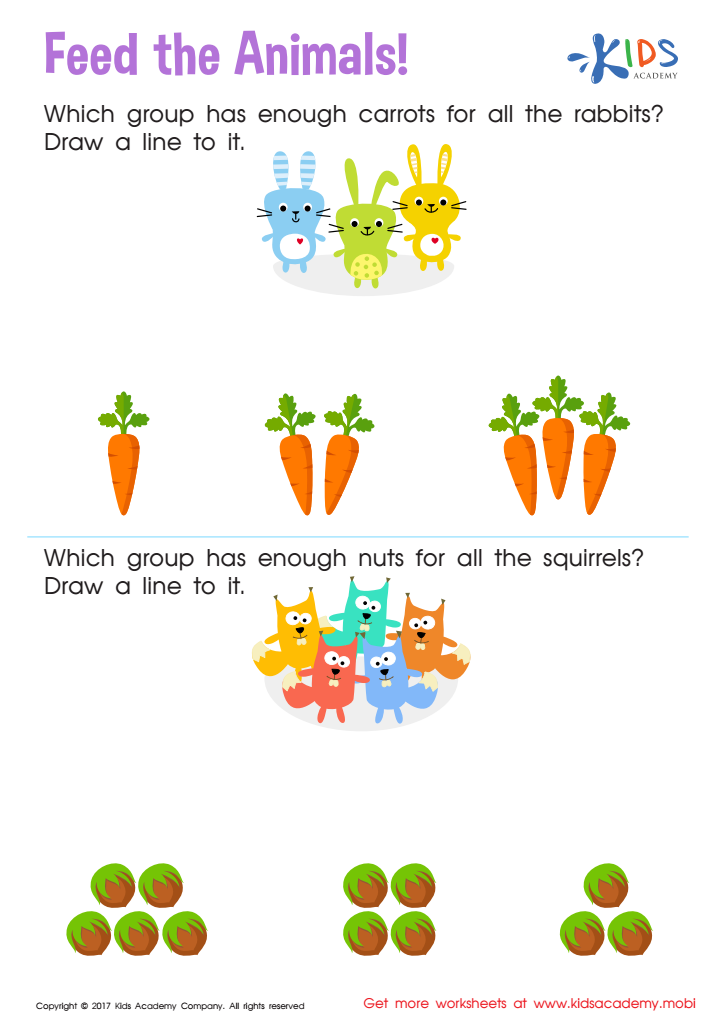
Count and Match: Feed the Animals Worksheet
Learning and growing involves more than just numbers, phonics and comparison. This Feed the Animals worksheet helps kids to exercise their reasoning skills. They must work out how many rabbits and carrots there are, and then repeat the process for the squirrels. This encourages problem solving and counting skills.
Count and Match: Feed the Animals Worksheet
Worksheet
Join Kids Academy for Free
Who is primarily going to use this learning content?




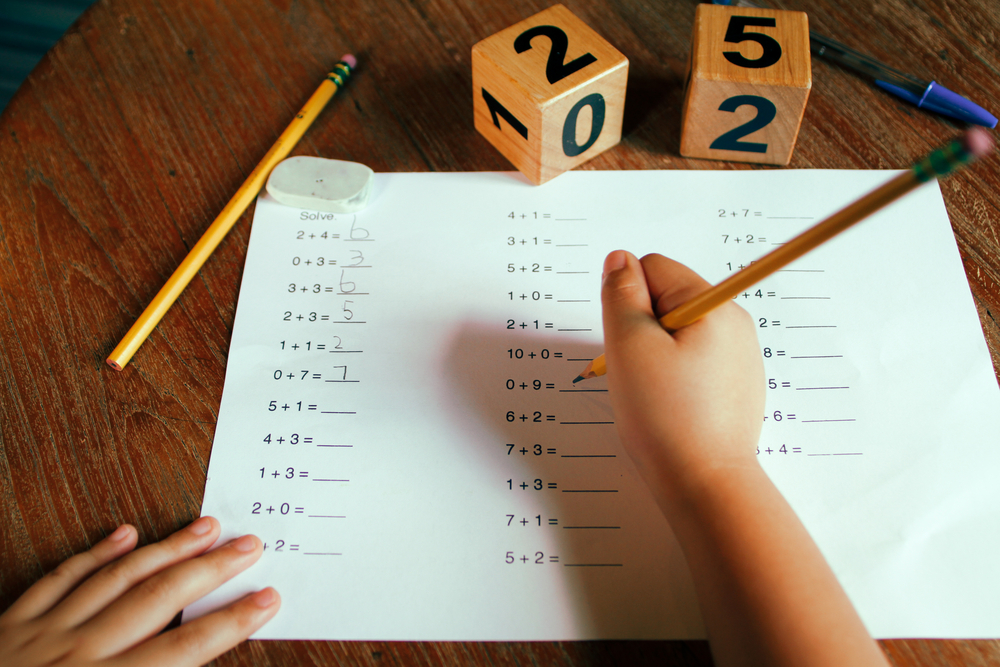


Number matching activities for children aged 3-6 are essential for their early mathematical development and cognitive skills. During this critical period, children develop foundational numeracy skills that set the stage for future mathematical understanding. Engaging in number matching activities helps young learners recognize and understand the concept of numbers, fostering both number identification and quantitative reasoning.
By matching numbers, children enhance their fine motor skills and hand-eye coordination, as they manipulate objects or cards associated with each numeral. This hands-on approach makes learning engaging and fun, keeping children motivated and attentive. Additionally, these activities can encourage critical thinking and problem-solving as children figure out how different numbers correlate with quantities.
For parents and teachers, supporting number matching activities can encourage a love for learning and build self-confidence as children successfully complete tasks. It also provides opportunities for meaningful one-on-one interaction, strengthening relationships and creating supportive learning environments. Overall, understanding the importance of number matching lays a solid foundation for arithmetic skills, paving the way for more complex mathematical concepts as children progress in their education. Prioritizing these activities means investing in better future learning outcomes and equipping children with lifelong skills.








