Understanding tally marks Numbers Worksheets for Ages 3-6
5 filtered results
-
From - To
Discover the "Understanding Tally Marks Numbers Worksheets" designed specifically for ages 3-6 at Kids Academy. These fun, educational activities introduce young learners to basic counting and number formation using tally marks. Perfectly tailored to early cognitive development, these worksheets help children grasp counting concepts, practice numerical writing, and enhance fine motor skills. Featuring engaging visuals and easy-to-follow instructions, each activity encourages interactive learning, ensuring your child enjoys every moment of their educational journey. Promote early math skills effectively with these playful and instructive worksheets, setting a strong foundation for future learning success.
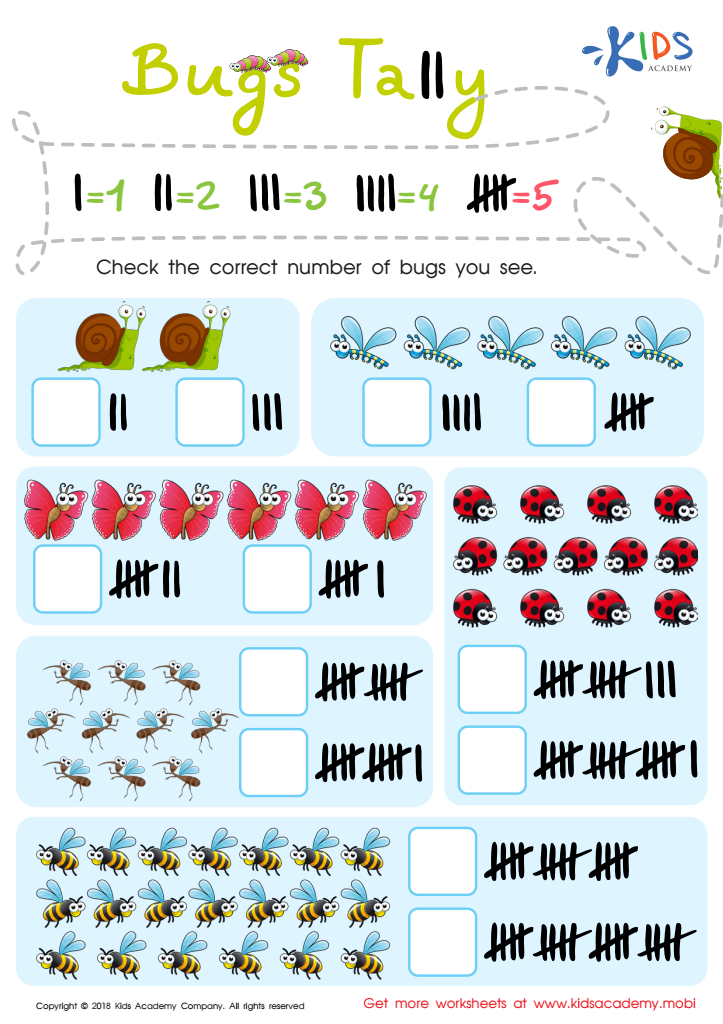
Bugs Tally Worksheet
 Assign to My Students
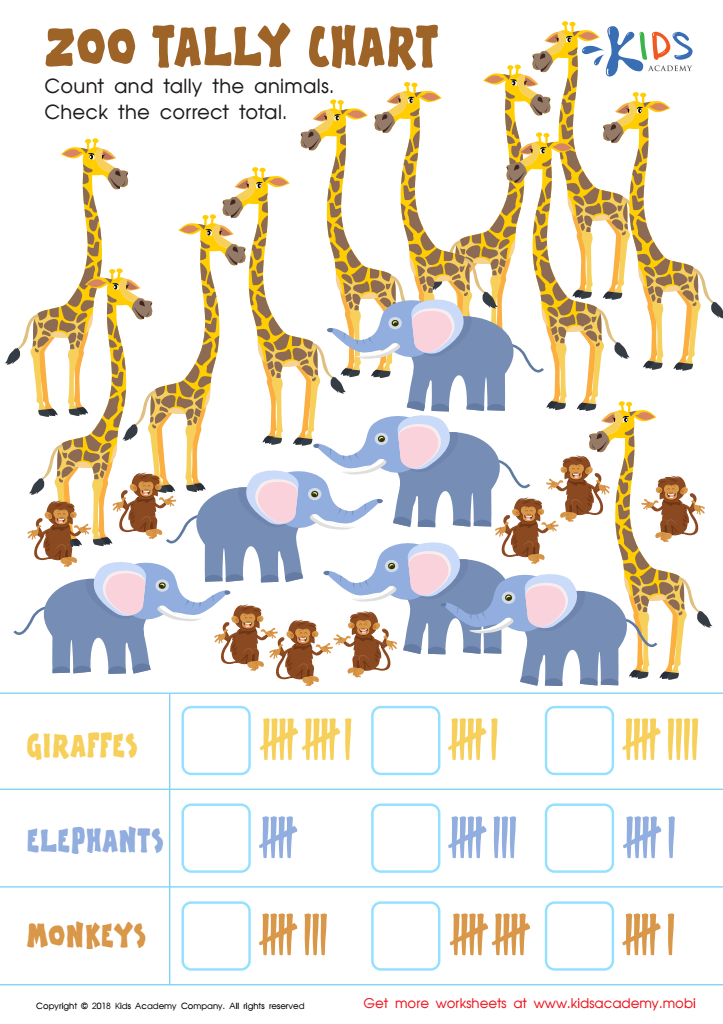
Zoo Tally Chart Worksheet
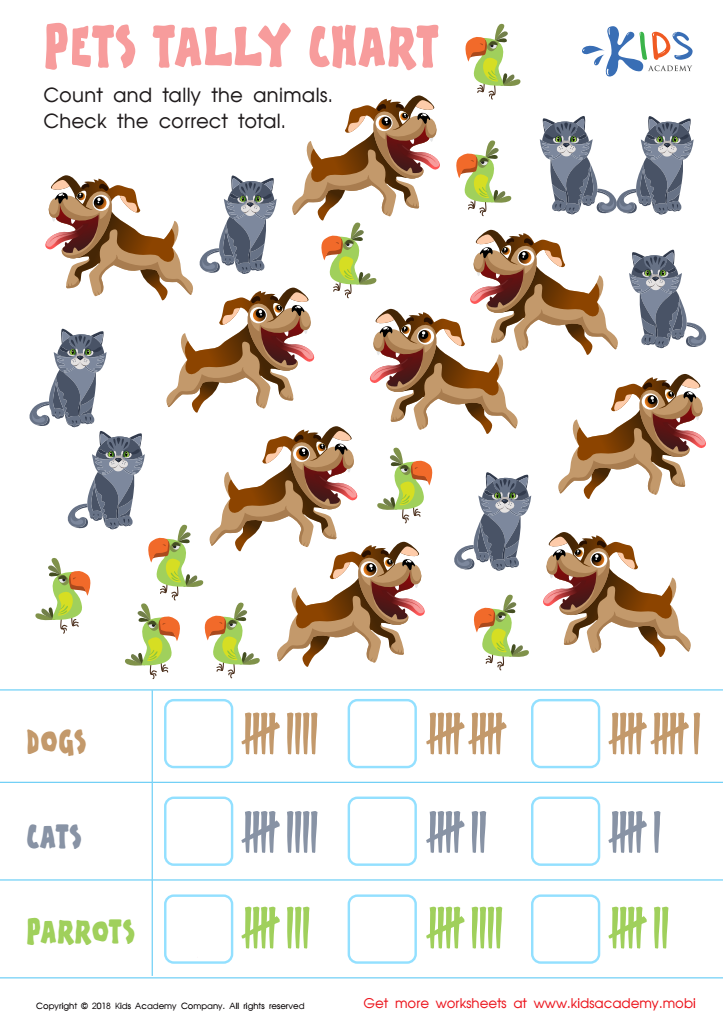
Pets Tally Chart Worksheet
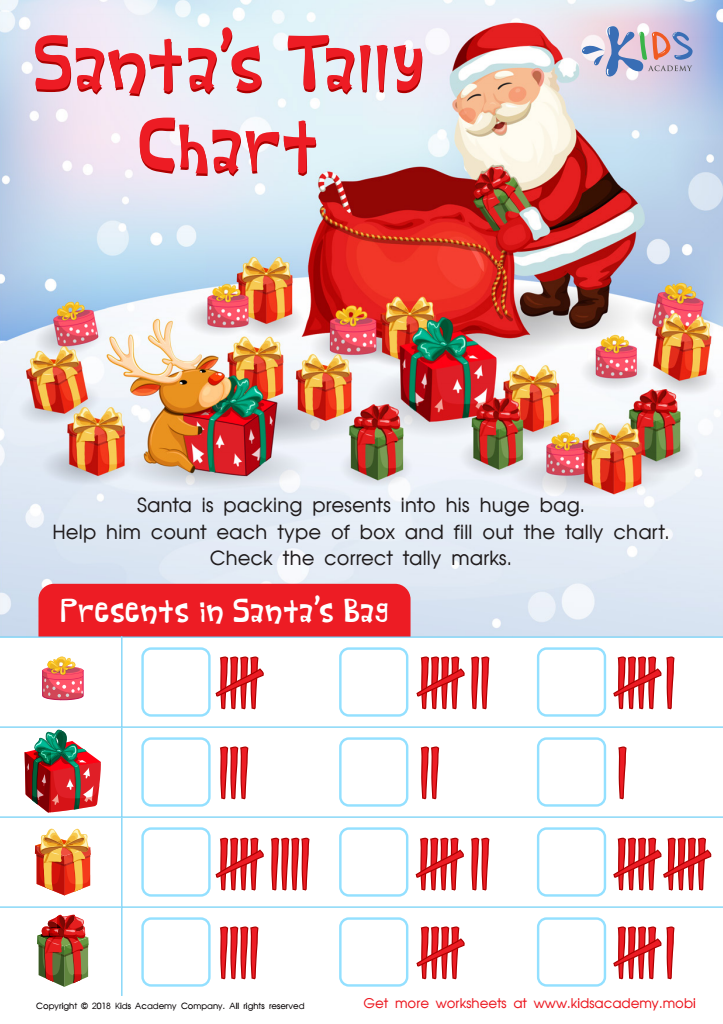
Santa Tally Chart Worksheet
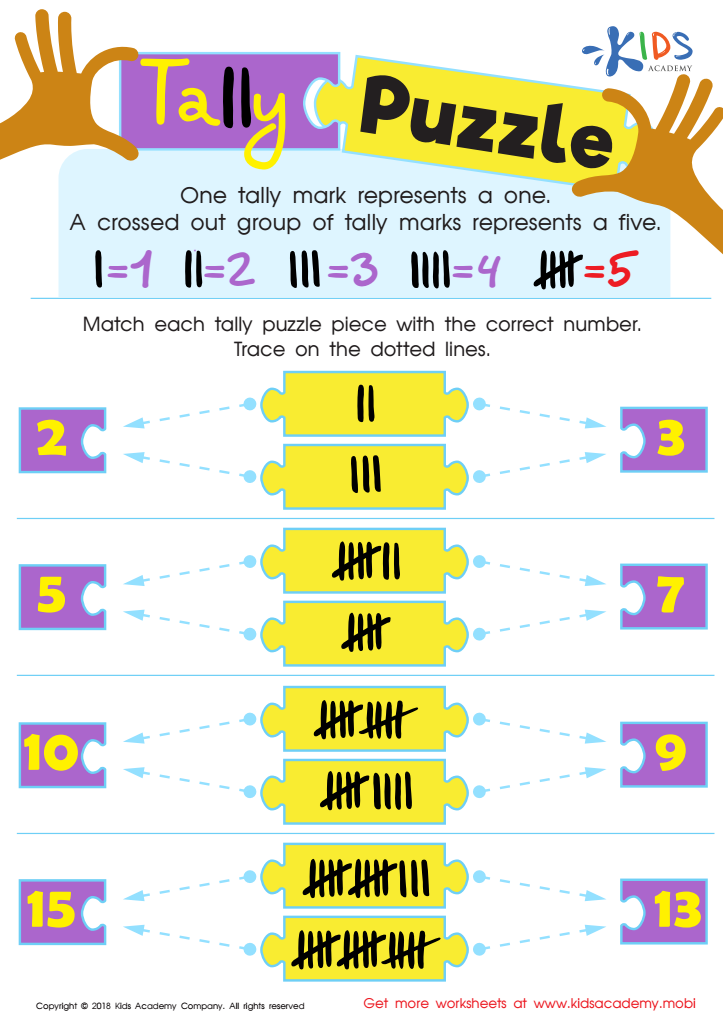
Tally Puzzle Worksheet







Understanding tally marks is essential for young children ages 3-6 as it lays the foundation for early numeracy skills. Tally marks are a simple, visual way to represent numbers, making abstract concepts more concrete for young minds. As children draw and recognize tally marks, they learn to count and can visually see groups of five, promoting a more advanced understanding of number grouping and arithmetic.
Parents and teachers should care about teaching tally marks because it introduces basic math principles in a fun and engaging manner. This early exposure helps develop fine motor skills as children practice drawing straight lines. Associating numbers with physical actions (like making a mark) also strengthens memory and counting skills.
Moreover, using tally marks aligns with various hands-on learning activities, fostering an interactive learning environment that is crucial at this developmental stage. It encourages independent counting and keeps children motivated and focused on their tasks, as the process resembles a game.
By grasping the concept of tally marks, children gain confidence in basic math, laying a solid foundation for more complex math skills in future education. Hence, integrating tally marks into early learning ensures a smooth transition to higher mathematical concepts, supporting academic success.








