Check out this FREE Trial Lesson on Math for age 3-6!

A

Favorites
With answer key
Interactive
  • 3-6
  • Basic Addition Skills
  • Math
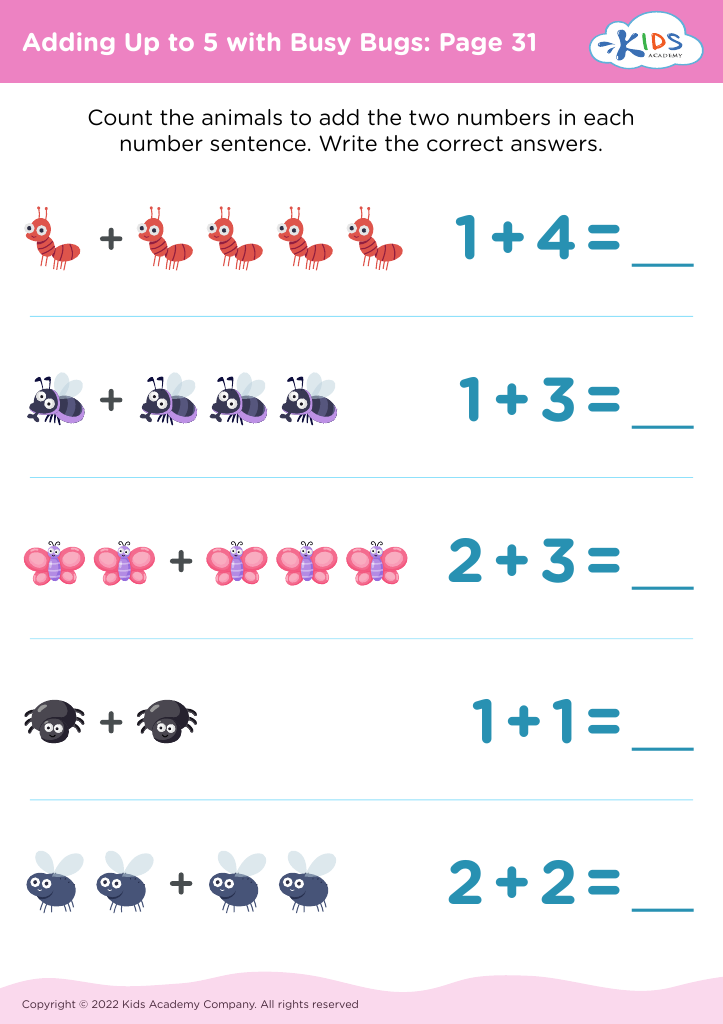
Adding Up to 5 with Busy Bugs: Page 31
Worksheet
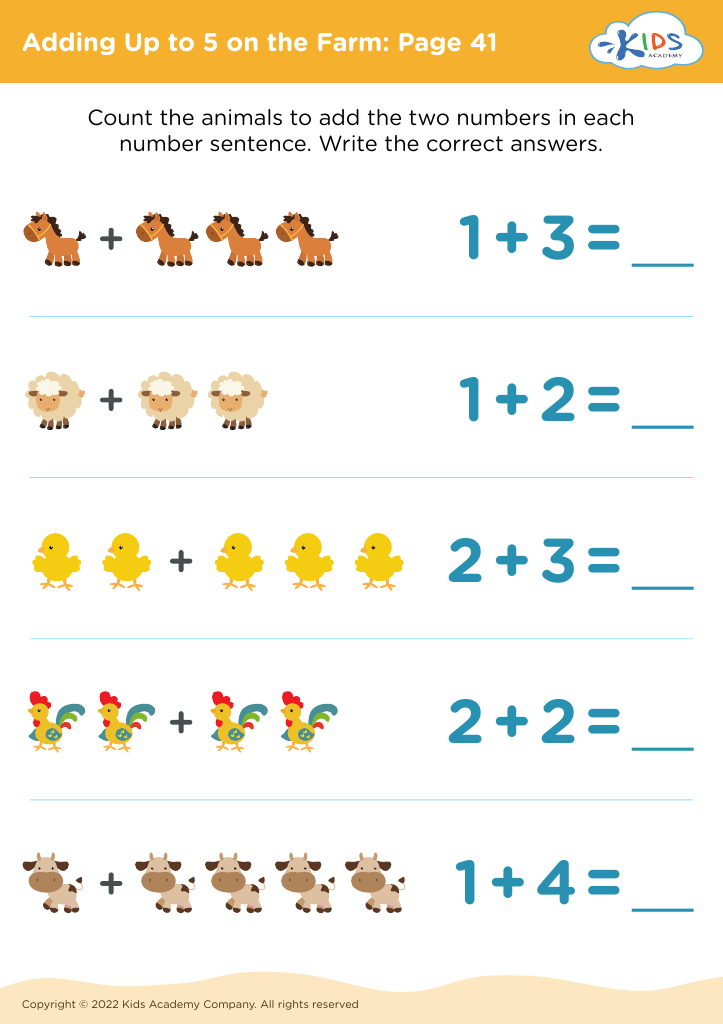
Adding Up to 5 on the Farm: Page 41
Worksheet
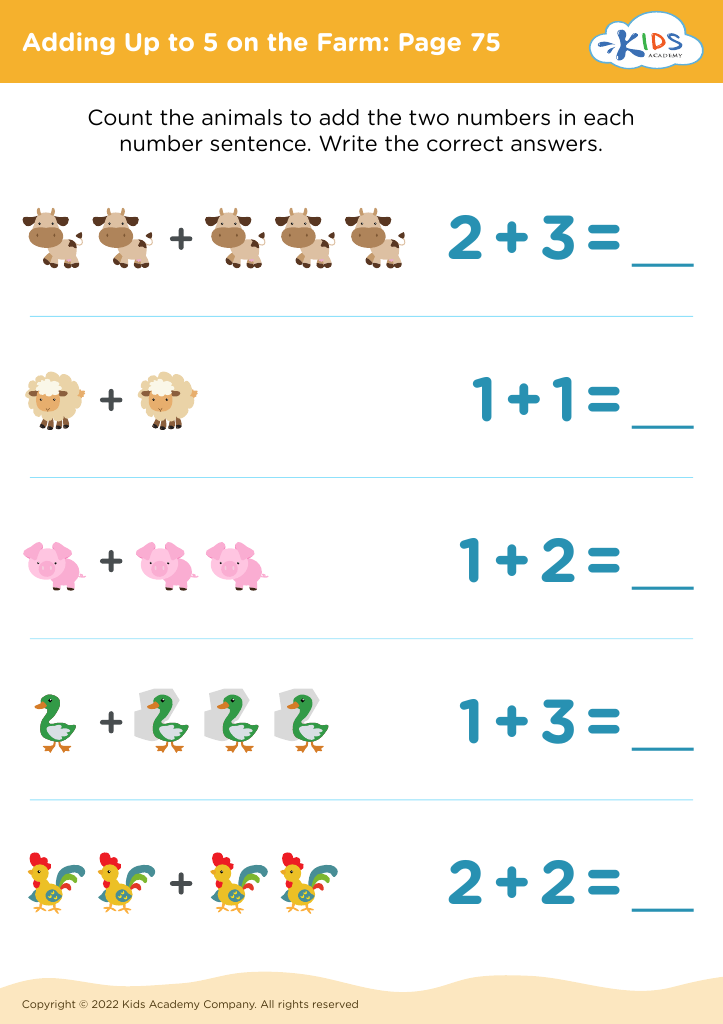
Adding Up to 5 on the Farm: Page 75
Worksheet
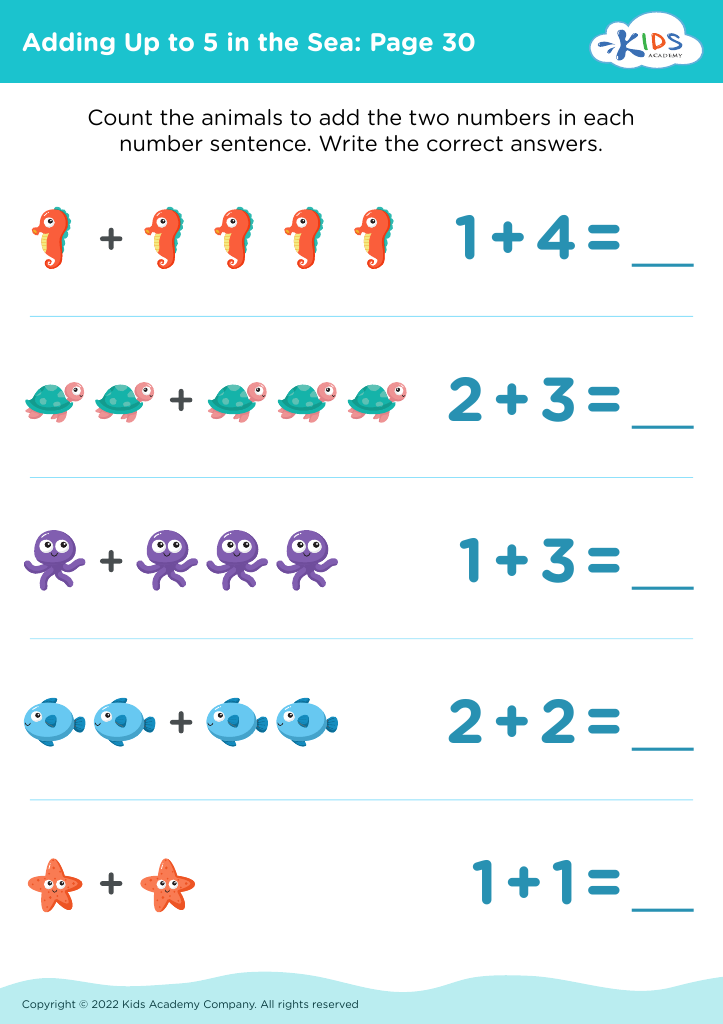
Adding Up to 5 in the Sea: Page 30
Worksheet
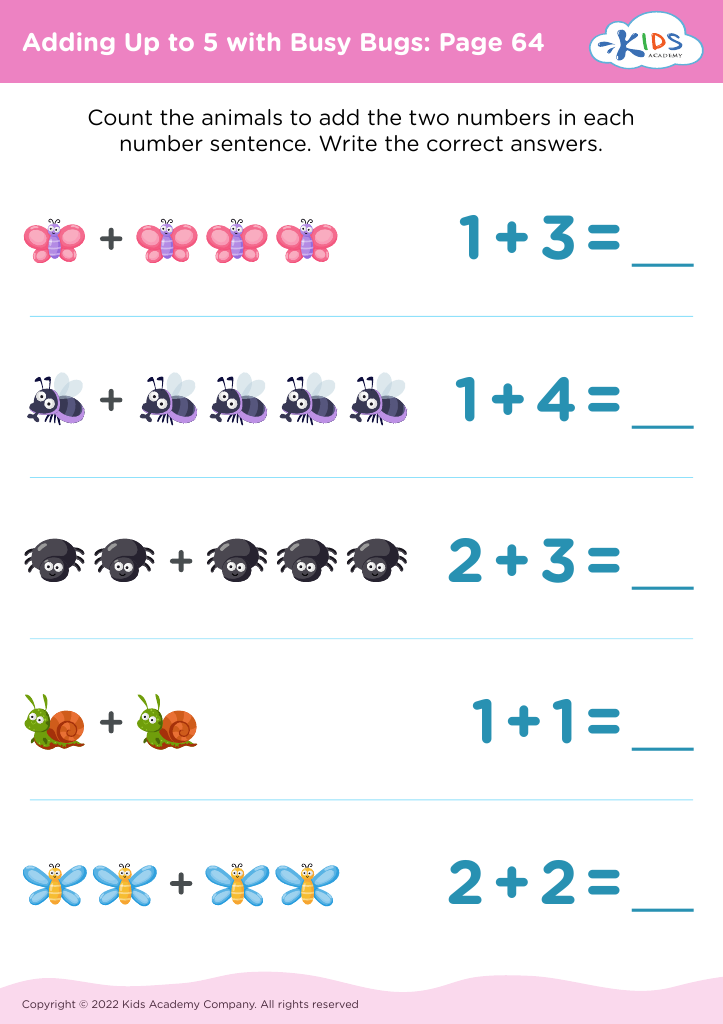
Adding Up to 5 with Busy Bugs: Page 64
Worksheet
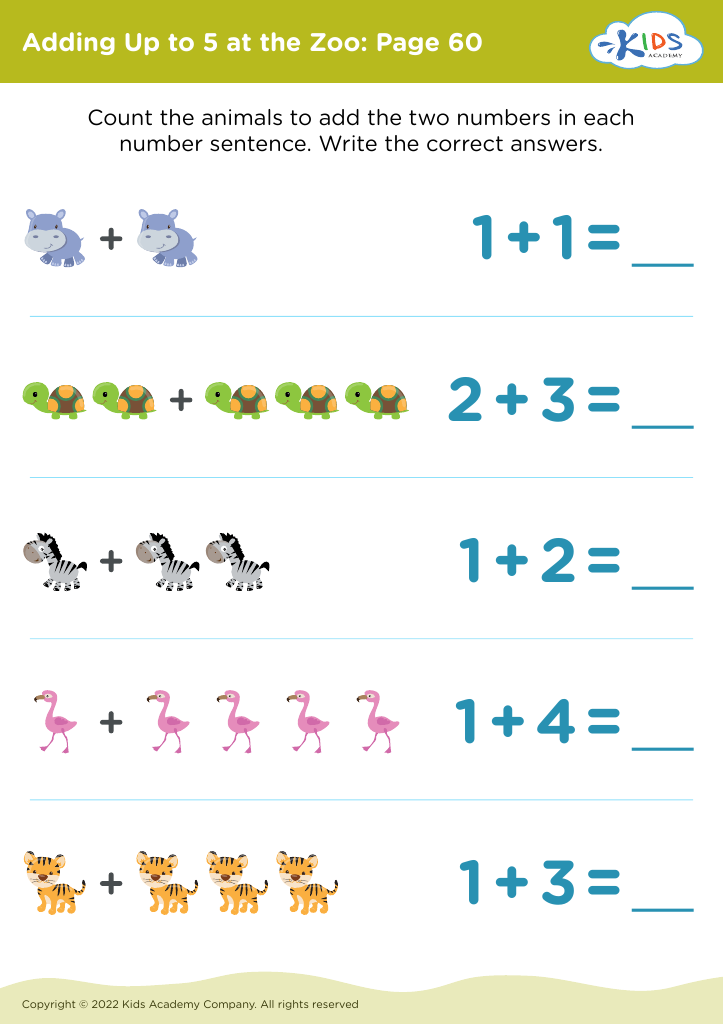
Adding Up to 5 at the Zoo: Page 60
Worksheet
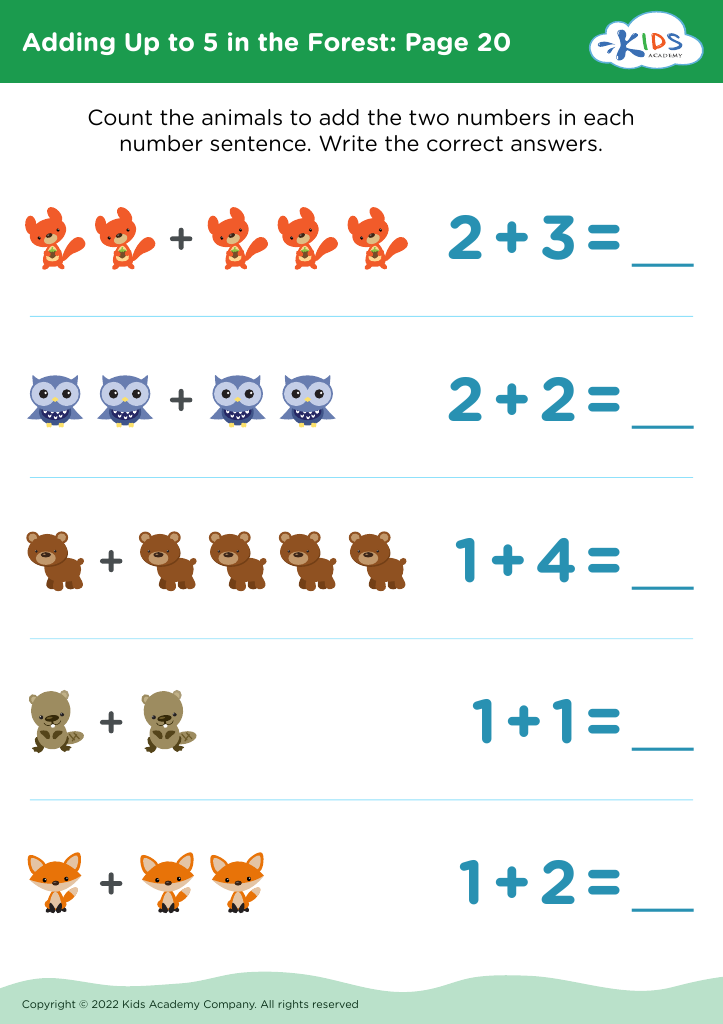
Adding Up to 5 in the Forest: Page 20
Worksheet
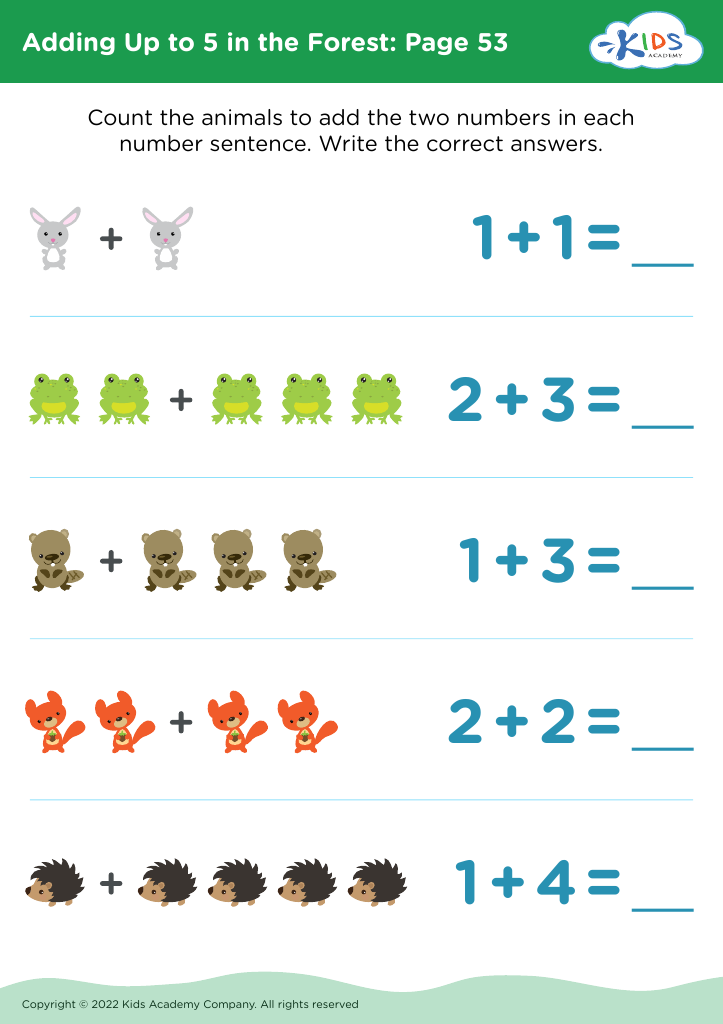
Adding Up to 5 in the Forest: Page 53
Worksheet
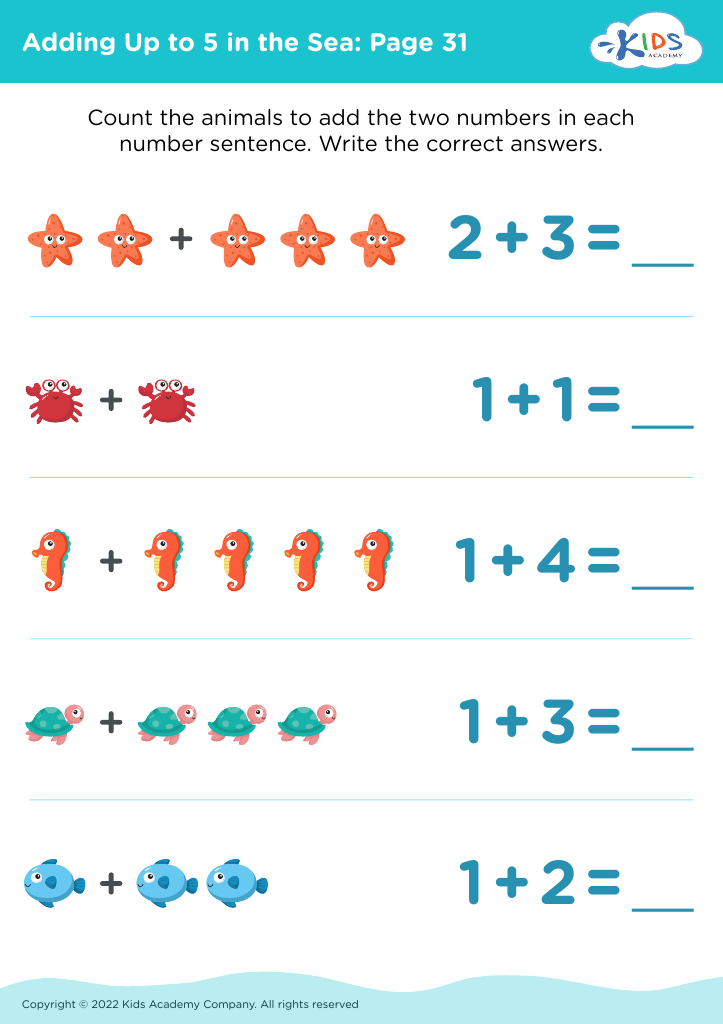
Adding Up to 5 in the Sea: Page 31
Worksheet
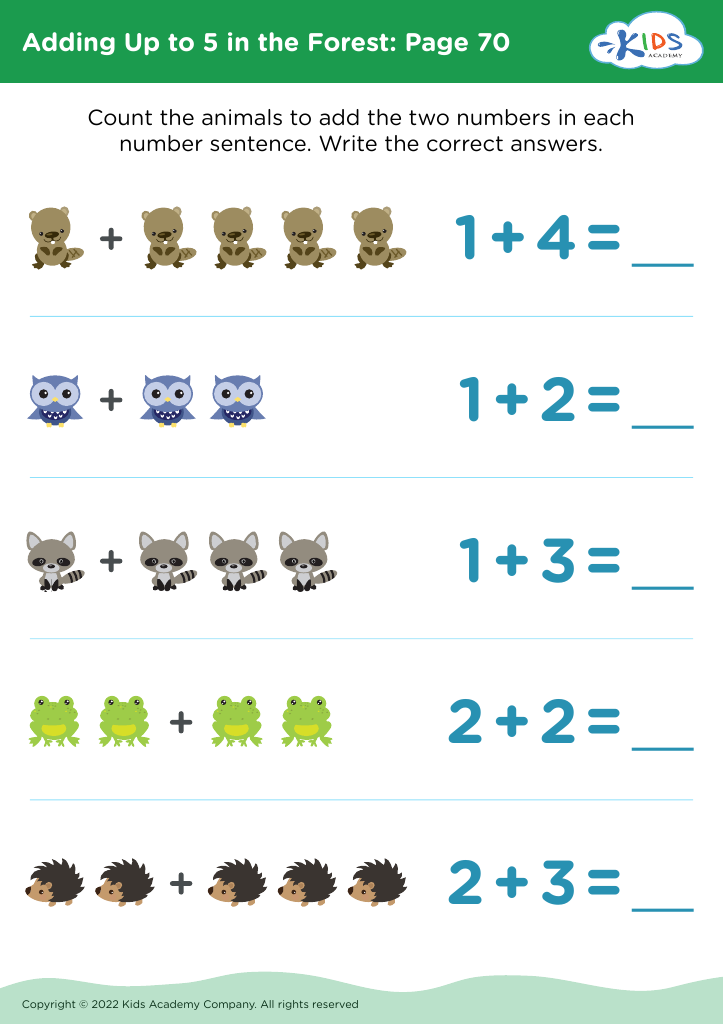
Adding Up to 5 in the Forest: Page 70
Worksheet
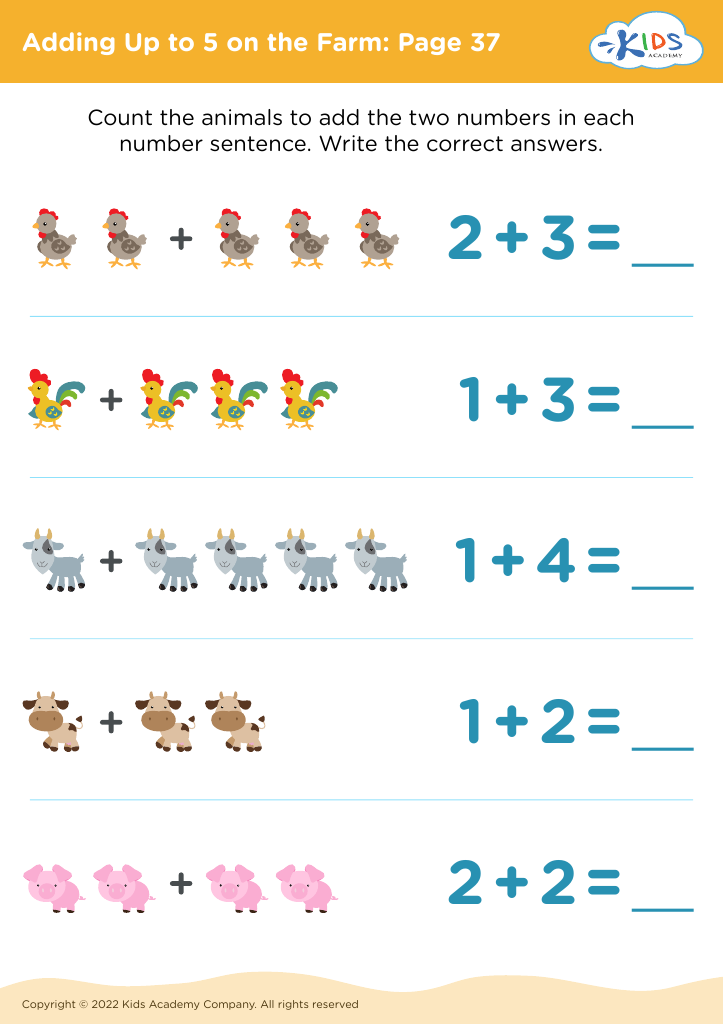
Adding Up to 5 on the Farm: Page 37
Worksheet
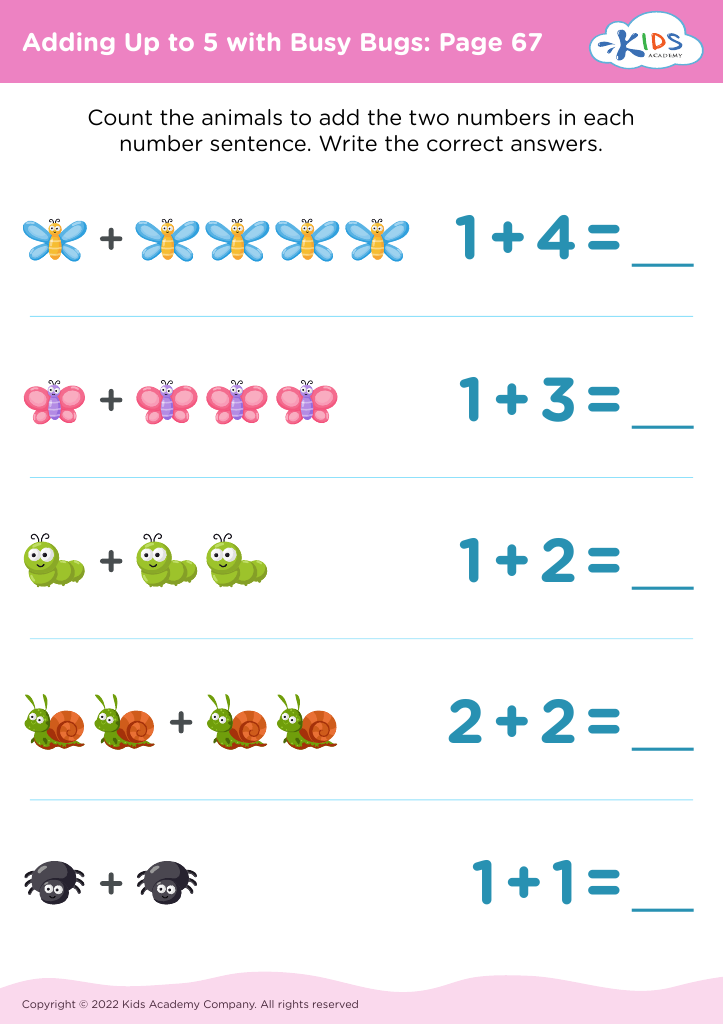
Adding Up to 5 with Busy Bugs: Page 67
Worksheet
Dot to Dot Numbers Printables

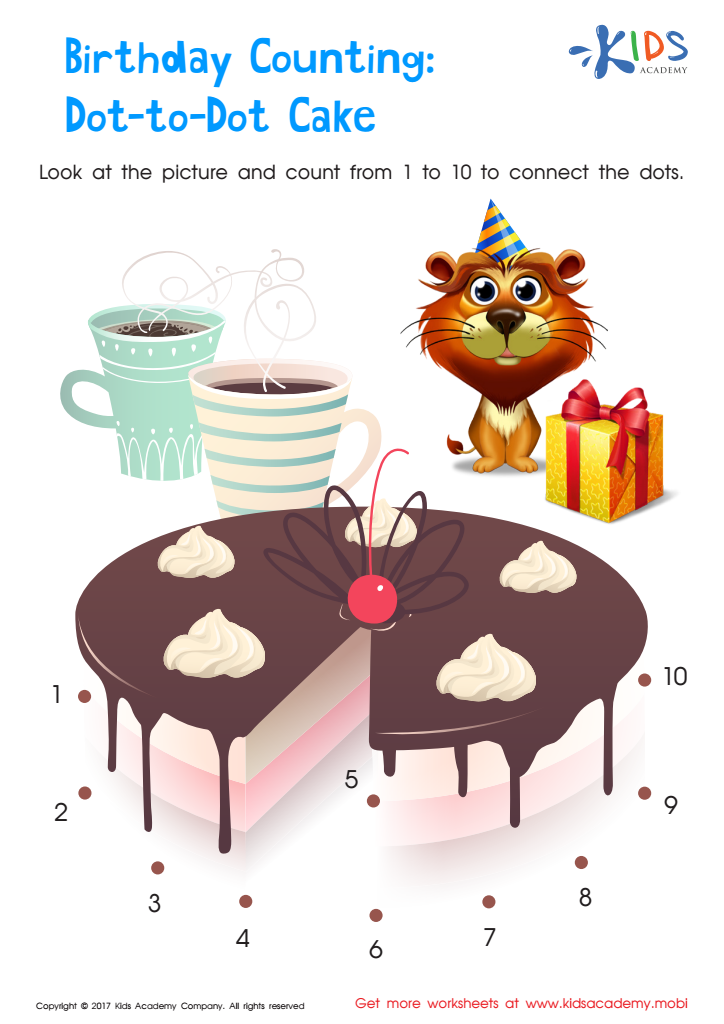
Birthday Counting Connect Dots Worksheet

Help your child count to ten and draw curved lines with this birthday cake dot to dot! Practice numeracy and problem solving skills, and enjoy the fun of creating a picture. Then, use it as a reminder for your child’s birthday and learn about the days and months of the year.
Birthday Counting Connect Dots Worksheet
Worksheet
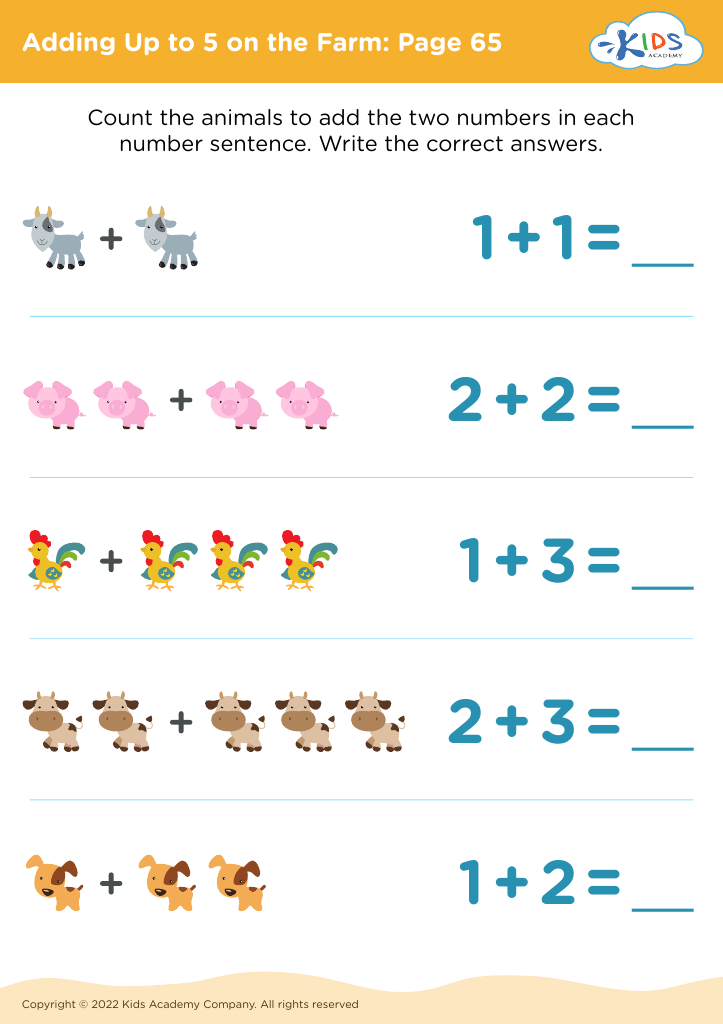
Adding Up to 5 on the Farm: Page 65
Worksheet
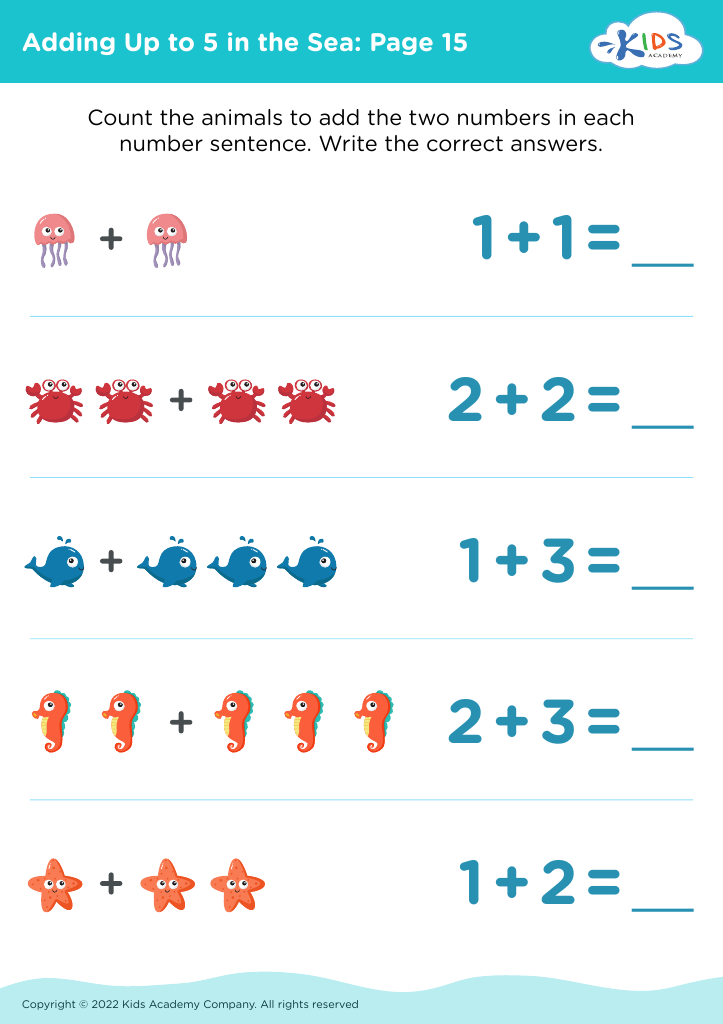
Adding Up to 5 in the Sea: Page 15
Worksheet
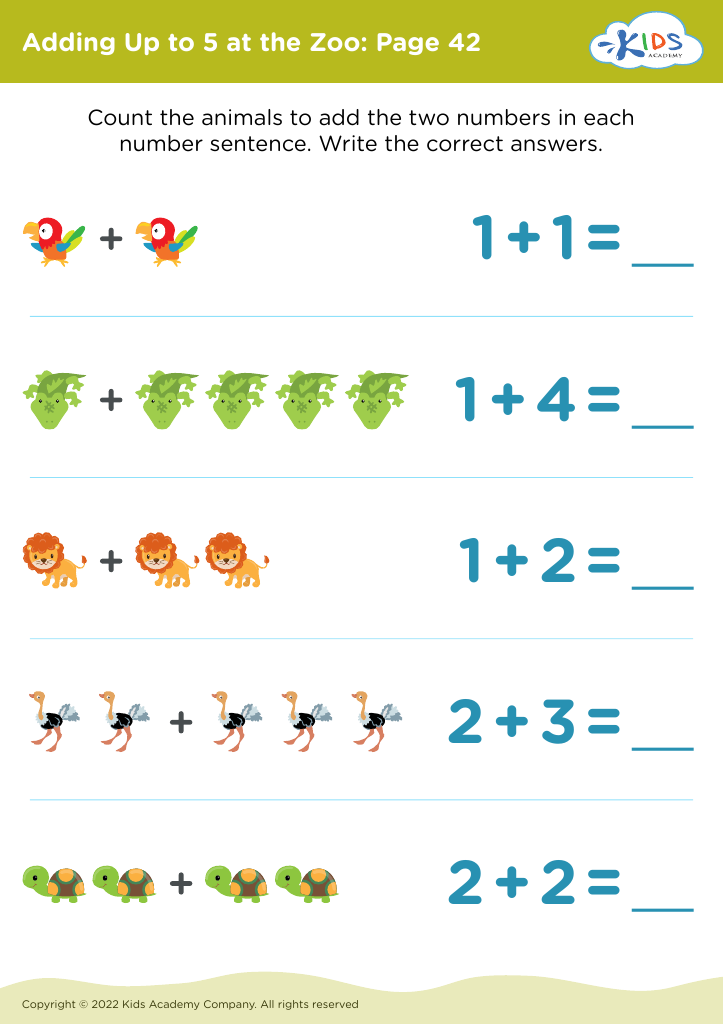
Adding Up to 5 at the Zoo: Page 42
Worksheet
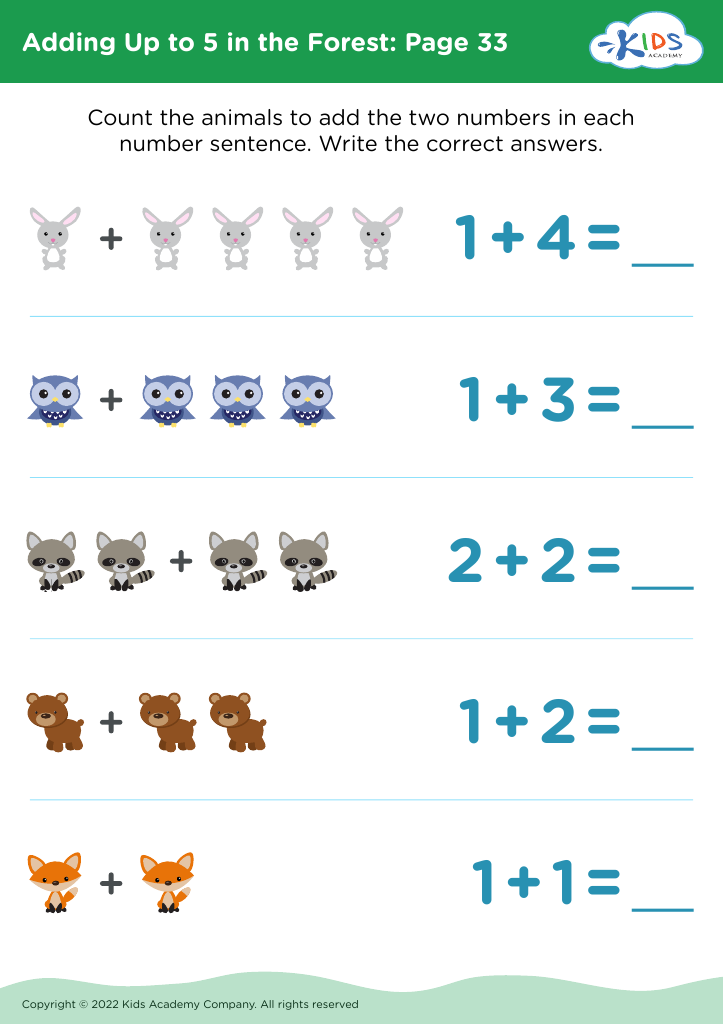
Adding Up to 5 in the Forest: Page 33
Worksheet
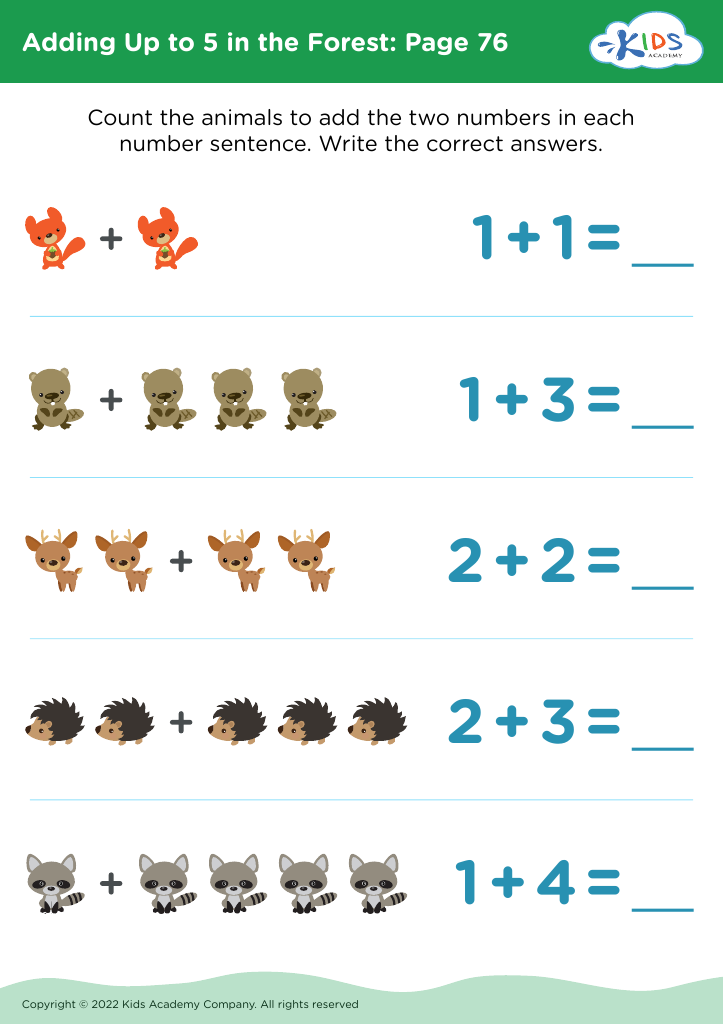
Adding Up to 5 in the Forest: Page 76
Worksheet
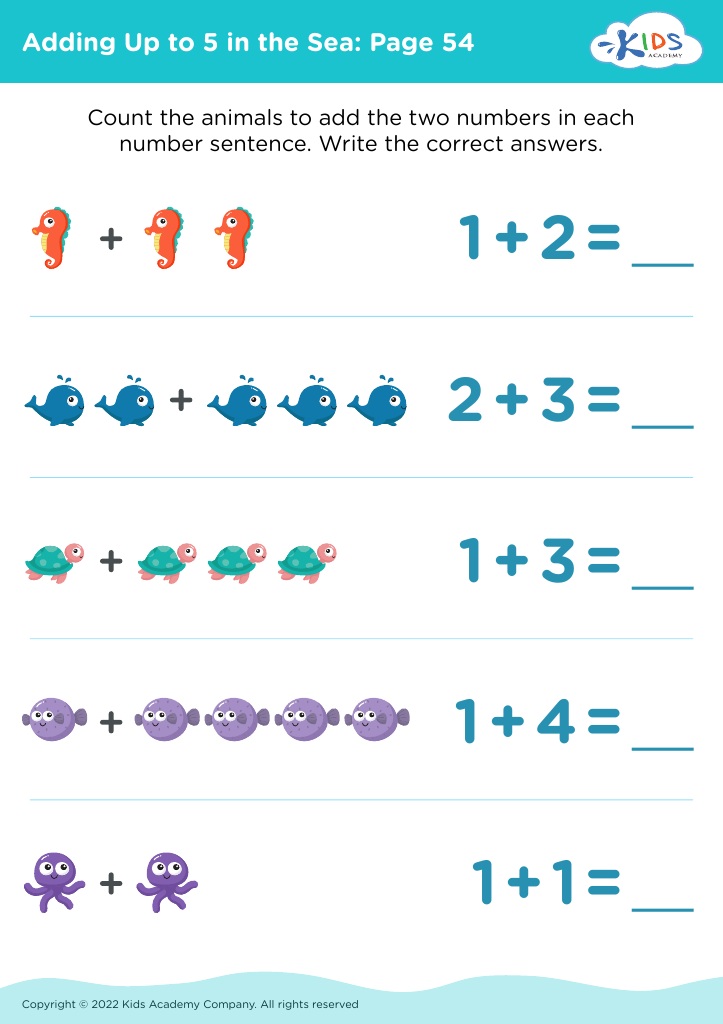
Adding Up to 5 in the Sea: Page 54
Worksheet
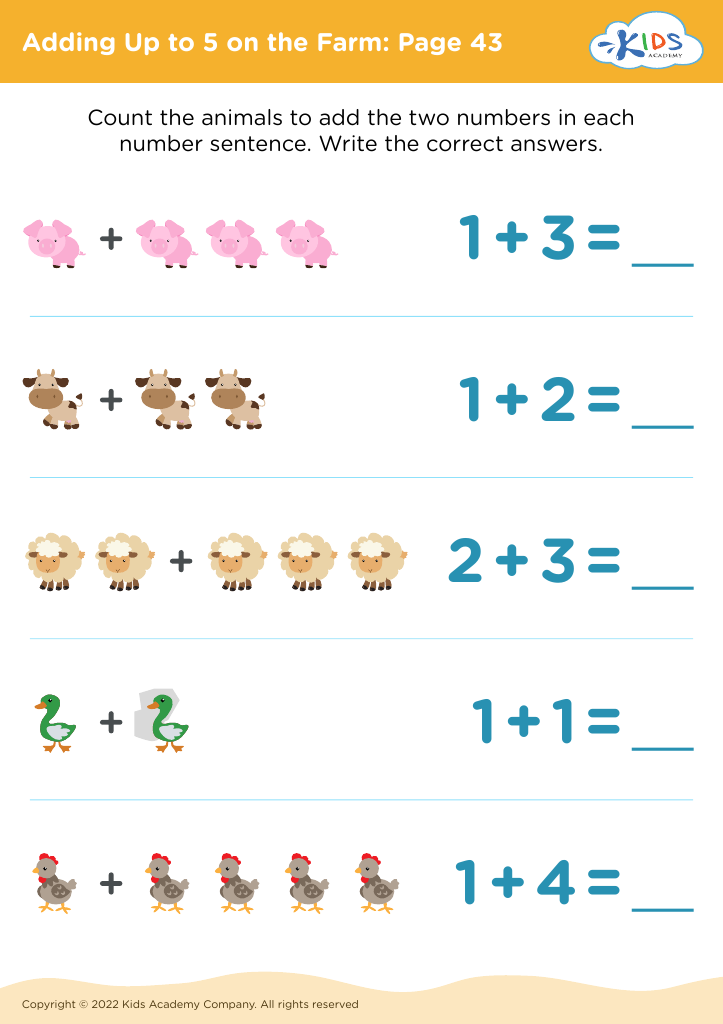
Adding Up to 5 on the Farm: Page 43
Worksheet
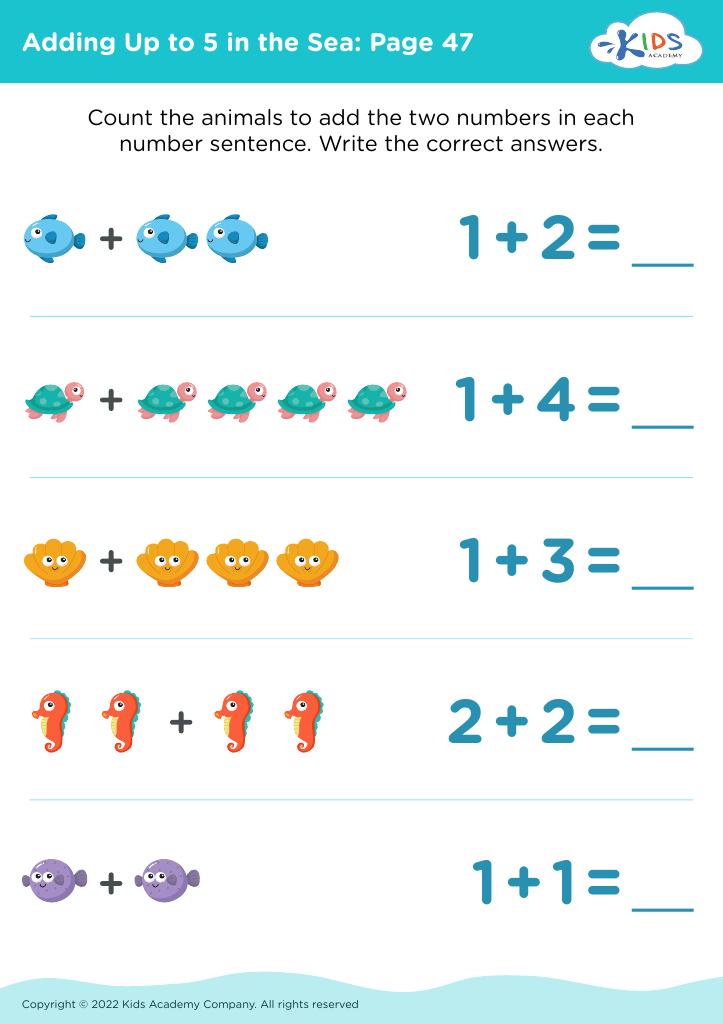
Adding Up to 5 in the Sea: Page 47
Worksheet
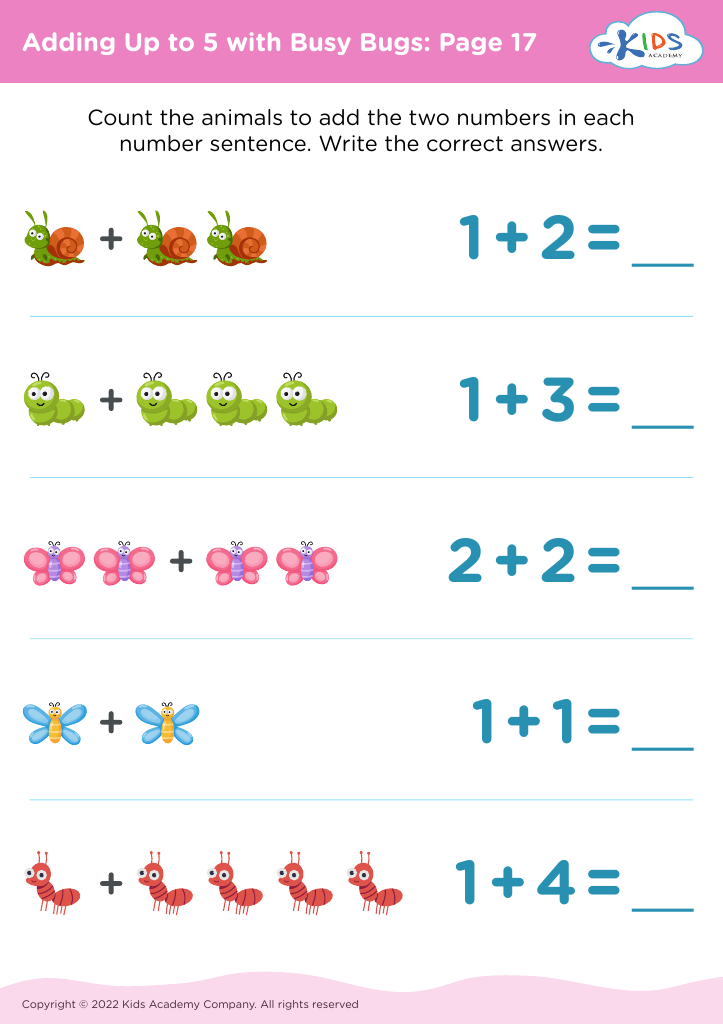
Adding Up to 5 with Busy Bugs: Page 17
Worksheet
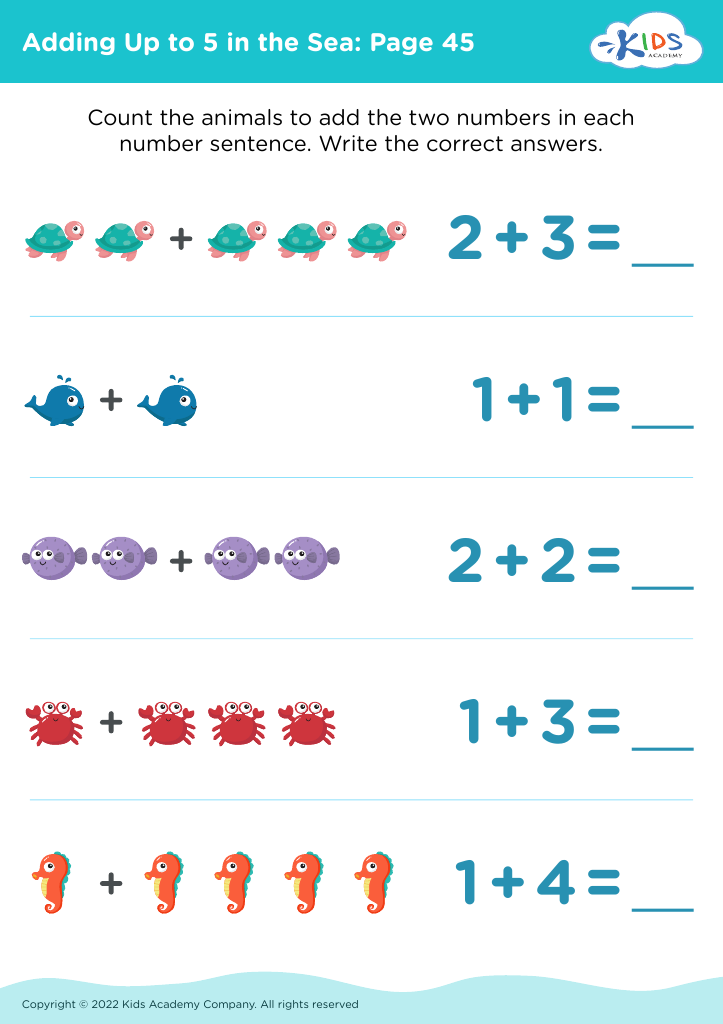
Adding Up to 5 in the Sea: Page 45
Worksheet
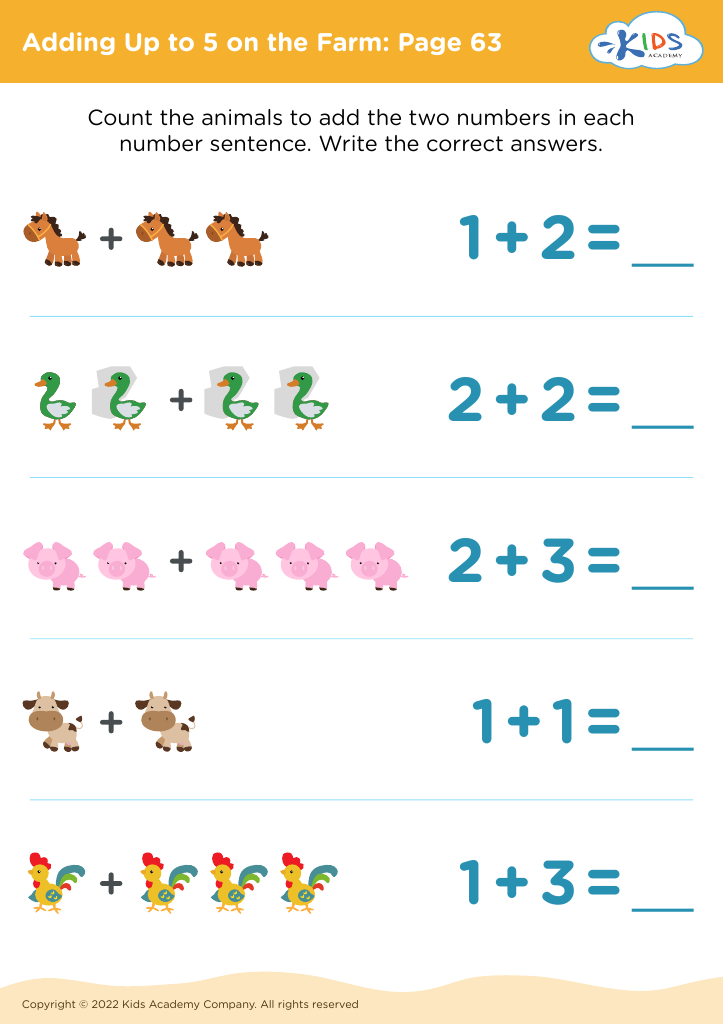
Adding Up to 5 on the Farm: Page 63
Worksheet


Basic addition skills are crucial for children aged 3-6 as they lay the foundation for future mathematical understanding and problem-solving abilities. At this tender age, children are naturally curious and eager to learn. Introducing them to basic addition not only enhances their cognitive skills but also develops their logical thinking and analytical abilities.

As children engage with numbers, they cultivate essential counting skills and number recognition, which are vital as they progress in their education. Understanding basic math concepts builds confidence, and positive early experiences with mathematics can foster a lifelong love for the subject.

Additionally, these skills are integral for daily activities and real-world situations, such as sharing objects and managing quantities. They encourage social and emotional skills as well, as children learn about cooperation, taking turns, and resolving conflicts during mathematical play.

By promoting basic addition skills, parents and teachers give children a critical advantage, preparing them for more advanced concepts in the future. Ultimately, prioritizing early math education enriches a child's overall learning experience, supports their academic growth, and equips them with essential life skills.