Shape identification Math Worksheets for Ages 3-6
16 filtered results
-
From - To
Explore our engaging Shape Identification Math Worksheets designed specifically for children ages 3-6! These vibrant and interactive worksheets help young learners recognize, name, and differentiate various shapes, laying a strong foundation for essential math skills. Through fun activities like tracing, coloring, and matching, children will develop their cognitive and fine motor skills while enjoying the learning process. Our worksheets align with early learning standards and are perfect for both classroom and home use. Make math enjoyable for your little ones and watch their confidence soar as they master shape recognition. Start their learning journey today with our delightful shape worksheets!
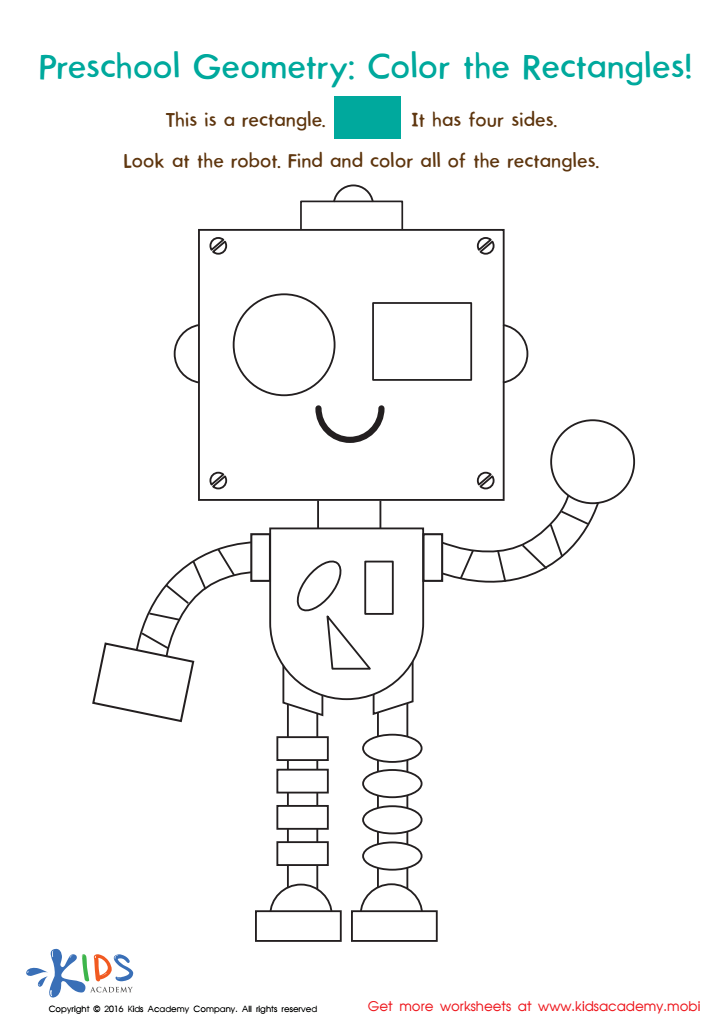
Geometry Worksheet
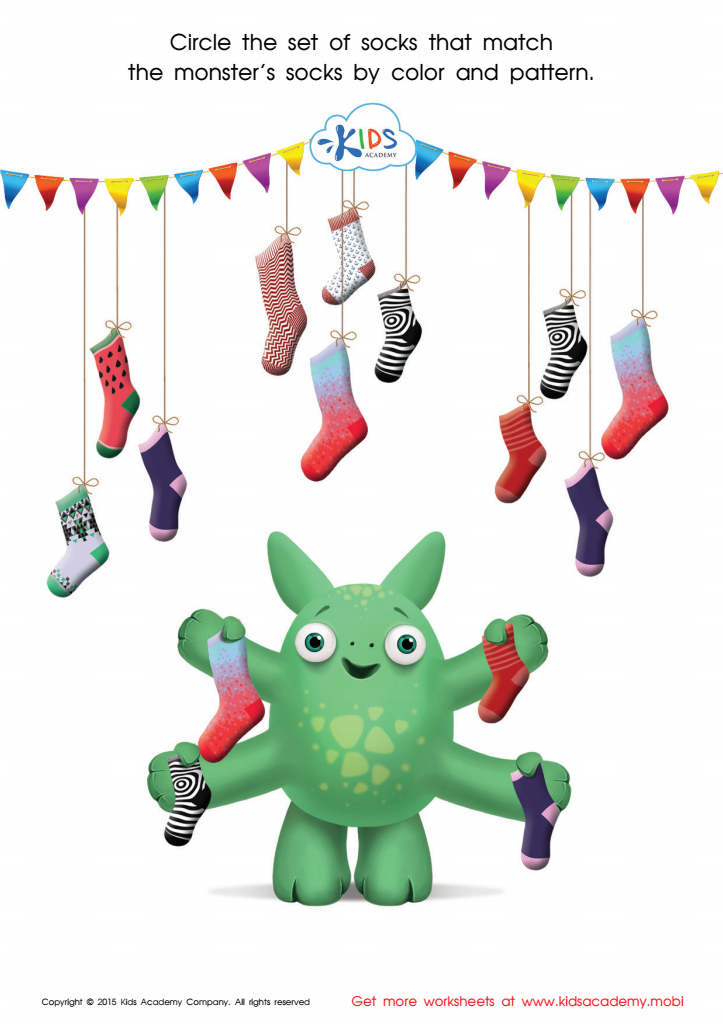
Sort the Monster's Socks Worksheet
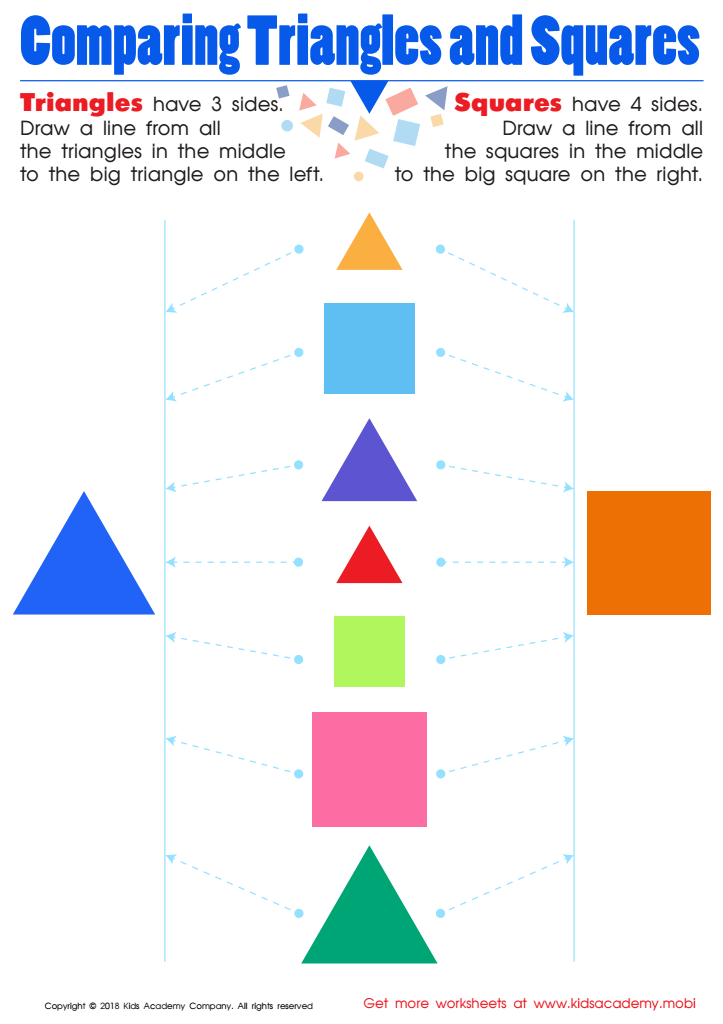
Comparing Triangles Squares Worksheet
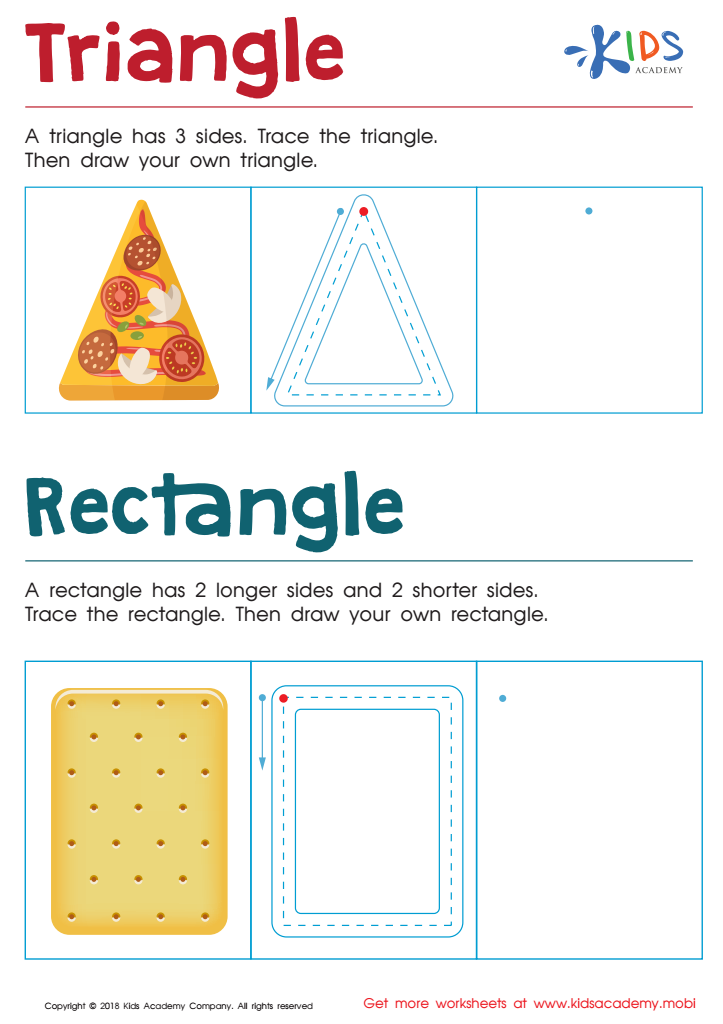
Triangle Rectangle Worksheet
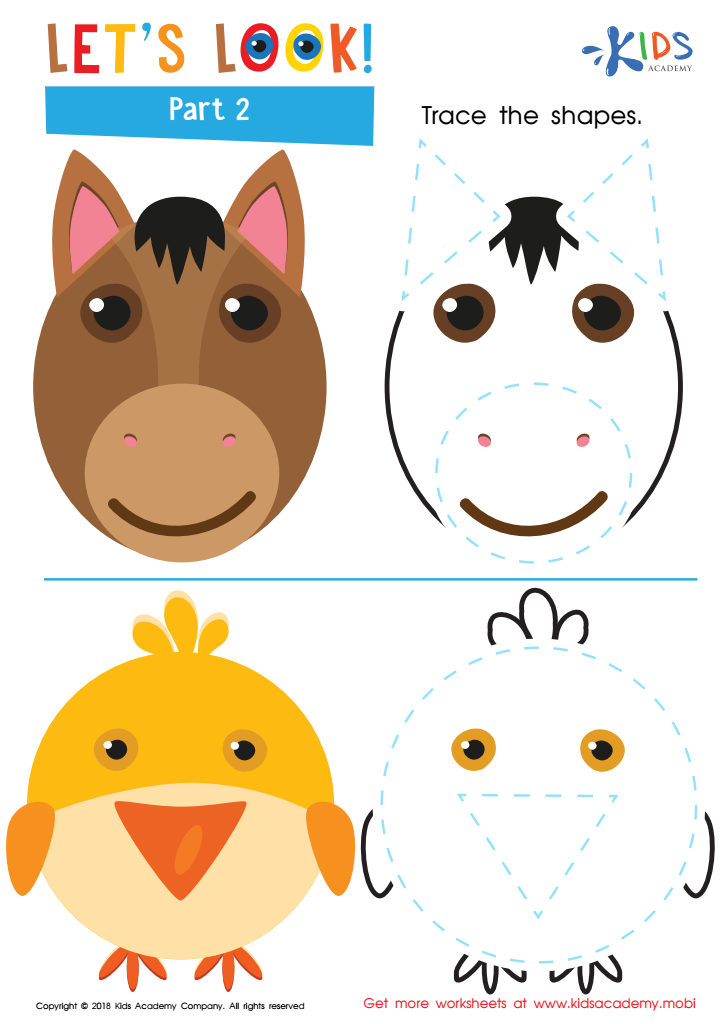
Let's Look! Part 2 Worksheet
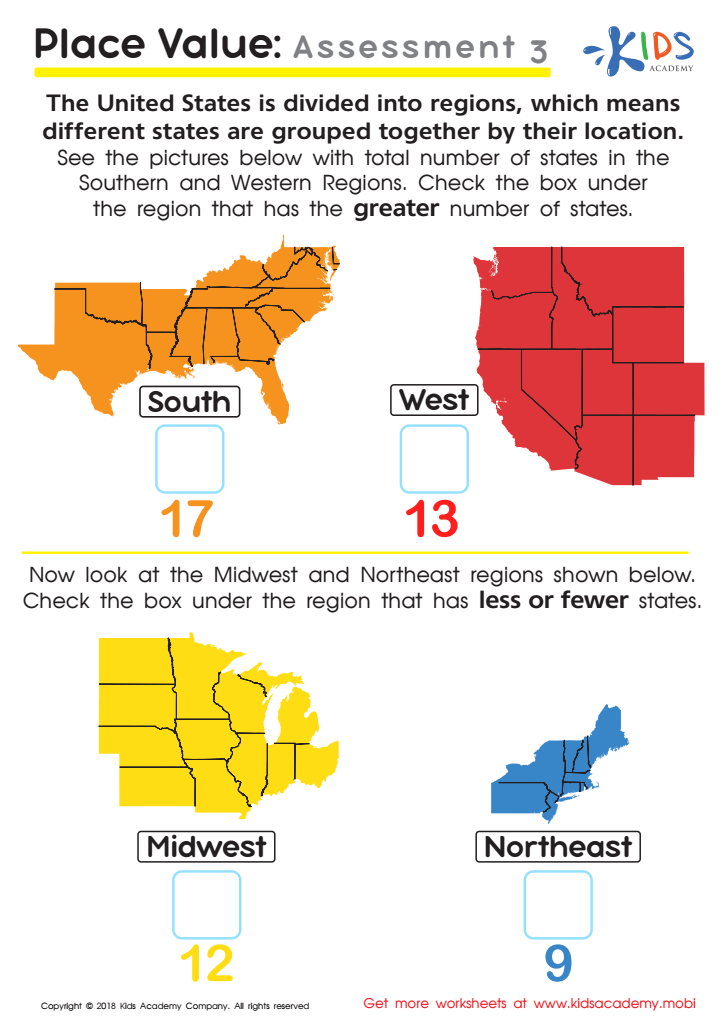
Place Value: Assessment 3 Worksheet
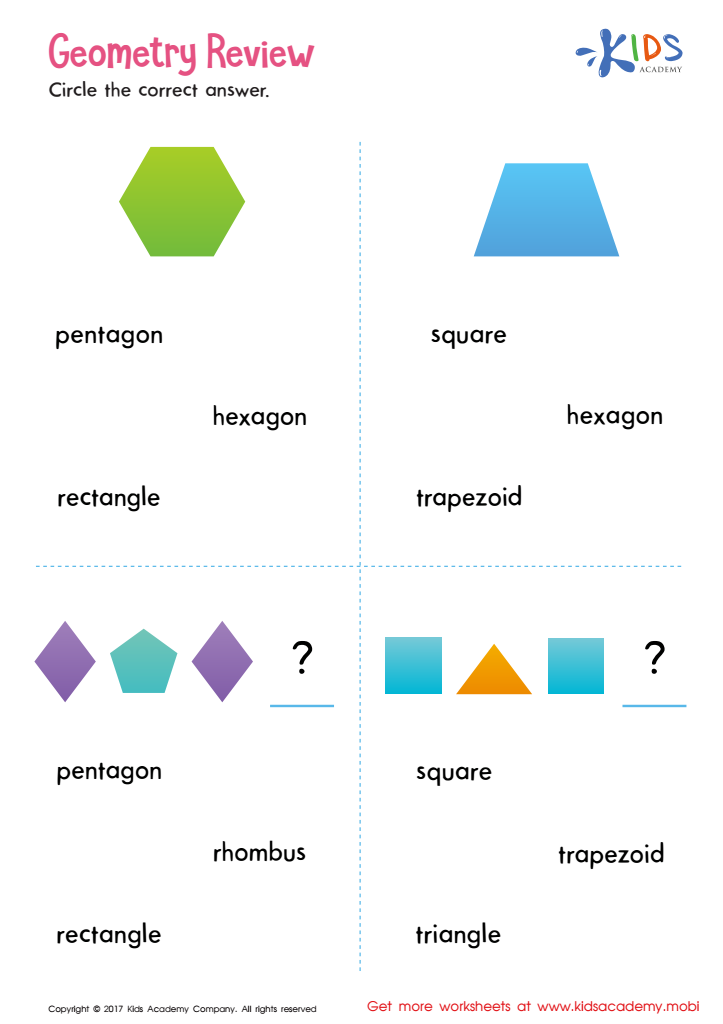
Geometry Review Printable
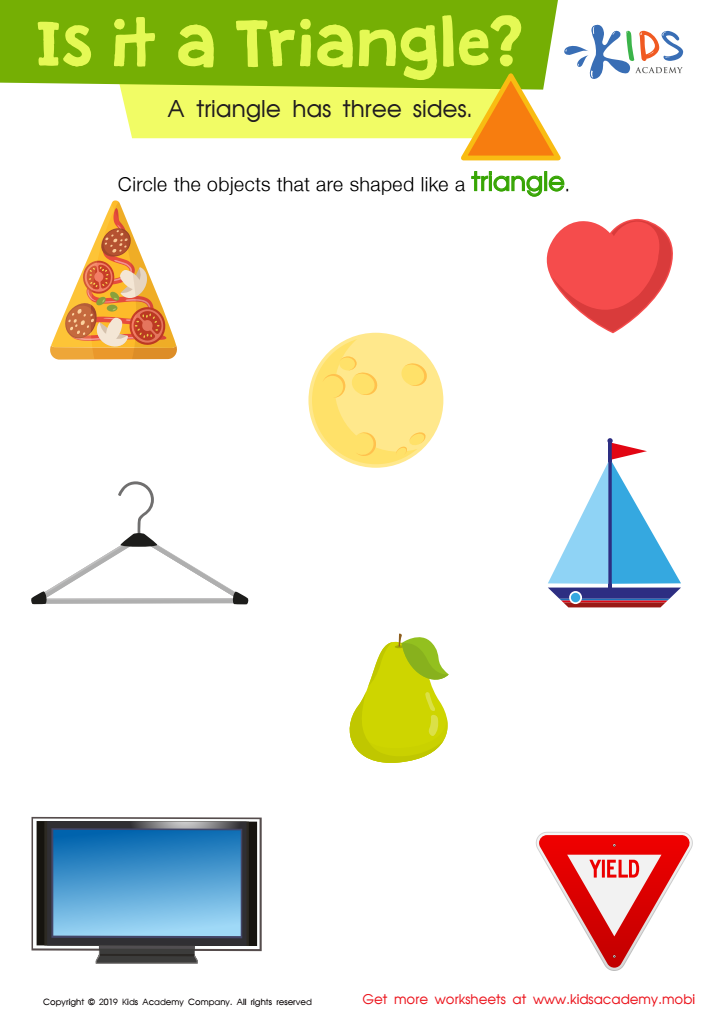
Is It a Triangle? Worksheet
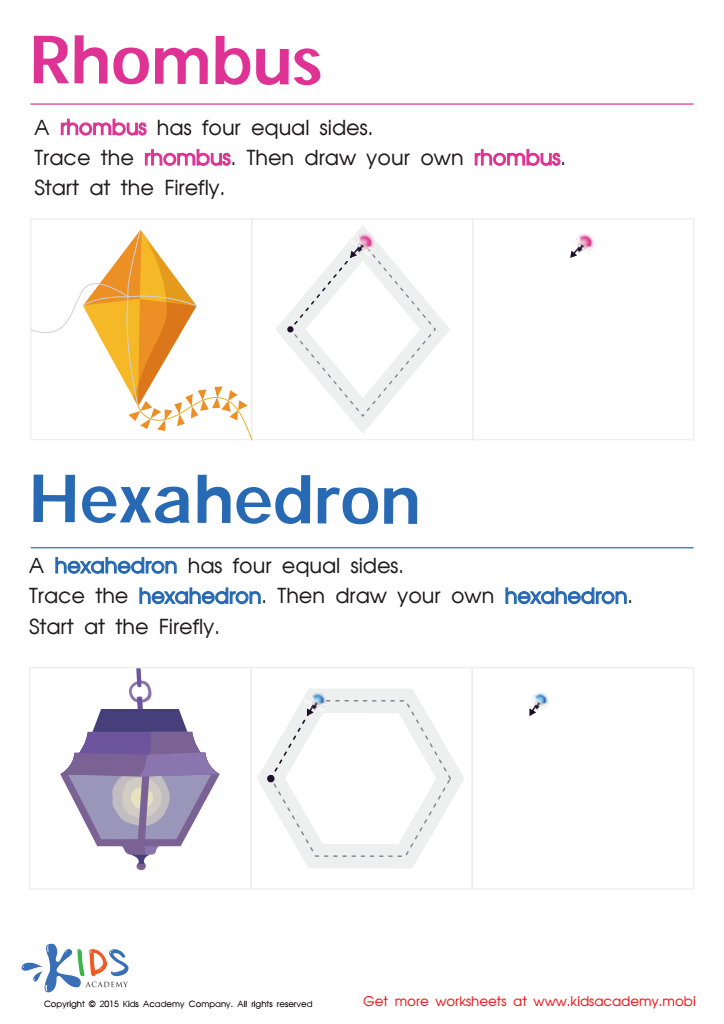
Draw a Rhombus And a Hexahedron Printable
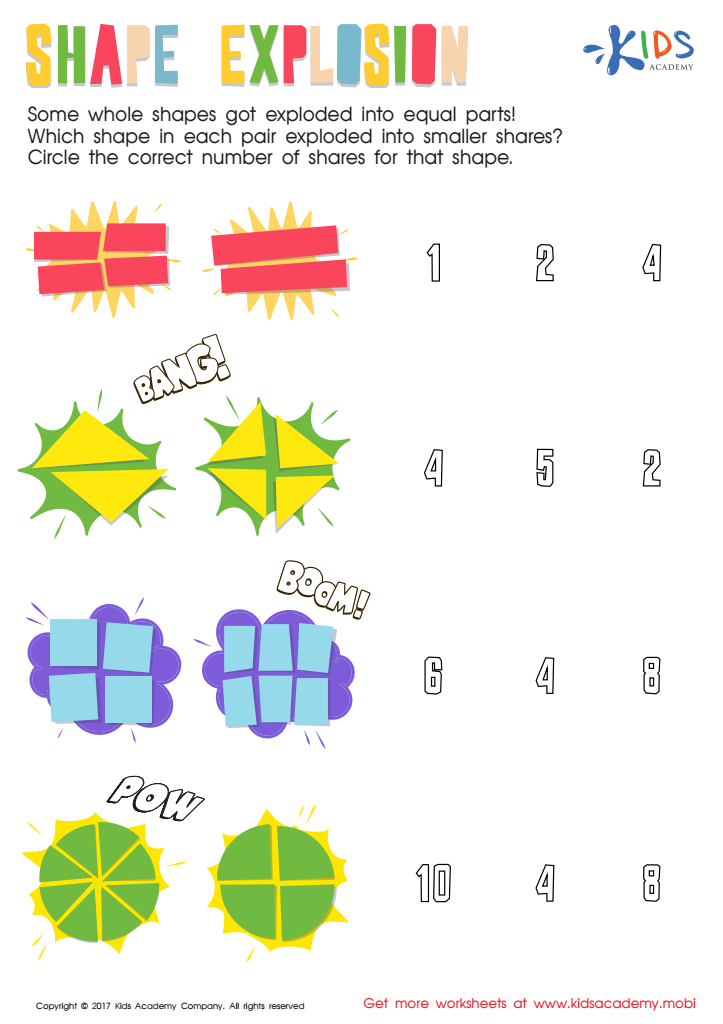
Shape Explosion Worksheet
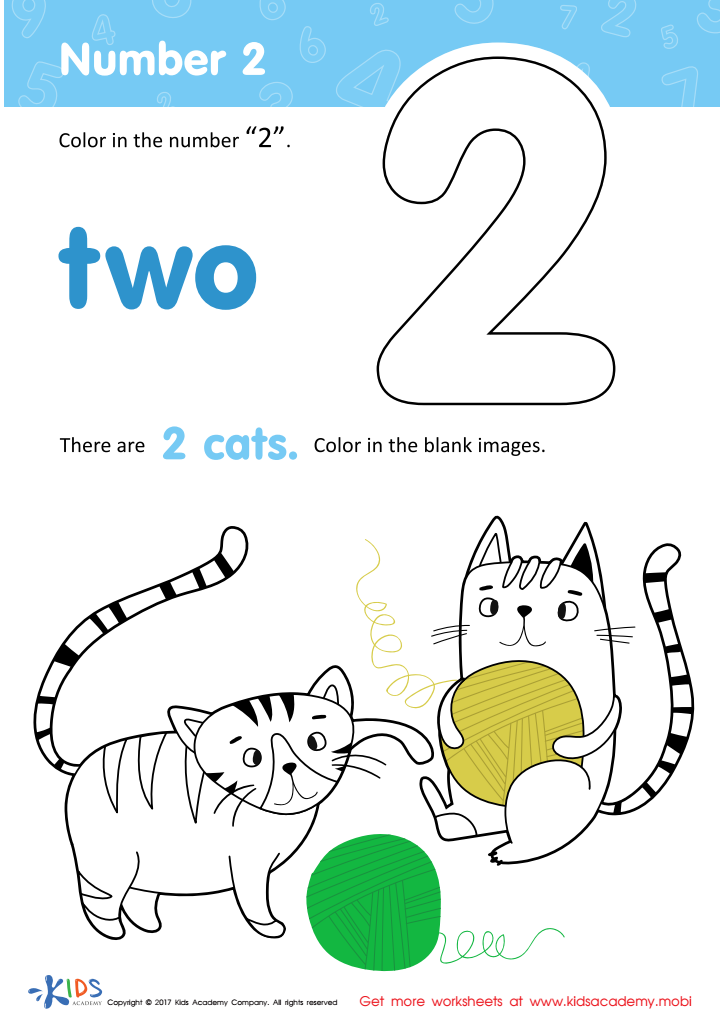
Number 2 Printable
 Assign to My Students
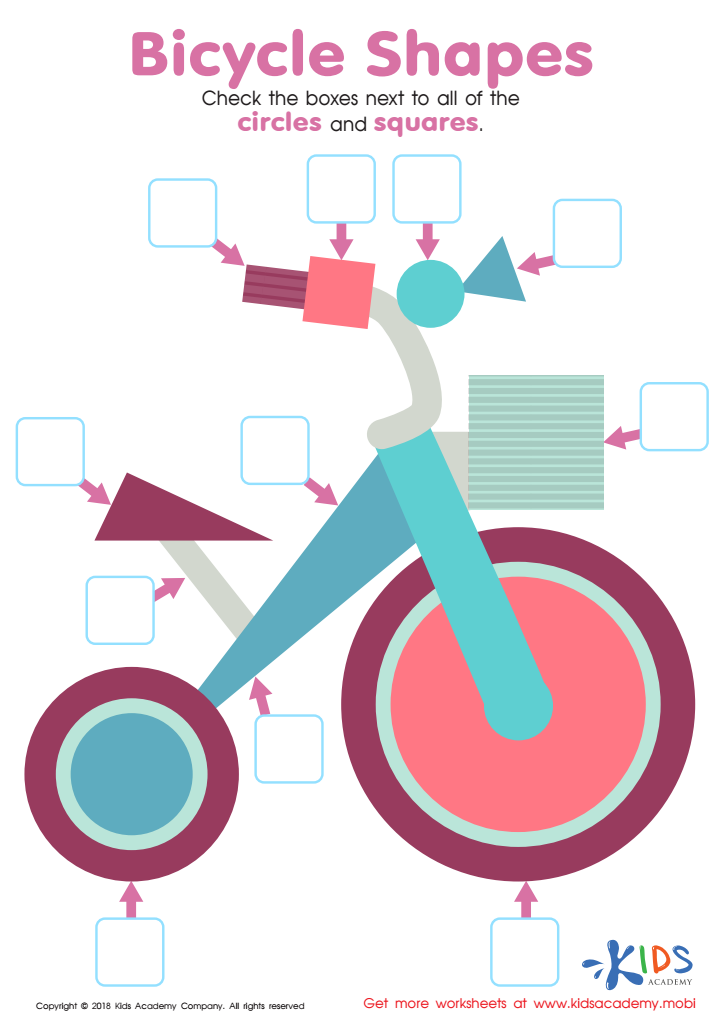
Bicycle Shapes Worksheet
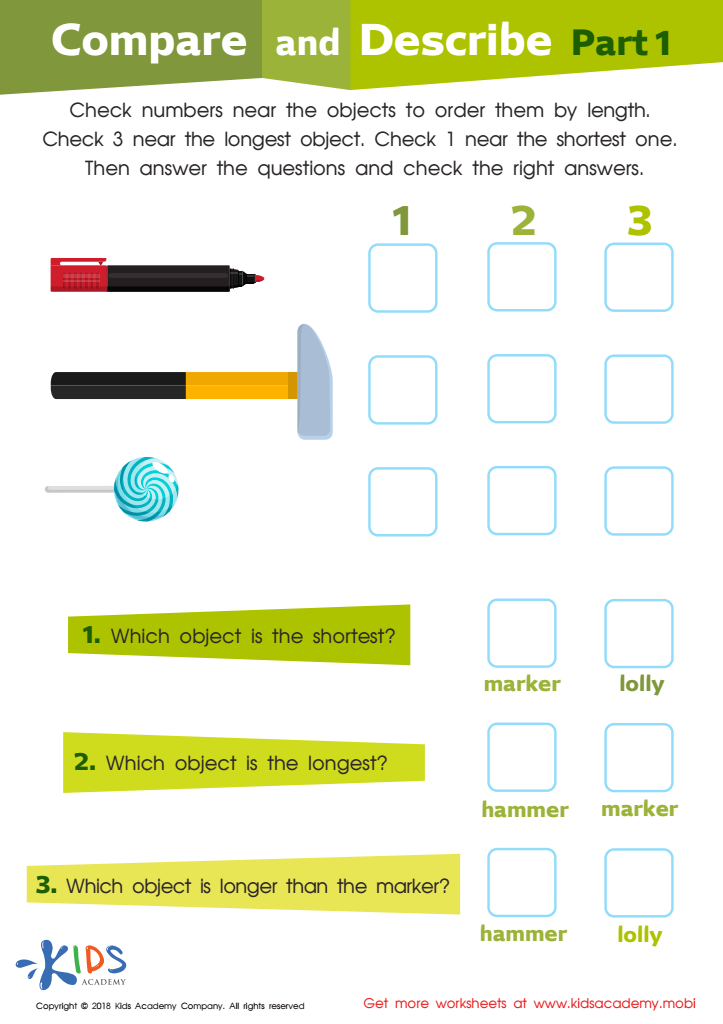
Compare and Describe: Part 1 Worksheet
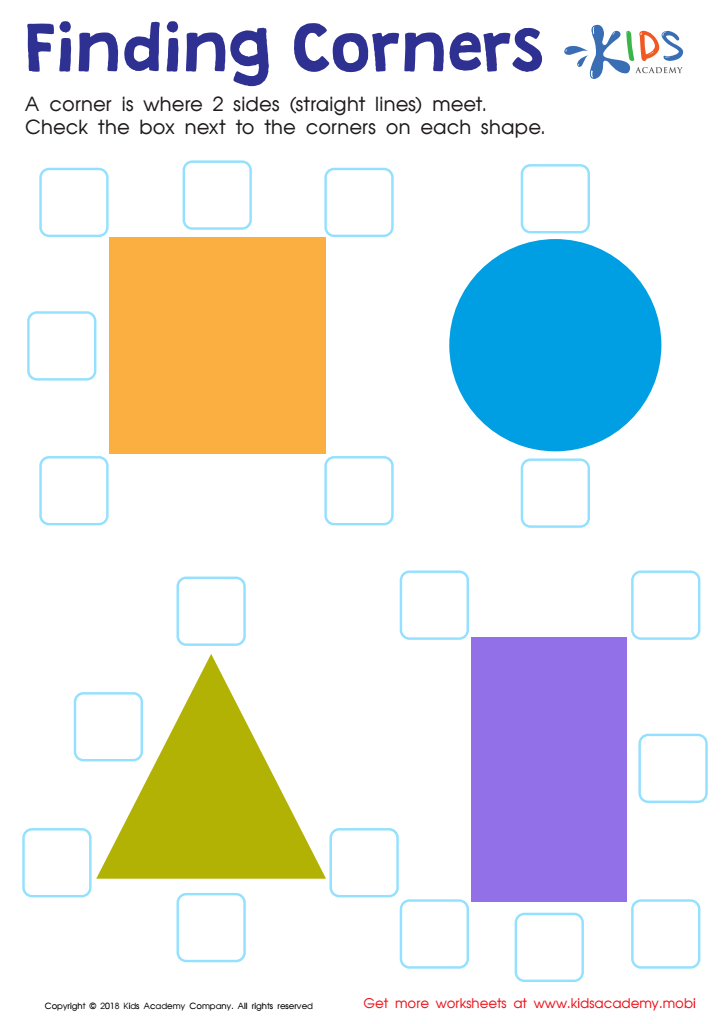
Finding Corners Worksheet
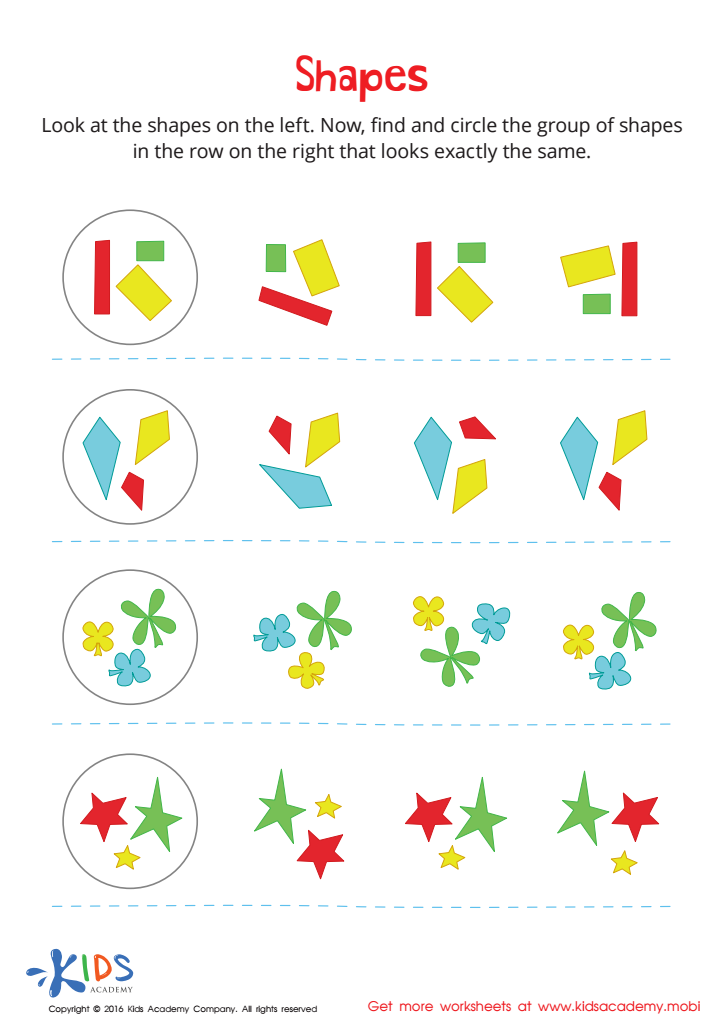
Shapes Worksheet








Shape identification is a foundational skill that plays a crucial role in early childhood education, particularly for children aged 3-6. For parents and teachers, understanding the significance of this skill is essential for fostering cognitive development and readiness for advanced mathematical concepts.
Firstly, recognizing shapes helps children develop their spatial awareness, enabling them to comprehend their environment and improve their problem-solving abilities. Identifying shapes lays the groundwork for geometry, a key component of mathematics that children will encounter later in their education.
Additionally, shape identification aids in enhancing language development. As children learn to describe and discuss shapes, they expand their vocabulary and engage in communication, which is vital for social skills. Activities that involve shapes also promote fine motor skills through manipulative play, as children interact with different forms.
Furthermore, shape identification fosters critical thinking as children learn to categorize, compare, and contrast various shapes. Parents and teachers who emphasize this skill can help children build confidence and a strong foundation for math, which is crucial for their long-term academic success.
Ultimately, investing time in shape identification is not just about learning geometric forms; it's about equipping children with essential cognitive and social skills that will benefit them across disciplines.








