Understanding sizes Math Worksheets for Ages 3-6
4 filtered results
-
From - To
Discover our engaging "Understanding Sizes" Math Worksheets designed specifically for children aged 3-6! These interactive activities help young learners grasp essential concepts of size, including big vs. small, tall vs. short, and more. By incorporating fun visuals and hands-on exercises, our worksheets encourage creativity and critical thinking while building a solid foundation in early math skills. You can easily print these worksheets at home or in the classroom, making learning accessible and enjoyable. Perfect for parents, teachers, and homeschoolers, our resources aim to nurture a love for learning while developing essential math skills in young children. Start exploring today!
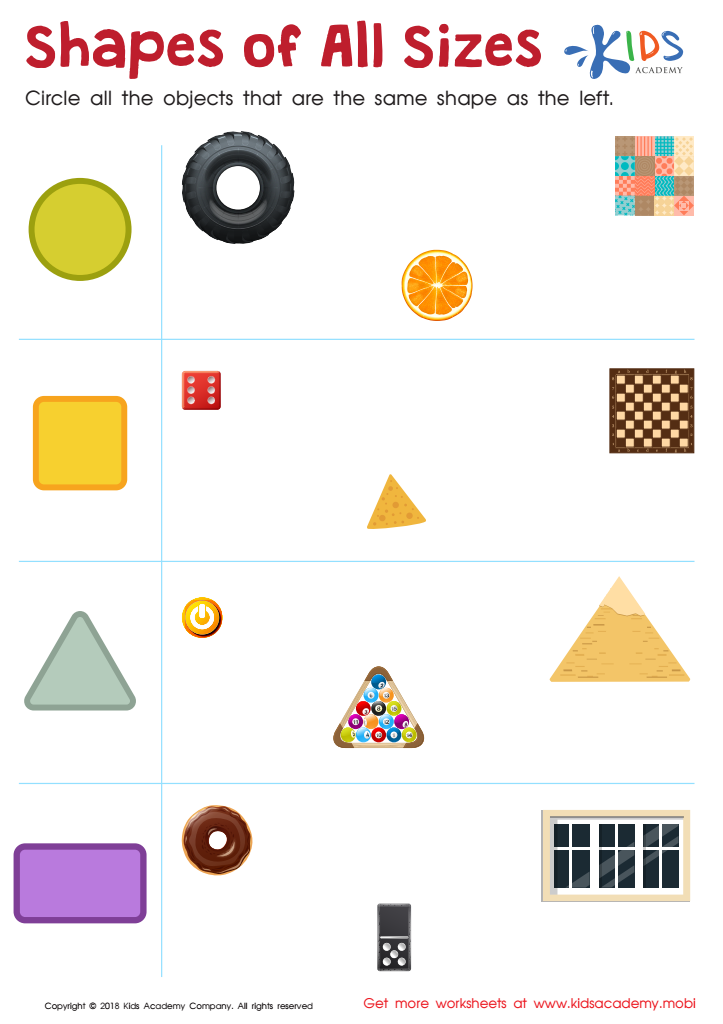
Shapes of All Sizes Worksheet
 Assign to My Students
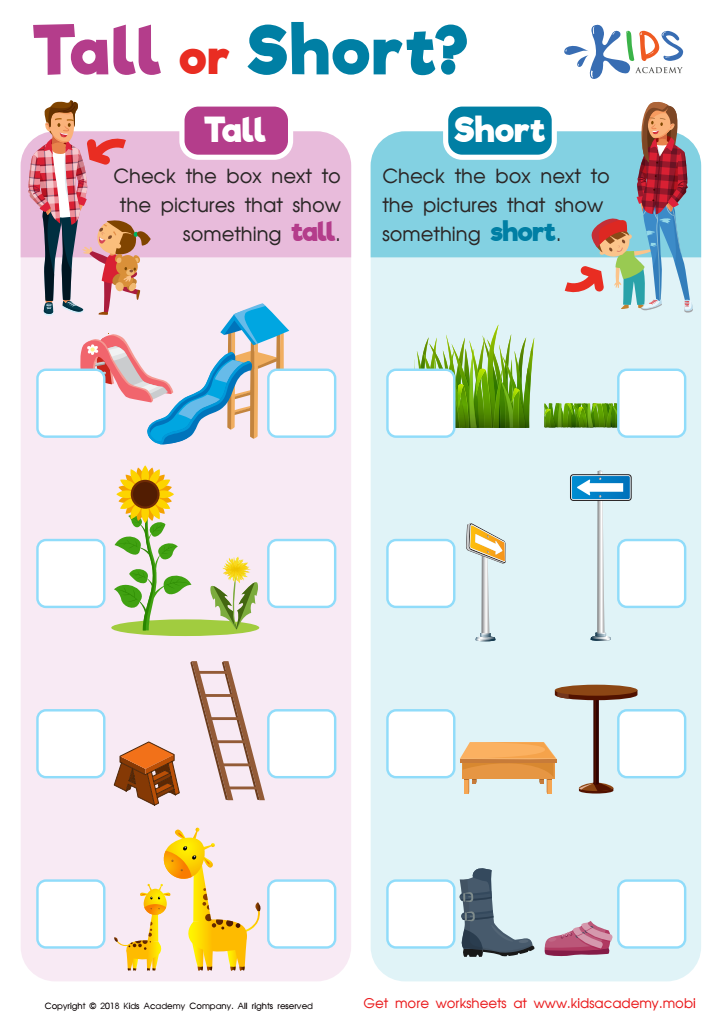
Tall or Short? Worksheet
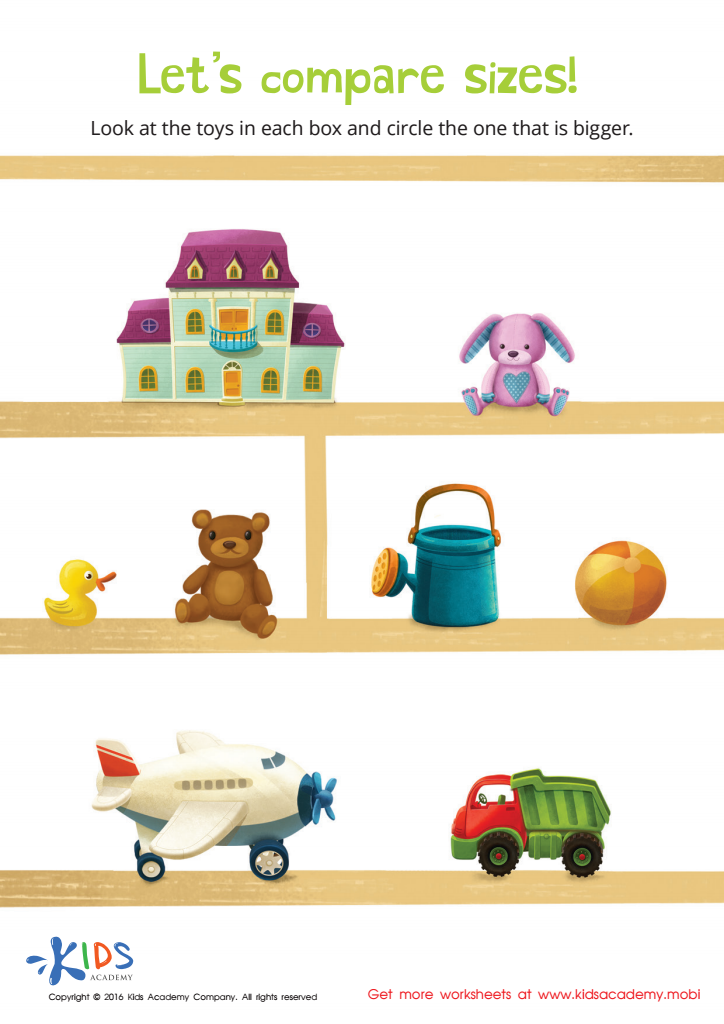
Classifying by Size Sorting Worksheet
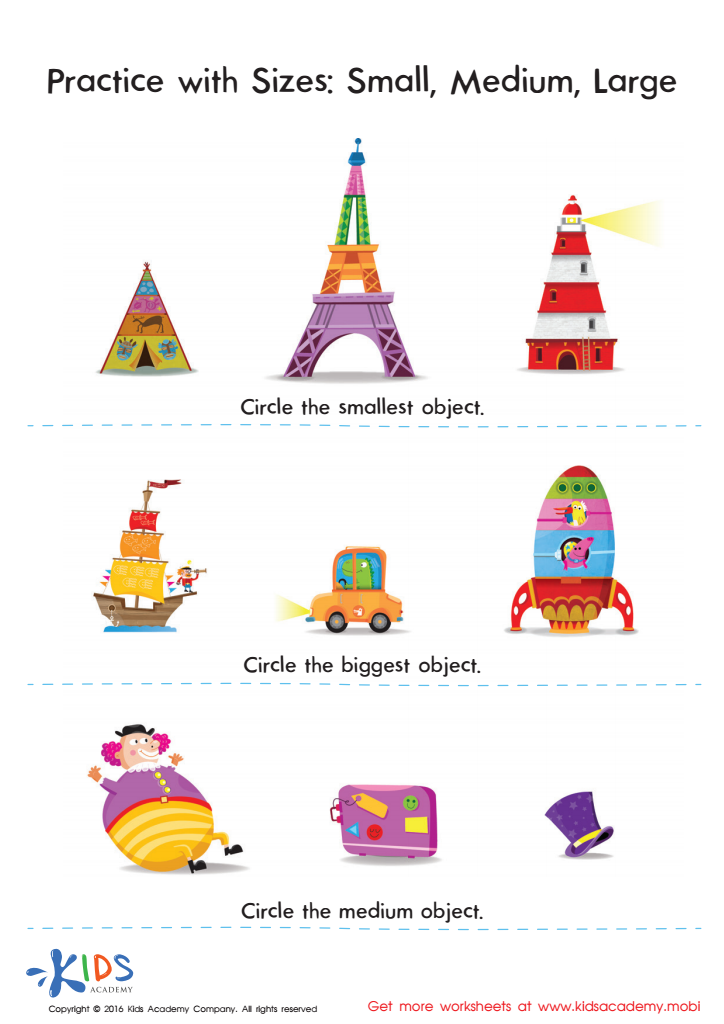








Understanding sizes is a foundational mathematical concept for children ages 3-6, and it plays a vital role in their cognitive and social development. During these formative years, children begin to explore their environment and make sense of the world around them. Recognizing differences in size—big versus small, tall versus short—helps children categorize objects and make relational comparisons, which is crucial for logical thinking.
For parents and teachers, fostering an understanding of sizes enhances literacy and numeracy skills. Engaging activities such as sorting, comparing, and measuring objects not only enrich children's vocabulary but also lay the groundwork for more complex mathematical concepts like addition and subtraction. It promotes critical thinking as children learn to identify relationships and solve problems.
Additionally, size awareness aids in social interplay. Children who can articulate size differences participate more effectively in group play, negotiating roles and sharing resources based on their estimations. Ultimately, investing time in helping young children comprehend sizes not only reinforces math skills but also nurtures essential life skills like communication, cooperation, and confidence, preparing them for future academic challenges and everyday situations. Cultivating these skills in early education sets the stage for a lifelong positive attitude towards learning.








