Number Recognition Subtraction Worksheets for Ages 3-6
10 filtered results
-
From - To
Welcome to our Number Recognition Subtraction Worksheets for Ages 3-6! Designed to support early childhood education, these engaging worksheets help young learners master number recognition while developing their subtraction skills. With fun illustrations and interactive activities, children will enjoy learning to identify numbers and solve basic subtraction problems. Our user-friendly resources promote essential math skills through enjoyable exercises that keep kids motivated. Perfect for parents and educators, these worksheets offer a great way to reinforce math concepts at home or in the classroom. Download now to help your little ones build confidence in their number and subtraction abilities!
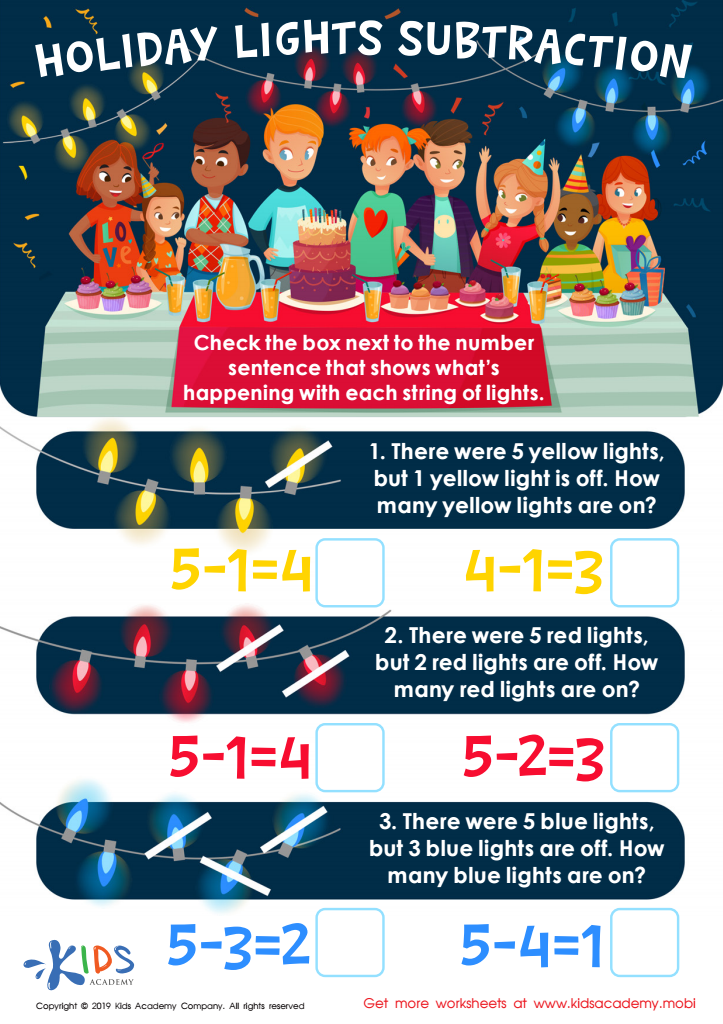
Holiday Lights Subtraction Worksheet
 Assign to My Students
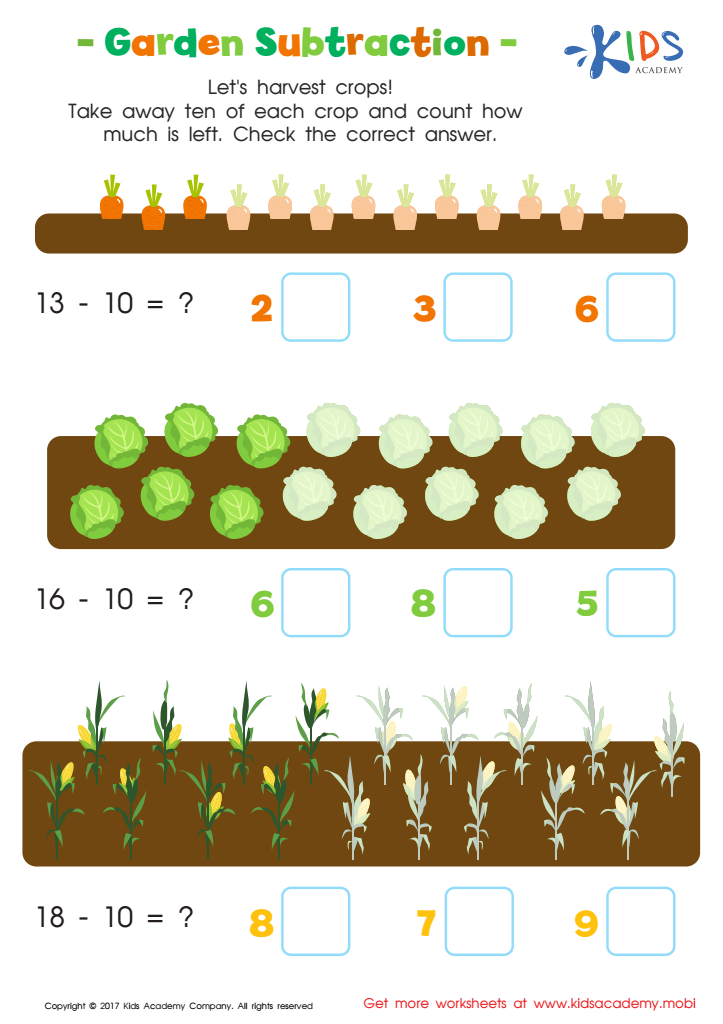
Garden Subtraction Worksheet
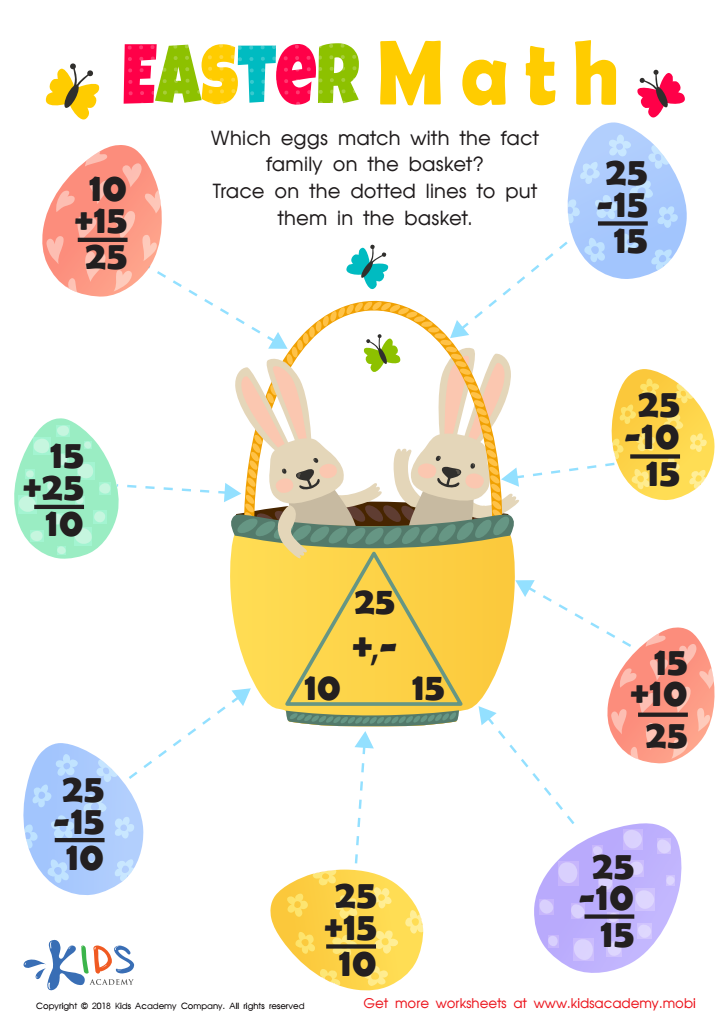
Fact Families: Easter Math Worksheet
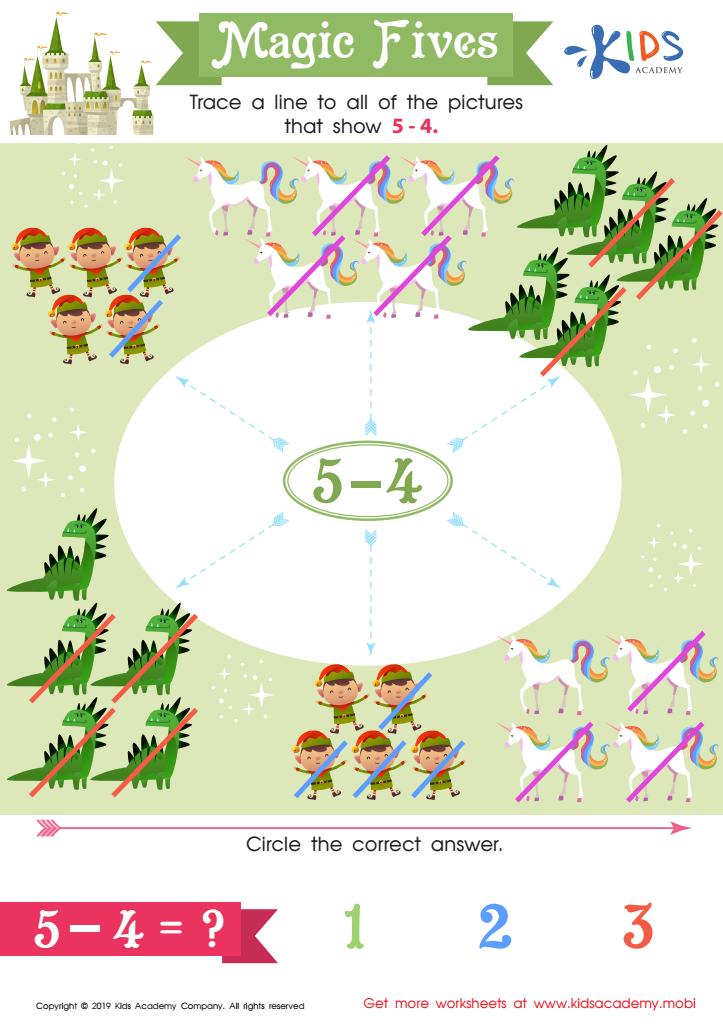
Magic Fives Worksheet
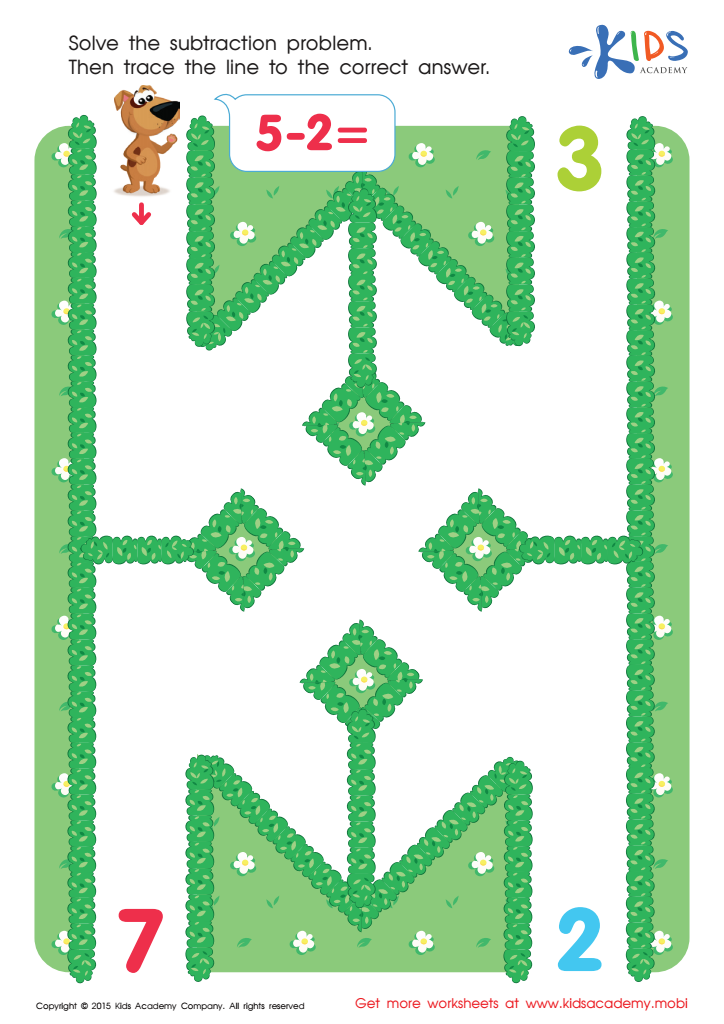
Five Minus Two Worksheet
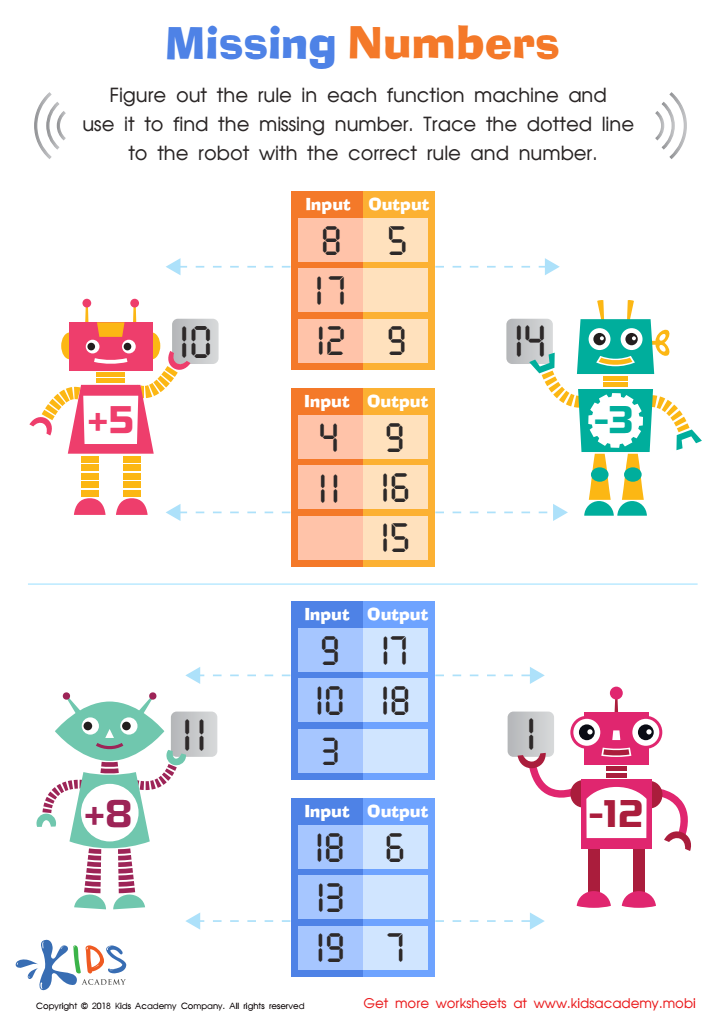
Missing Numbers Worksheet
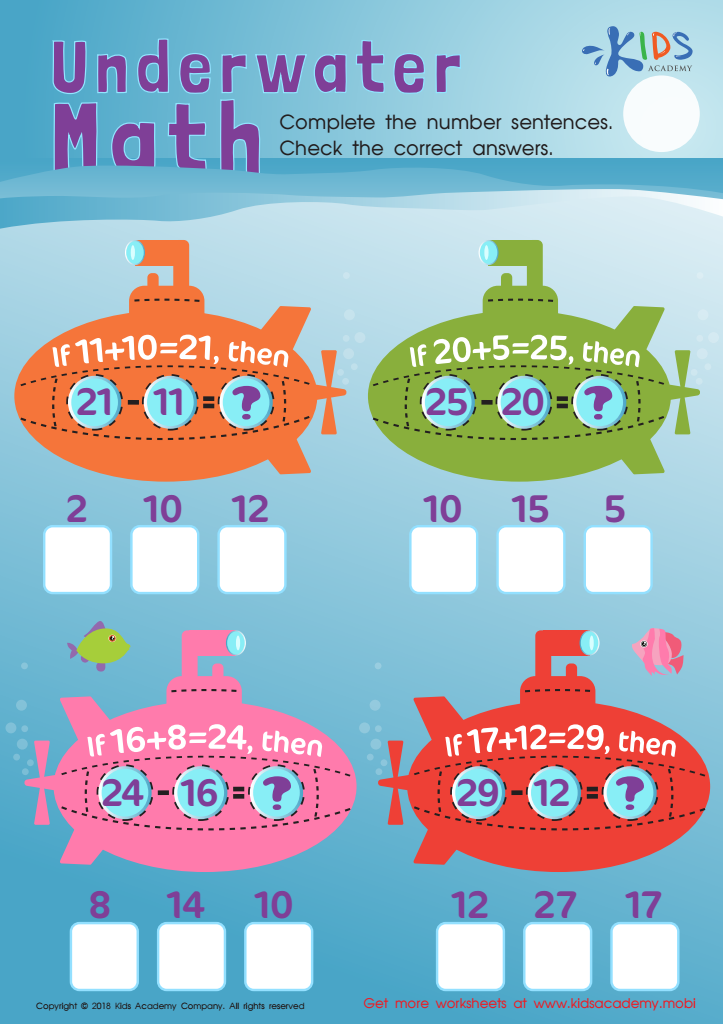
Addition and Subtraction: Underwater Math Worksheet
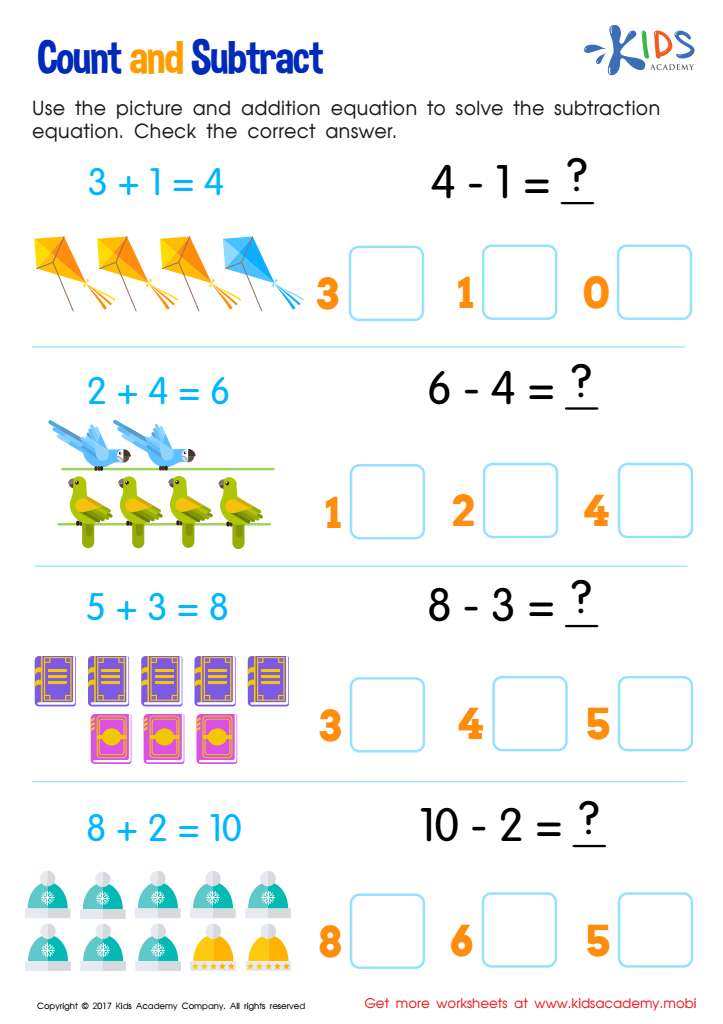
Count and Subtract Worksheet
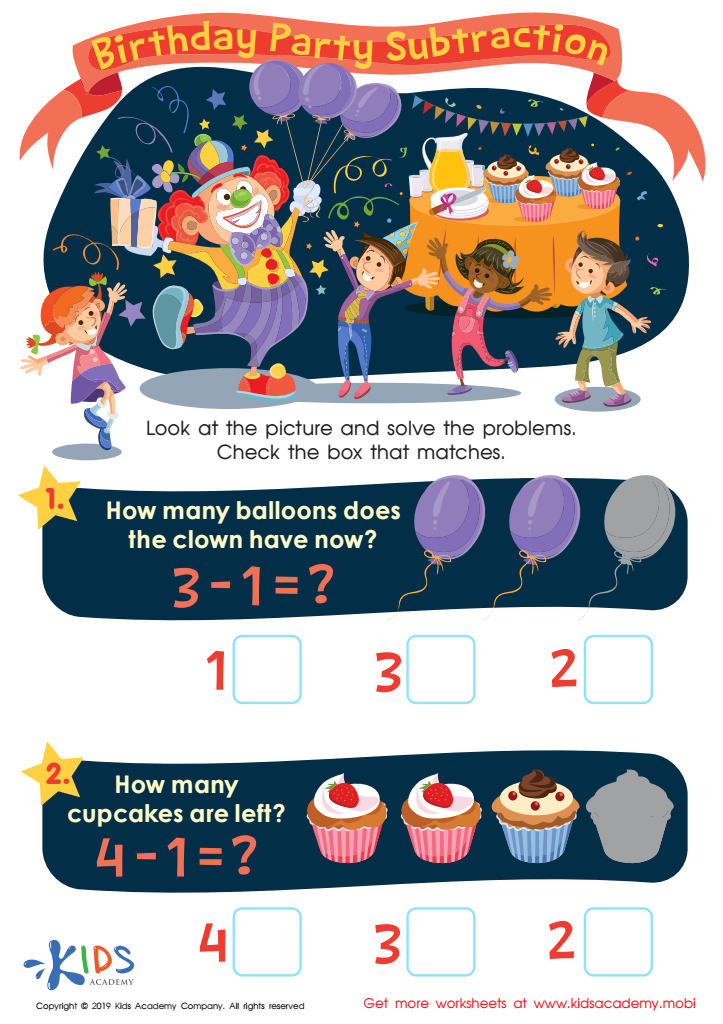
Birthday Party Subtraction Worksheet
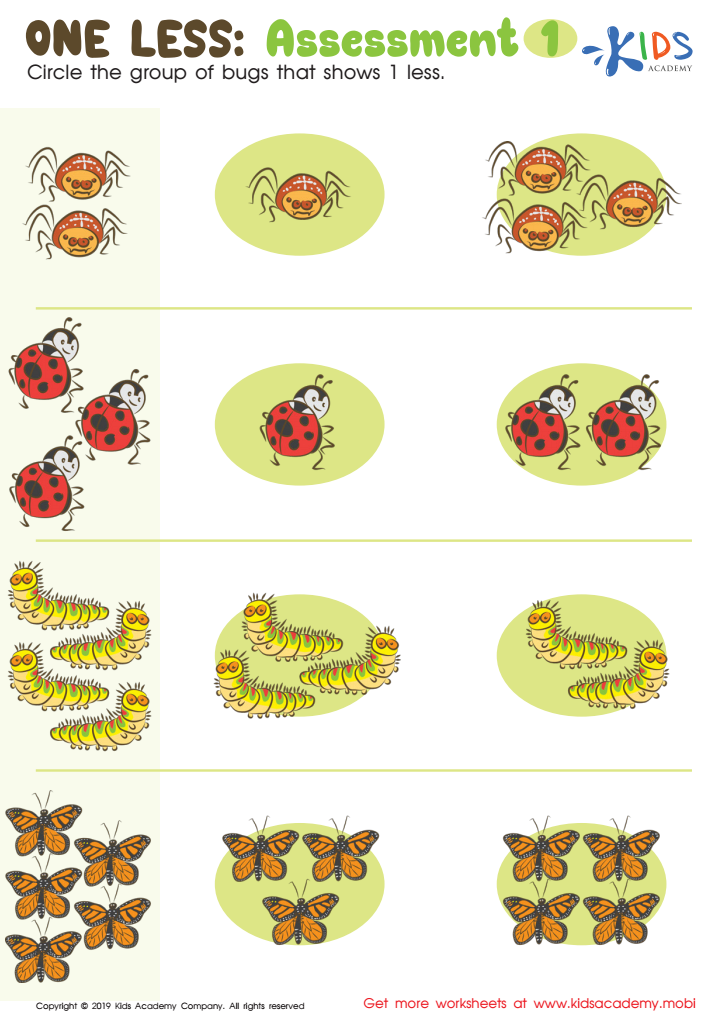
One Less: Assessment 1 Worksheet








Number recognition and subtraction are foundational skills in early childhood education, crucial for building a strong mathematical base for children aged 3 to 6. Understanding numbers and their relationships prepares children for more complex math concepts they'll encounter in later grades.
For parents and teachers, fostering these skills can enhance a child’s confidence and interest in math. Number recognition allows children to identify and utilize numbers in everyday situations, promoting cognitive development and critical thinking. When kids begin to grasp the concept of subtraction, they develop problem-solving skills and learn how to approach challenges systematically.
Moreover, introducing subtraction through engaging activities can make learning enjoyable. Simple games, storytelling, or visual aids can help children see math as a fun adventure rather than a chore, encouraging a positive relationship with the subject. By focusing on these aspects in early education, parents and teachers are not only teaching math but are also laying the groundwork for essential life skills like perseverance, analytical thinking, and adaptability.
Ultimately, nurturing number recognition and subtraction in young children prepares them for future academic success and instills a lifelong appreciation for learning. This investment in their education today can yield significant benefits for tomorrow.








