
Attention to Detail Reading Worksheets for Ages 3-6
5 filtered results
Difficulty Level
Grade
Age
-
From - To
Subject
Activity
Standards
Introducing "Attention to Detail Reading Worksheets" tailored for ages 3-6, our meticulously crafted resources are designed to enhance young learners' reading skills while focusing on detail-oriented exercises. These engaging activities foster concentration and precision, critical for early reading and comprehension development. Each worksheet combines fun illustrations and interactive tasks to captivate young minds, turning learning into an enjoyable adventure. Perfect for parents and educators, our worksheets support early literacy goals, helping children to recognize patterns, improve memory, and build foundational skills for future success. Start your child's detailed attention journey today with our vibrant and educational tools!
Favorites
With answer key
Interactive
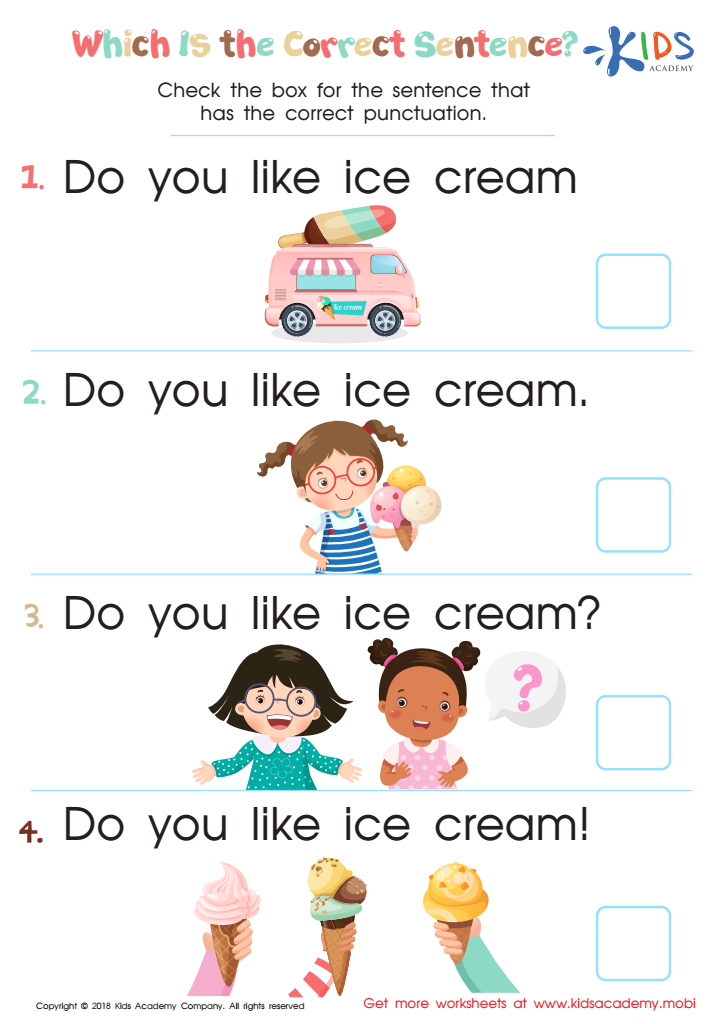
Which is the Correct Sentence? Worksheet
Punctuation is crucial in sentence formation. If your kid still doesn't grasp it, bigger hurdles await when writing sentences. Get them to read simple sentences, then ask if they know the right punctuation. Assist them in selecting the sentence that has the accurate punctuation.
 Assign to My Students
Which is the Correct Sentence? Worksheet
Worksheet
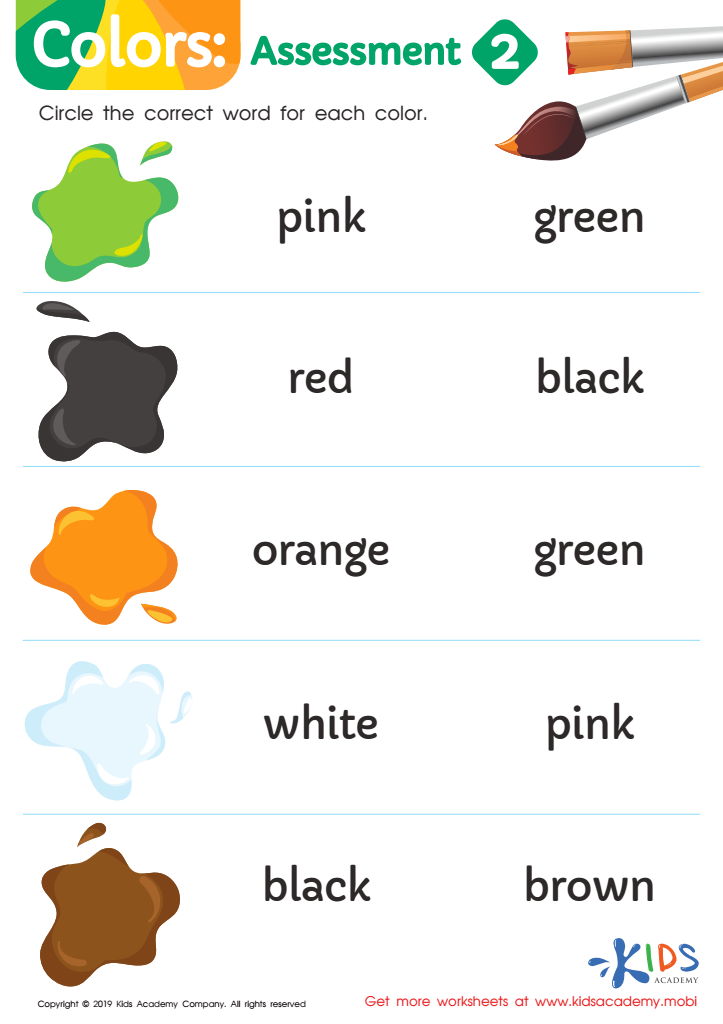
Colors: Assessment 2 Worksheet
Teach color words to young students to build fluency and confidence. Check knowledge with an assessment worksheet. Have students look at paint samples and circle the correct color word. This assessment helps parents and teachers measure a child’s accuracy when reading color words.
Colors: Assessment 2 Worksheet
Worksheet
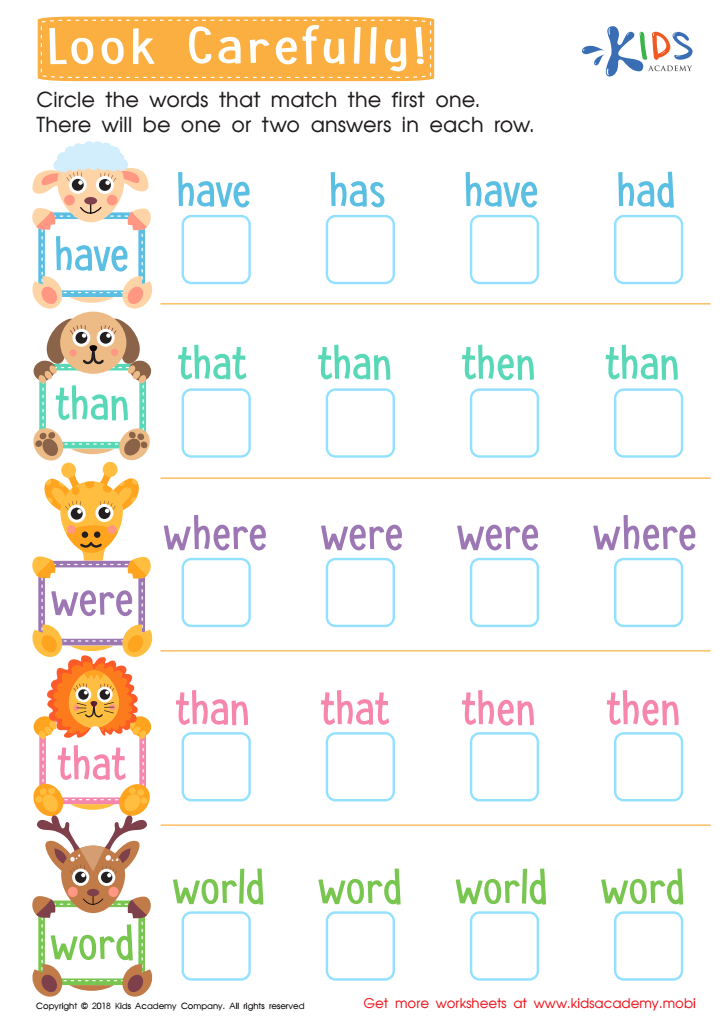
Look Carefully Worksheet
It's crucial to teach kids to identify sight words and become fluent readers. This free worksheet helps make it simpler for kids to learn the similarities and differences between similar words. They'll get practice by looking at the box word and selecting the one that matches from the row.
Look Carefully Worksheet
Worksheet
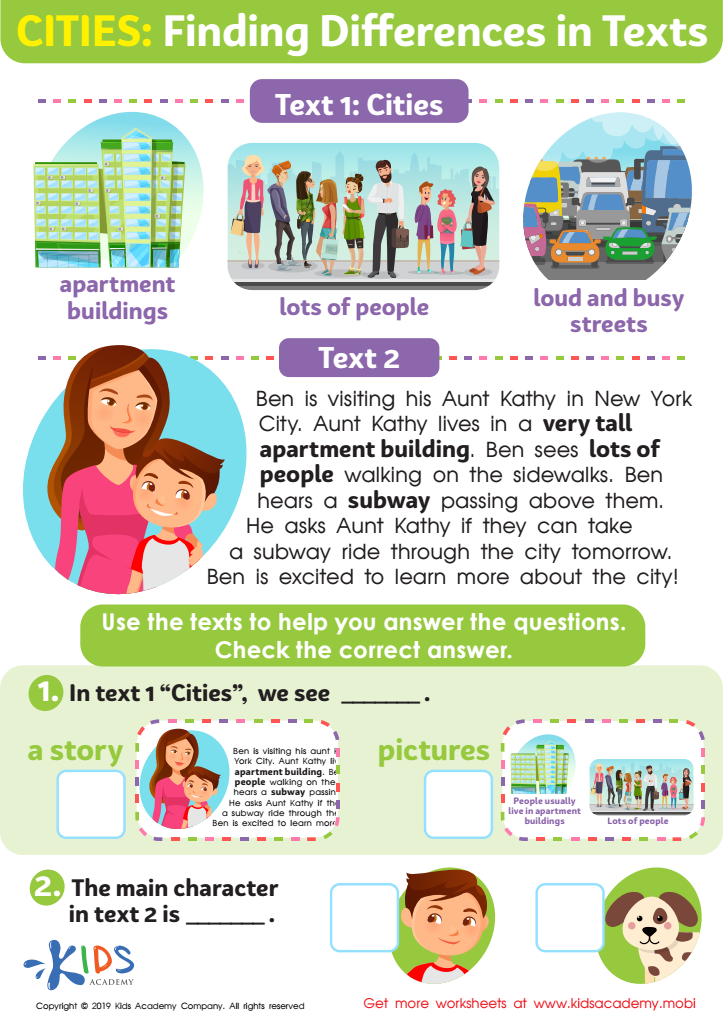
Cities: Finding Differences Worksheet
Critical thinking is essential for reading comprehension. New readers must be able to identify the key information in different text formats. This worksheet helps children learn what they might find in cities and how to differentiate between stories and pictures.
Cities: Finding Differences Worksheet
Worksheet
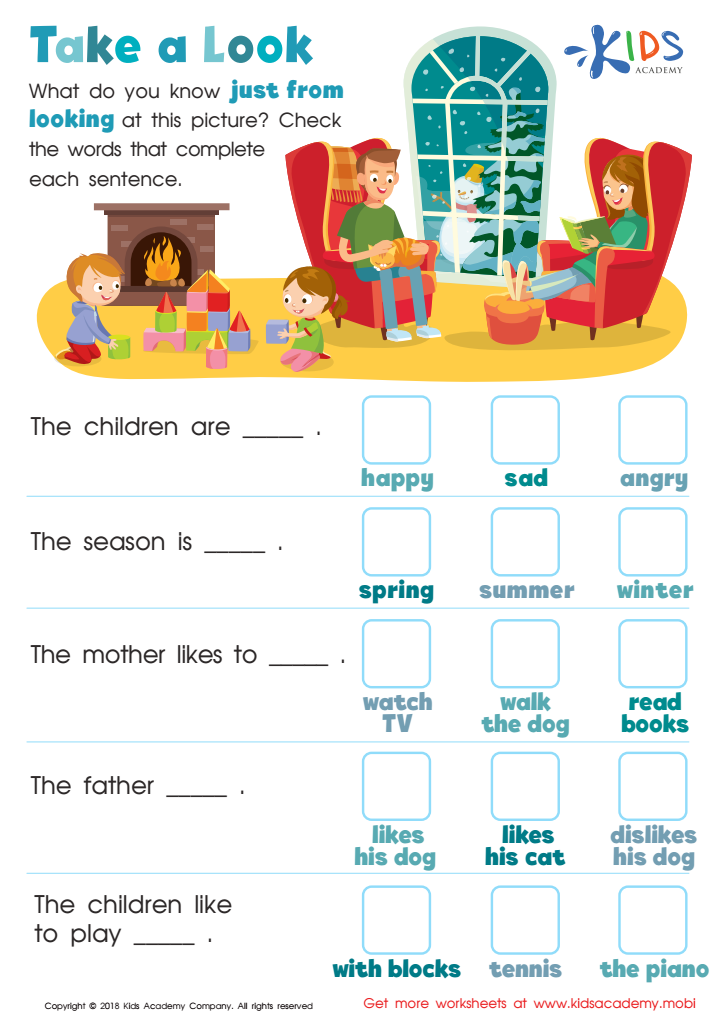
Take a Look - Part 1 Worksheet
Young learners gain understanding when using picture clues when reading. Looking at illustrations can help students learn the meaning of key vocabulary when reading fiction or informational text. Ask your students to look at the worksheet and observe what they can learn from the picture. It's a great comprehension strategy for early readers.
Take a Look - Part 1 Worksheet
Worksheet
Join Kids Academy for Free
Who is primarily going to use this learning content?








Attention to Detail Reading is crucial for children aged 3-6 as it lays the foundational skills for their future learning and development. At this early age, children are like sponges, absorbing information rapidly and forming neural connections that will be essential for later academic success. Paying attention to detail helps children develop critical language skills, including vocabulary, comprehension, and phonemic awareness. These skills are not only essential for reading ability but also for overall cognitive development.
Moreover, attention to detail fosters concentration and focus, teaching children to notice and interpret nuances in text and illustrations. This can improve their ability to follow instructions, solve problems, and engage in creative thinking. For parents and teachers, incorporating detailed reading practices into daily activities ensures that children are exposed to a variety of words and contexts, broadening their understanding of the world.
Finally, instilling attention to detail early on nurtures a lifelong love for reading and learning. When children realize the joy and satisfaction that comes from being able to understand and absorb information on their own, they are more likely to develop into curious, independent learners. Thus, attention to detail reading isn't just about teaching children to read; it's about setting them up for a lifetime of success and discovery.








