Identification skills Reading Worksheets for Ages 3-6
3 filtered results
-
From - To
Enhance your child's learning journey with our "Identification Skills Reading Worksheets for Ages 3-6." Specially crafted to boost early readers, these activities focus on identifying letters, words, and simple sentences. The engaging exercises promote critical thinking and visual recognition among preschool and kindergarten students. Colorful illustrations and fun tasks keep young learners interested and motivated as they build a solid foundation in reading. Ideal for both classroom and at-home learning, these worksheets support early literacy and language development. Give your child a head start with our expertly designed resources that merge education with play.
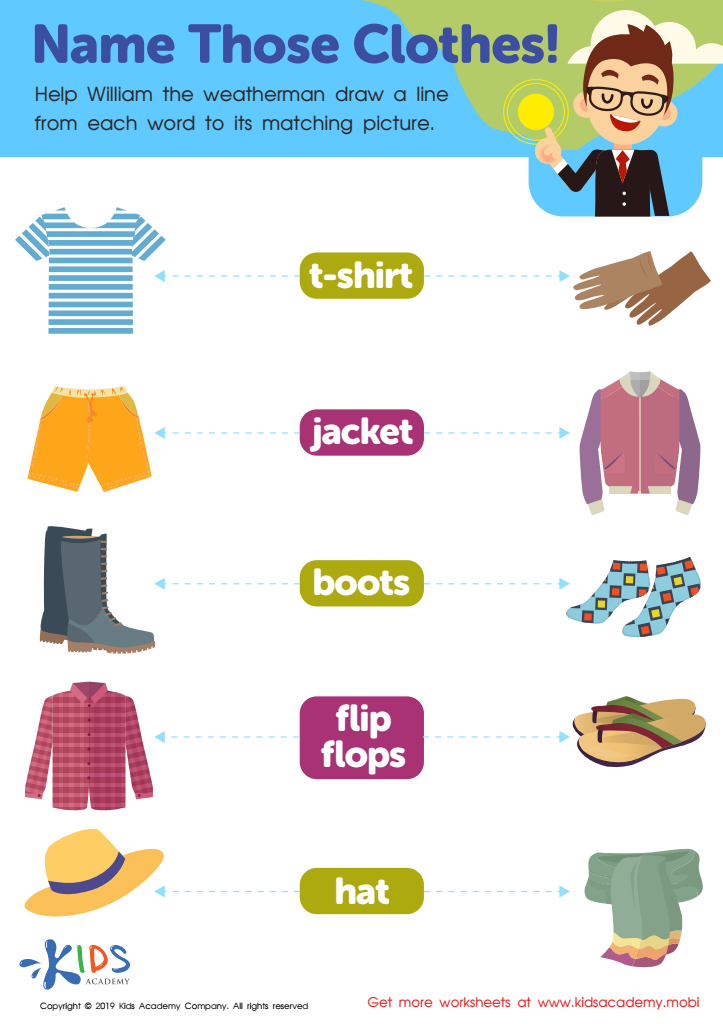
Name Those Clothes Worksheet
 Assign to My Students
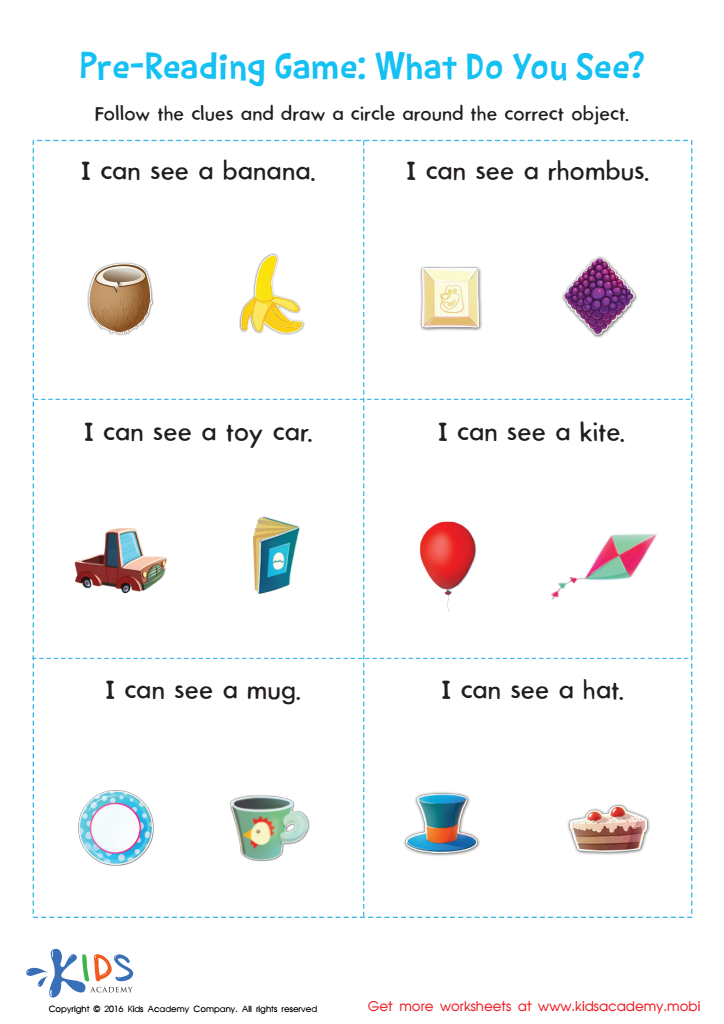
Pre–reading Worksheet: What Do You See?
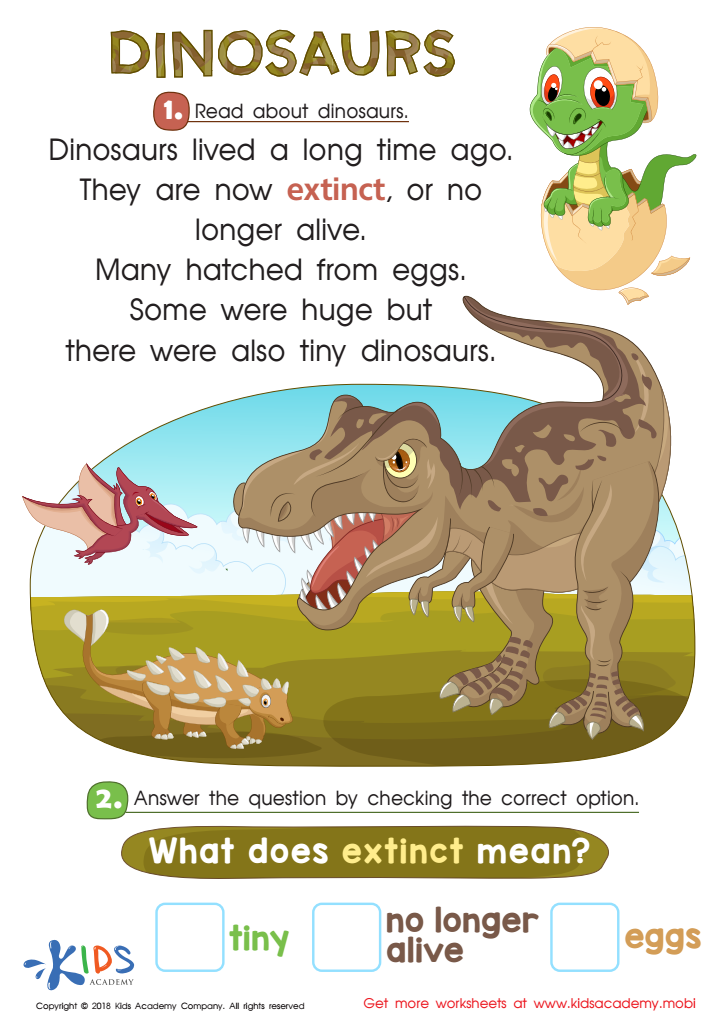
Dinosaurs Worksheet







Identification skills in reading are foundational for children ages 3-6 and are critical for their early literacy development. These skills, such as recognizing letters, sounds, and basic words, form the building blocks for more complex reading abilities. Parents and teachers should prioritize these skills for several reasons.
Firstly, strong identification skills are predictive of future reading success. Research shows that children who can identify letters and sounds early on tend to become more proficient readers later in life. This early competence equips them with the tools they need to decode and comprehend more advanced texts.
Secondly, fostering identification skills enhances cognitive development. It encourages memory enhancement, broadened attention spans, and heightened problem-solving abilities. By routinely engaging with letters and words, children develop neural connections that stimulate overall intellectual growth.
Socially and emotionally, successful reading experiences boost self-esteem and foster a love for learning. Early successes make children feel confident in their abilities, instilling a positive attitude towards education and reducing instances of frustration and aversion to schoolwork.
Lastly, early identification skills often enrich a child’s communication abilities, aiding them in expressing themselves more clearly and understanding the voices surrounding them. This verbal proficiency is beneficial in both academic and social contexts.
In summary, identification skills in reading are crucial for a child's academic trajectory, cognitive development, self-esteem, and communication skills, making parental and teacher investment in this area essential.








