Sound recognition Reading Worksheets for Ages 3-6
3 filtered results
-
From - To
Enhance your child's early reading skills with our Sound Recognition Reading Worksheets, specially designed for ages 3-6. These engaging worksheets help young learners recognize, distinguish, and understand sounds, providing a strong foundation for phonics and reading proficiency. Each activity is crafted to improve auditory discrimination, promote language development, and build listening skills. With colorful illustrations and fun exercises, children stay motivated while mastering essential reading skills. Perfect for both classroom and at-home learning, our Sound Recognition Worksheets make learning to read an enjoyable and effective experience for your little ones. Start their reading journey today!
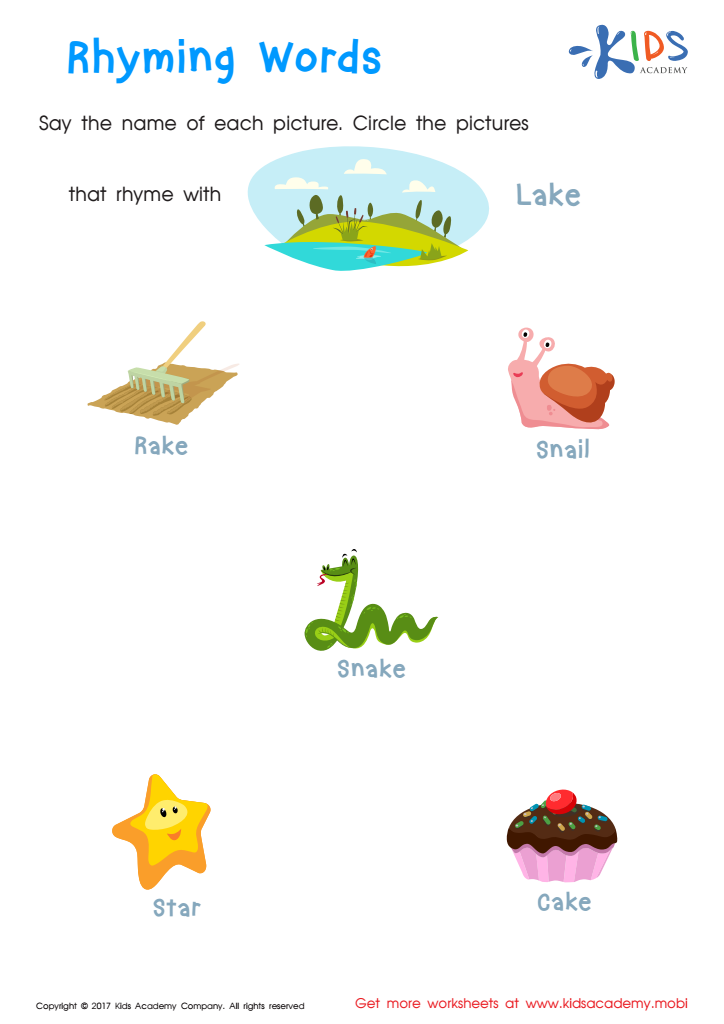
Rhyming Words Rhyming Worksheet
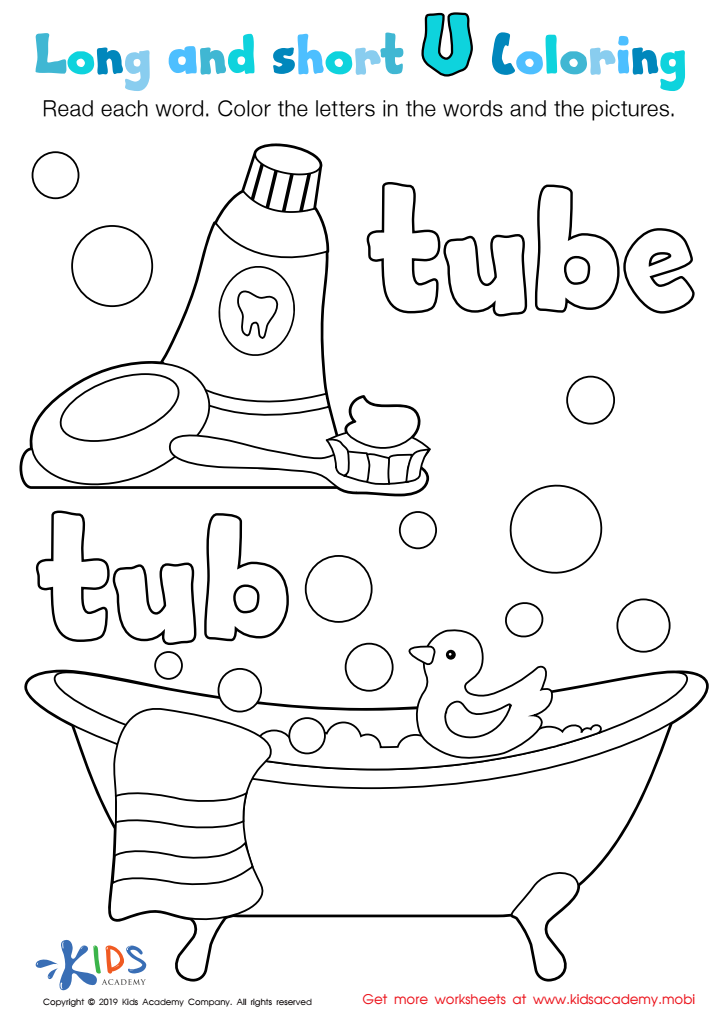
Long and Short U Worksheet
 Assign to My Students
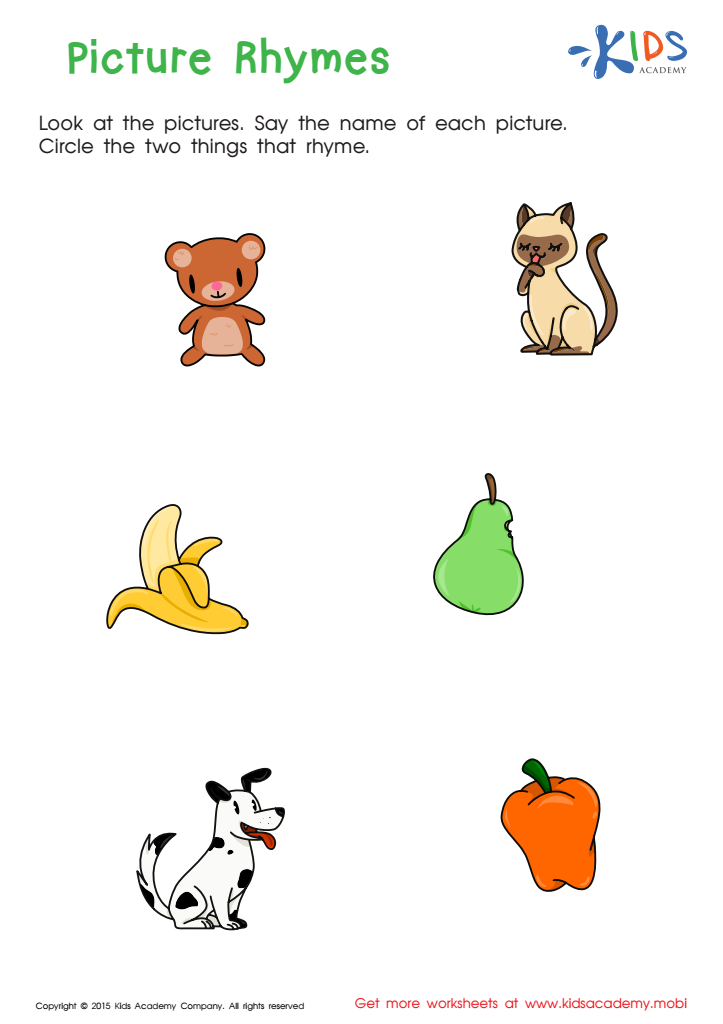
First Words: Picture Rhymes Worksheet



.jpg)



Sound recognition is pivotal in the formative years of children aged 3-6 for several compelling reasons, making it crucial for parents and teachers to focus on it. During these early years, children's brains are especially receptive to auditory stimuli, which forms the foundation for language development. Recognizing sounds helps children differentiate between various phonetic elements, which is essential for learning to read.
Developing sound recognition skills aids in phonemic awareness, a critical precursor to reading. Phonemic awareness involves the ability to hear, identify, and manipulate individual sounds in words. This skill is strongly linked to later reading and spelling success. Children who can recognize and manipulate sounds are better equipped to understand the relationship between sounds and their corresponding letters, paving the way for fluent reading.
Moreover, sound recognition enhances vocabulary and comprehension skills. As children learn to distinguish sounds, they start to understand that words are made up of different sounds, which helps them decode new words they encounter. This understanding not only boosts reading capabilities but also aids in proper pronunciation and communication.
Fostering sound recognition in young children also builds listening skills, concentration, and memory—all essential cognitive skills. By prioritizing sound recognition in early education, parents and teachers set a strong foundation for academic success and lifelong learning.








