
Story analysis Reading Comprehension Worksheets for Ages 3-6
5 filtered results
Difficulty Level
Grade
Age
-
From - To
Subject
Activity
Standards
Enhance your child’s reading skills with our Story Analysis Reading Comprehension Worksheets for ages 3-6! These thoughtfully designed worksheets foster critical thinking and help young learners explore story elements like characters, settings, and main events. Perfect for preschool and kindergarten students, each worksheet encourages kids to engage with the text, improving their comprehension and analytical abilities. Our enriching exercises make learning enjoyable, promoting a lifelong love of reading. Ideal for both classroom and home use, these worksheets are a valuable tool in early education. Start your child on the path to reading success with Kids Academy today!
Favorites
With answer key
Interactive
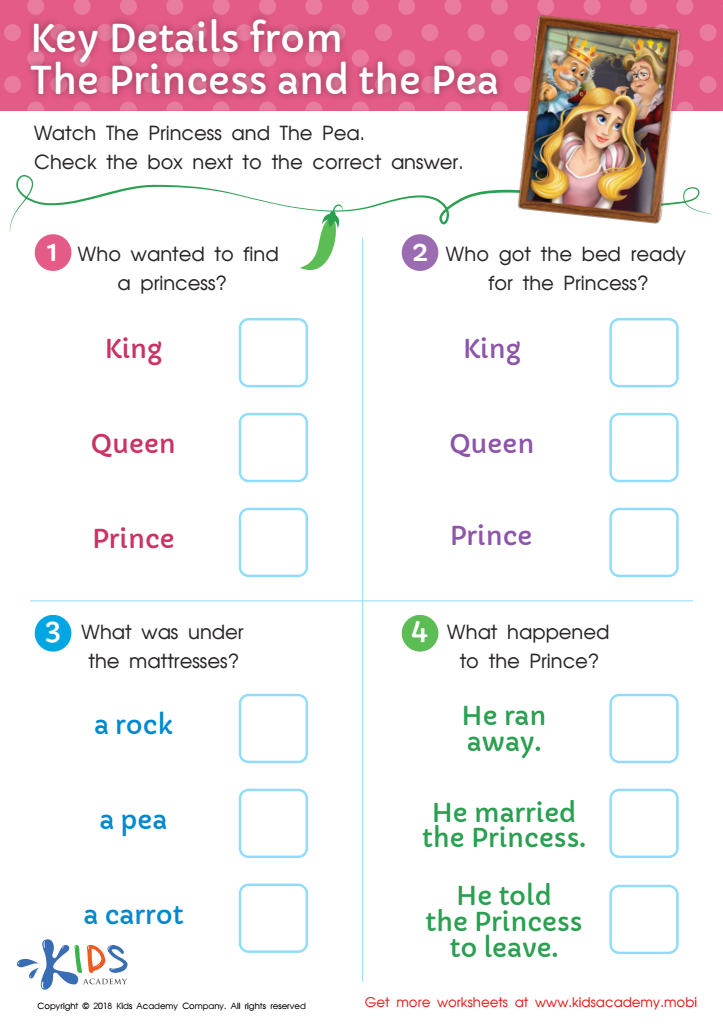
Key Details from the Princess and the Pea Worksheet
After reading The Princess and the Pea, ask your students questions to assess their comprehension of the story. Check their knowledge of key details. This printable can be used to help evaluate their understanding. Encouraging the recall of story events helps build important reading skills.
 Assign to My Students
Key Details from the Princess and the Pea Worksheet
Worksheet
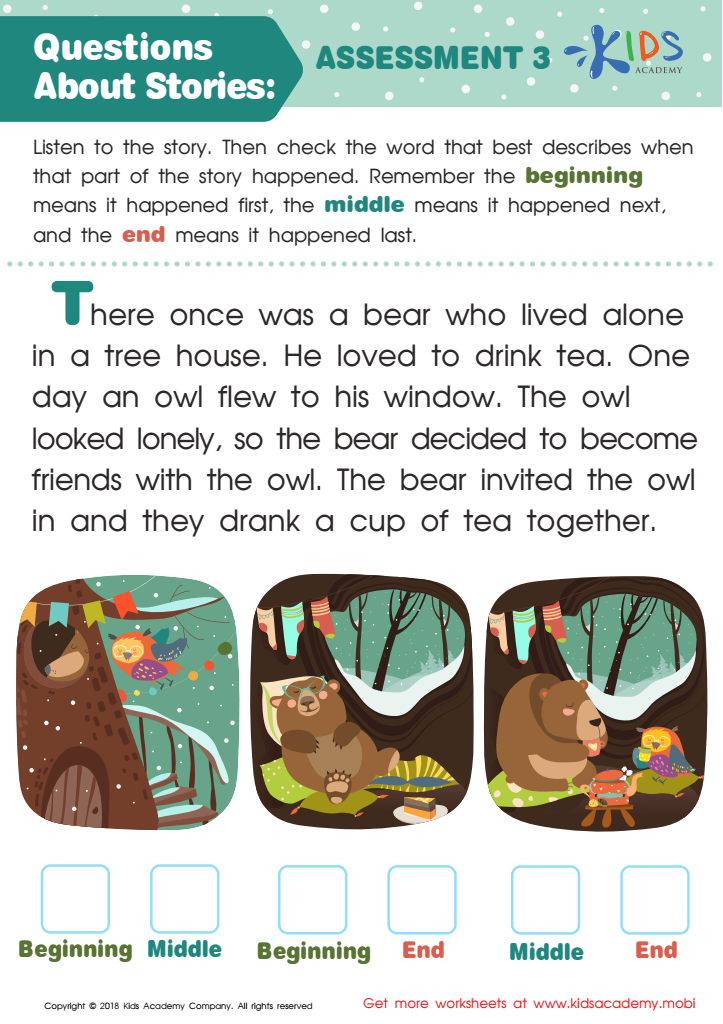
Questions About Stories: Assessment 3 Worksheet
Help kids understand stories by having them listen to a story and check boxes for the beginning, middle, and end. This worksheet makes it fun for even the youngest learners to recall story elements and sequence of events. Let them listen to the story from start to finish, then look at the pictures to check which part of the story they depict.
Questions About Stories: Assessment 3 Worksheet
Worksheet
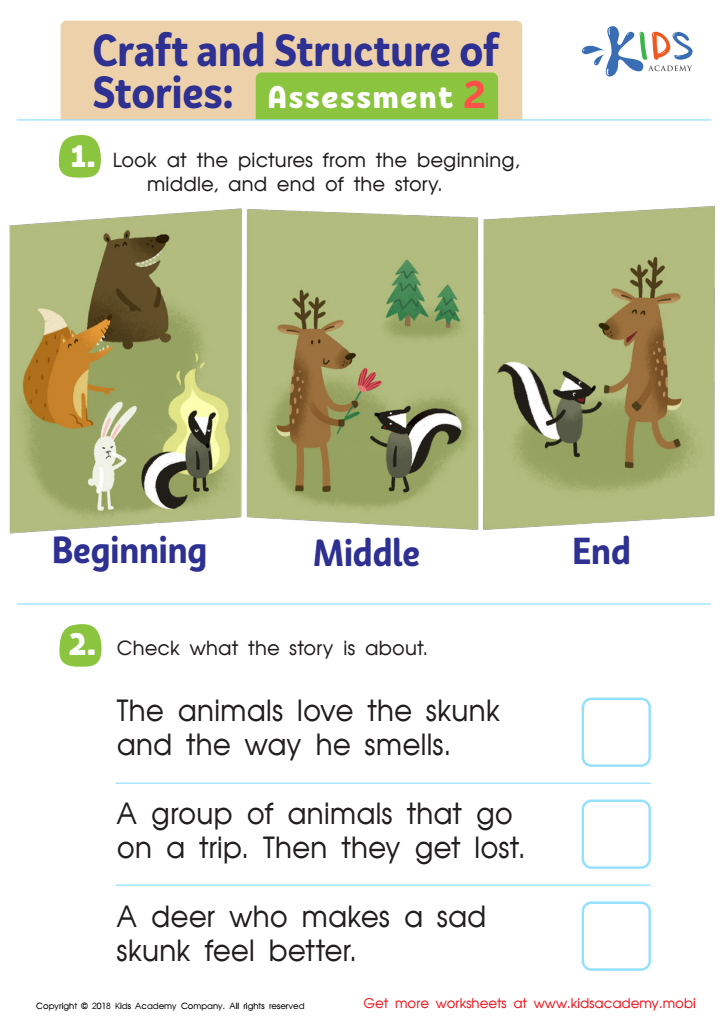
Craft and Structure of Stories: Assessment 2 Worksheet
Help your child assess their story sequencing and reading comprehension skills using this cute worksheet! It encourages them to look at the three pictures on the page, each representing a scene from the beginning, middle and end. Ask them what the story is about, then let them check the box next to the correct answer. This is a great way to ensure they understand the main events of a story.
Craft and Structure of Stories: Assessment 2 Worksheet
Worksheet
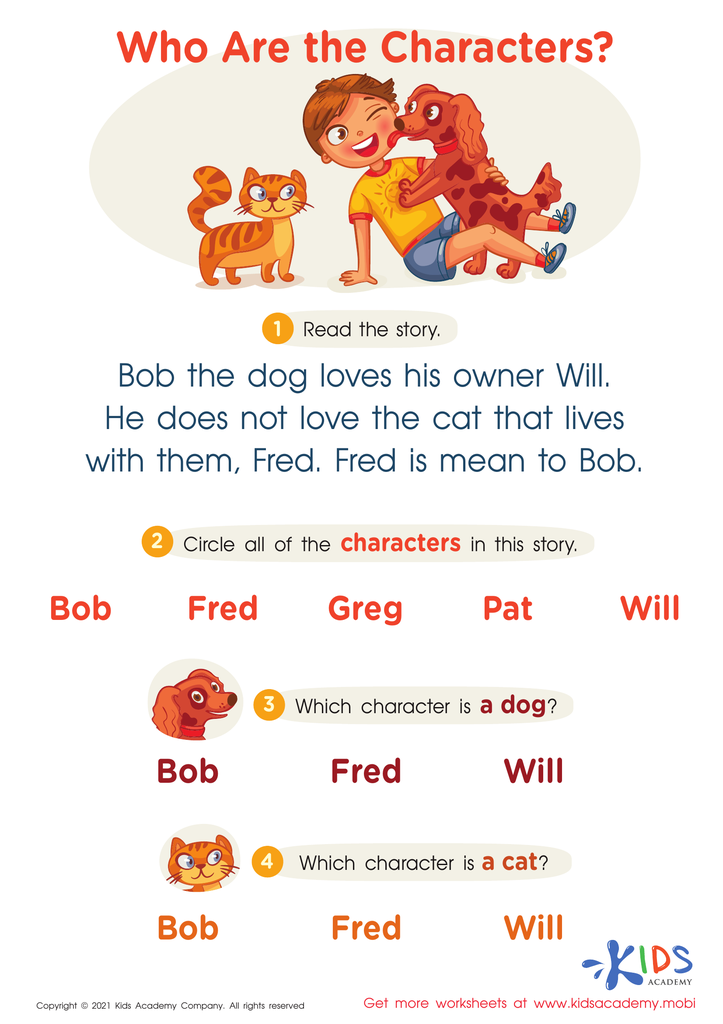
Who Are the Characters? Worksheet
Original:
The annual summer festival takes place on the last day of June and is celebrated with a parade and a carnival that features rides, games, and yummy food.
Rewrite:
Every June end marks the annual summer festival with a parade and carnival. Enjoy rides, games, and delicious food!
Who Are the Characters? Worksheet
Worksheet
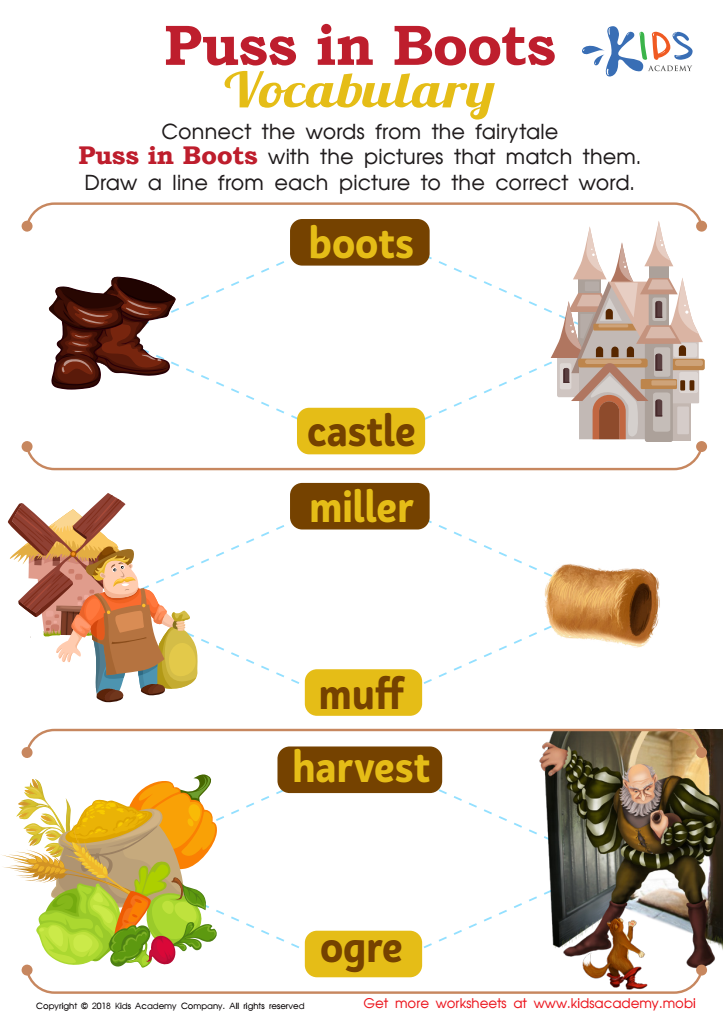
Puss in Boots Vocabulary Worksheet
Let your kids enjoy story-telling while learning at the same time. Help them learn from the fairytale, Puss in Boots, by connecting words from the worksheet with the matching pictures. Ask them to draw a line between each picture and corresponding word to build their vocabulary.
Puss in Boots Vocabulary Worksheet
Worksheet
Join Kids Academy for Free
Who is primarily going to use this learning content?







Story analysis and reading comprehension are essential skills for young children aged 3-6, laying a foundation for lifelong learning and critical thinking. At this age, children's brains are highly adaptable and absorbent, making it an ideal time to introduce fundamental cognitive skills.
Firstly, story analysis encourages children to think beyond the literal narrative. They learn to identify characters, understand emotions, and grasp the sequence of events, which enhances cognitive abilities like memory and logical thinking. These skills are crucial for future academic success and everyday problem-solving.
Secondly, comprehending stories helps to build a child’s vocabulary and language skills. Encountering new words in various contexts allows children to expand their lexicon and understand syntax and grammar more intuitively. This linguistic foundation supports effective communication, both spoken and written.
Moreover, engaging with stories fosters emotional intelligence. By identifying with characters and their experiences, children develop empathy and learn to navigate their own feelings. This aids in forming healthy relationships and emotional resilience.
Finally, reading comprehension promotes a love for reading, setting children on a path of curiosity and knowledge. When children learn to enjoy books from an early age, they are more likely to become lifelong readers, which contributes to continuous learning and intellectual growth. Therefore, parents and teachers should prioritize story analysis to nurture well-rounded, competent, and emotionally healthy individuals.








