Animal identification Science Worksheets for Ages 3-6
6 filtered results
-
From - To
Introduce your little ones to the fascinating world of animals with our engaging Animal Identification Science Worksheets designed for ages 3-6. These fun and interactive worksheets promote early learning and foster a love for nature among preschoolers. Packed with colorful illustrations and easy-to-follow activities, children can learn to recognize different animals and their habitats while enhancing their cognitive skills. Perfect for home or classroom use, these worksheets support foundational knowledge in science, boost vocabulary, and develop fine motor skills. Dive into the joy of exploration and let your child's curiosity soar with our delightful animal identification worksheets!
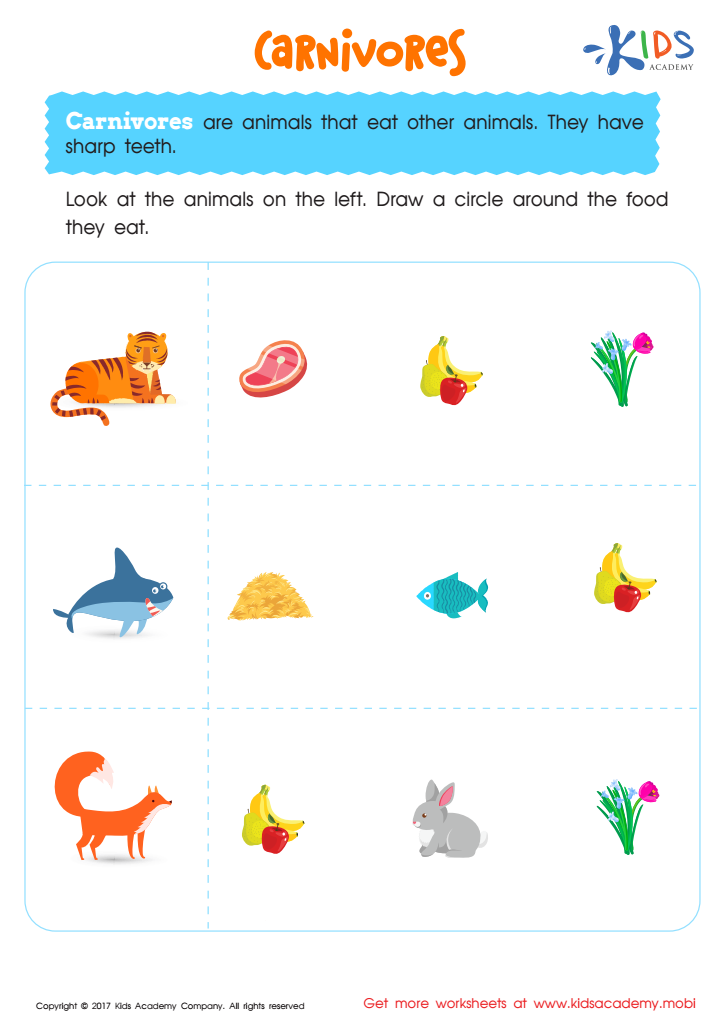
Carnivores Worksheet
 Assign to My Students
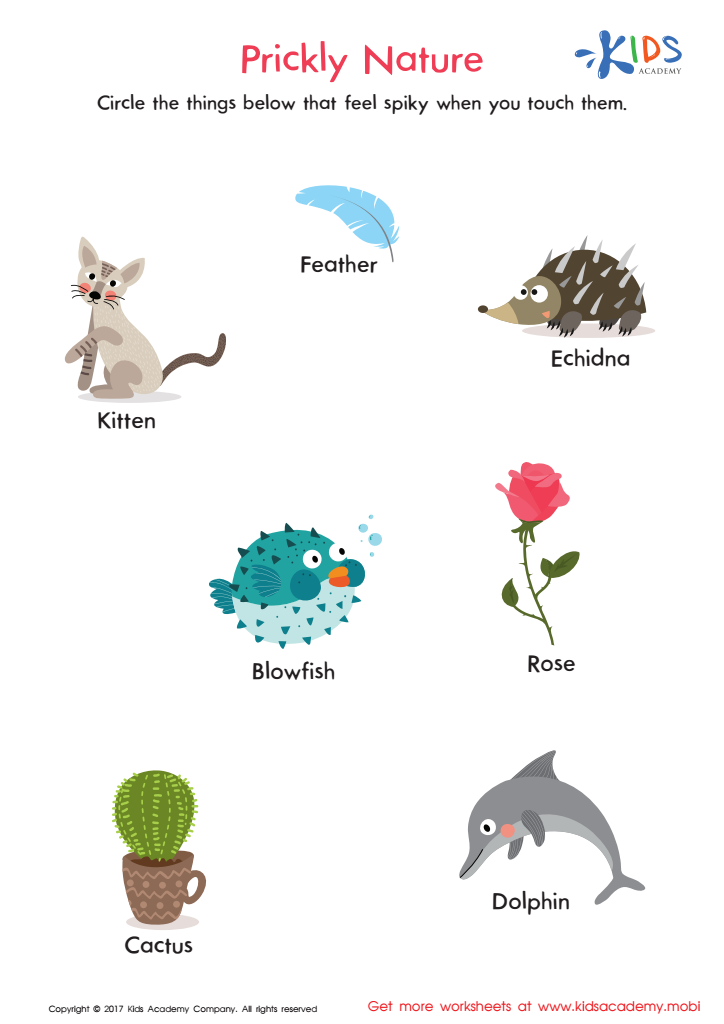
Prickly Nature Worksheet
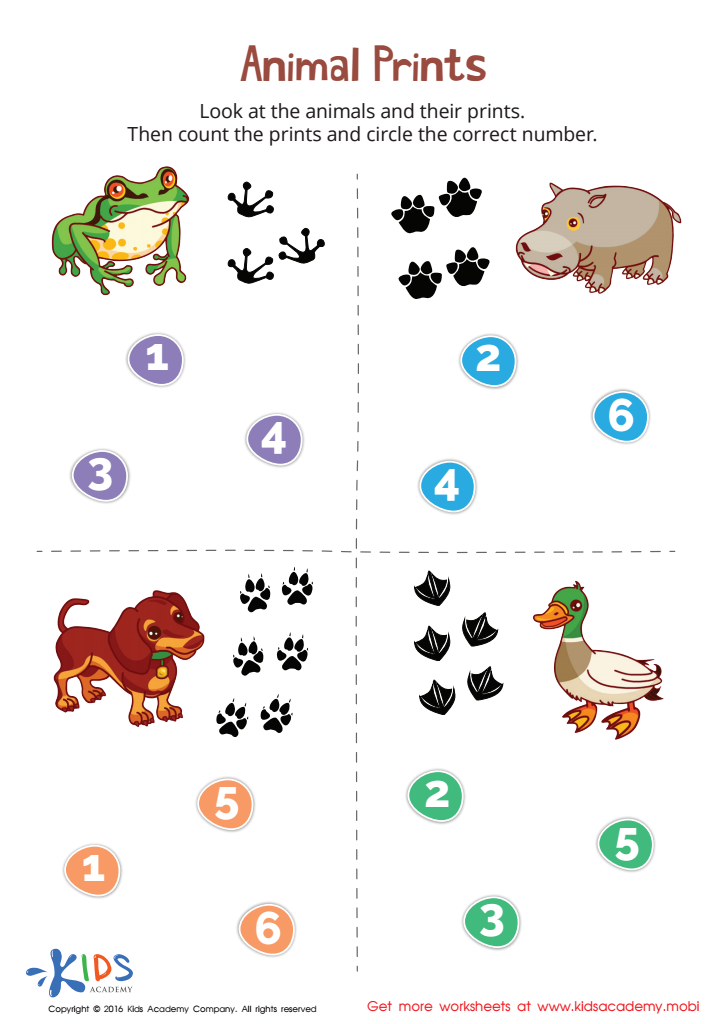
Animal Prints Match-Up Worksheet
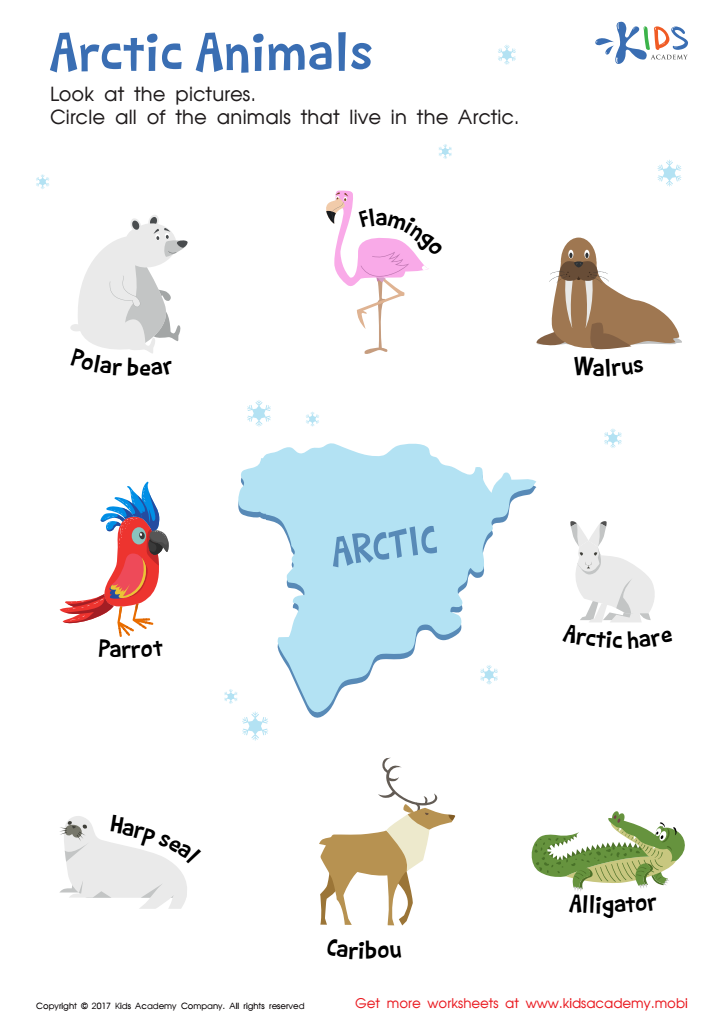
Arctic Animals Worksheet
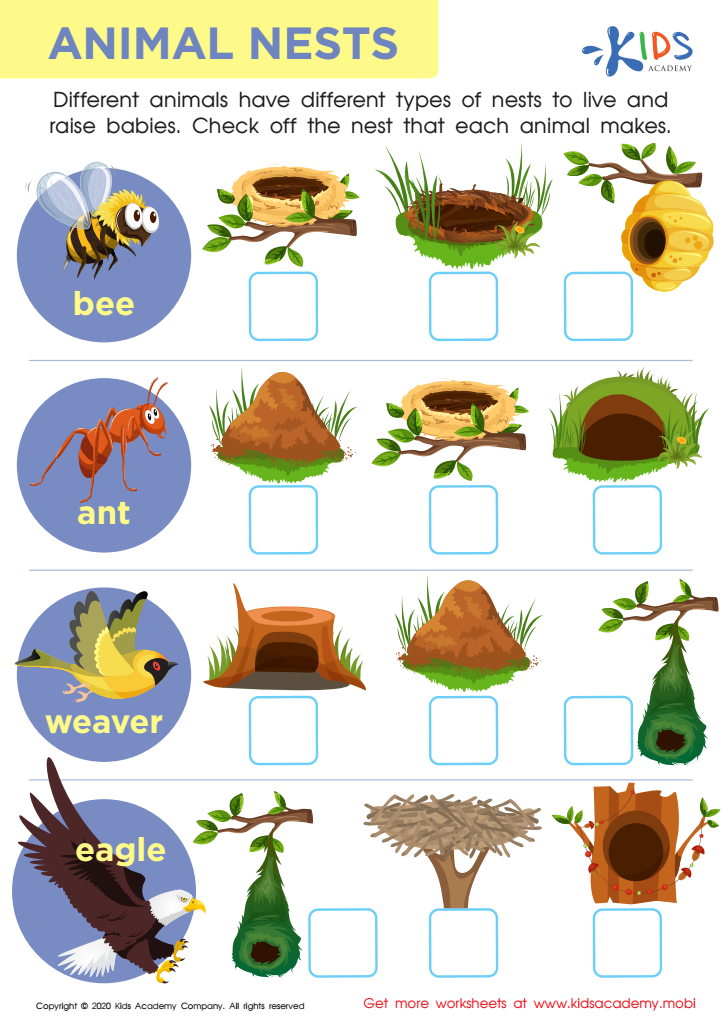
Animal Nests Worksheet
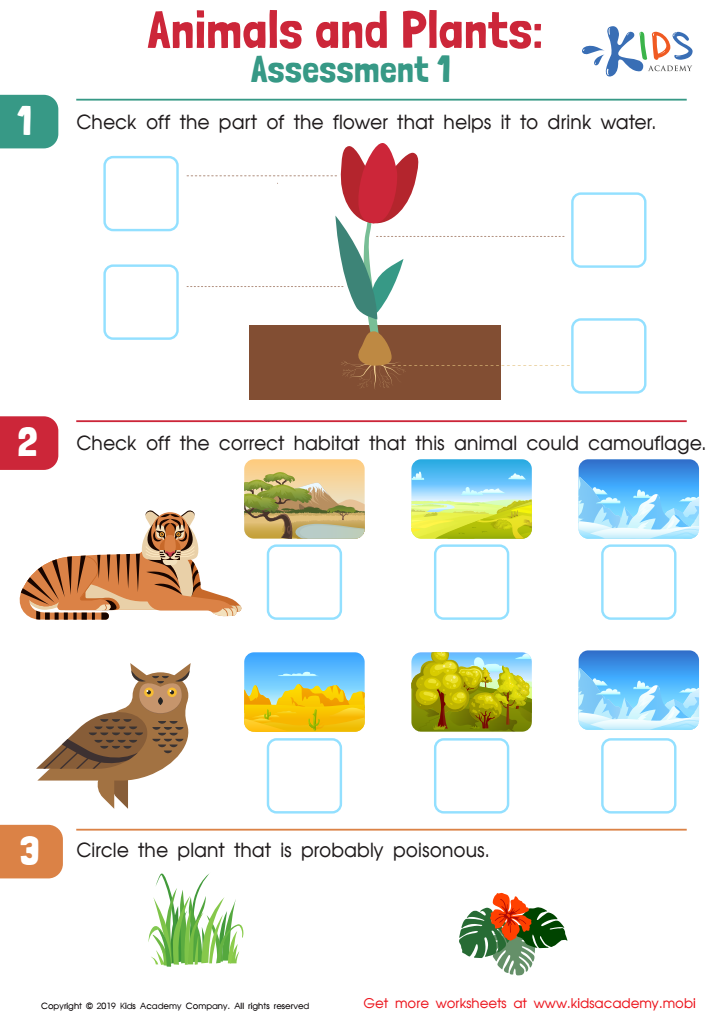
Animals and Plants: Assessment 1 Worksheet








Animal identification science is crucial for young children aged 3-6 as it fosters curiosity, empathy, and foundational knowledge about the natural world. At this developmental stage, children are naturally inquisitive, and introducing them to the concept of identifying different animal species can encourage their love for learning. Recognizing animals helps them develop observation skills, enhancing their attention to detail and critical thinking.
Furthermore, learning about animal characteristics, habitats, and behaviors can instill a sense of responsibility towards wildlife conservation. Kids who understand the importance of various species are more likely to grow into environmentally-conscious adults.
Engaging in activities centered around animal identification can also enhance language skills, as children learn to describe and categorize animals, contributing to their vocabulary and articulation. Collaborative learning experiences, like nature walks or classroom discussions, encourage teamwork and social skills.
Additionally, familiarizing young minds with animals can promote playfulness and creativity through storytelling, arts, and dramatization, making education enjoyable. Thus, for parents and teachers, investing time in animal identification science not only enriches children's knowledge but also nurtures emotional development and promotes a lifelong appreciation for nature.







