Animal recognition Science Worksheets for Ages 3-6
6 filtered results
-
From - To
Discover the joy of learning with our Animal Recognition Science Worksheets, designed for ages 3-6. These engaging and interactive worksheets are perfect for young learners to explore the animal kingdom. Each worksheet focuses on developing a child's observation and categorization skills, making science both fun and educational. With captivating illustrations and simple activities, children will learn to identify various animals, their sounds, and habitats. Ideal for parents and educators, our worksheets foster a love for science from an early age. Available now at Kids Academy for an enriching learning experience in the world of animals!
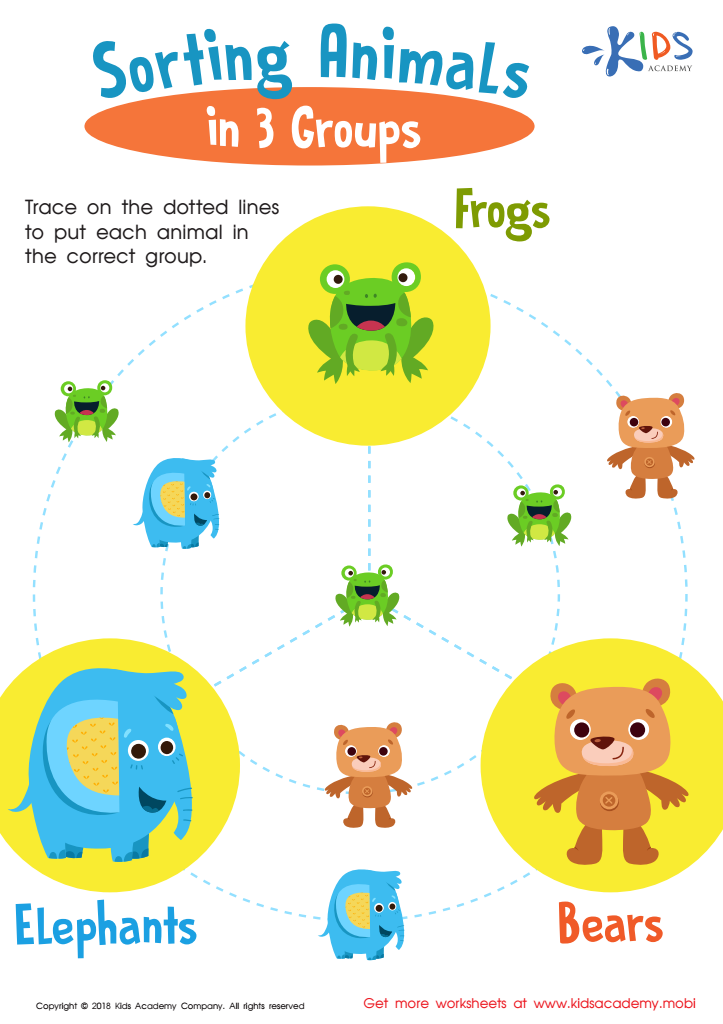
Sorting Animals in 3 Groups Worksheet
 Assign to My Students
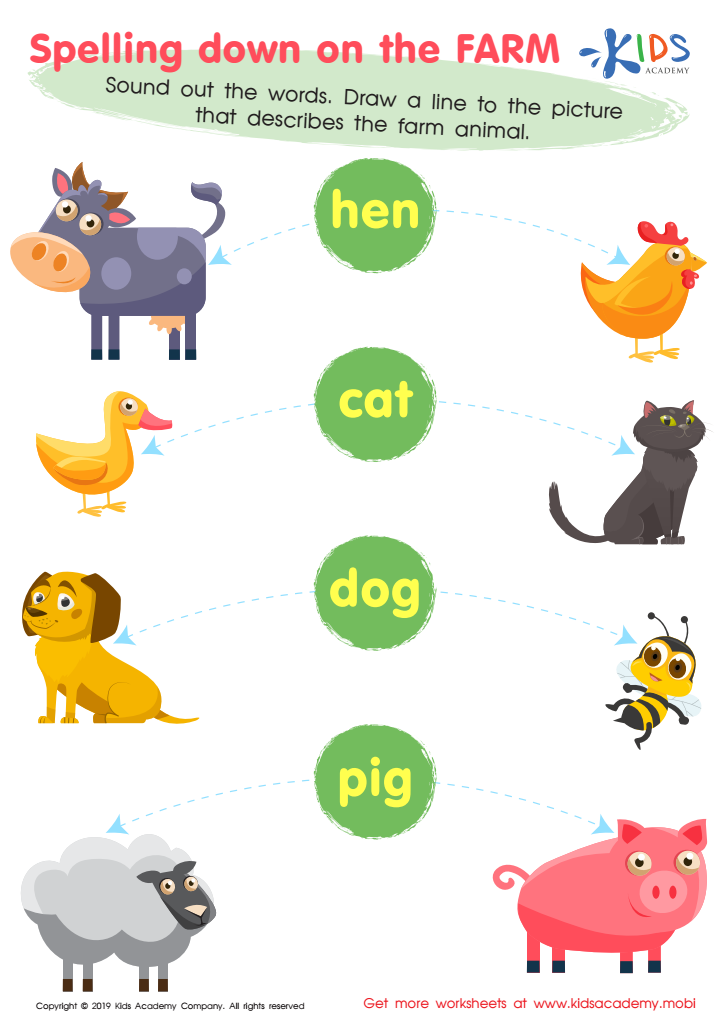
Spelling Down on the Farm Worksheet
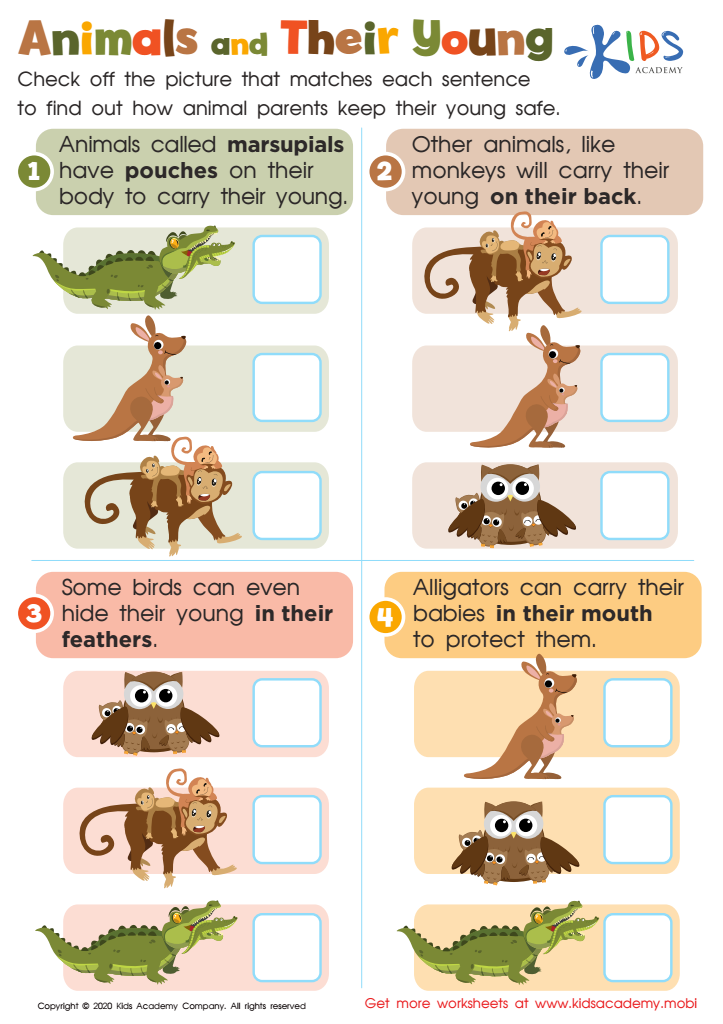
Animals and Their Young Worksheet
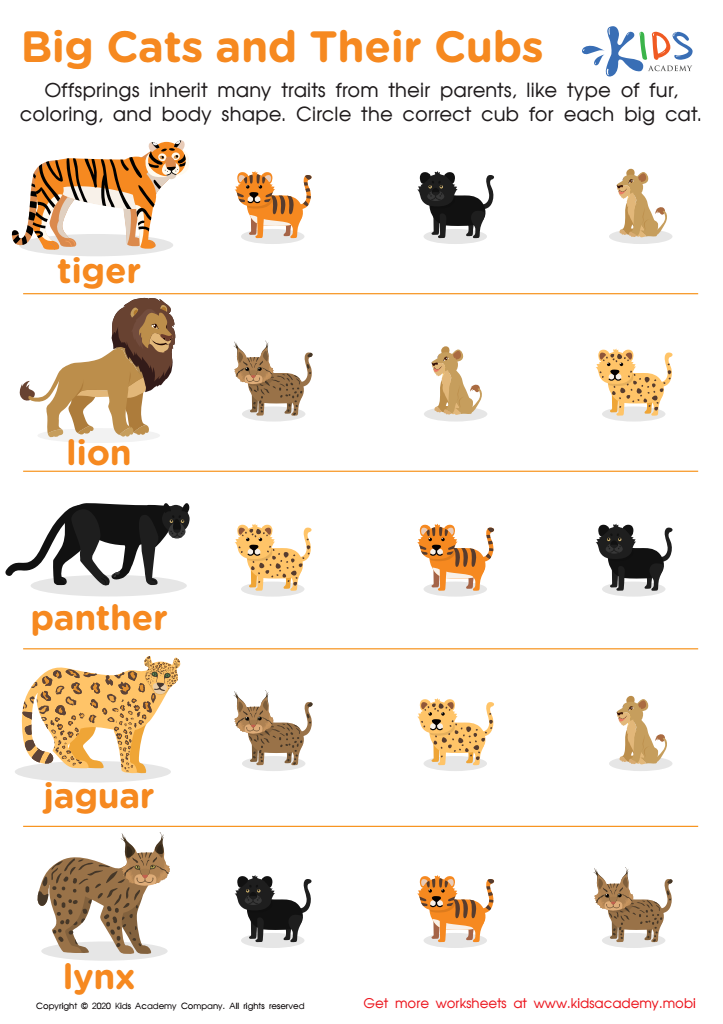
Big Cats and Their Cubs Worksheet
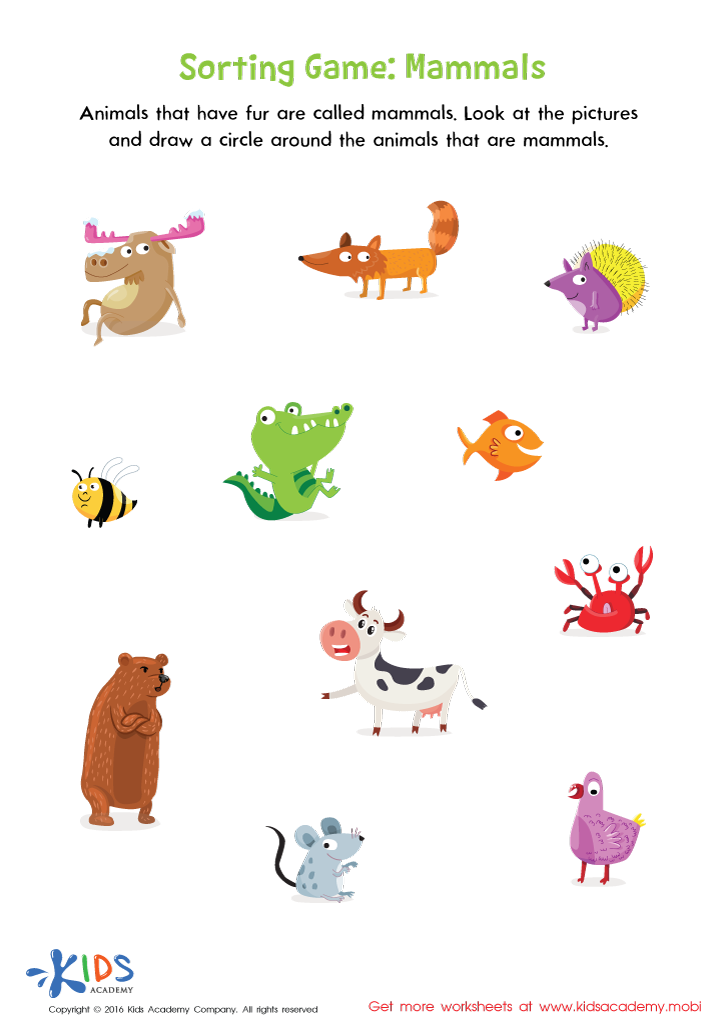
Mammals Sorting Worksheet
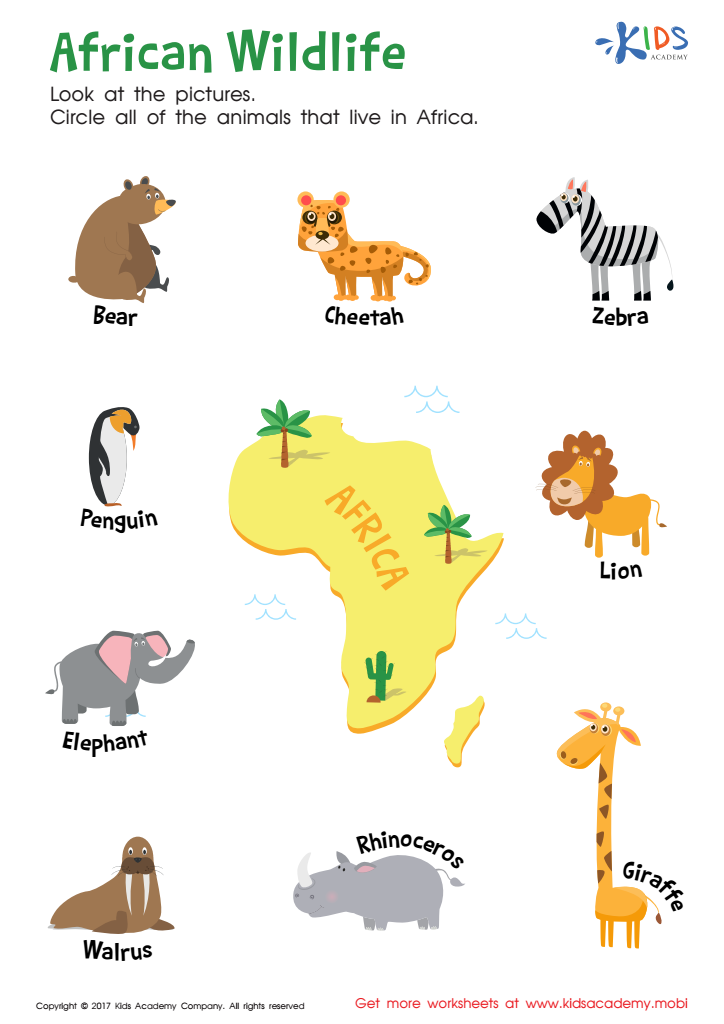







Animal recognition science is vital for young children aged 3-6 because it fosters foundational skills and stimulates curiosity about the natural world. At this impressionable age, learning about animals helps develop cognitive abilities such as memory, classification, and observation. Recognizing various animals and understanding their traits, habitats, and behaviors not only sharpens children’s critical thinking but also lays the groundwork for scientific literacy.
Additionally, animal recognition nurtures empathy and respect for living beings. It encourages children to appreciate biodiversity and understand the importance of conservation. This early exposure can cultivate responsible attitudes towards the environment and instill a lifelong love for nature.
Social and communication skills are also enhanced as children share their discoveries and engage in conversations. Books, multimedia resources, and interactive activities related to animals can be particularly captivating, nurturing a child’s willingness to learn and explore.
Furthermore, integrating animal themes into curriculum supports learning in other subject areas. For instance, counting spots on a ladybug can teach numbers, while studying animal movement can introduce basic physics concepts.
In essence, parents and teachers should care about animal recognition science because it offers a holistic approach to education, laying a nurturing foundation for intellectual, emotional, and social development in young children.







