Recognizing Patterns Science Worksheets for Ages 3-6
3 filtered results
-
From - To
Discover the joy of learning with our "Recognizing Patterns Science Worksheets" tailored for ages 3-6! These engaging worksheets introduce young learners to the world of patterns through fun activities that promote critical thinking and early science skills. By identifying, extending, and creating patterns, children enhance their cognitive abilities while exploring colors, shapes, and nature. Our worksheets are designed to be interactive and visually appealing, making learning enjoyable and effective. Perfect for home or classroom use, these resources provide a solid foundation for early scientific exploration. Help your child develop essential skills that will last a lifetime with our fun pattern recognition worksheets!
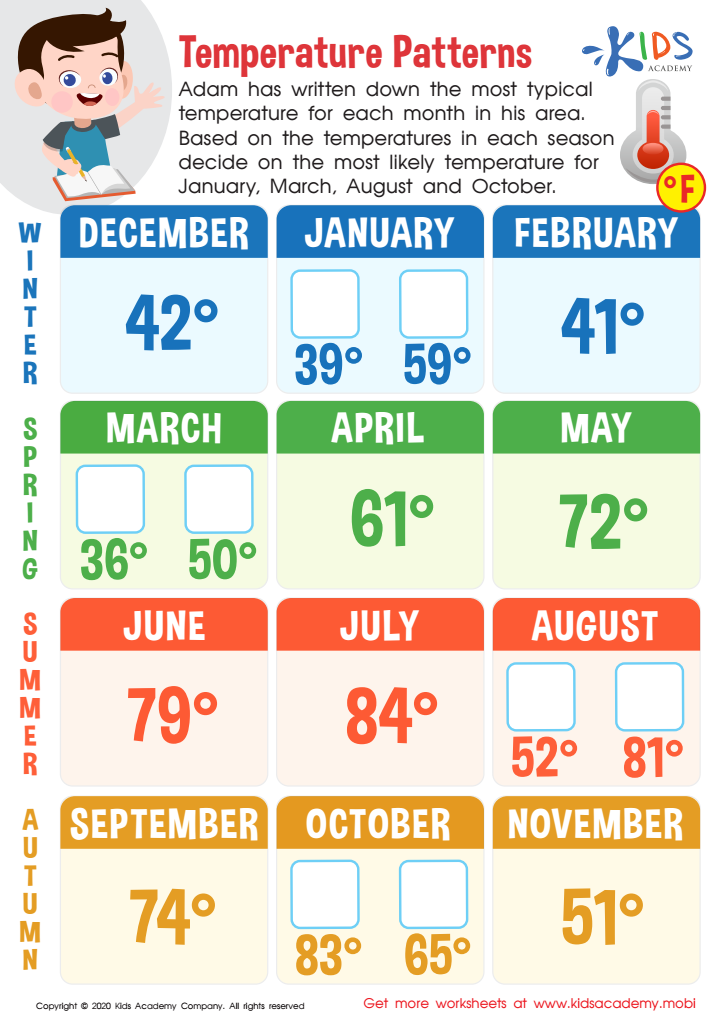
Temperature Patterns Worksheet
 Assign to My Students
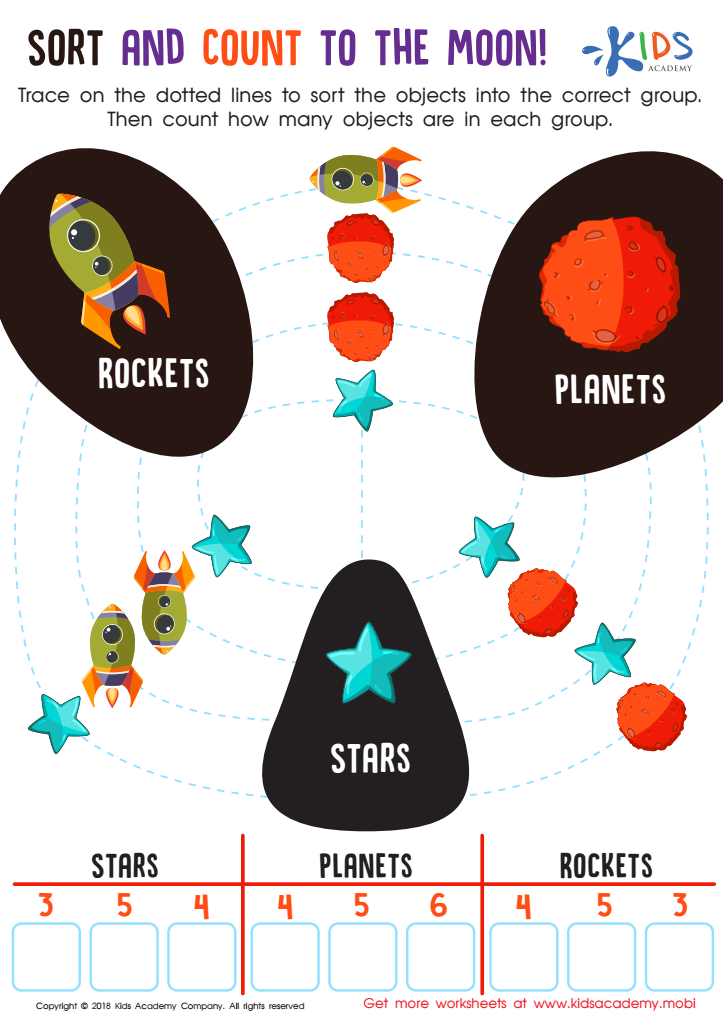
Sort and Count to the Moon Worksheet
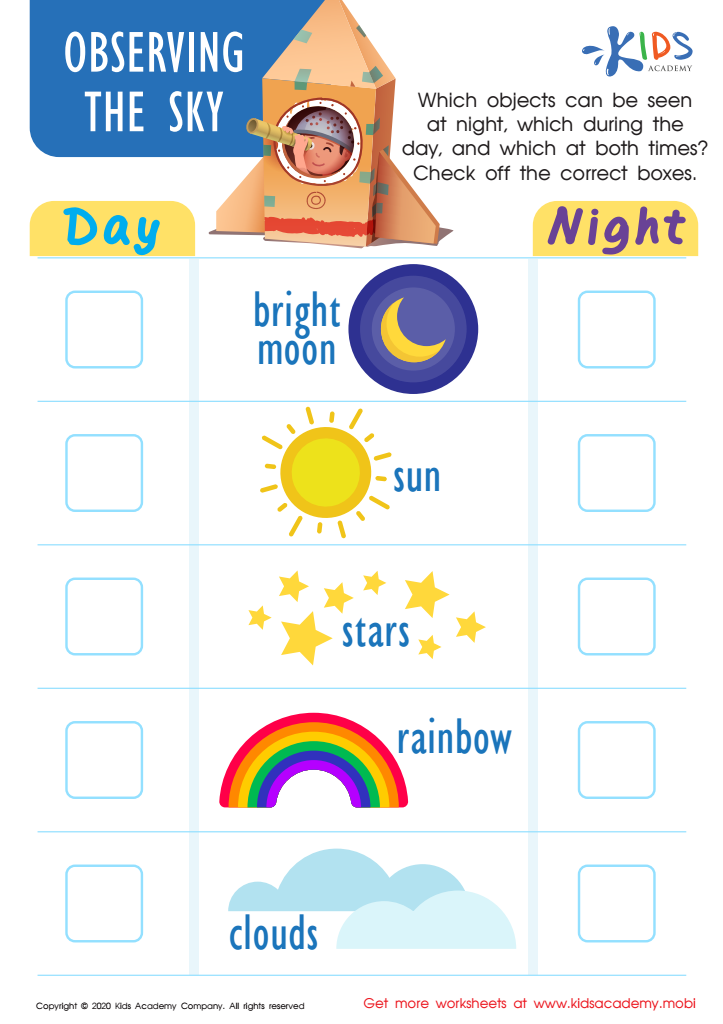
Observing the Sky Worksheet


.jpg)





Recognizing patterns in science is crucial for children aged 3-6 as it lays the foundation for critical thinking, problem-solving, and an understanding of the world around them. At this age, children are naturally curious and heavily influenced by their environments. By engaging them in pattern recognition activities, parents and teachers help foster cognitive skills that are vital for future learning.
Firstly, recognizing patterns aids in the development of mathematical skills. Children learn to identify and predict sequences, which enhances their ability to count, categorize, and grasp basic concepts of mathematics. Additionally, it encourages observation skills and attention to detail, as they learn to notice similarities and differences in their surroundings.
Furthermore, engaging with patterns in science inspires creativity and curiosity. For instance, children explore patterns in nature, such as stripes on a zebra or the shapes of leaves, sparking a sense of wonder and inquiry. This not only deepens their appreciation of the natural world but also advances their scientific understanding.
Ultimately, recognizing patterns is a critical building block in a child’s cognitive, mathematical, and scientific development, leading to confident learners and critical thinkers as they grow. Thus, both parents and teachers play a vital role in nurturing these essential skills early on.







