Problem-Solving Skills Life Science Worksheets for Ages 3-6
3 filtered results
-
From - To
Boost your child's problem-solving skills with our engaging Life Science worksheets designed for ages 3-6! These worksheets incorporate fun, age-appropriate activities that encourage young learners to think critically while exploring the natural world. From identifying plants and animals to sorting habitats and understanding ecosystems, children will develop essential analytical skills through interactive challenges. Each worksheet promotes hands-on learning and creativity, allowing kids to investigate scientific concepts at their own pace. Perfect for homeschooling or classroom use, our Problem-Solving Skills Life Science Worksheets inspire curiosity and foster a love for learning in young minds. Start your child's scientific adventure today!
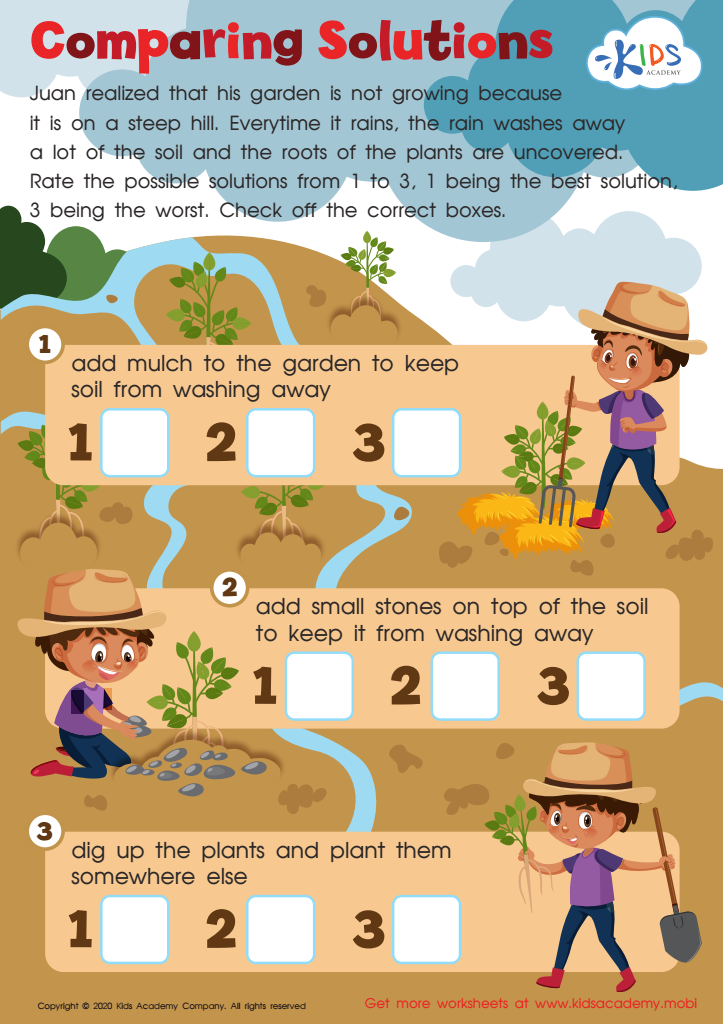
Comparing Solutions Worksheet
 Assign to My Students
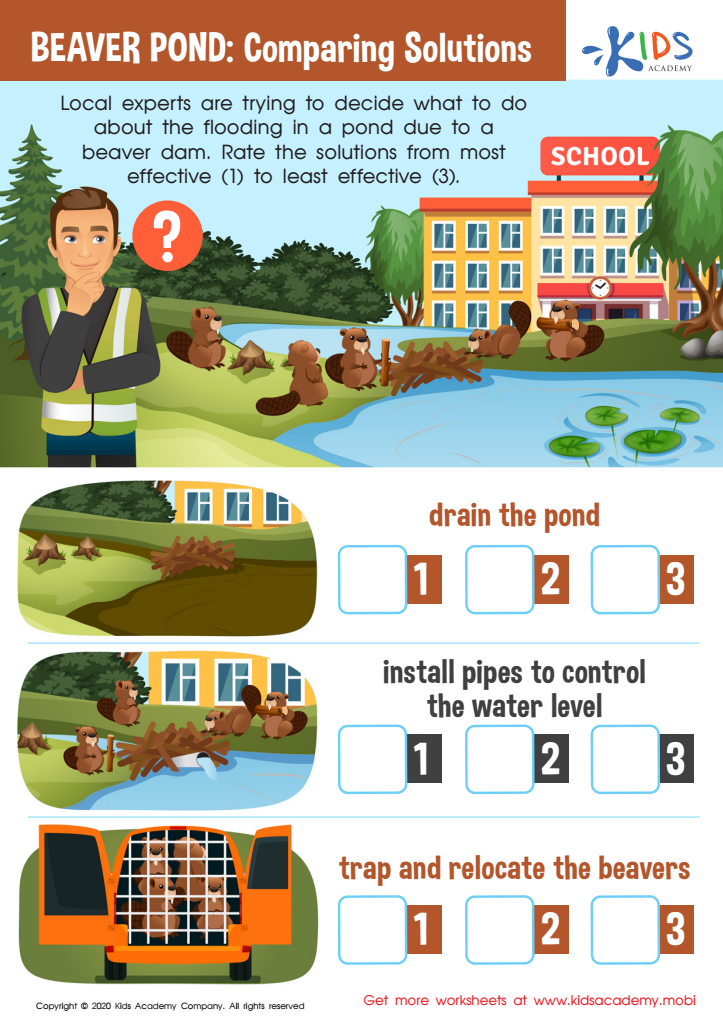
Beaver Pond: Comparing Solutions Worksheet
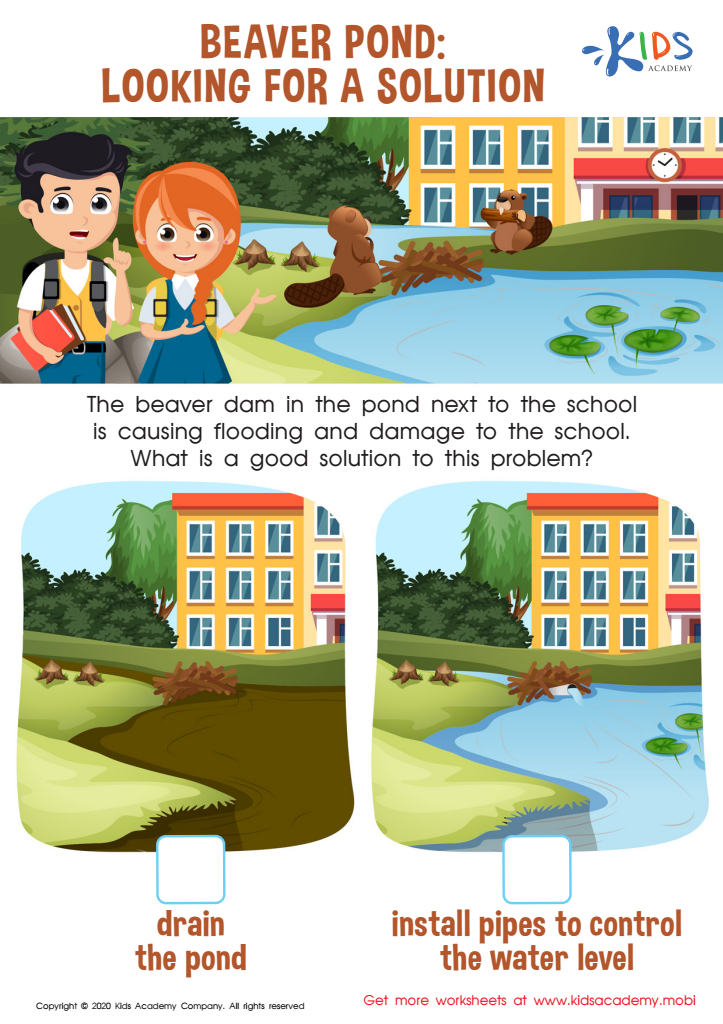
Beaver Pond: Looking for a Solution Worksheet






Parents and teachers should care about developing problem-solving skills in life science for children ages 3-6 because these foundational skills enhance critical thinking, curiosity, and a deeper understanding of the world. At this age, children are naturally curious, asking questions about their environment and how things work. Engaging them in life science fosters this curiosity, encouraging explorative behaviors and a love for learning.
Introducing problem-solving in life science allows children to experiment, observe, and draw conclusions in a hands-on manner. For instance, activities such as planting seeds, caring for living organisms, or exploring ecosystems promote inquiry and reasoning. These experiences help young learners develop resilience and creativity as they encounter challenges or investigate mysteries of nature.
Furthermore, effective problem-solving nurtures social skills, as children often work collaboratively, sharing ideas and strategies. The experience of approaching and solving life-related problems cultivates independence and confidence, essential traits for lifelong learning. By integrating problem-solving skills within the life sciences, parents and teachers equip young children with the tools they need to navigate their environment and develop a strong scientific foundation, fostering future innovation and responsible citizenship.








