Observational skills Space Worksheets for Ages 3-6
3 filtered results
-
From - To
Enhance your child's observational skills with our engaging Space Worksheets designed for ages 3-6! These interactive resources cultivate curiosity and critical thinking as young learners explore the wonders of the universe. Through fun activities, children will develop essential skills such as attention to detail, pattern recognition, and visual comprehension. Our thoughtfully designed worksheets encourage exploration of celestial bodies and concepts, making learning enjoyable and effective. Perfect for home or classroom use, these worksheets provide a fantastic opportunity to spark your child's interest in space science while honing vital observational abilities. Download our Space Worksheets today and launch your child's learning adventure!
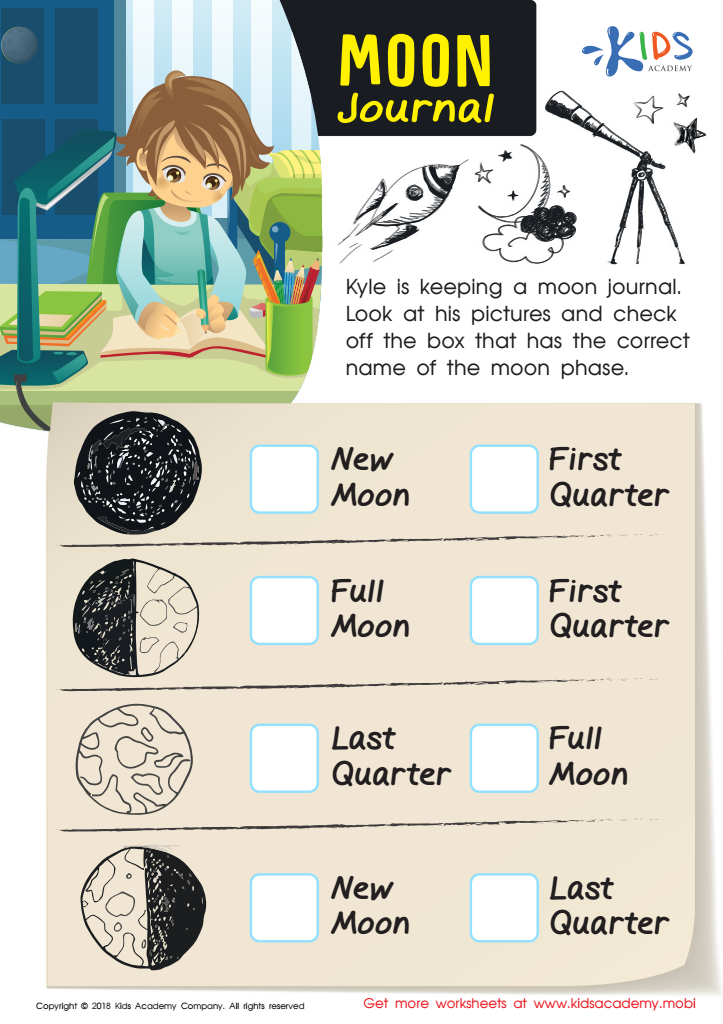
Moon Journal Worksheet
 Assign to My Students
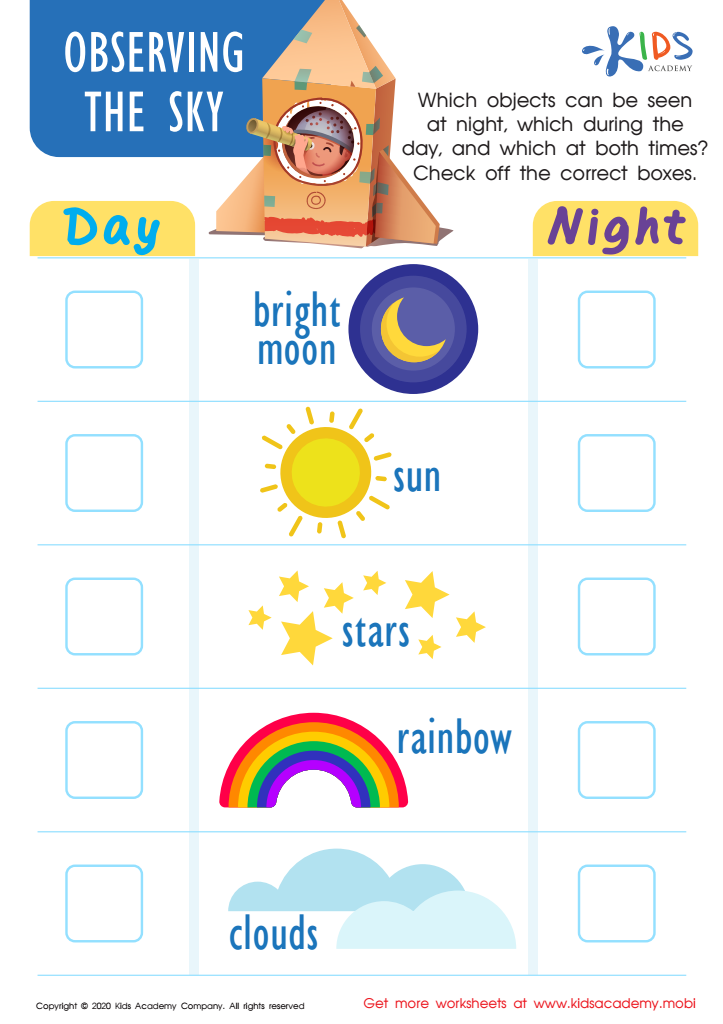
Observing the Sky Worksheet
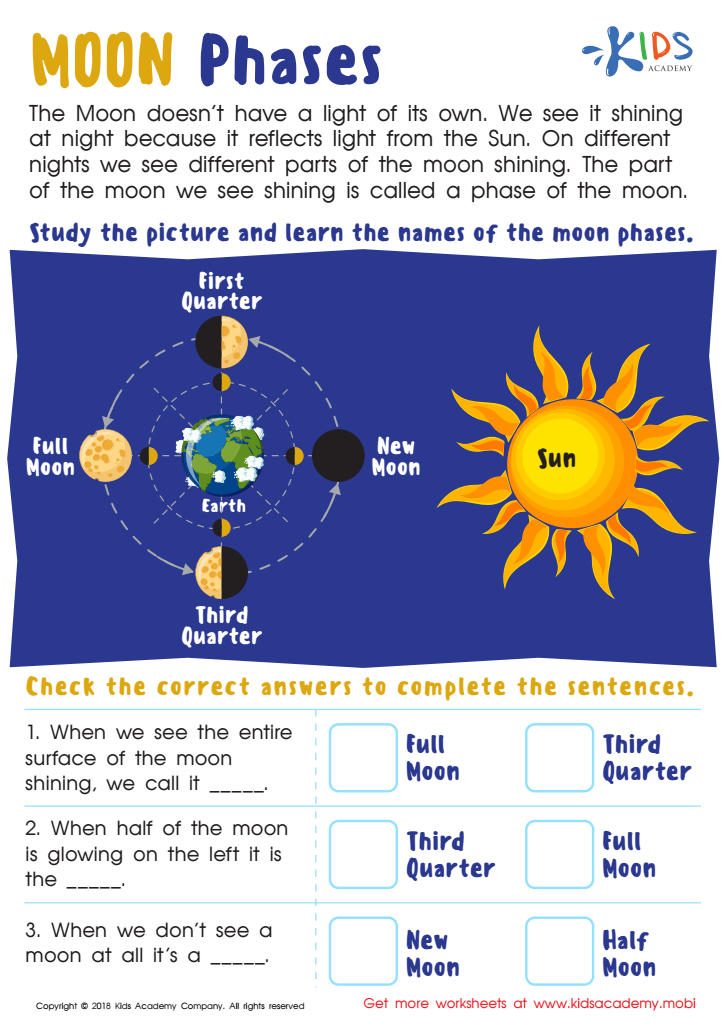
Moon Phases Worksheet







Observational skills are pivotal for children's early development, particularly for those aged 3-6. During these formative years, children are naturally curious and keen to engage with their environment. Parents and teachers should prioritize the development of these skills, as they foster critical thinking, problem-solving, and emotional intelligence.
Encouraging observational skills helps children make connections between what they see, hear, and feel. By noticing details in their surroundings or peer interactions, young learners improve their abilities to communicate and cooperate with others. This aids in socialization and developing empathy—a crucial aspect of emotional growth.
Moreover, observational skills enhance a child's ability to learn informally through exploration and discovery. When children can successfully observe and interpret their surroundings, they become more adept learners, easily integrating new information into existing knowledge frameworks. This hands-on learning approach is vital in early education, laying a strong foundation for more complex cognitive skills acquired later on.
By fostering these skills, parents and teachers will not only optimize children's learning experiences but also instill a lifelong love for learning. In essence, focusing on observational skills is an investment in a child's academic and social future, equipping them with essential tools for navigating the world around them.







