Reading comprehension improvement Space Worksheets for Ages 3-6
3 filtered results
-
From - To
Discover the enchanting world of space while enhancing reading skills with our Reading Comprehension Improvement Space Worksheets, specially designed for ages 3-6. These engaging worksheets blend captivating space-themed illustrations with age-appropriate reading activities to ignite young imaginations and foster an early love for science and astronomy. Tailored to develop essential literacy skills, each worksheet combines fun stories, simple sentences, and easy-to-follow prompts that make learning a delightful adventure. Support your child's early education and build a solid foundation in reading comprehension with these interactive and educational space worksheets. Explore, learn, and sparkle in space!
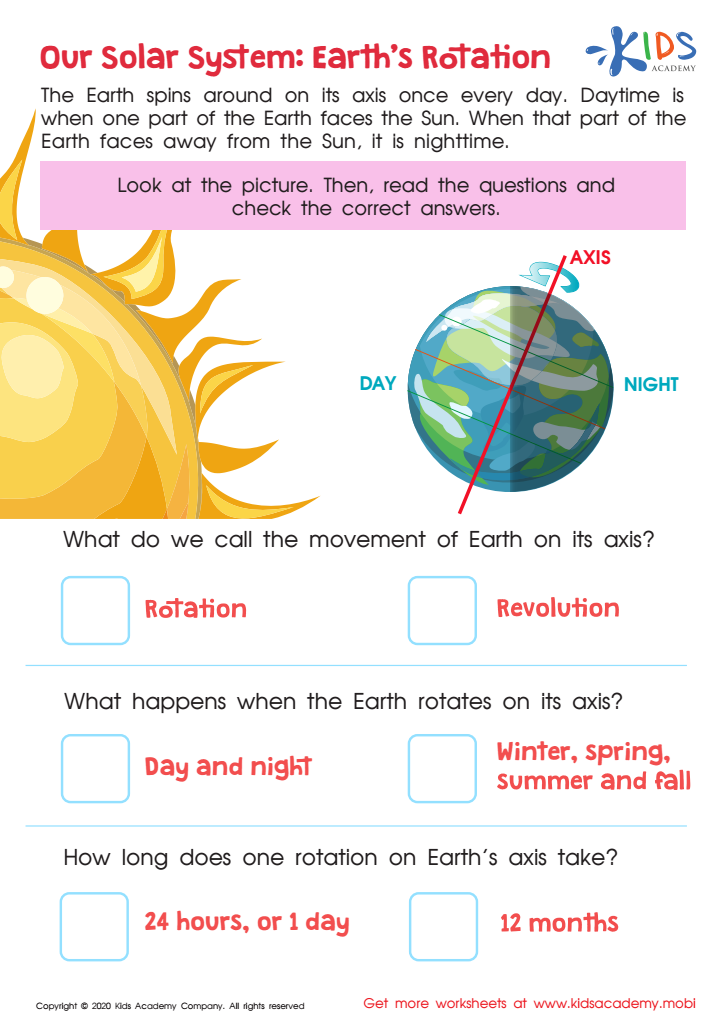
Our Solar System: Earth's Rotation Printable
 Assign to My Students
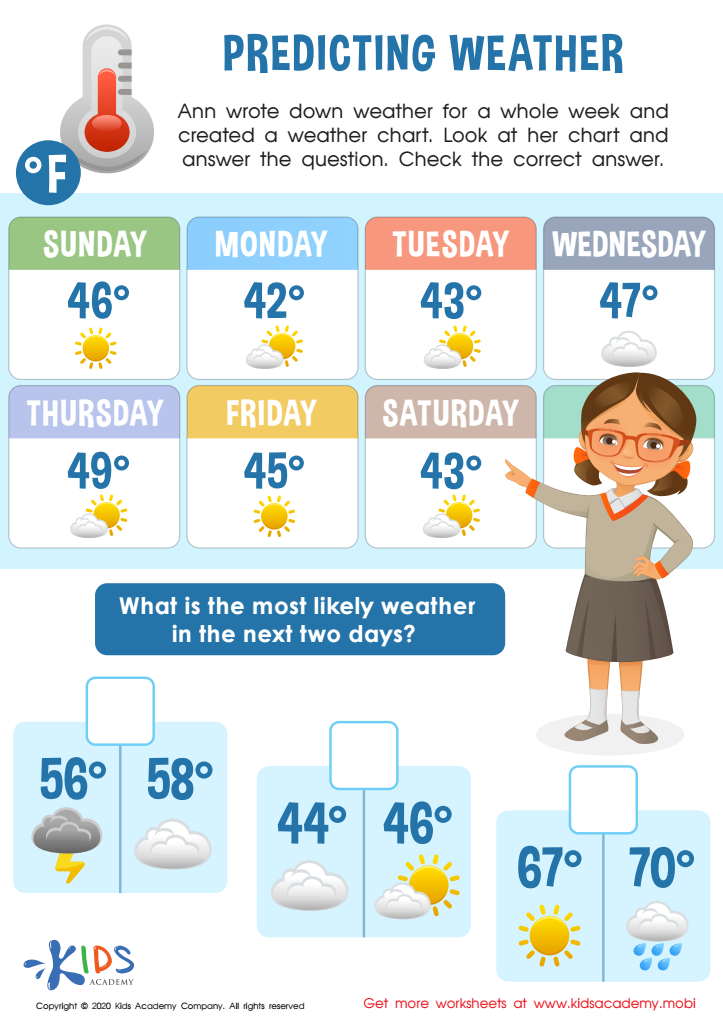
Predicting Weather Worksheet
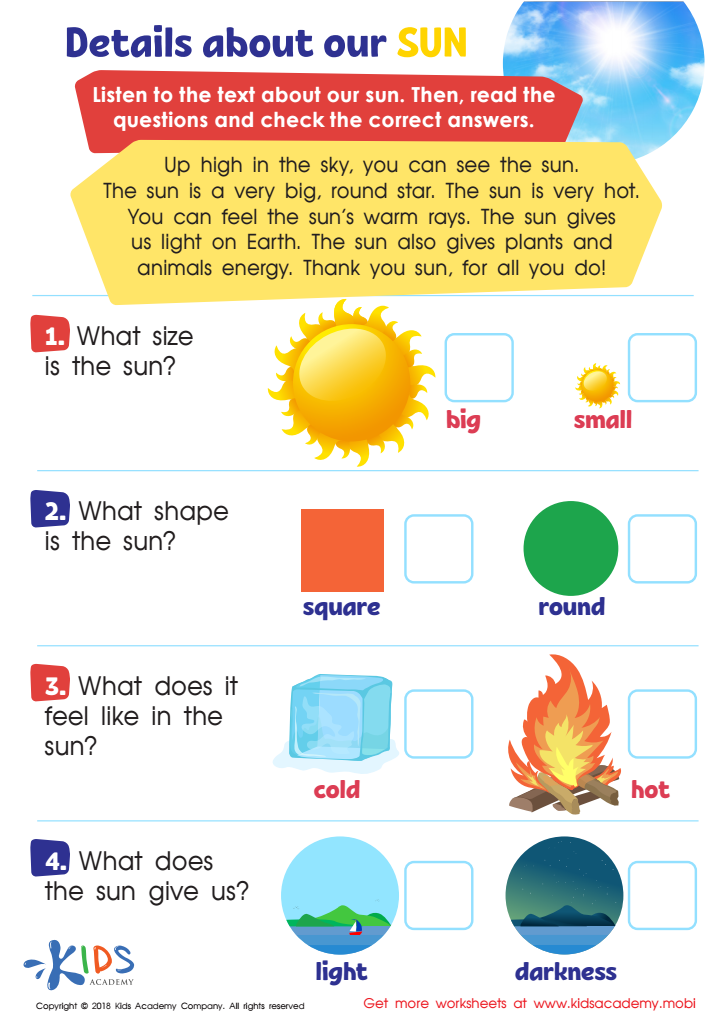
Details About Our Sun Worksheet








Improving reading comprehension for children ages 3-6 is crucial for laying a solid foundation for their future learning and development. At this early stage, children's brains are highly receptive and adaptable, making it the ideal time to develop essential literacy skills. Engaging in reading comprehension activities helps children not only understand the narratives in their books but also boosts their cognitive development, vocabulary, and linguistic abilities.
Reading comprehension is more than just recognizing words; it’s about grasping the meaning of sentences and stories. This skill helps kids make sense of the world around them and enhances their critical thinking. It’s linked to academic success because strong reading comprehension skills correlate with better performance in all subjects, not just English.
For parents and teachers, creating a reading-rich environment means opening doors to a lifelong love of books and learning. Activities such as storytelling, interactive reading sessions, and discussions about stories enhance a child’s ability to understand and retain information. Encouraging these practices helps children develop focus, patience, and listening skills, essential traits for successful learning.
Additionally, improving reading comprehension at an early age builds confidence and instills a sense of achievement in children. This self-assurance propels them toward more advanced learning goals, setting a positive trajectory for their educational journey.







