
Space knowledge Space Worksheets for Ages 3-6
3 filtered results
Difficulty Level
Grade
Age
-
From - To
Subject
Activity
Standards
Explore the wonders of the universe with our Space Knowledge Worksheets designed for children ages 3-6! Our engaging resources introduce young learners to fascinating topics such as planets, stars, and the cosmos through fun activities that stimulate their curiosity. Each worksheet promotes essential skills like problem-solving, sequencing, and critical thinking, ensuring that kids grasp complex concepts in an accessible way. Perfect for use in the classroom or at home, these worksheets make learning about space enjoyable and interactive. Spark your child's interest in science and the universe as they embark on their cosmic adventure today!
Favorites
With answer key
Interactive
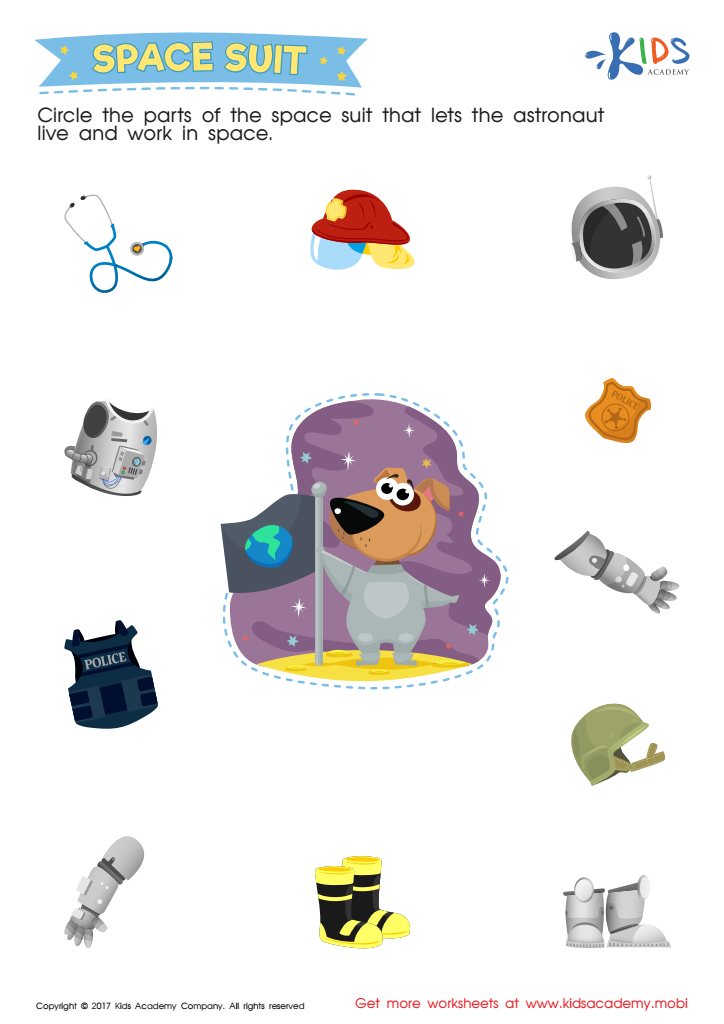
 Assign to My Students
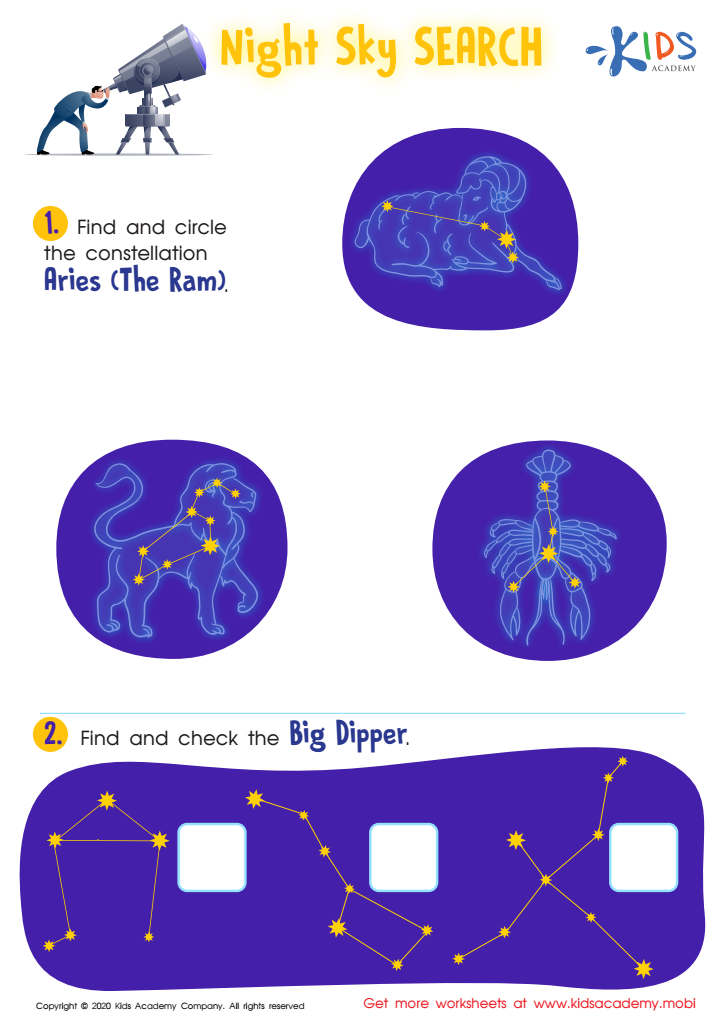
Night Sky Search Worksheet
Gaze up into the night sky and spot the stars! Your little astronomer can learn about Aries and Big Dipper constellations with this science worksheet. Simply find the ram for Aries and check the box for Big Dipper. Then, when the weather is right, go outside and look for them in the night sky!
Night Sky Search Worksheet
Worksheet
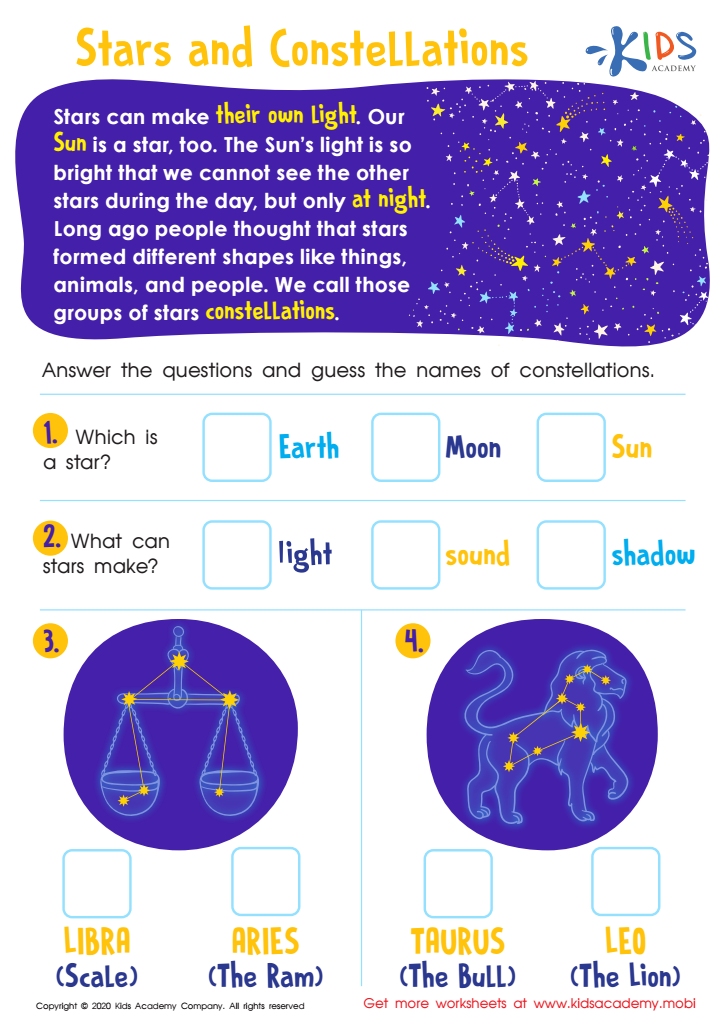
Stars and Constellations Worksheet
Learn about stars and constellations with this entertaining worksheet! Read the passage at the top of the page to gain an understanding of stars, then test your child's knowledge with the questions below. Check the right answers and finish this science worksheet with your child - they'll be amazed that stars can make their own light, just like the sun!
Stars and Constellations Worksheet
Worksheet
Join Kids Academy for Free
Who is primarily going to use this learning content?





%20(1).jpg)

.jpg)
Space knowledge for ages 3-6 is crucial for several reasons. Firstly, early exposure to space concepts fosters curiosity and imagination, two essential components of young children's development. By learning about planets, stars, and the universe, children can engage in imaginative play, supporting cognitive growth and critical thinking skills.
Additionally, instilling a fascination for space encourages inquiry-based learning. When young learners ask questions about the cosmos, it prompts exploration and discovery, elements central to effective education. This foundation can nurture a lifelong love of learning, sparking interests in science, technology, engineering, and mathematics (STEM) fields, which are vital for the future workforce.
Moreover, space knowledge expands children's horizons, teaching them about the interconnectedness of life on Earth with the universe. Understanding our place in the cosmos can foster a sense of wonder and responsibility towards our planet and inspire discussions on important themes like sustainability and cooperation.
Lastly, learning about space teaches fundamental skills such as counting, classification, and storytelling, making it a multidimensional educational tool. By integrating space topics into early education, parents and teachers can nurture well-rounded, curious, and engaged learners, laying the groundwork for future academic success and informed global citizens.







