Critical Thinking Community Worksheets for Ages 3-6
5 filtered results
-
From - To
Welcome to our Critical Thinking Community Worksheets for Ages 3-6! Designed to foster early cognitive skills, our engaging worksheets guide young learners in exploring their community while sharpening their thinking abilities. Featuring fun, age-appropriate activities, these worksheets encourage children to analyze, question, and connect ideas in a playful manner. By integrating critical thinking into the learning process, we help children develop problem-solving skills and creativity. Perfect for both classroom settings and home learning, each worksheet is tailored to make complex concepts easily accessible and enjoyable for little learners. Start nurturing your child's critical thinking skills today!
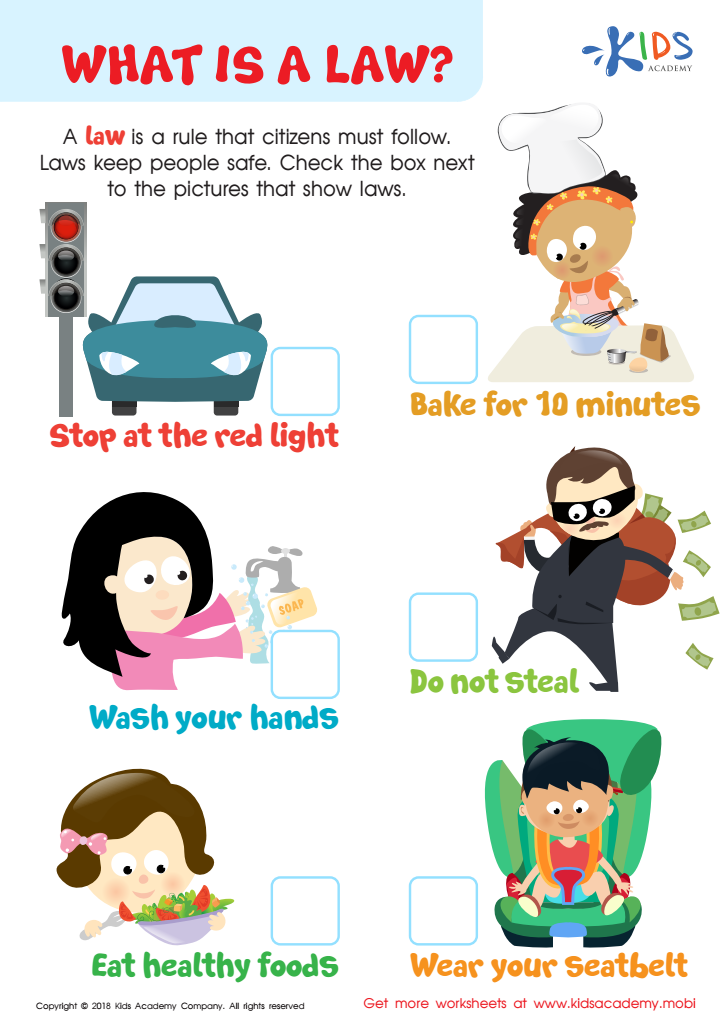
What is a Law? Worksheet
 Assign to My Students
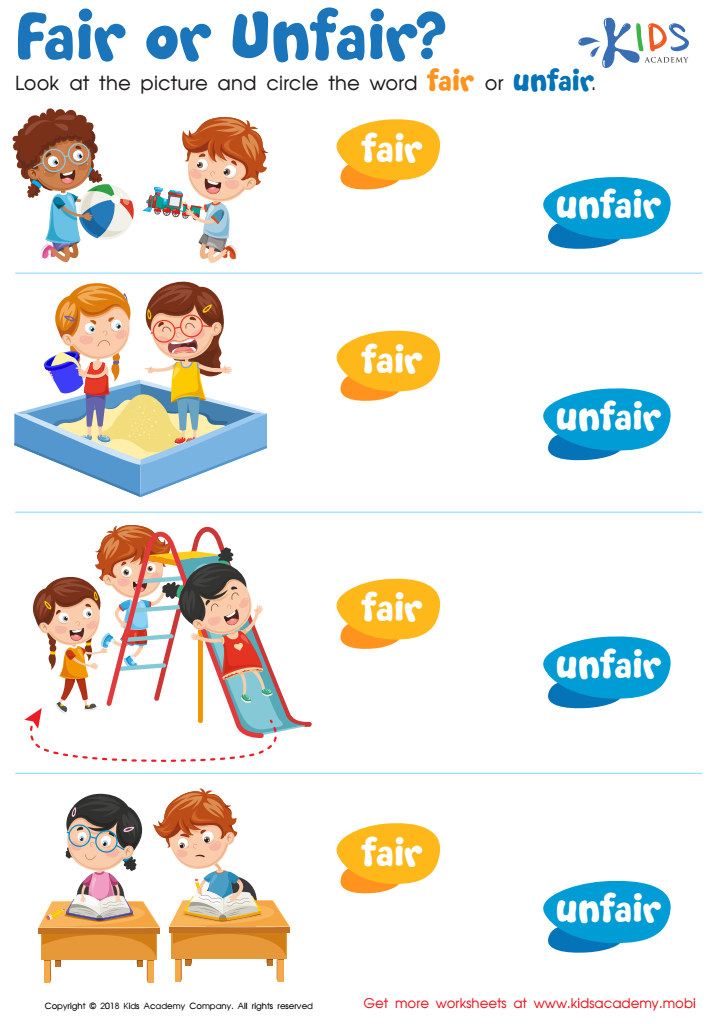
Fair or Unfair Worksheet
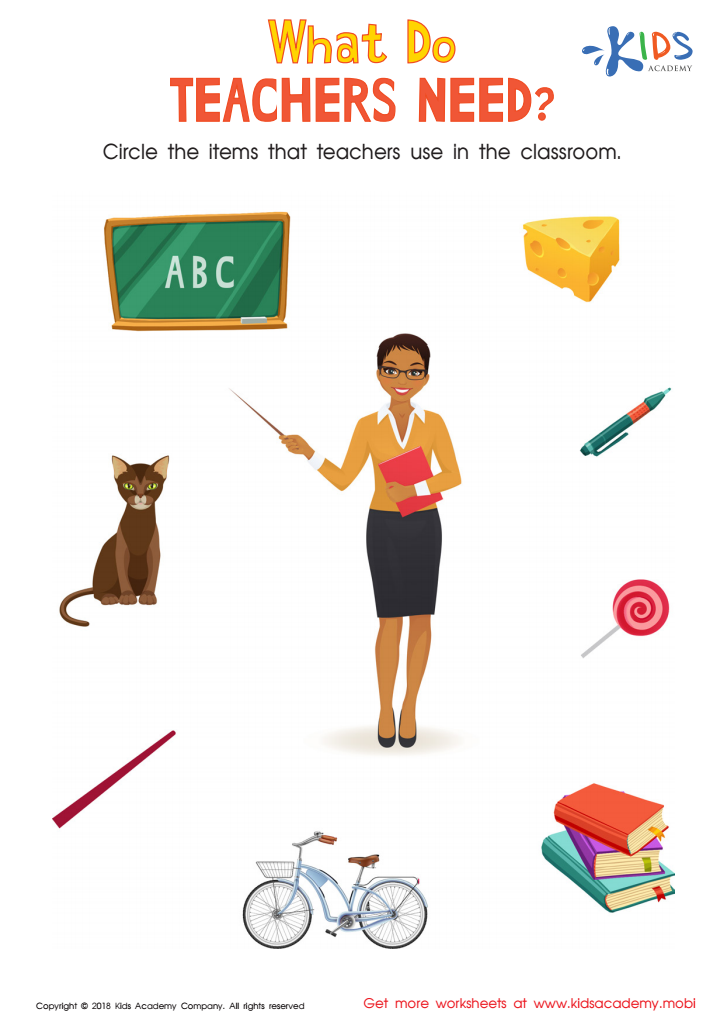
What Do Teachers Need Worksheet

Traditional Music Worksheet
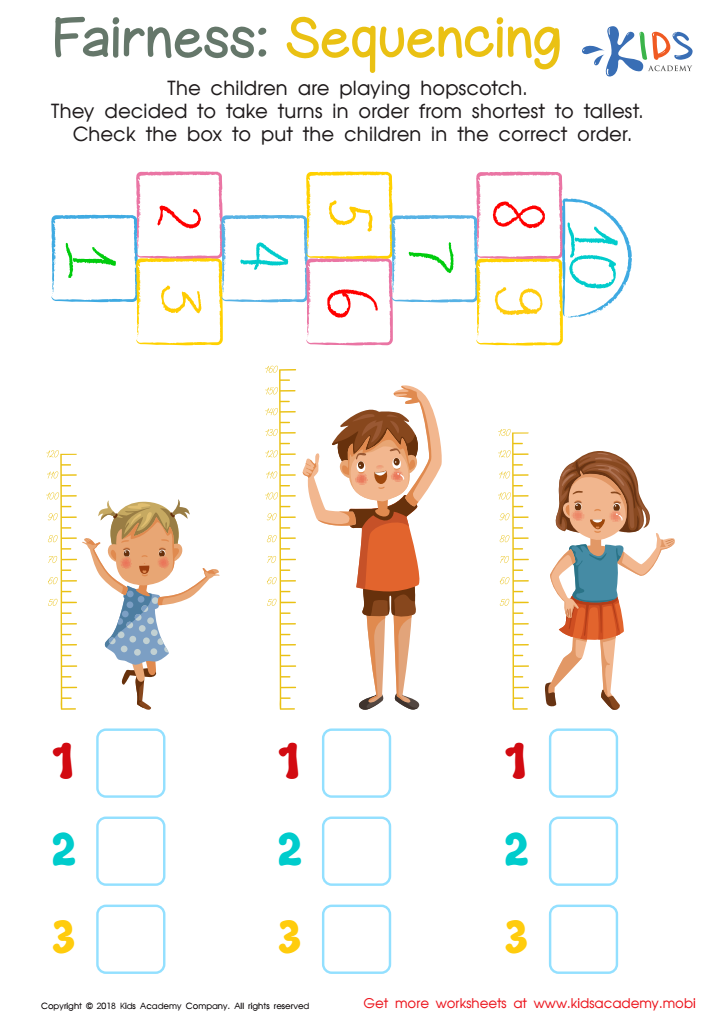
Fairness: Sequencing Worksheet







Parents and teachers should care about the Critical Thinking Community for Ages 3-6 because it lays the foundation for essential cognitive skills crucial for children’s future success. Critical thinking nurtures a child's ability to analyze situations, solve problems, and make informed decisions. At this age, children's brains are highly receptive, and engaging them in critical thinking activities fosters curiosity and a love for learning.
Additionally, involvement in a community designed to enhance critical thinking cultivates social and collaborative skills. Children learn to communicate their ideas, listen to different perspectives, and work together towards common solutions. This not only builds their confidence but also improves their emotional intelligence, preparing them for schooling and life challenges.
Furthermore, educators and caregivers equipped with resources and strategies from the Critical Thinking Community can create enriching learning environments. They can implement age-appropriate activities that stimulate inquiry and dialogue, moving away from rote memorization to experiential learning.
Ultimately, encouraging critical thinking from an early age empowers children to become independent thinkers, effective communicators, and lifelong learners, paving the way for their academic and personal development. Supporting such initiatives influences a child’s ability to navigate an increasingly complex world effectively.








