Understanding communities Community Worksheets for Ages 3-6
3 filtered results
-
From - To
Explore our engaging "Understanding Communities Community Worksheets" designed for children ages 3-6. These interactive worksheets are perfect for young learners, helping them discover the various elements that make up their community. Through fun coloring, matching, and sorting activities, children will identify key community roles, landmarks, and resources. These educational tools foster curiosity and enhance social awareness, allowing kids to better understand their surroundings and the people within their communities. Suitable for both home and classroom use, these worksheets promote early social studies skills while making learning enjoyable and accessible. Start your child's journey into community awareness today!
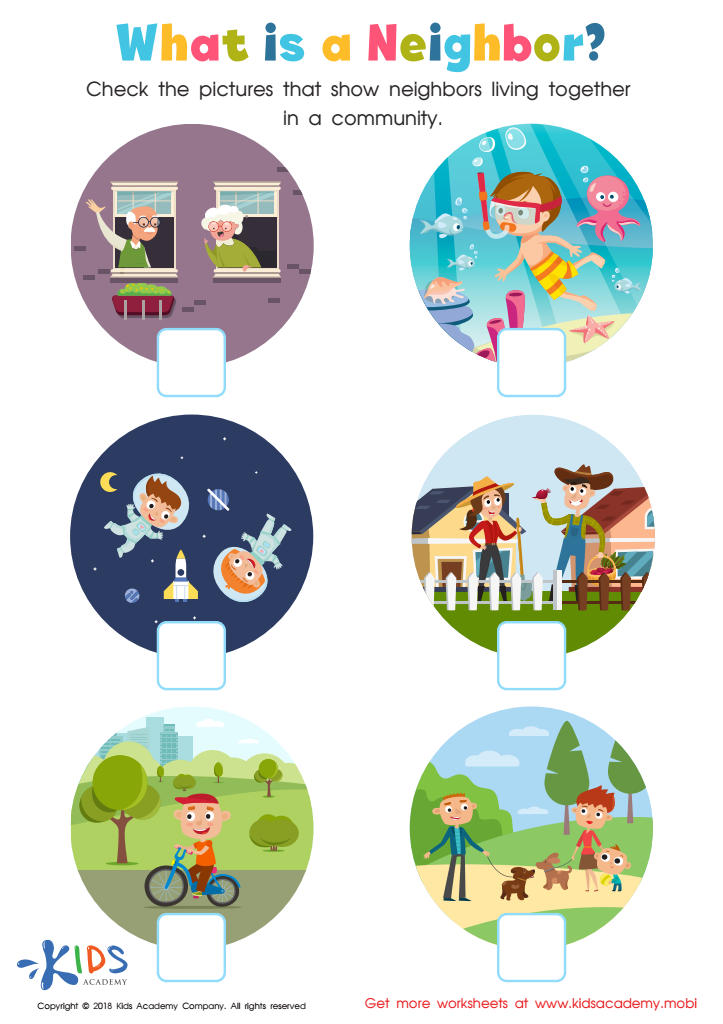
What is a neighbor Worksheet
 Assign to My Students
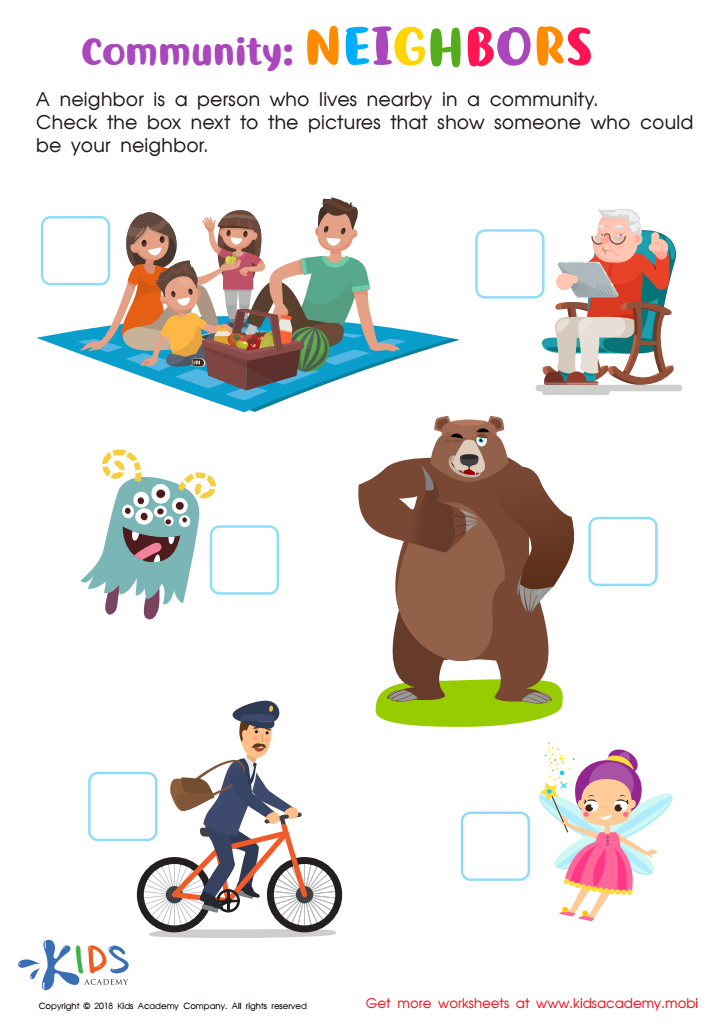
Community: Neighbors Worksheet
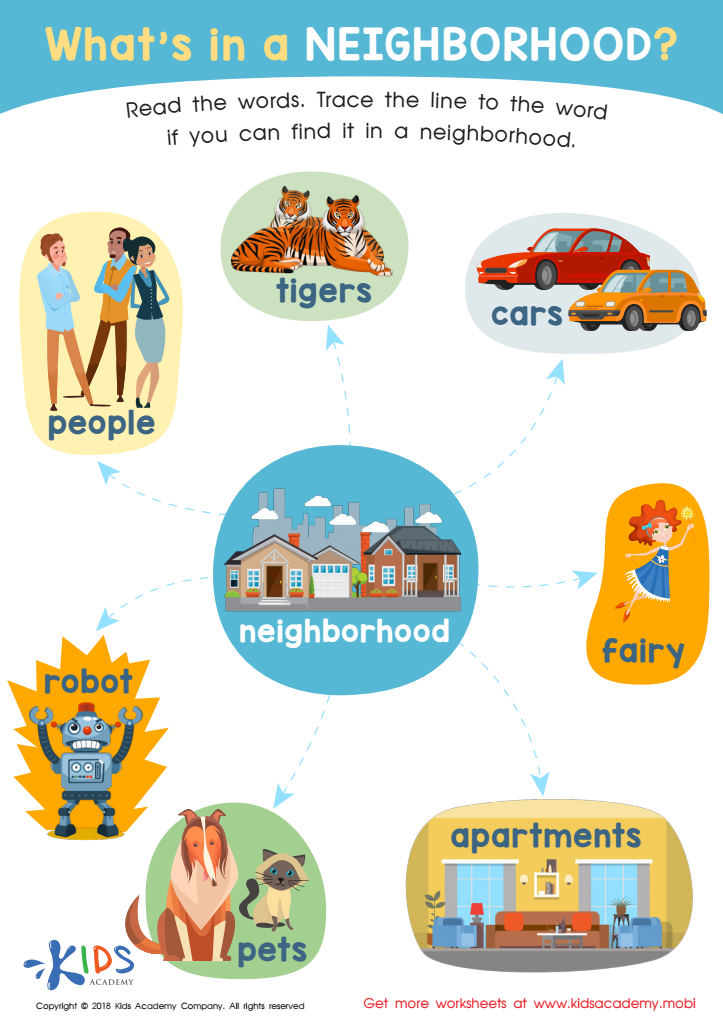
What's in a Neighborhood? Worksheet







Understanding communities is essential for parents and teachers of children aged 3-6 because it lays the groundwork for social, cognitive, and emotional development during these formative years. At this age, children are naturally curious about the world around them, and learning about their community helps them make sense of their experiences.
Teaching young children about their community fosters a sense of belonging and identity. It allows them to recognize the people and places that influence their daily lives, from family members to local parks and essential services. This familiarity helps children build connections, promoting social skills such as empathy and cooperation.
Additionally, discussing community encourages language development, as children learn to express thoughts about their environment and ask questions. Through storytelling, art, and play, they explore roles within their communities, gaining a deeper understanding of diversity and shared responsibilities.
Moreover, parents and teachers who focus on community engagement can model civic responsibility and respect for others. By fostering an awareness of their community, they equip children with the skills necessary to navigate and contribute positively to the larger world, ultimately enhancing their personal and academic growth.








