
Enhancing observation skills Social Studies Worksheets for Ages 3-6
3 filtered results
Difficulty Level
Grade
Age
-
From - To
Subject
Activity
Standards
Discover our engaging Social Studies worksheets designed to enhance observation skills for children aged 3-6. These interactive activities encourage young learners to explore their surroundings, develop critical thinking, and build meaningful connections with their environment. Featuring colorful visuals and age-appropriate themes, our worksheets promote active learning through observation exercises that spark curiosity and ignite imagination. Ideal for classroom settings or at-home learning, these resources empower educators and parents to facilitate effective skill-building while making learning enjoyable. Take your child's understanding of the world to the next level with our thoughtfully crafted worksheets, perfect for fostering early observation and analytical skills.
Favorites
With answer key
Interactive
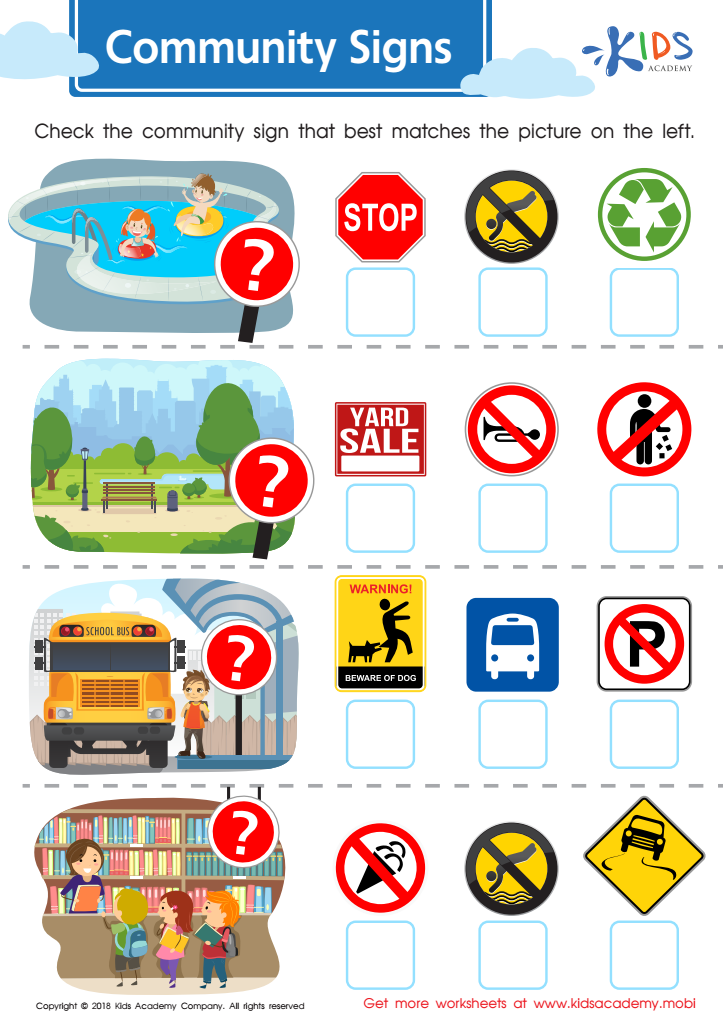
Community Signs Worksheet
To stay safe, our kids need to know community signs. Ask them to name signs at the pool, park, etc. Then, have them check the worksheet for the picture that matches the community signs.
 Assign to My Students
Community Signs Worksheet
Worksheet
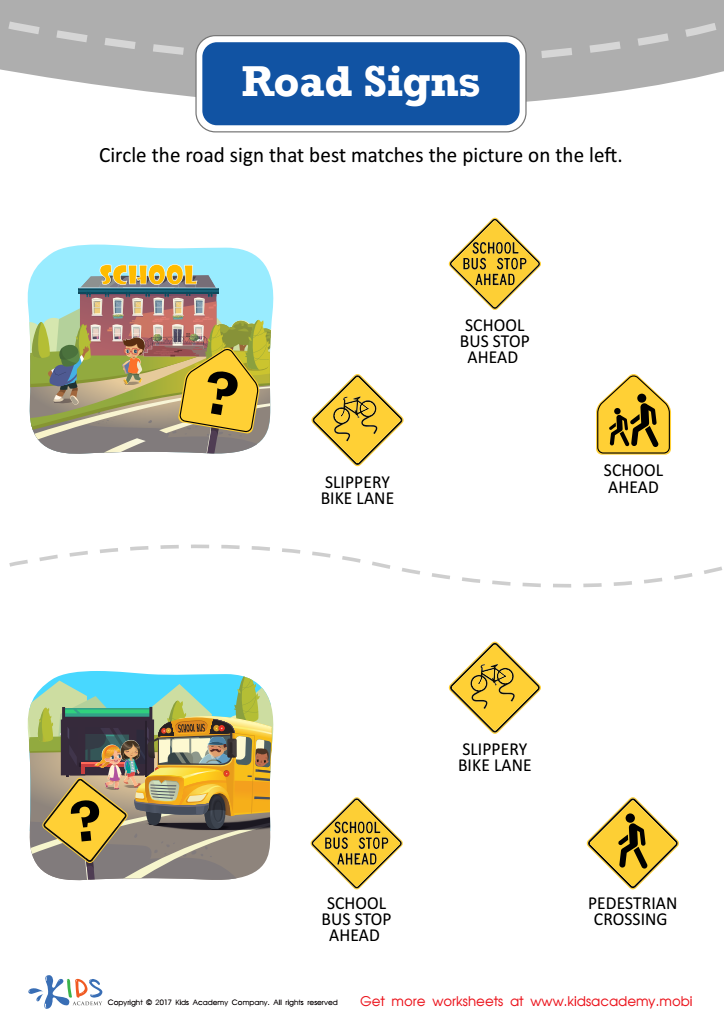
Road Signs (Part 1) Worksheet
Kids are exposed to danger near roads, so help them recognize traffic signs with this printable. It'll foster their reading comprehension and symbol recognition, while keeping them safe.
Road Signs (Part 1) Worksheet
Worksheet
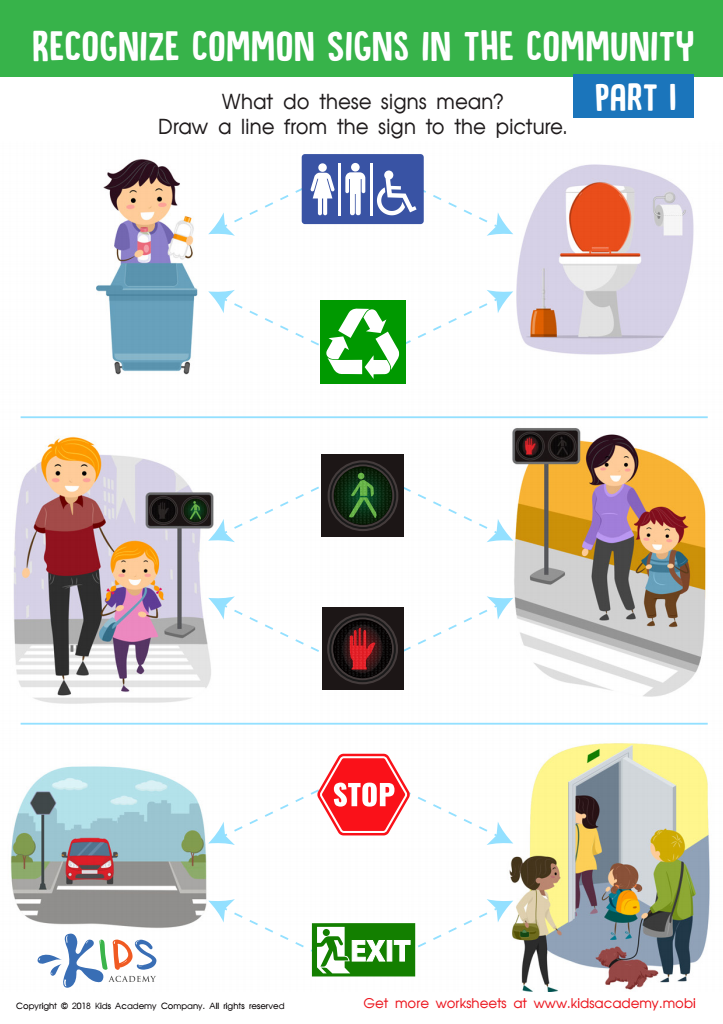
Recognize Common Signs: Part 1 Worksheet
Beginning readers can strengthen picture identification and decoding skills with a free downloadable worksheet. They use traceable lines to match activities in community signs to the correct pictures and build a bridge to reading. This helps familiarize them with their surroundings and starts them on their reading journey.
Recognize Common Signs: Part 1 Worksheet
Worksheet
Join Kids Academy for Free
Who is primarily going to use this learning content?








Enhancing observation skills in young children, particularly in the context of social studies, is crucial for their overall development and understanding of the world around them. For ages 3-6, children are naturally curious and hyper-aware of their environment, making it an ideal time to cultivate their observation abilities. By encouraging them to notice details, ask questions, and connect with their surroundings, parents and teachers foster critical thinking skills that serve as the foundation for more complex learning.
Observation in social studies allows children to explore cultural diversity, communities, and relationships. This lays the groundwork for empathy, respect, and social awareness as they grow. Teachers can create interactive activities, like neighborhood walks or storytelling based on community helpers, that nurture observational skills while enriching social studies lessons.
Moreover, strong observation skills promote language development, as children learn to articulate their thoughts and draw conclusions based on what they see. Ultimately, honing these skills empowers children to become active learners and engaged citizens who are well-prepared to navigate an increasingly complex world. Parents and teachers play a vital role in guiding this process, enriching children’s educational experiences and shaping their understanding of social dynamics.








