
Shape Recognition Social Studies Worksheets for Ages 3-6
4 filtered results
Difficulty Level
Grade
Age
-
From - To
Subject
Activity
Standards
Explore our engaging Shape Recognition Social Studies Worksheets designed specifically for children aged 3 to 6! These fun and interactive activities introduce young learners to the essential concept of shapes while incorporating social studies themes. Kids will enjoy identifying, matching, and sorting various shapes, fostering critical thinking and fine motor skills. Perfect for classroom use or home learning, these worksheets provide a hands-on approach to integrating shape recognition with valuable social studies lessons. Encourage your child's early learning journey and support their development in both mathematics and social awareness with these delightful worksheets. Print, play, and learn with Kids Academy today!
Favorites
With answer key
Interactive
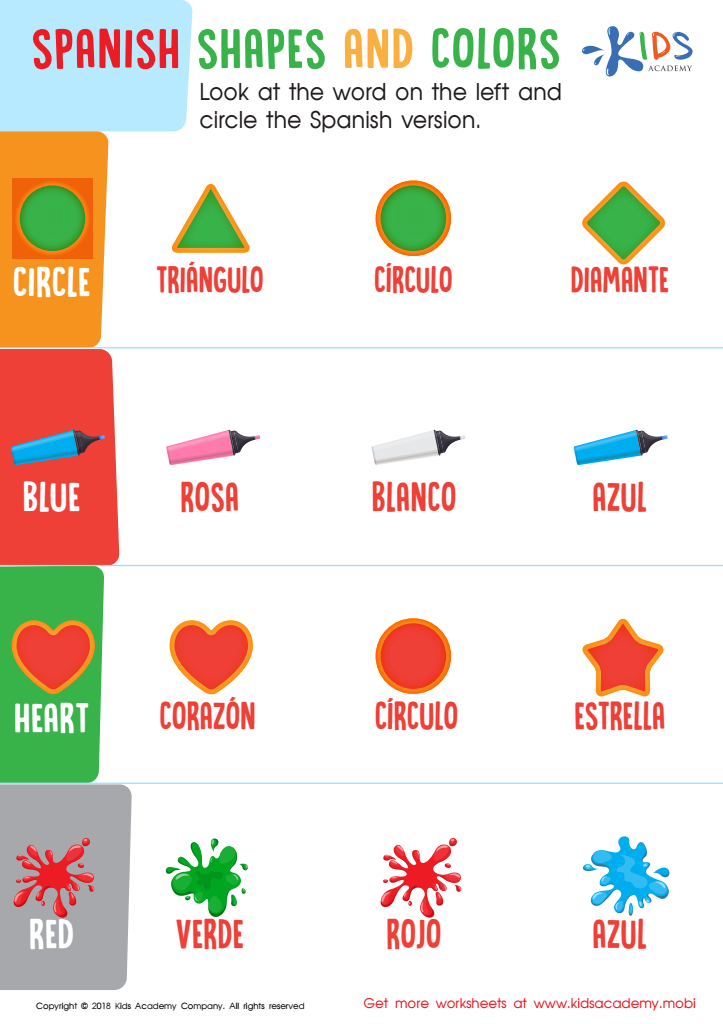
Spanish Shapes and Colors Worksheet
Encourage your children to learn another language from an early age. For example, Spanish - use a worksheet to help with the basics. Point to the English word and ask them to identify and circle the corresponding Spanish word on the right. This way, your kids will grow up with familiarity of the language.
 Assign to My Students
Spanish Shapes and Colors Worksheet
Worksheet
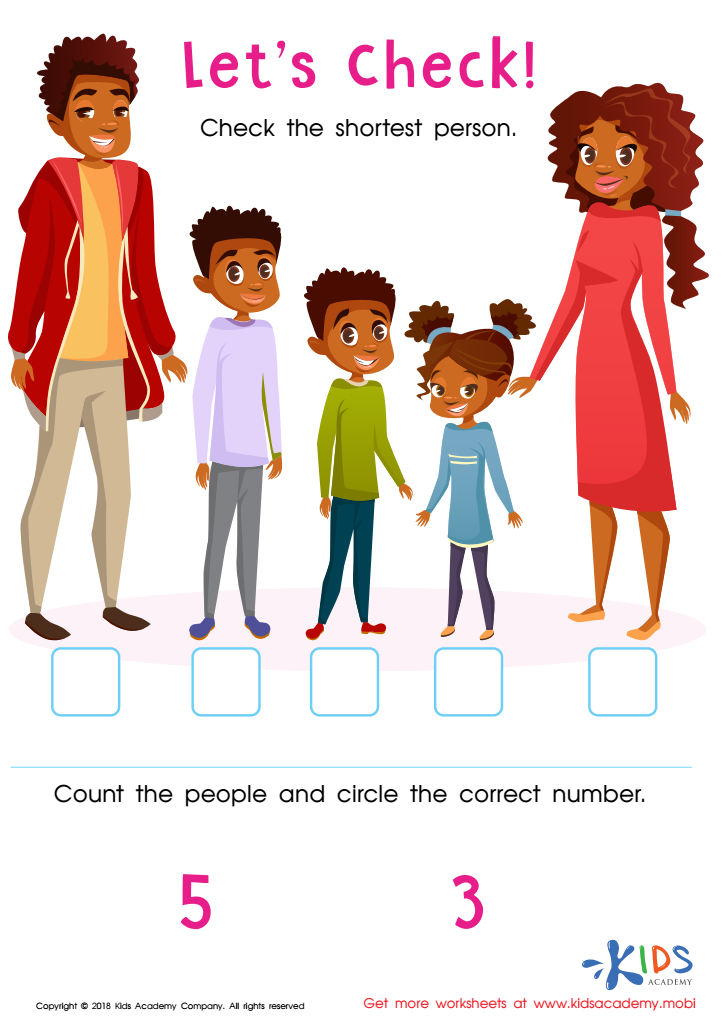
Let's Check! Assessment Worksheet
Check your child's understanding of height with this worksheet. Ask them to sort the objects in order of size and identify the tallest and shortest member of the family in the picture. See if they can correctly arrange the items from tallest to shortest.
Let's Check! Assessment Worksheet
Worksheet
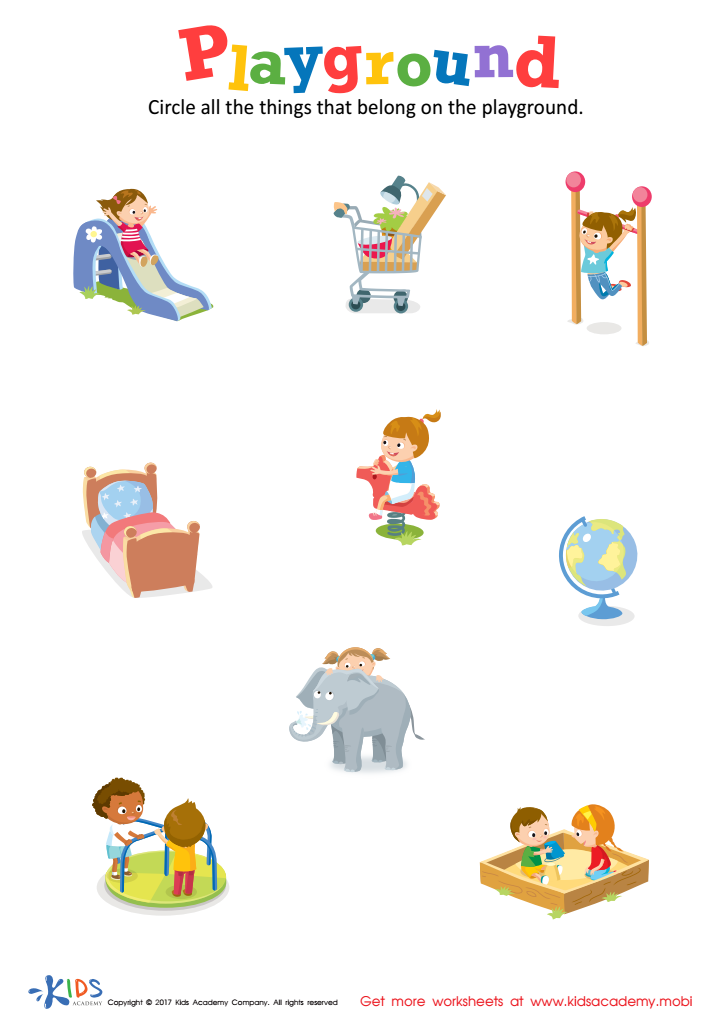
Playground Worksheet
Head to the park with this playground worksheet! It strengthens sorting and cognitive skills while encouraging problem solving. Plus, it's fun-filled and engaging! When finished, head out to the park to see what items your child finds in the playground!
Playground Worksheet
Worksheet
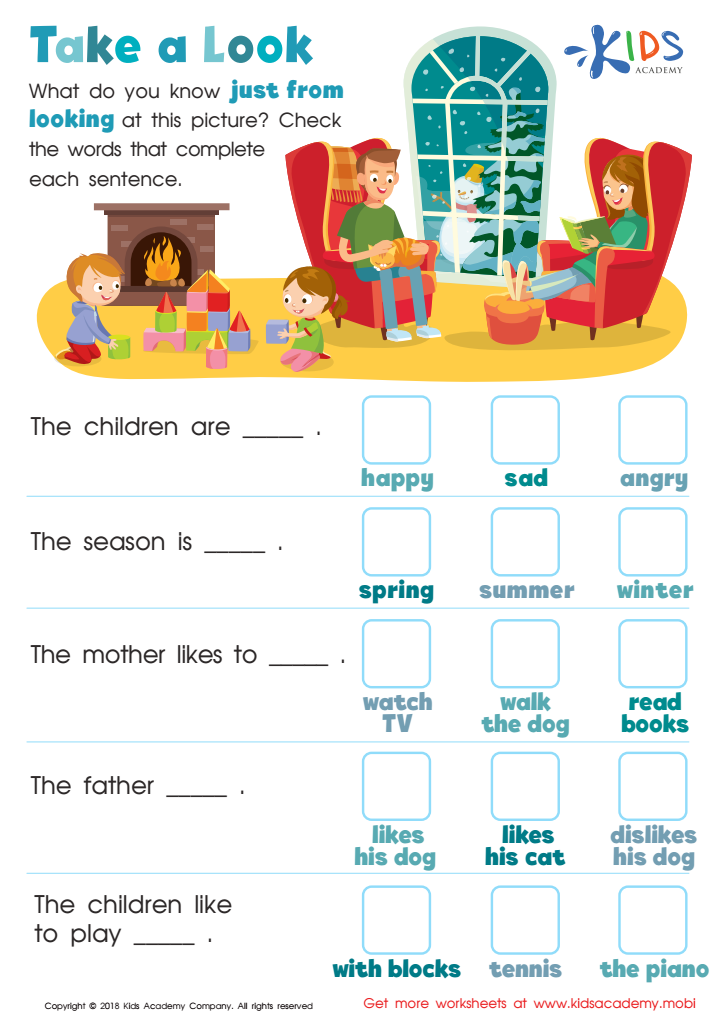
Take a Look - Part 1 Worksheet
Young learners gain understanding when using picture clues when reading. Looking at illustrations can help students learn the meaning of key vocabulary when reading fiction or informational text. Ask your students to look at the worksheet and observe what they can learn from the picture. It's a great comprehension strategy for early readers.
Take a Look - Part 1 Worksheet
Worksheet
Join Kids Academy for Free
Who is primarily going to use this learning content?








Shape recognition is a crucial element of early childhood education, particularly in social studies for ages 3-6. Parents and teachers should care about this concept because it lays the foundation for various essential skills that extend beyond mere shape identification. Recognizing shapes helps young learners develop spatial awareness, which is crucial for understanding geography, understanding their environment, and histories—all fundamental components of social studies.
Additionally, shape recognition encourages critical thinking and problem-solving abilities. As children categorize objects by shape, they understand relationships and differences, helping them navigate their social world. This cognitive development translates into better communication skills as children learn to describe and categorize, essential skills for effective social interactions.
Furthermore, discussing shapes can lead to diverse curriculum opportunities. Incorporating shapes into lessons about culture, history, or community can foster curiosity and connections, promoting a sense of belonging. Understanding shapes can also touch upon art and design, health and safety (recognizable road signs), and even mathematics.
In essence, focusing on shape recognition enriches young learners’ academic experience, allowing them to connect various concepts holistically, and helping them thrive socially and emotionally as they interact with the world around them. It is a multidimensional tool in their educational arsenal.








