Understanding communities Social Studies Worksheets for Ages 3-6
3 filtered results
-
From - To
Explore our "Understanding Communities" Social Studies worksheets designed for children ages 3-6. These engaging and interactive printables help young learners grasp the concept of community, encouraging them to recognize the importance of diverse groups and their roles. Through fun activities, kids will discover local landmarks, understand occupations, and learn about helpers in their communities. These worksheets ensure children develop social awareness and build communication skills as they interact with their peers and surroundings. Perfect for preschool and early grade classrooms, our resources provide a strong foundation for understanding the world around them. Start your child's journey into community exploration today!
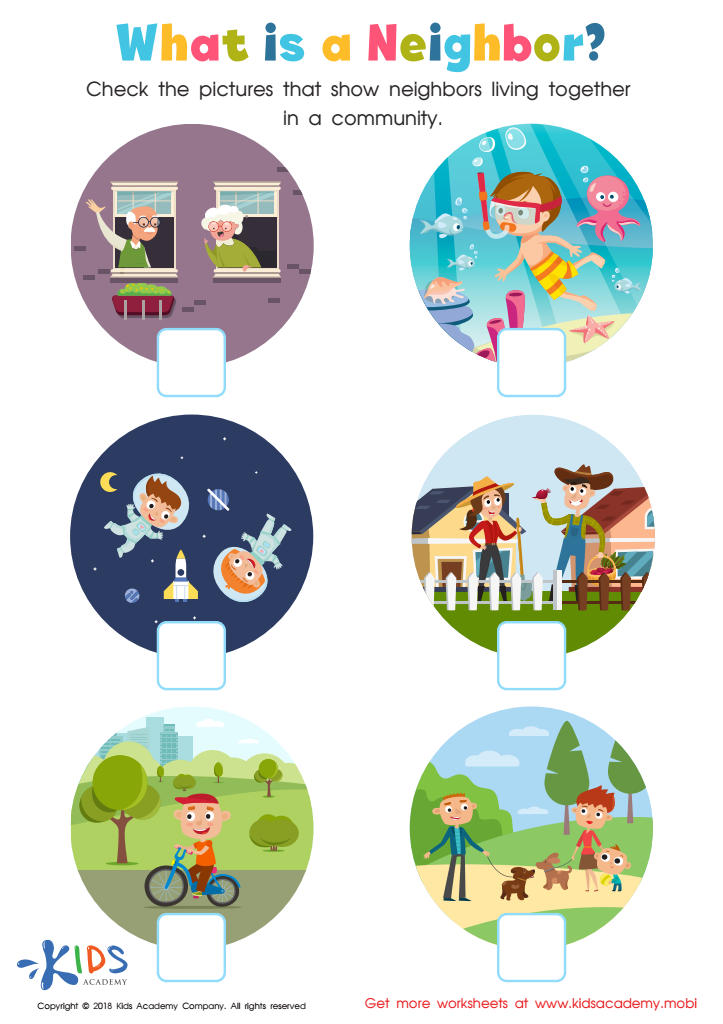
What is a neighbor Worksheet
 Assign to My Students
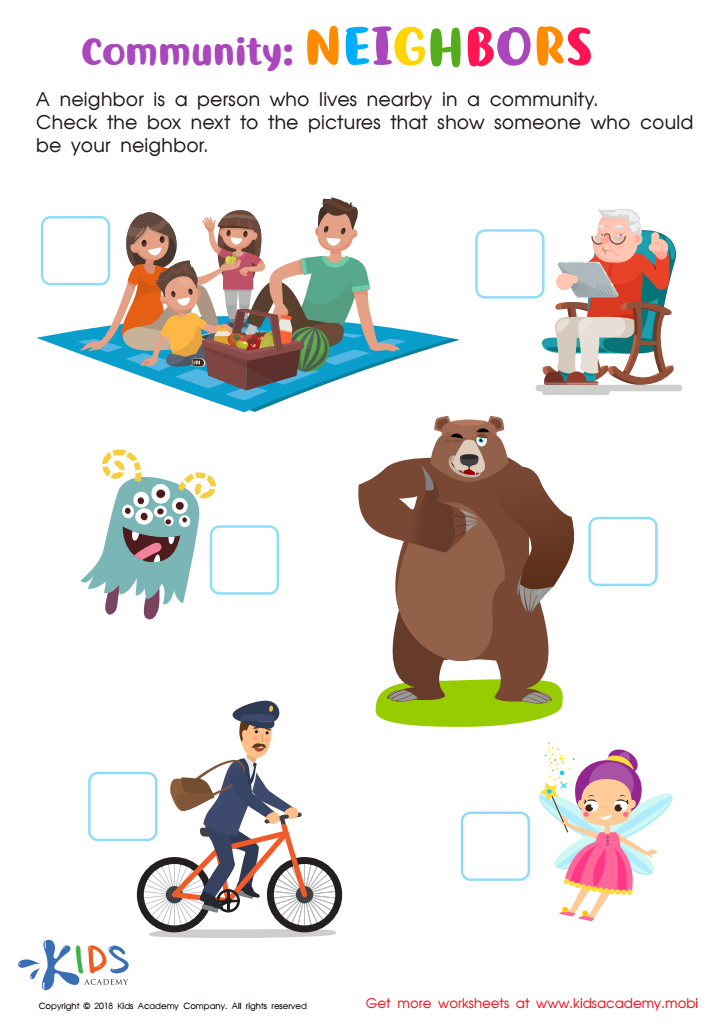
Community: Neighbors Worksheet
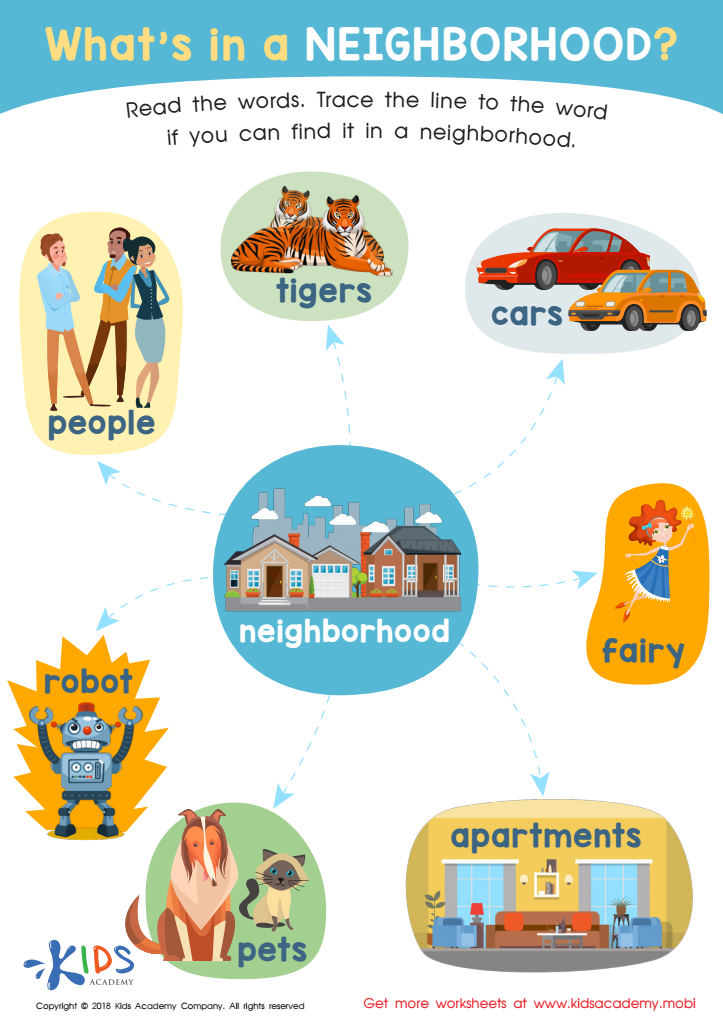
What's in a Neighborhood? Worksheet




.jpg)



Understanding communities is crucial for young children aged 3-6 as it lays the foundation for their social, emotional, and cognitive development. At this age, children are naturally curious about the world around them, and teaching them about their communities helps satisfy this curiosity. It encourages them to recognize the people, places, and roles within their surroundings, fostering a sense of belonging and identity.
Parents and teachers who engage children in social studies during these formative years facilitate crucial skills such as empathy, cooperation, and communication. Through activities like storytelling, family discussions, and community exploration, children learn about diversity and develop respectful attitudes towards different cultures and perspectives. Additionally, introducing simple concepts like jobs, community helpers, and local geography contributes to their understanding of how society functions, preparing them for more complex social interactions later on.
Furthermore, early exposure to community-focused learning can spark interest in civic engagement and responsibility. Children who feel connected to their community are more likely to grow into active, informed citizens. Ultimately, investing in early social studies education cultivates compassionate, aware individuals who appreciate their environment and contribute positively to society. It is an essential step in nurturing well-rounded, engaged learners.