
Alphabet Recognition Writing Worksheets for Ages 3-6
4 filtered results
Difficulty Level
Grade
Age
-
From - To
Subject
Activity
Standards
Introduce your child to the magical world of letters with our Alphabet Recognition Writing Worksheets, tailored for ages 3-6. These engaging worksheets help young learners identify and write each letter from A to Z, fostering early literacy skills. Colorful visuals and fun activities captivate children's attention, making learning enjoyable and effective. Ideal for preschool and kindergarten preparation, our alphabet worksheets promote fine motor skills, letter recognition, and foundational writing abilities. Enhance your child's developmental milestones with interactive, hands-on practice designed to build confidence and foster a love for reading and writing at an early age.
Favorites
With answer key
Interactive
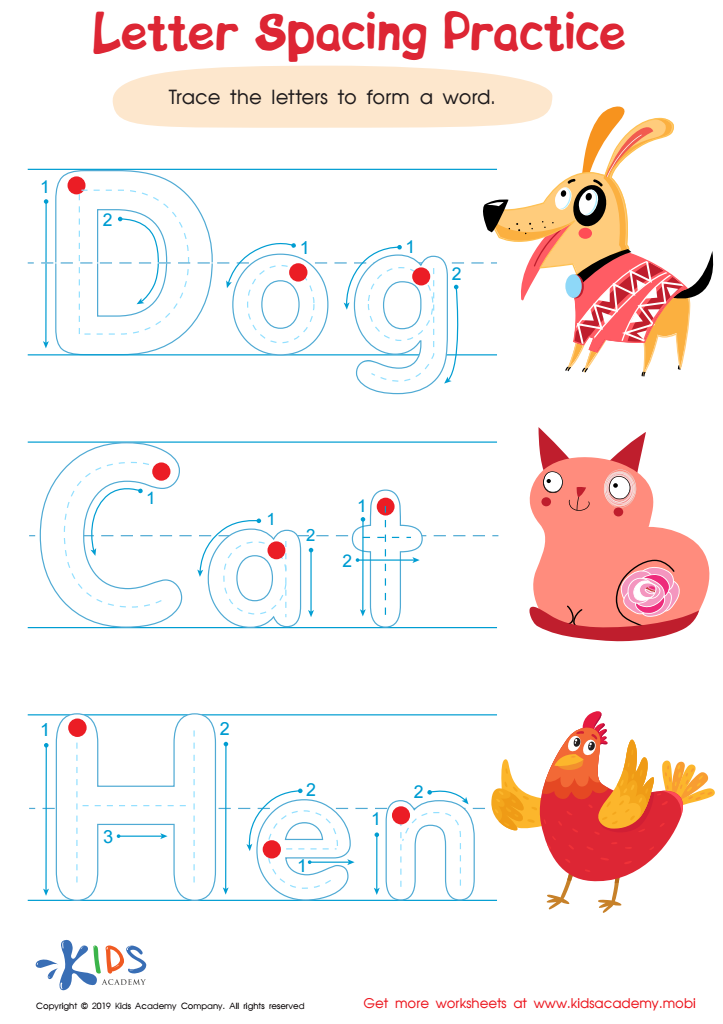
Letter Spacing Practice Worksheet
Encourage your preschoolers to practice writing with this worksheet. Ask them to identify the animals in the picture and help them trace the letters to form the words. It'll help develop their writing skills and even if they make mistakes, you can guide them with a helping hand.
 Assign to My Students
Letter Spacing Practice Worksheet
Worksheet
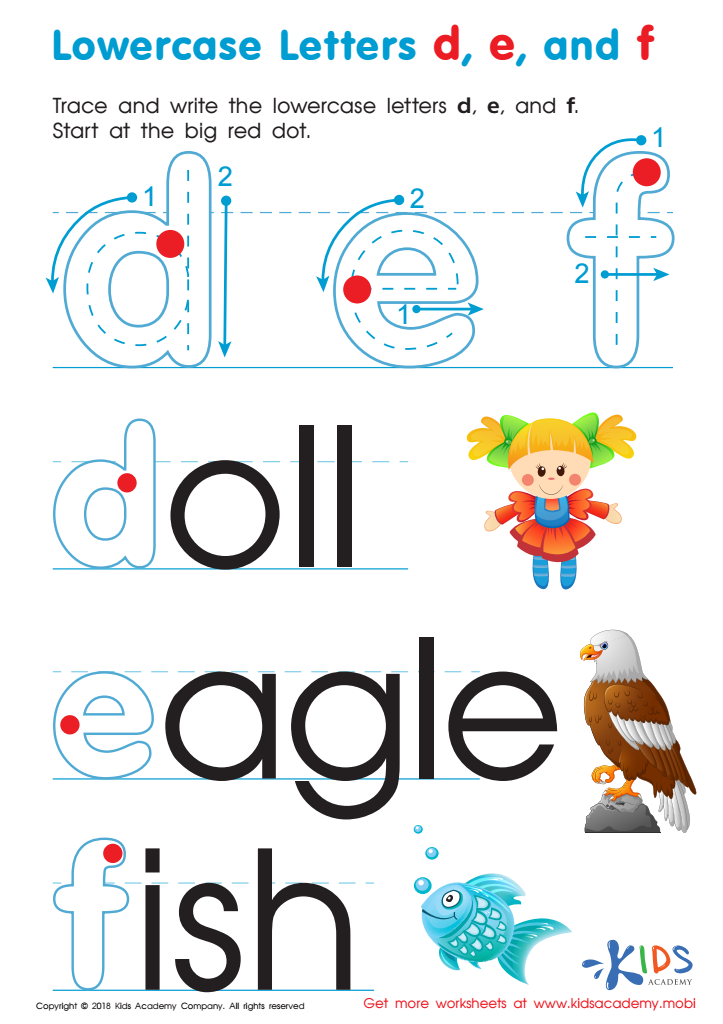
Lowercase Letters d e f Worksheet
Help your child learn the alphabet letters by tracing and writing the lowercase letters d, e, and f. Begin at the big red dot and follow the dots. This worksheet will help your little one gain a better understanding of the letters.
Lowercase Letters d e f Worksheet
Worksheet
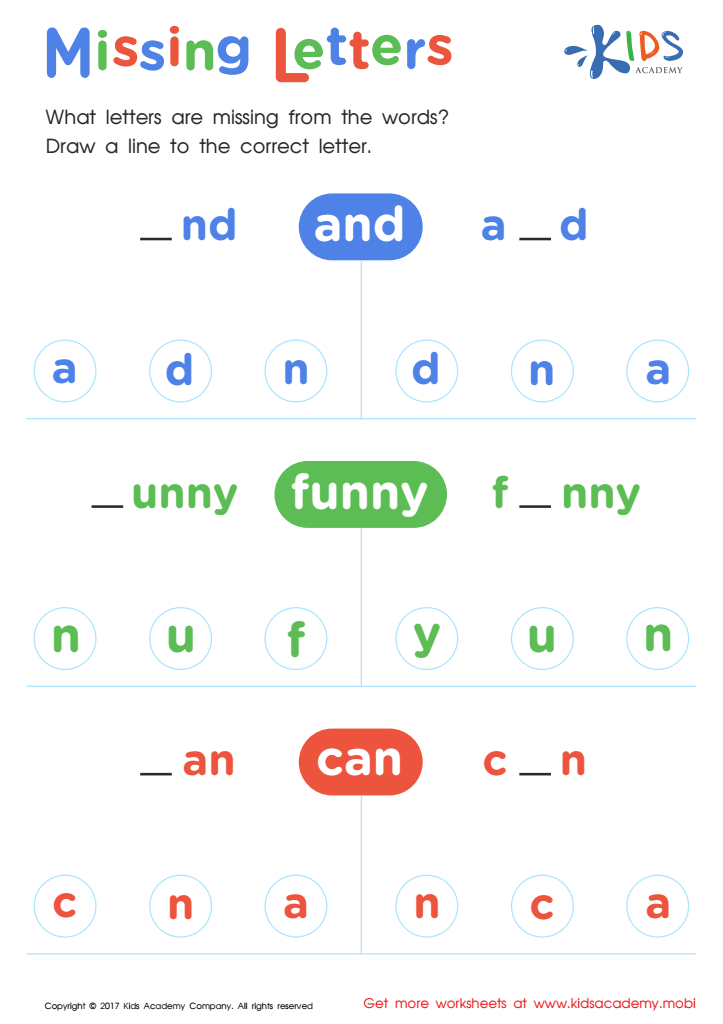
Missing Letters Worksheet
Review sight words with this fun matching worksheet from Kids Academy! Look at the sight words in the middle, read them aloud and find the missing letter on each side for each word. Draw a line to the correct letter to complete the sheet!
Missing Letters Worksheet
Worksheet
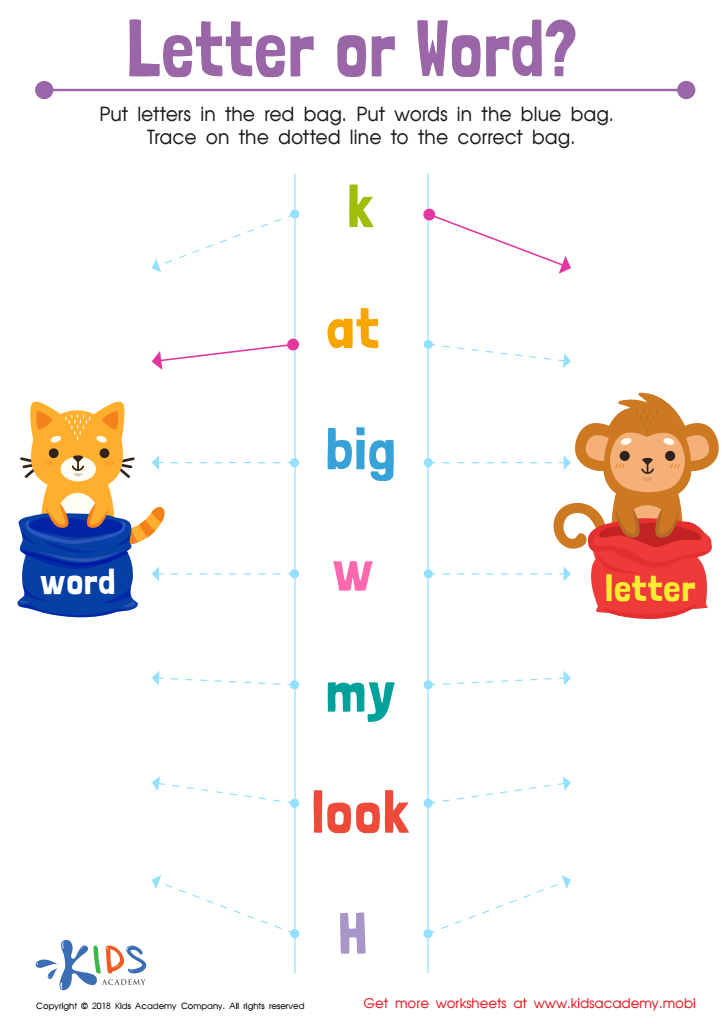
Letter or Word? Worksheet
Help your kids differentiate between words and letters. If they can recite their alphabets and identify common words, this tracing sheet will be a breeze. Have them trace on the dotted lines to place the letters in the red bag with the kitten, and the words in the blue bag with the monkey.
Letter or Word? Worksheet
Worksheet
Join Kids Academy for Free
Who is primarily going to use this learning content?




.jpg)



Alphabet recognition and writing are fundamental skills acquired during the early childhood years (ages 3-6), crucial for a child's academic and communication development. This period forms the foundation for literacy, gradually transitioning children from pre-reading stages to fluent reading and writing competence. Parents and teachers play a pivotal role in fostering these abilities, each contributing uniquely to the child's learning environment.
Recognition of the alphabet involves associating letters with their corresponding sounds, thus linking visual symbols to phonetic cues. This initial stage is essential for later reading skills such as decoding words, which is a foundational aspect of early literacy. Mastery of alphabet recognition enables children to comprehend and reproduce meaningful text, cleverly intertwining their cognitive and motor skills. Correct letter formation and handwriting bolster their written communication abilities, making learning more enjoyable, and less strenuous as they progress in education.
Early intervention through structured, nurturing, and playful activities can significantly enhance letter recognition and writing skills. Engagement from parents and teachers can stimulate curiosity, reinforcing learning through relaxed and interactive sessions. Establishing these core skills creates a long-term positive impact, boosting children's academic confidence, self-esteem, and lifelong learning enthusiasm, thereby affirming the critical importance of investing in alphabet recognition writing during early childhood.








