Understanding suffixes Writing Worksheets for Ages 3-6
3 filtered results
-
From - To
Enhance your child's literacy skills with our "Understanding Suffixes" writing worksheets designed for ages 3-6. These engaging activities help young learners grasp the concept of suffixes, promoting vocabulary expansion and improved reading comprehension. Our worksheets feature fun illustrations and easy-to-follow instructions, making learning enjoyable and effective. Children will practice adding common suffixes to root words, developing their understanding of word formation in a hands-on way. Ideal for homeschool or classroom settings, these worksheets are valuable tools to foster early writing and language skills. Equip your child with the building blocks of literacy today! Explore our resources and start their language journey!
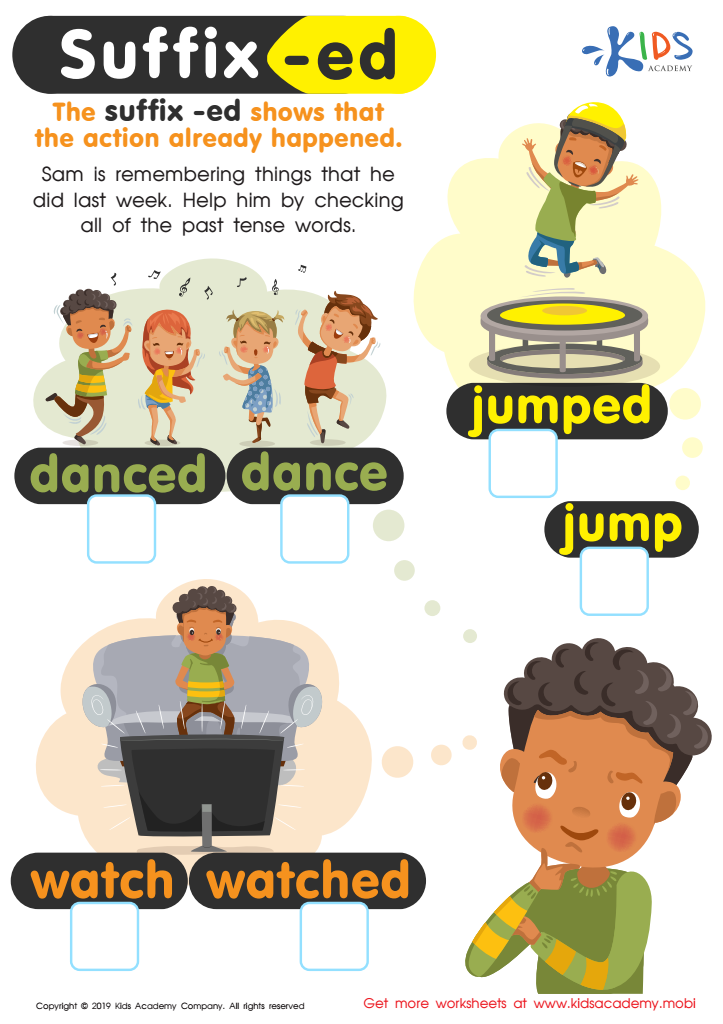
Suffix-ed Worksheet
 Assign to My Students
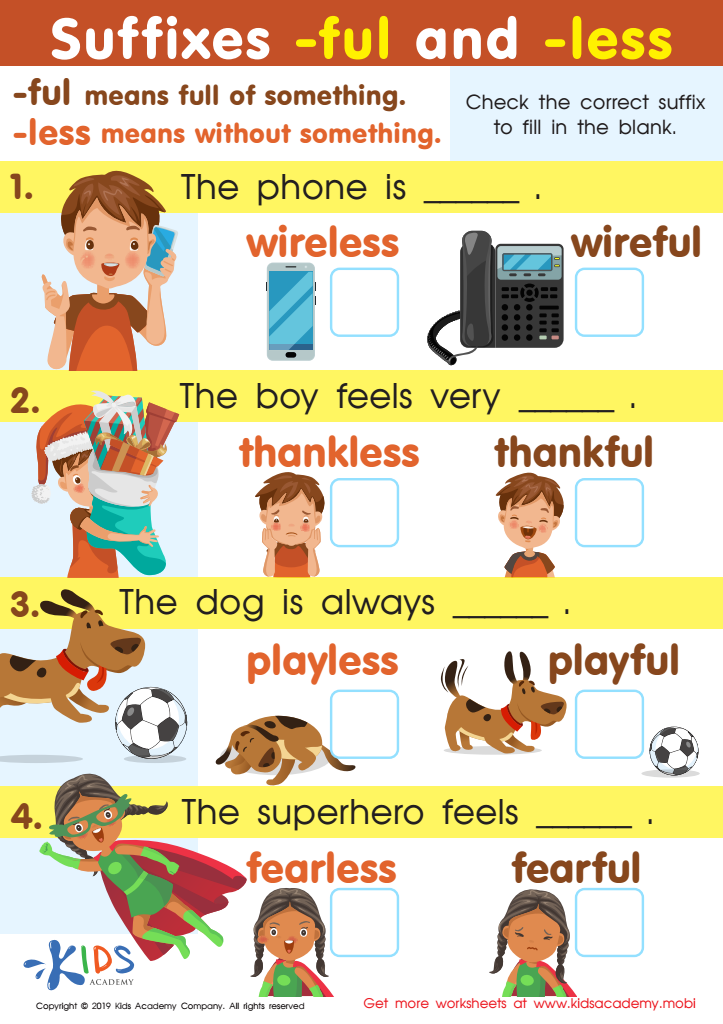
Suffixes –ful and –less Worksheet
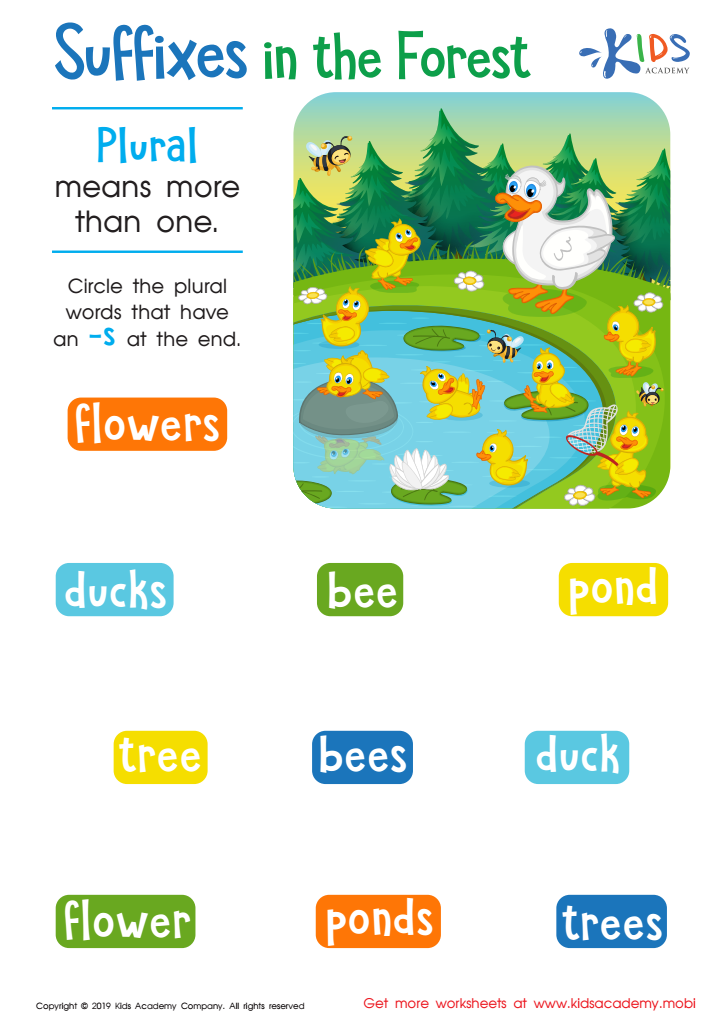
Suffixes in the Forest Worksheet








Understanding suffixes is crucial for children aged 3-6 as it lays the foundation for their reading and writing skills. Suffixes are word endings that modify a word's meaning or grammatical function, helping young learners grasp how words change when suffixes are added. For instance, adding “-ed” signals past tense, while “-ing” indicates ongoing action. These transformations enhance vocabulary by expanding a child's word bank, making their language richer and more expressive.
Parents and teachers should care about fostering this understanding as it boosts literacy development. Children who grasp suffixes can more easily decode unfamiliar words, enabling better reading comprehension. This ability encourages early writing skills—children can experiment with word formation, enhancing their creativity and expression in writing. For instance, they can modify a word like "play" to "playing" or "played," which broadens their ability to tell stories and share experiences.
Moreover, learning about suffixes nurtures linguistic awareness, fostering critical thinking and problem-solving skills as children explore language structure. Investing in this understanding early on sets the stage for academic success, boosting confidence and enthusiasm for learning. By prioritizing suffix awareness, we help shape capable, expressive communicators of the future.








