Vocabulary development Writing Worksheets for Ages 3-6
6 filtered results
-
From - To
Unlock your child's linguistic potential with our Vocabulary Development Writing Worksheets designed specifically for ages 3-6. These engaging, interactive worksheets promote early literacy through fun activities that enrich vocabulary and writing skills. Kids can explore new words, practice writing them, and enhance their understanding of language in a playful way. Ideal for parents and educators looking to support language acquisition, these worksheets foster creativity and critical thinking, making learning enjoyable. With our carefully crafted resources, children will gain confidence in their writing abilities and develop a lifelong love for words. Download now and start your child's vocabulary journey today!
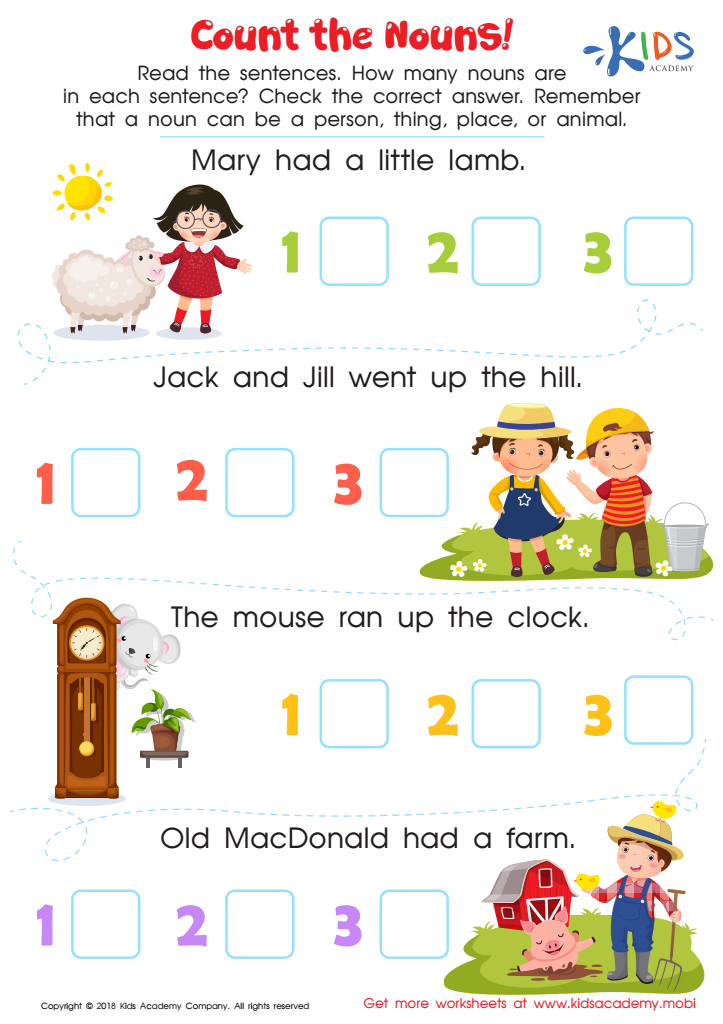
Count the Nouns Worksheet
 Assign to My Students
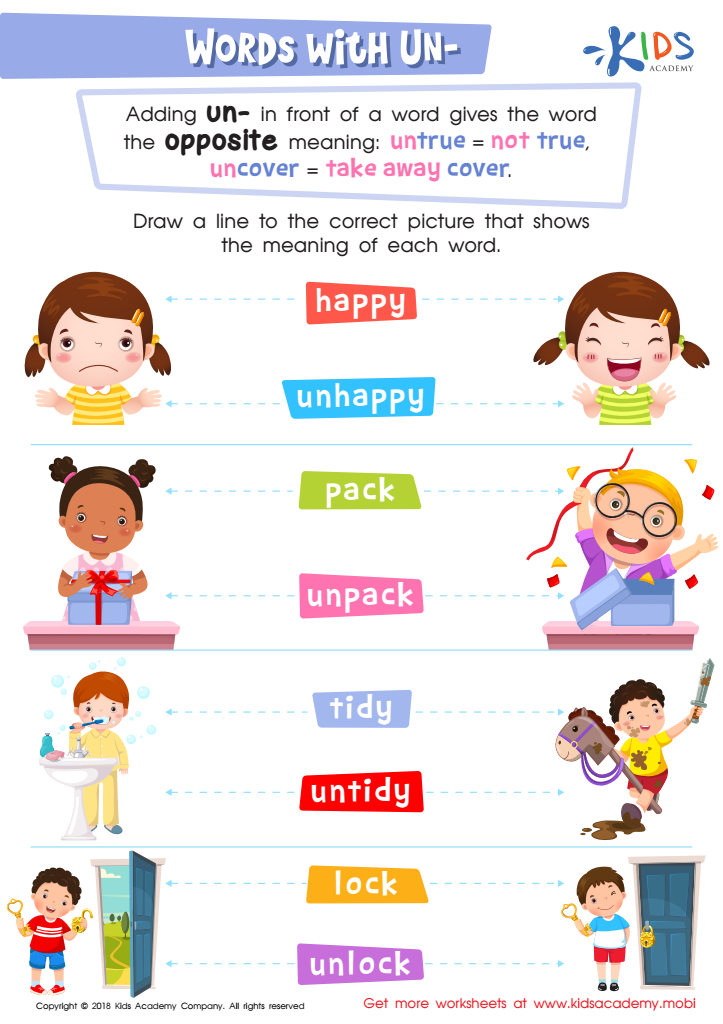
Words with Un– Worksheet
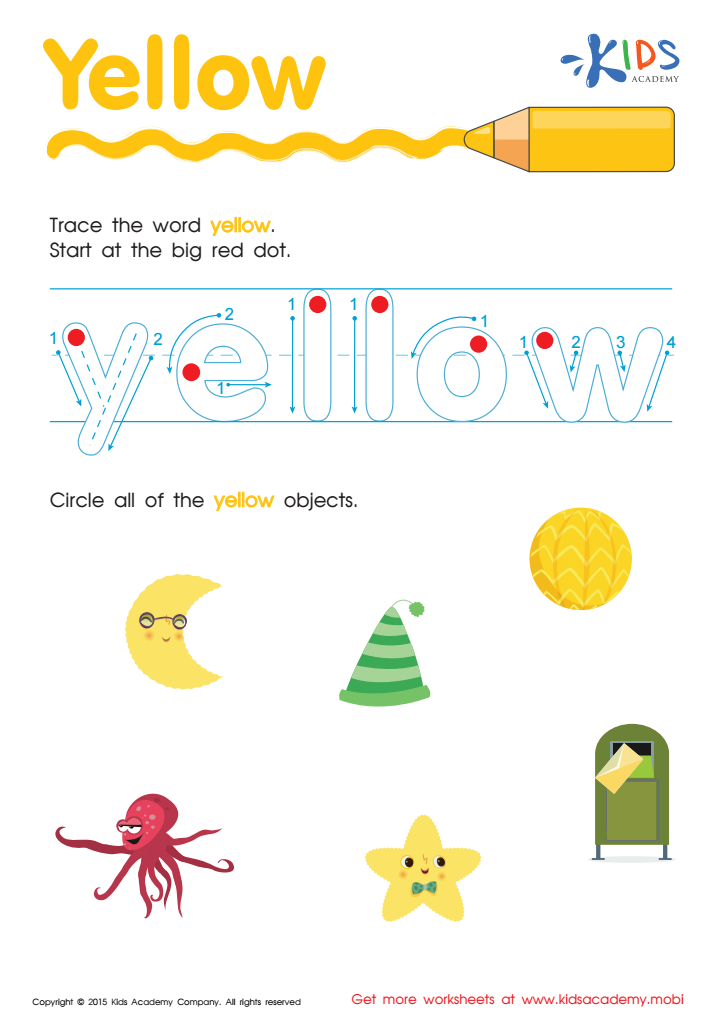
Yellow Tracing Color Words Worksheet
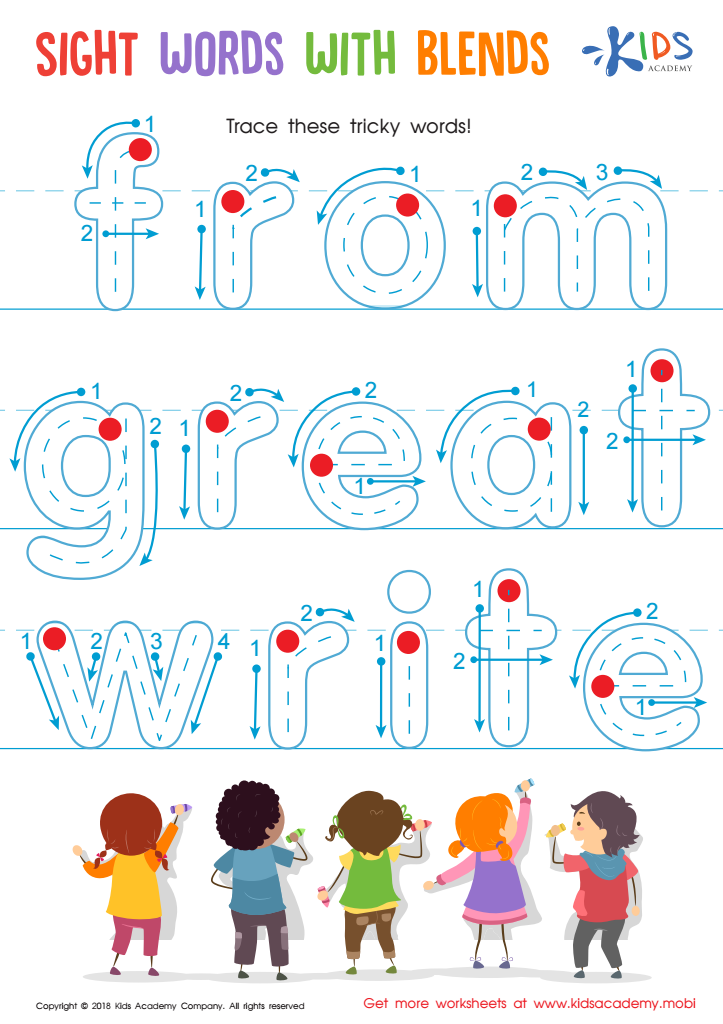
Sight Words with Blends Worksheet
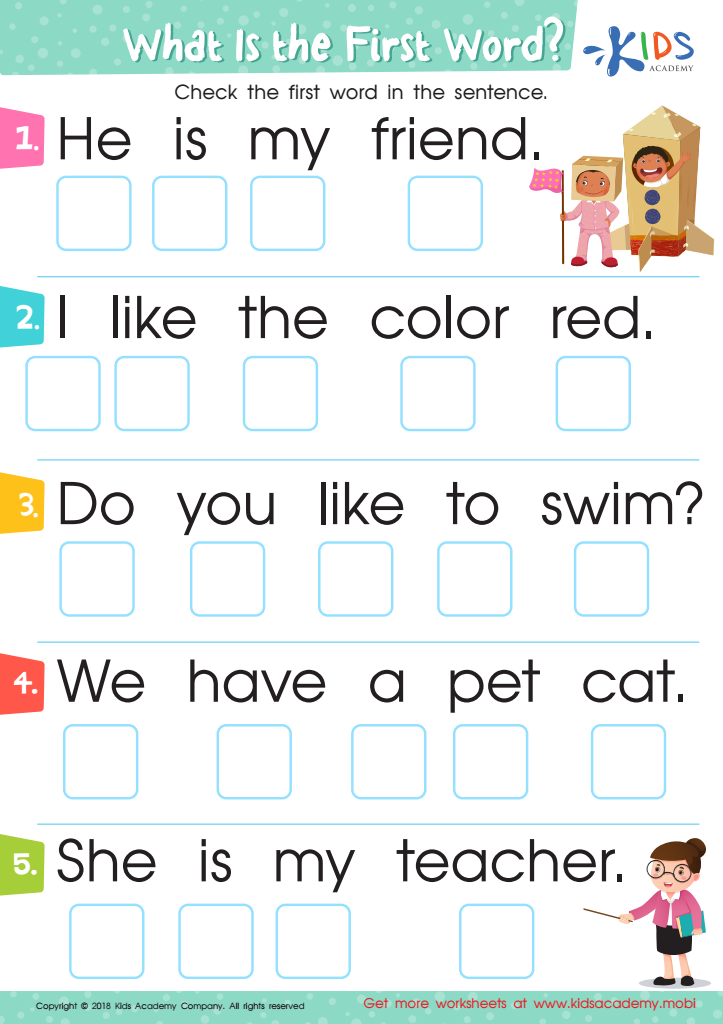
What is the First Word? Worksheet
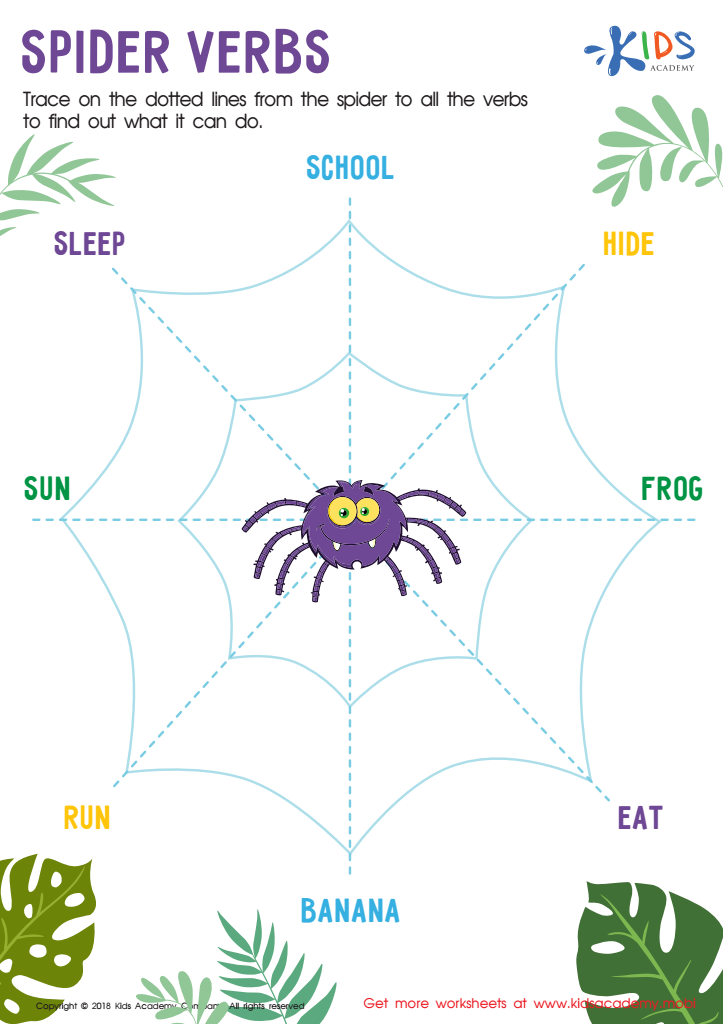
Spider Verbs Worksheet







Vocabulary development is crucial for children aged 3-6 as it lays the foundation for later language skills, reading comprehension, and academic success. During these formative years, children are highly receptive to language acquisition, with their brains developing rapidly. By nurturing vocabulary growth, parents and teachers equip children with essential communication tools, enhancing their ability to express ideas and feelings.
Furthermore, a rich vocabulary supports cognitive development, allowing young learners to make connections, understand complex concepts, and engage in critical thinking. Effective vocabulary development enhances reading skills, fostering a love for books and storytelling, which in turn fuels imagination and creativity.
Additionally, strong vocabulary skills are linked to better social interactions. Children with a well-developed vocabulary can articulate their needs and emotions, building stronger relationships with peers and adults. This social competence is essential for teamwork, conflict resolution, and building friendships.
Ultimately, prioritizing vocabulary development during early education empowers children to navigate the world more effectively. It equips them not just for academic success but for life, enabling them to communicate confidently and articulately in various situations. This makes it a vital focus for parents and teachers during these critical early years.








