
Letter Tracing Alphabet Worksheets for Ages 3-7
8 filtered results
Difficulty Level
Grade
Age
-
From - To
Subject
Activity
Standards
Discover the joy of learning with our "Letter Tracing Alphabet Worksheets for Ages 3-7." These engaging worksheets are designed to help young learners master letter formation, enhancing their fine motor skills and writing confidence. Perfect for preschool and early elementary students, our printable resources feature colorful illustrations and interactive activities that make tracing fun. Each worksheet focuses on both uppercase and lowercase letters, ensuring a comprehensive learning experience. Encourage your child’s love for writing with our easy-to-use worksheets that support foundational literacy skills. Get started today and empower your child’s journey toward becoming a confident writer!
Favorites
With answer key
Interactive
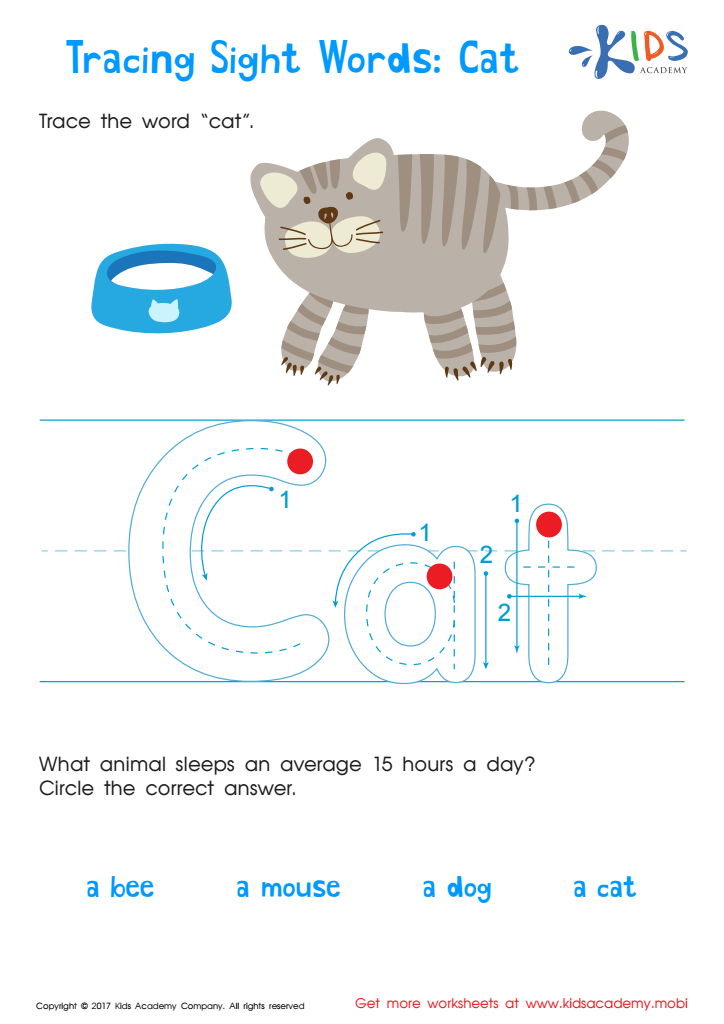
Cat Printable Sight Words Worksheet
Encourage your child's literacy with this fun sight words worksheet: cat PDF! It helps build a solid foundation for reading, featuring activities such as reading and tracing the word cat, and finding it amongst other sight words. With its cute cat, Kids Academy makes learning to read a delight!
Cat Printable Sight Words Worksheet
Worksheet
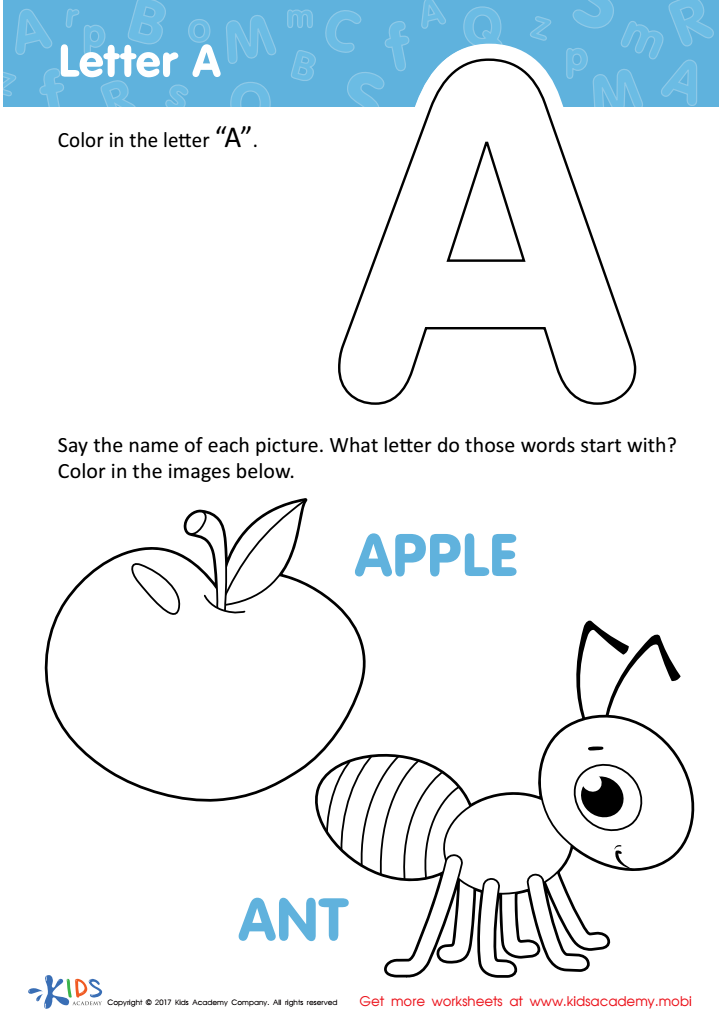
Letter A Coloring Sheet
This letter "A" coloring page is great for introducing kids to the alphabet! Let them exercise their creativity while they learn to recognize letters and sounds - it's a fun and easy way to help them get started.
Download (PDF)
 Assign to My Students
Assign to My Students
Letter A Coloring Sheet
Worksheet
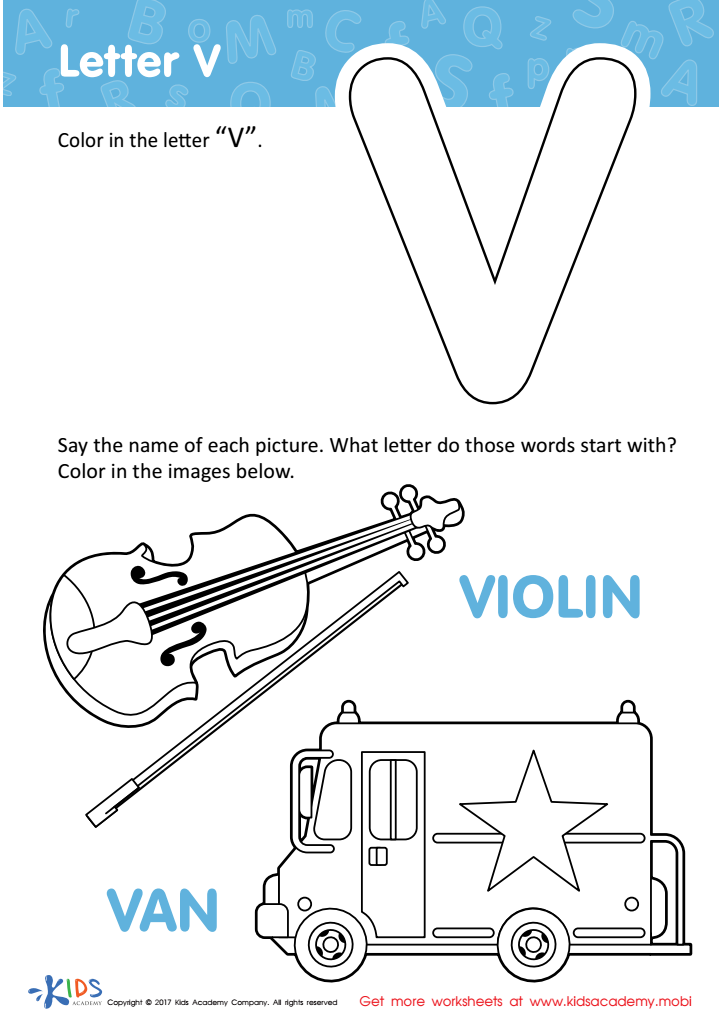
Letter V Coloring Sheet
This fun letter V coloring page can boost your child's knowledge of the letter "V" and its sound. Help them pronounce it correctly, too!
Download (PDF)
Assign to My Students
Assign to My Students
Letter V Coloring Sheet
Worksheet
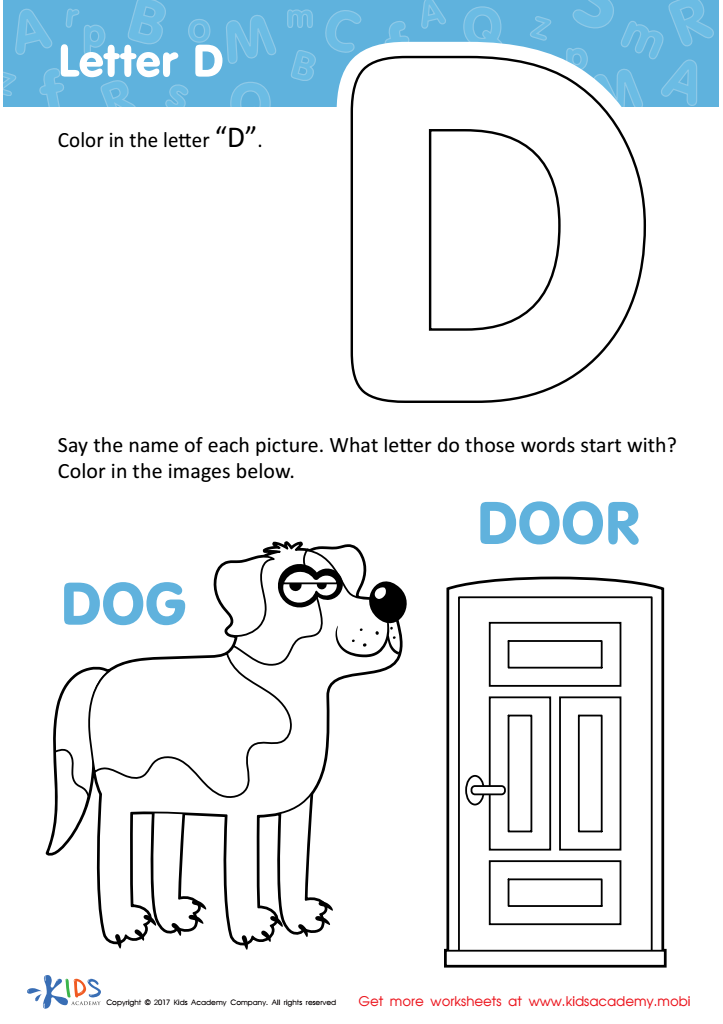
Letter D Coloring Sheet
Coloring with this letter "D" page is a great way to encourage your child's creativity while they learn the letter "D" and its sound. It's a fun activity to stimulate their imagination!
Download (PDF)
Assign to My Students
Assign to My Students
Letter D Coloring Sheet
Worksheet
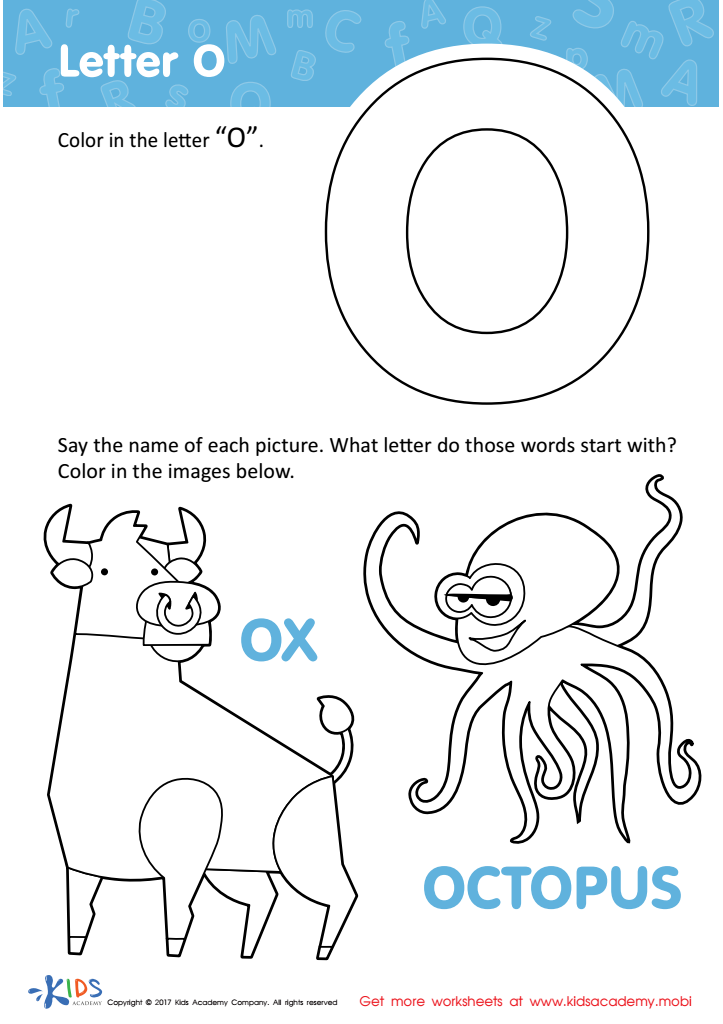
Letter O Coloring Sheet
Oh my! The letter "O" is so much fun. Coloring in the octopus and ox on this delightful letter "O" coloring page can help your child have fun while strengthening their recognition of the letter and sound.
Download (PDF)
Assign to My Students
Assign to My Students
Letter O Coloring Sheet
Worksheet
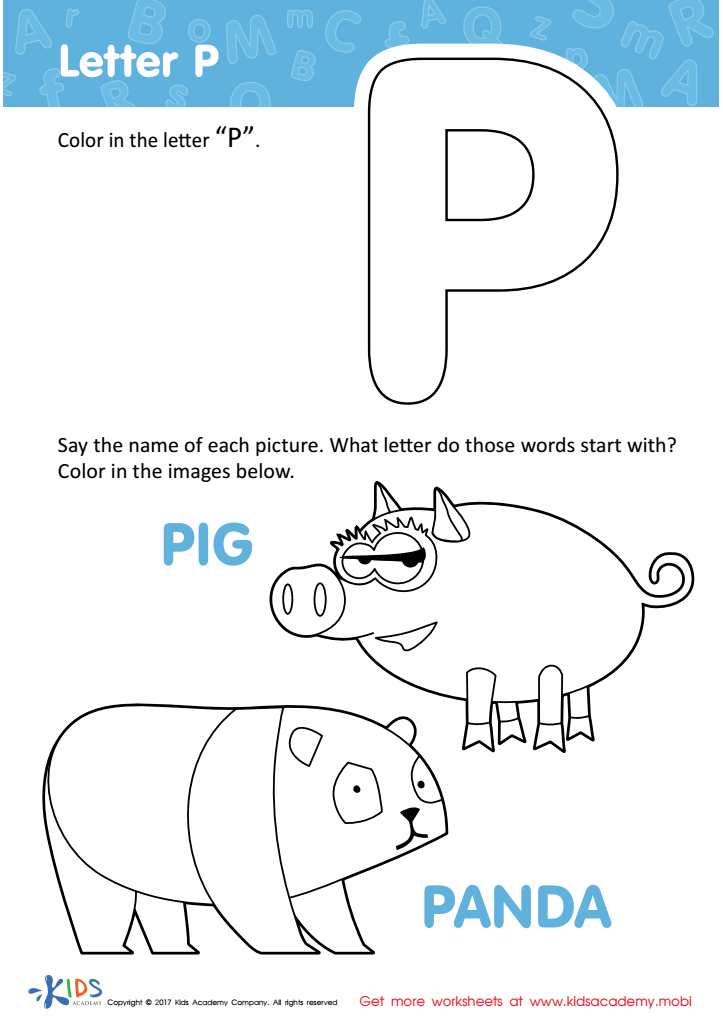
Letter P Coloring Sheet
Encourage your child's creativity and letter recognition with this "P" coloring page! Through coloring animals such as pigs and pandas, your little one will get to know the sound of the letter "P" and have fun too!
Download (PDF)
Assign to My Students
Assign to My Students
Letter P Coloring Sheet
Worksheet
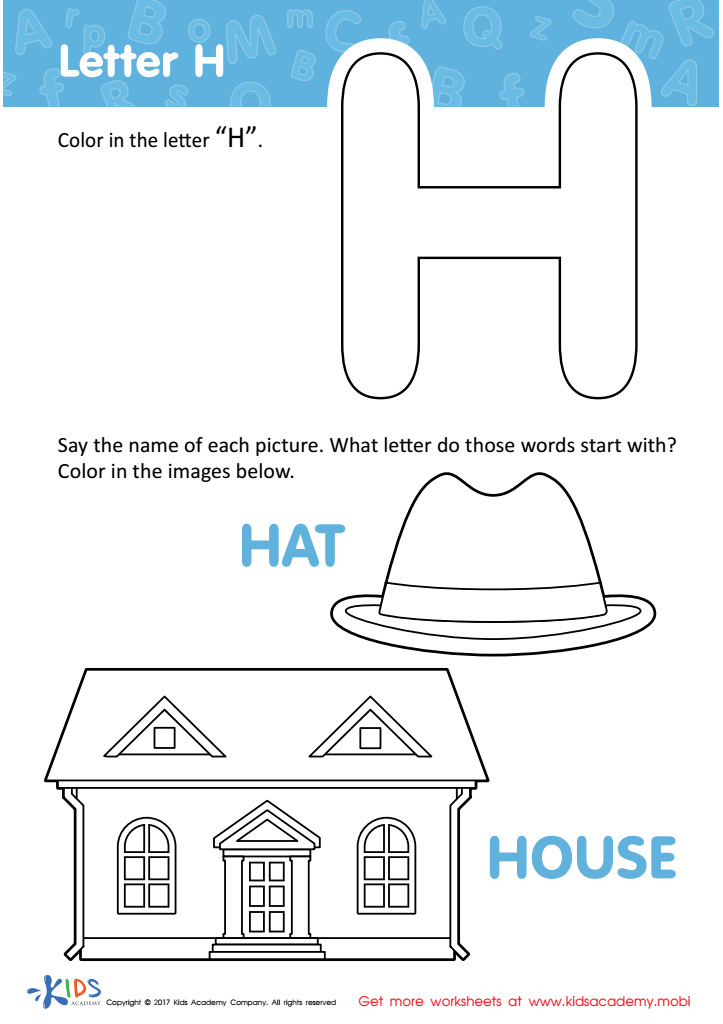
Letter H Coloring Sheet
This fun "H" coloring page will help your child recognize the letter and sound of "H"! With a hat and house to color, your little learner will have a blast picking colors and creating designs, all while learning about the letter "H"!
Download (PDF)
Assign to My Students
Assign to My Students
Letter H Coloring Sheet
Worksheet
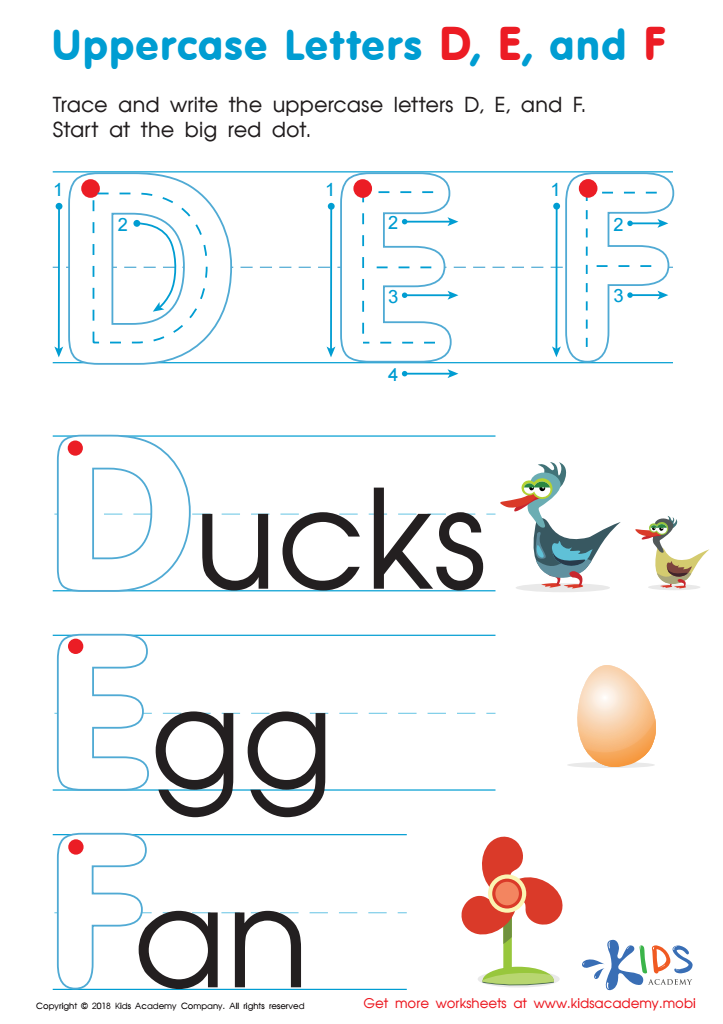
Uppercase Letters D, E, and F Worksheet
A-F are important letters! Get kids tracing with this free printable worksheet. Help them learn the right pencil strokes by following the tracing lines, starting at the big red dot. Reinforce letter sounds with the colorful pictures. 80 words.
Uppercase Letters D, E, and F Worksheet
Worksheet
Join Kids Academy for Free
Who is primarily going to use this learning content?








Letter tracing is an essential activity for children ages 3-7, as it lays the foundation for their literacy and cognitive development. Firstly, it helps improve fine motor skills, which are critical for writing. By tracing letters, children learn to control their hand movements, making it easier for them to write independently as they grow.
Additionally, letter tracing reinforces letter recognition and phonetic awareness. As children practice, they become familiar with both uppercase and lowercase letters, facilitating easier reading comprehension in later stages. This foundational knowledge supports early literacy, which is vital for academic success.
Moreover, tracing letters can make learning engaging and fun: it often incorporates color, art, and creative design, which can motivate children. When parents or teachers introduce tracing in a playful context, it helps create a positive learning environment, encouraging a love for reading and writing from a young age.
Lastly, regular practice promotes concentration and discipline, traits needed for lifelong learning. Thus, incorporating letter tracing in early education is pivotal, ensuring children develop critical skills needed for their academic journey and beyond. Caring about this activity is profoundly beneficial for parents, teachers, and, most importantly, the children themselves.







