
Rhyme recognition Alphabet Worksheets for Ages 3-7
4 filtered results
Difficulty Level
Grade
Age
-
From - To
Subject
Activity
Standards
Discover the perfect resource for your child with our Rhyme Recognition Alphabet Worksheets for Ages 3-7! Designed to make learning fun and engaging, these printable worksheets help young learners develop crucial phonemic awareness through entertaining rhyming activities. Each worksheet is crafted to reinforce letter recognition and sound patterns, laying a solid foundation for reading and spelling success. With vibrant illustrations and easy-to-follow instructions, children will enjoy every moment as they explore the alphabet. Ideal for preschool, kindergarten, and early elementary students, these worksheets provide an educational adventure that sparks curiosity and love for learning. Start the journey today!
Favorites
With answer key
Interactive
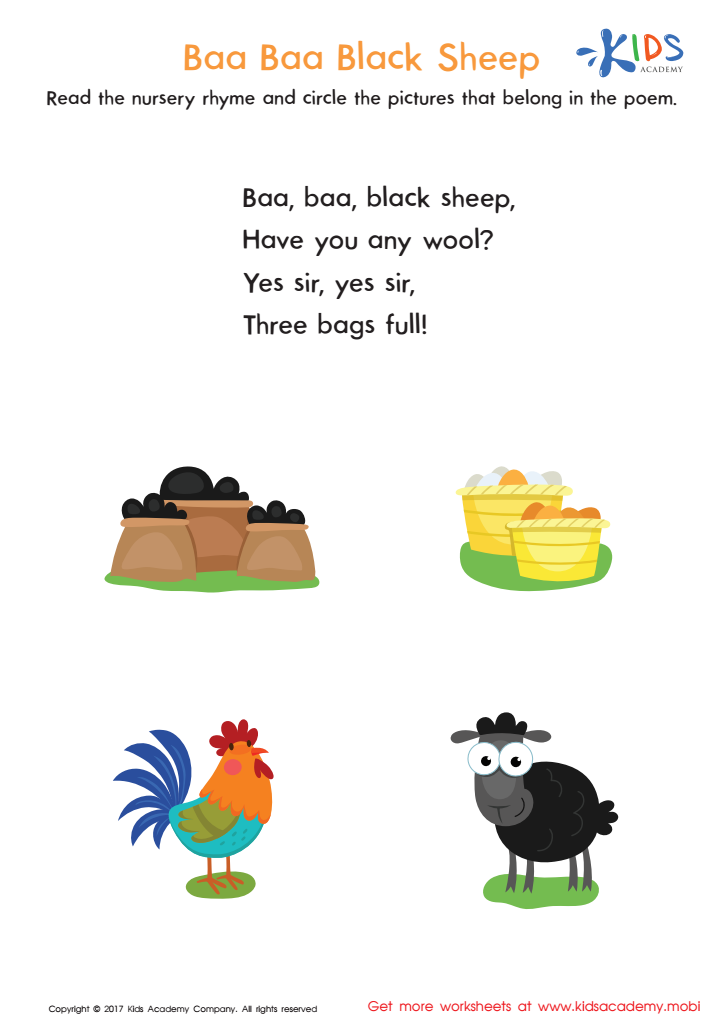
Baa Baa Black Sheep Printable
Jumpstart your child's reading skills with this printable Baa Baa Black Sheep worksheet! Recite the lines with them, then have them select the pictures associated with the poem to test comprehension. Fun and educational!
 Assign to My Students
Baa Baa Black Sheep Printable
Worksheet
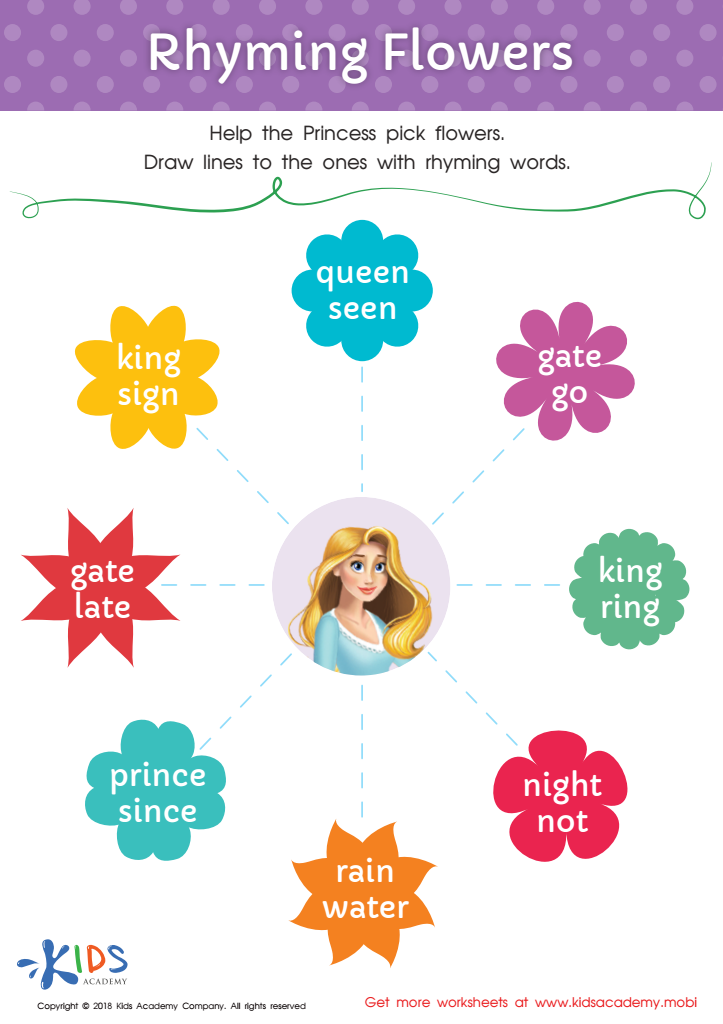
Rhyming Flowers Worksheet
Recognizing rhyming words boosts phonological awareness. With this skill, students can identify similar sounds in words and predict new words more accurately. This worksheet provides practice and is ideal for the reading classroom. Download and find the rhyming words! (80 words)
Rhyming Flowers Worksheet
Worksheet
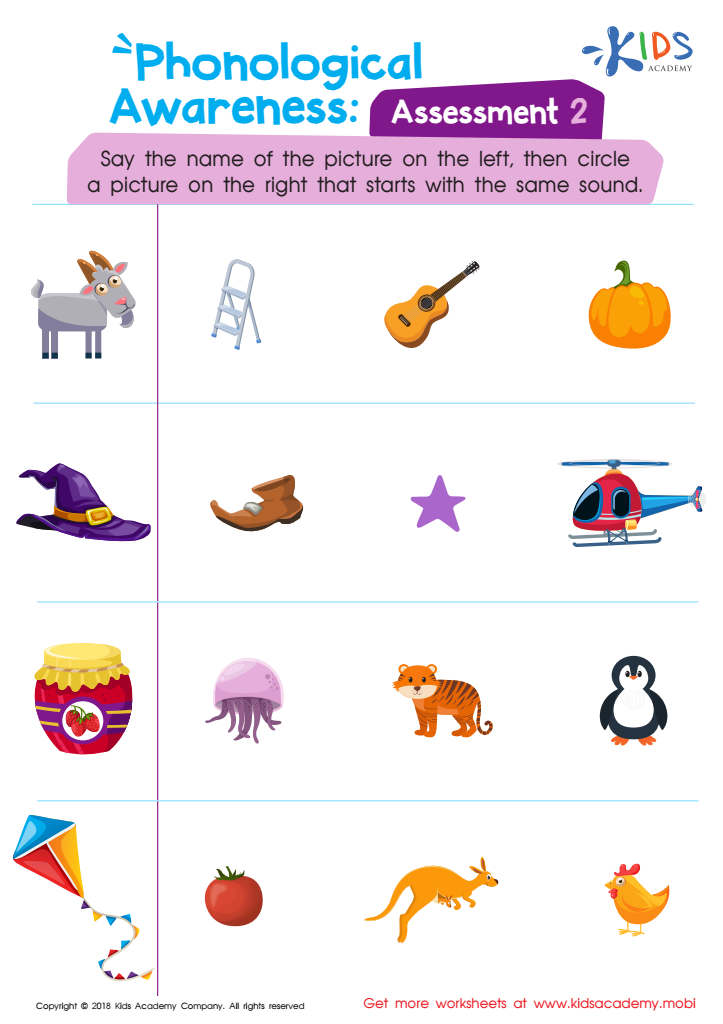
Phonological Awareness: Assessment 2 Worksheet
Test your child’s phonological awareness and reading readiness with this charming worksheet! Perfect for K-1, it assesses if they can name a picture aloud, listening for the starting sound and matching it to another word. Watch as they think deeply and listen to the sounds as they name each picture. Determine if your child is ready to sound out words or needs more phonics practice.
Phonological Awareness: Assessment 2 Worksheet
Worksheet
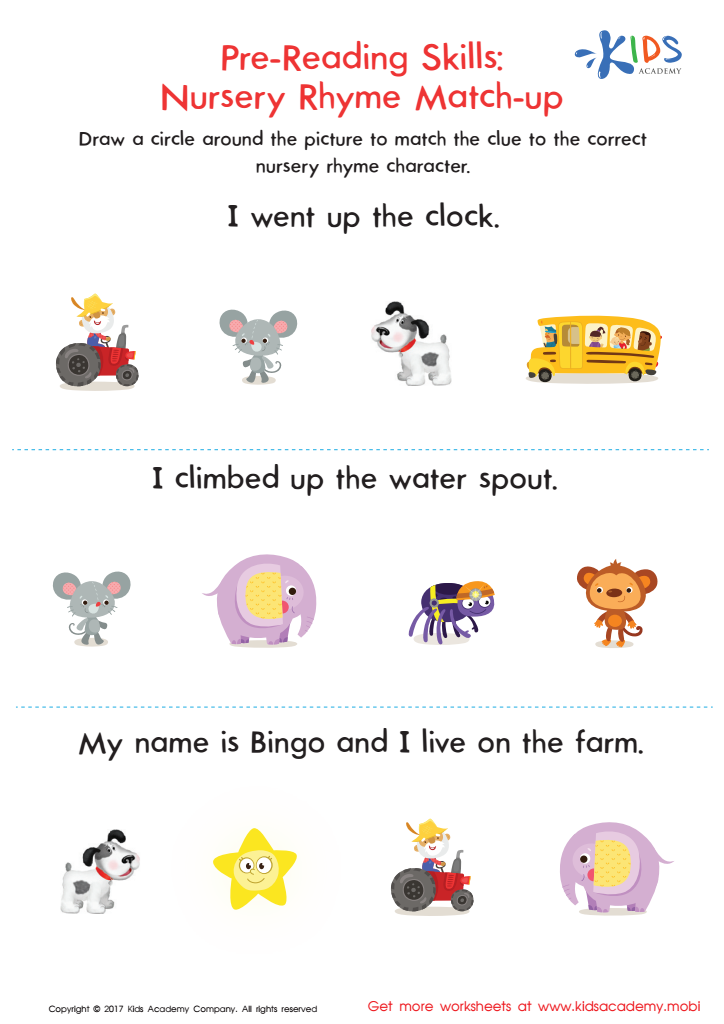
Nursery Rhyme Match–Up Worksheet
This worksheet helps kids build pre-reading skills using stories they know and love! By connecting with prior knowledge, kids can develop ideas about characters and set the stage for reading strategies.
Nursery Rhyme Match–Up Worksheet
Worksheet
Join Kids Academy for Free
Who is primarily going to use this learning content?








Rhyme recognition is a critical component in early childhood education, particularly in the learning and understanding of the alphabet for children aged 3-7. First, recognizing rhymes enhances phonemic awareness, which is essential for reading. When children identify and predict rhymes, they become more sensitive to the sounds within words, aiding in their ability to sound out words when they read. This foundational skill improves their overall literacy skills, setting a strong base for future learning.
Second, learning the alphabet through rhymes makes the process more engaging and memorable. At this developmental stage, children's attention spans are often short. Rhymes captivate their interest more effectively than rote memorization by turning learning into a fun and playful activity. Songs and poems that incorporate rhyming alphabets can help children remember the order and sounds of letters more easily.
Additionally, recognizing rhymes aids in vocabulary development. Through exposure to a variety of rhyming words, children inevitably expand their word bank. This aspect also supports communication skills as they learn to form connections between similar-sounding words and apply this understanding in both spoken and written language.
Lastly, involving parents and teachers in incorporating rhyme recognition provides a shared educational experience, fostering a supportive learning environment. This collaboration reinforces the importance of literacy both in the classroom and at home, giving children a well-rounded and supportive approach to their early education.







