Understanding syllables Alphabet Worksheets for Ages 3-7
3 filtered results
-
From - To
Introduce your little learners to the world of syllables with our engaging "Understanding Syllables Alphabet Worksheets" designed for ages 3-7! These worksheets provide a fun and interactive way for children to grasp the concept of syllables, laying the groundwork for reading and writing skills. Each activity focuses on breaking down words into their syllabic components, enhancing phonemic awareness and linguistic skills. With colorful illustrations and easy-to-follow instructions, children will enjoy exploring syllables through tracing, coloring, and matching exercises. Perfect for home or classroom use, these worksheets support early literacy development while keeping young minds entertained. Start their syllable journey today!
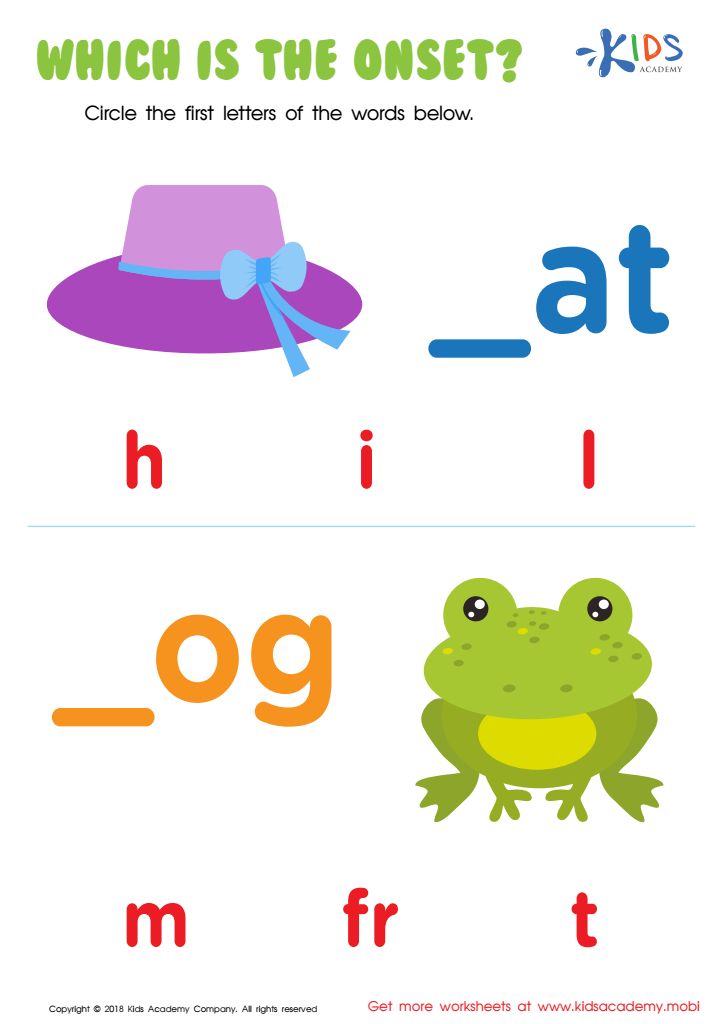
Which Is the Onset? Worksheet
 Assign to My Students
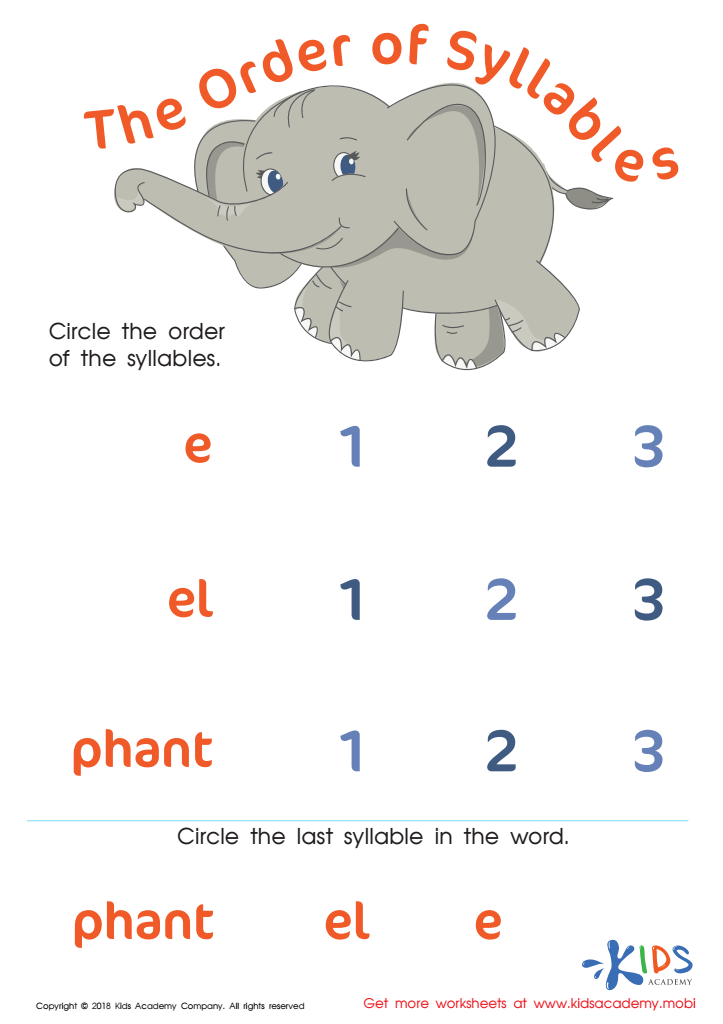
The Order of Syllables Worksheet
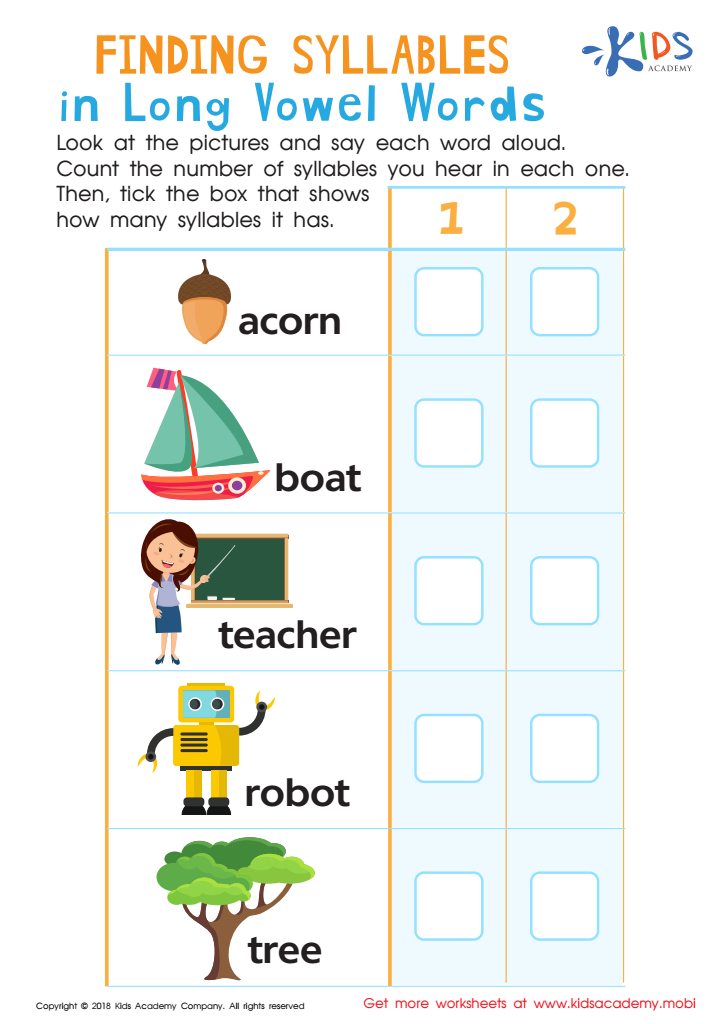
Finding Syllables in Long Vowel Words Worksheet








Understanding syllables and the alphabet is crucial for young learners aged 3-7 as it lays the foundation for reading and writing skills. Phonemic awareness, which involves recognizing syllables, is a key component in literacy development. When children learn to break words into syllables, they become better equipped to sound out unfamiliar words, improving both reading fluency and comprehension.
Furthermore, introducing the alphabet at this early age promotes recognition and understanding of letters and their sounds, facilitating effective phonics instruction. Children who grasp the relationship between letters and corresponding sounds will excel in spelling, writing, and overall language skills.
Parents and teachers should prioritize this learning because building a strong literacy foundation contributes to lifelong academic success. Engaging with children through games, songs, and interactive activities revolving around syllables and the alphabet nurtures a love for language and empowers them to express themselves effectively.
Additionally, these skills foster self-confidence and promote effective communication, essential for social interactions and educational advancement. By focusing on syllables and the alphabet, parents and teachers can create tailored learning experiences that meet each child's developmental needs, ensuring they develop essential skills Readiness for Literacy.







