
Vocabulary enhancement Letter Recognition Worksheets for Ages 3-7
4 filtered results
Difficulty Level
Grade
Age
-
From - To
Subject
Activity
Standards
Welcome to our engaging Vocabulary Enhancement Letter Recognition Worksheets designed for children ages 3 to 7! Our worksheets combine essential letter recognition skills with playful, vocabulary-building exercises. Each activity promotes literacy development through fun, interactive methods that captivate young learners. Kids will practice identifying letters, associating them with words, and expanding their vocabulary in an enjoyable way. Perfect for homeschooling, preschool, or reinforcing classroom learning, these worksheets provide a solid foundation for early literacy skills. Boost your child’s confidence and readiness for reading with our expertly crafted resources that make learning letters and words an exciting adventure! Start today!
Favorites
With answer key
Interactive
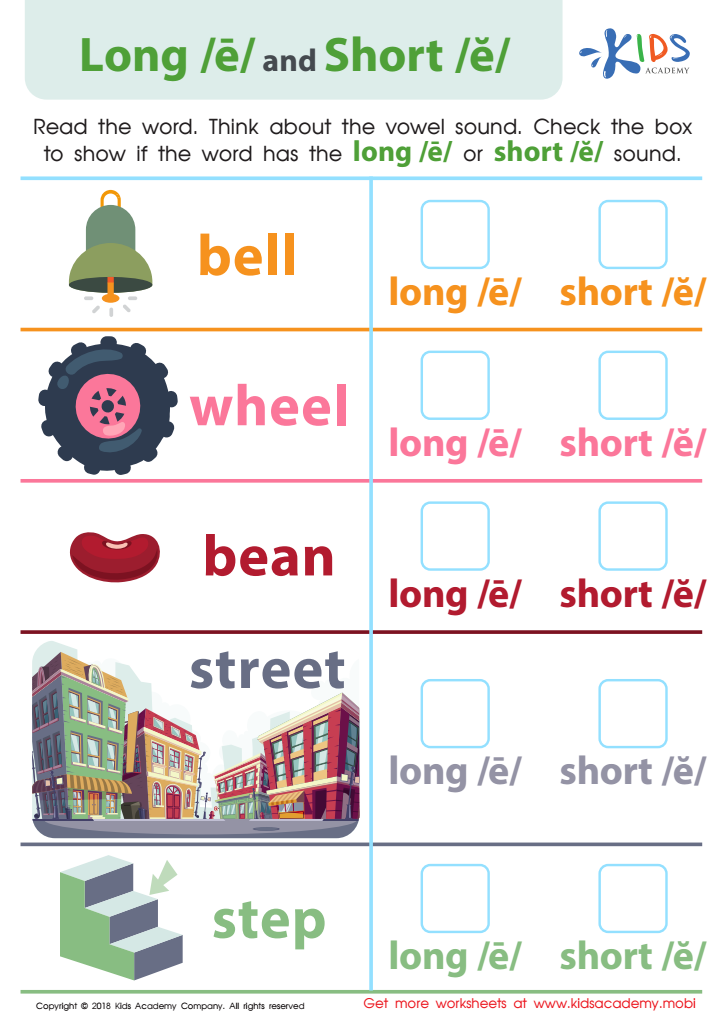
Reading: Long E and Short E Worksheet
Provide your students with valuable practice in distinguishing long and short E sounds with this worksheet. They'll look at pictures and read the words, then decide which sound is being used. It's an effective tool to help them master a difficult concept.
 Assign to My Students
Reading: Long E and Short E Worksheet
Worksheet
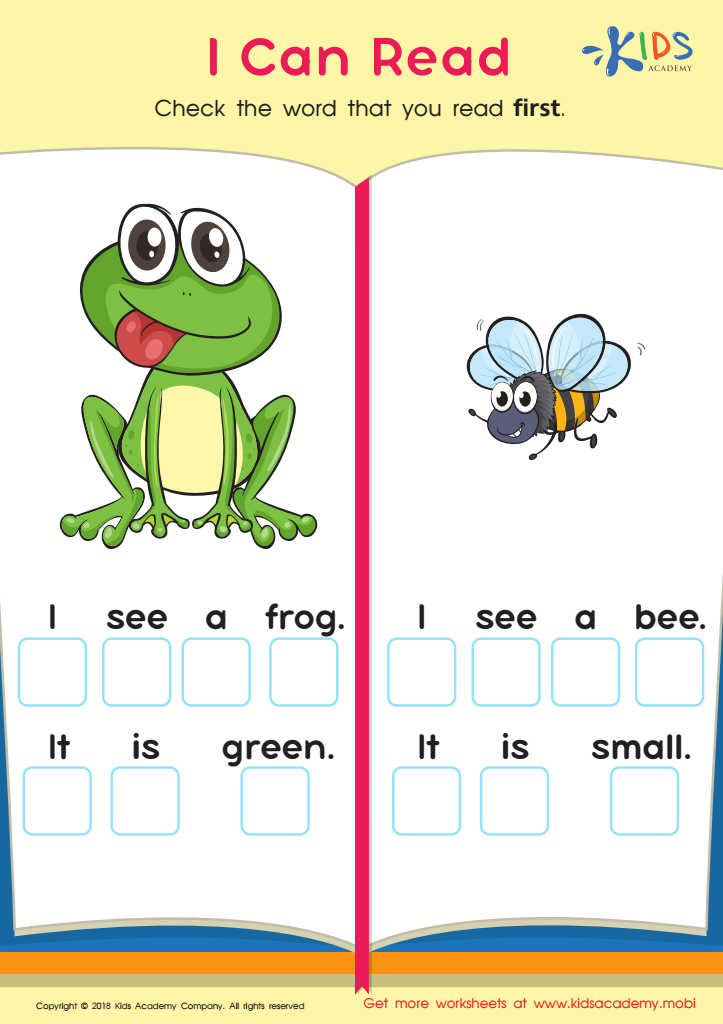
I Can Read Worksheet
Test your child's reading skills with this fun worksheet. See how well they know one-letter, two-letter, and five-letter words. Ask your little one to read the sentences and tick the word they identify first. It's a great way to track their progress and help them become more confident readers.
I Can Read Worksheet
Worksheet
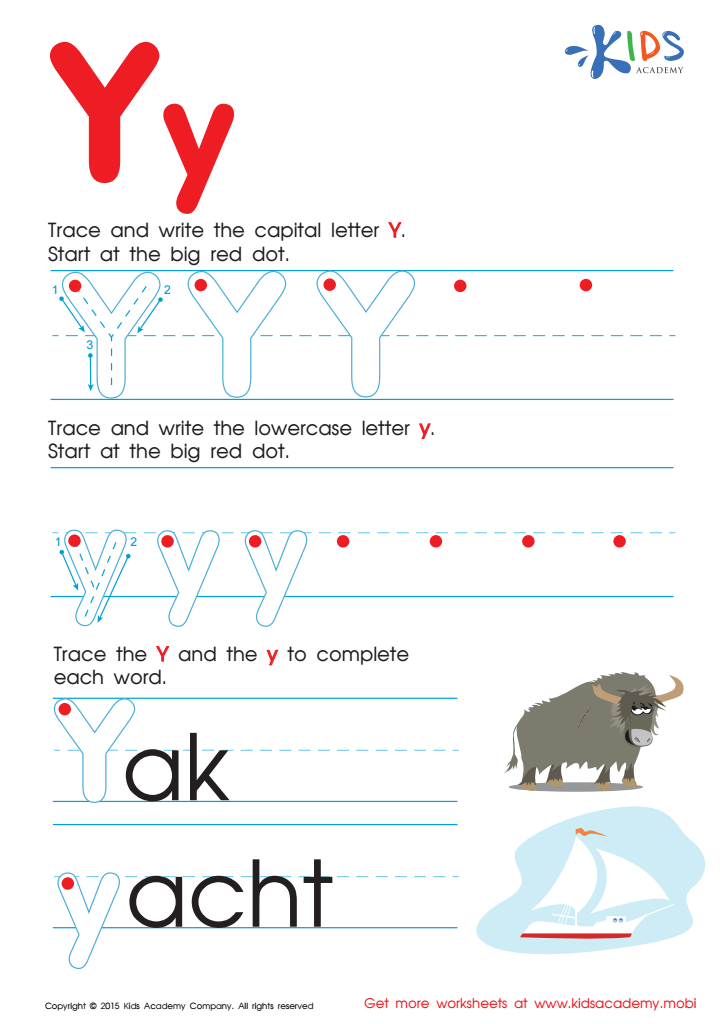
Letter Y Tracing Page
Trace the capital letter "Y" on the red dot, then trace and write the lowercase letter. Complete the words to help the Yak walk and the yacht swim. More worksheets at Kids Academy.
Letter Y Tracing Page
Worksheet
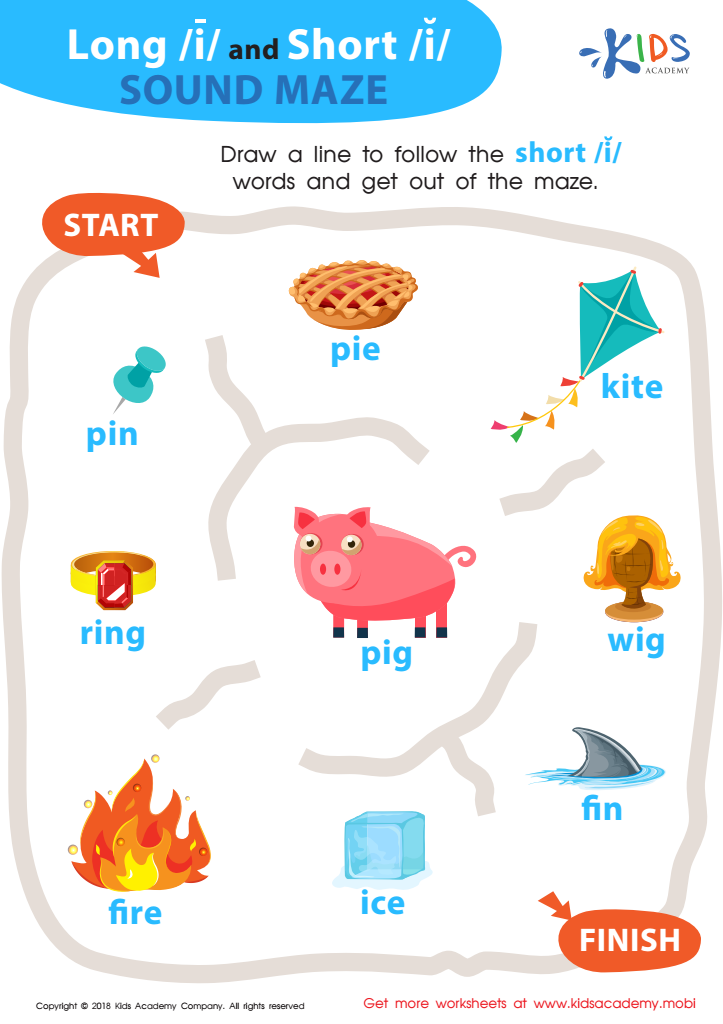
Reading: Long I and Short I Sound Maze Worksheet
Question your students if the worksheet is entertaining. They may respond negatively! Nonetheless, this activity will bring satisfaction while learning the distinction between a long and short I sound. Students read the words in the maze and only follow the words with the short I sound to finish the exercise. Grasping the difference between long and short vowels is demanding, but this worksheet helps students understand this reading skill.
Reading: Long I and Short I Sound Maze Worksheet
Worksheet
Join Kids Academy for Free
Who is primarily going to use this learning content?








Vocabulary enhancement and letter recognition are crucial components of early literacy development for children ages 3-7. During these formative years, children are like sponges, absorbing language and concepts that will serve as the foundation for their future reading, writing, and communication skills.
Letter recognition aids in helping children identify and understand the shapes and sounds of letters, leading to phonemic awareness—a key skill for reading. When children can recognize letters, they can begin to decode simple words, fostering a sense of accomplishment and confidence in their literacy journey.
Vocabulary enhancement, on the other hand, enriches a child’s language comprehension and expression. A strong vocabulary enables children to articulate their thoughts more clearly and understand more complex ideas and instructions. This not only benefits academic achievement but also enhances social connections and emotional development.
When parents and teachers prioritize these skills, they create a nurturing environment conducive to learning. Engaging young learners through games, reading, songs, and conversations expands their linguistic capabilities while making learning enjoyable. Ultimately, investing in vocabulary and letter recognition during these early years sets the stage for lifelong communication skills, academic success, and personal growth.







