Understanding syllables Phonics Worksheets for Ages 3-7
3 filtered results
-
From - To
Unlock your child’s potential with our "Understanding Syllables Phonics Worksheets" designed for ages 3-7! These engaging resources simplify the concept of syllables, promoting early reading skills through fun and interactive activities. Kids will learn to break words into manageable parts, enhancing their phonemic awareness and boosting their confidence in literacy. Our worksheets include colorful illustrations, exciting games, and structured exercises that keep young learners motivated. With a focus on phonics mastery, these worksheets are perfect for parents and educators seeking to strengthen foundational reading skills. Start your child’s journey to reading success today with our thoughtfully crafted phonics worksheets!
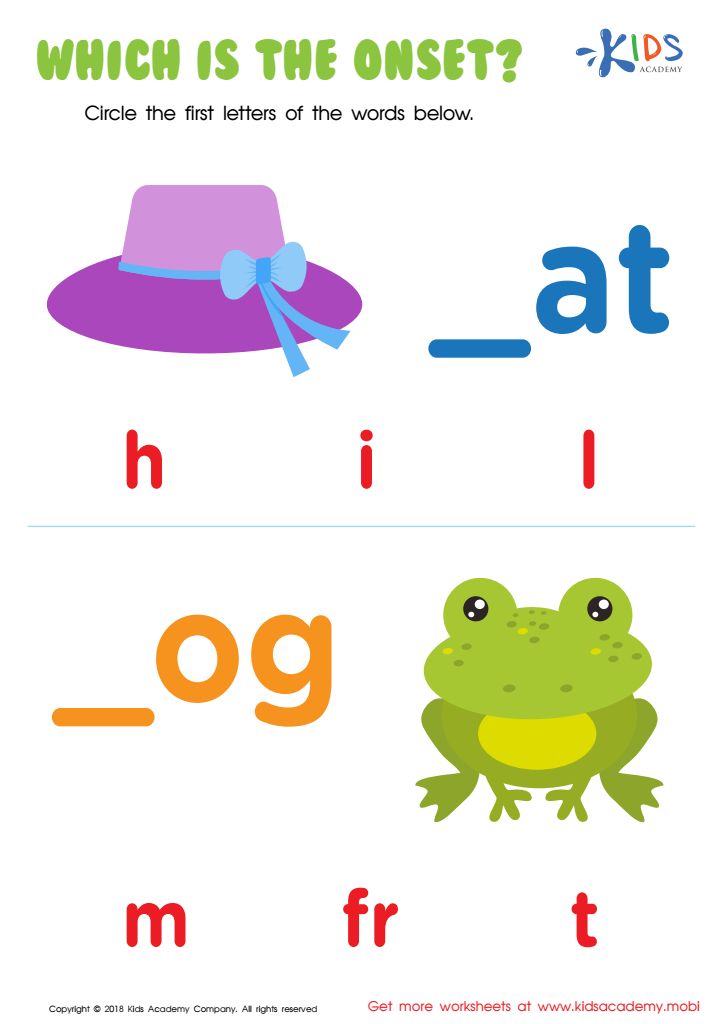
Which Is the Onset? Worksheet
 Assign to My Students
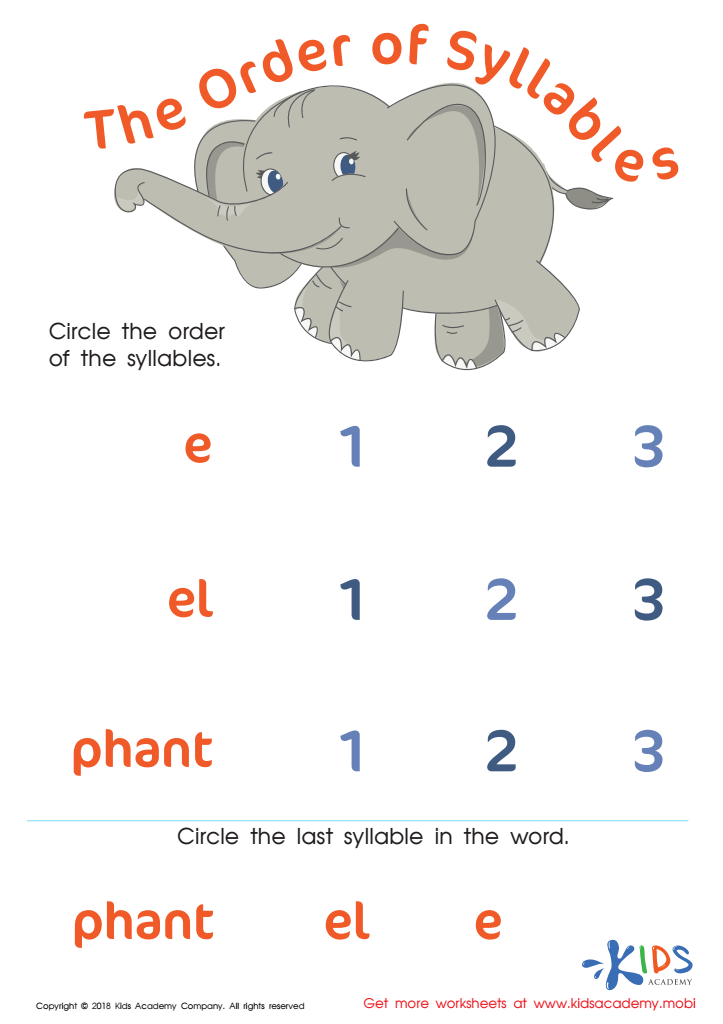
The Order of Syllables Worksheet
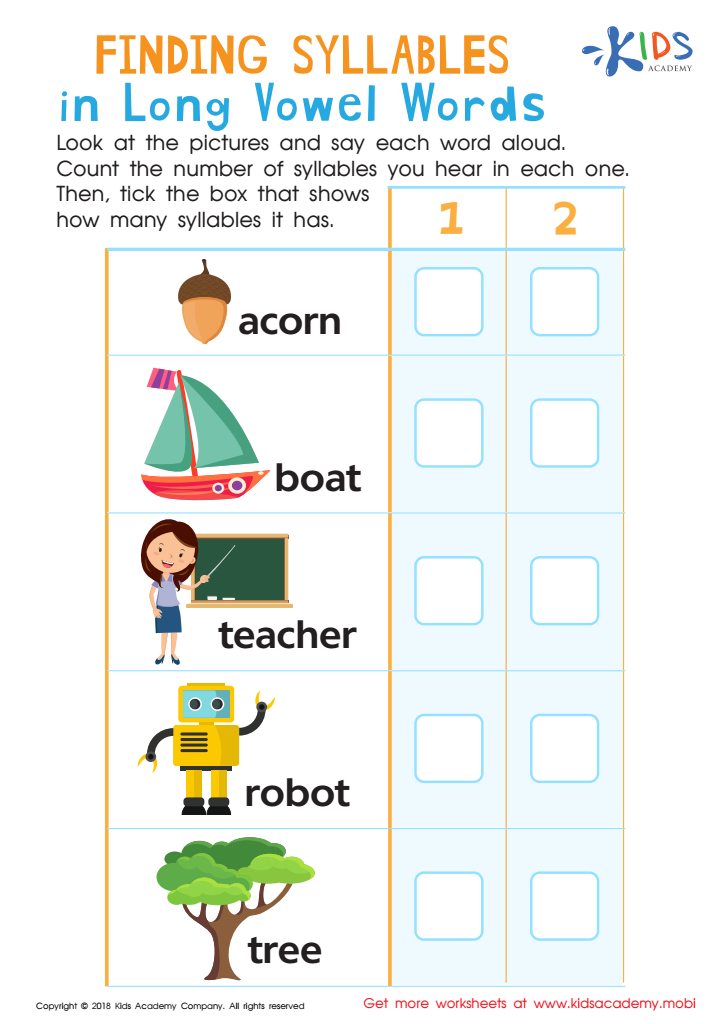
Finding Syllables in Long Vowel Words Worksheet








Understanding syllables and phonics is crucial for children aged 3-7 as it lays the foundational skills for reading and writing. During these formative years, children are developing their language abilities, and phonics teaches them how letters and patterns of letters correspond to sounds. By grasping phonics, children can decode words, which boosts their confidence and independence in reading.
Syllables, on the other hand, help children understand word structure, improving their ability to spell correctly and pronounce words. Recognizing syllables aids in breaking down longer words into manageable parts, making reading less daunting. This skill is essential for fluency, enabling children to read more smoothly and with better comprehension.
For parents and teachers, examining these elements equips them to support literacy development effectively. Engaging in activities that emphasize phonics and syllable recognition can enhance children's overall language skills, fostering a love for reading. Additionally, awareness of these concepts allows parents and teachers to identify any potential challenges early, ensuring timely interventions. Ultimately, investing time in understanding syllables and phonics not only improves literacy rates but also enriches children's cognitive development and lifelong learning habits.







