Vocabulary enhancement Tracing Letters Worksheets for Ages 3-7
3 filtered results
-
From - To
Looking to boost your child's vocabulary skills while they learn to write? Our "Vocabulary Enhancement Tracing Letters Worksheets for Ages 3-7" provide the perfect blend of literacy and language development. Designed specifically for young learners, these worksheets guide children in tracing letters and incorporating new words related to various themes. Each engaging worksheet encourages recognition, pronunciation, and usage of new vocabulary in a fun, interactive way. By connecting tracing practice with vocabulary enhancement, kids develop essential writing skills while expanding their language abilities. Explore our collection today to help your child gain confidence in reading and writing!
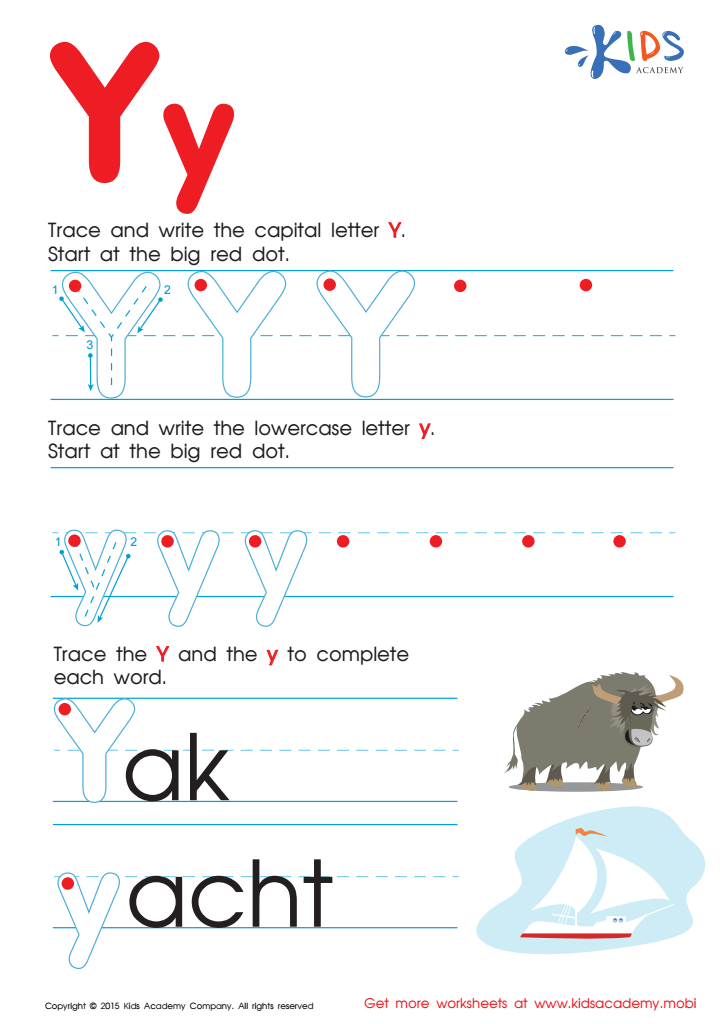
Letter Y Tracing Page
 Assign to My Students
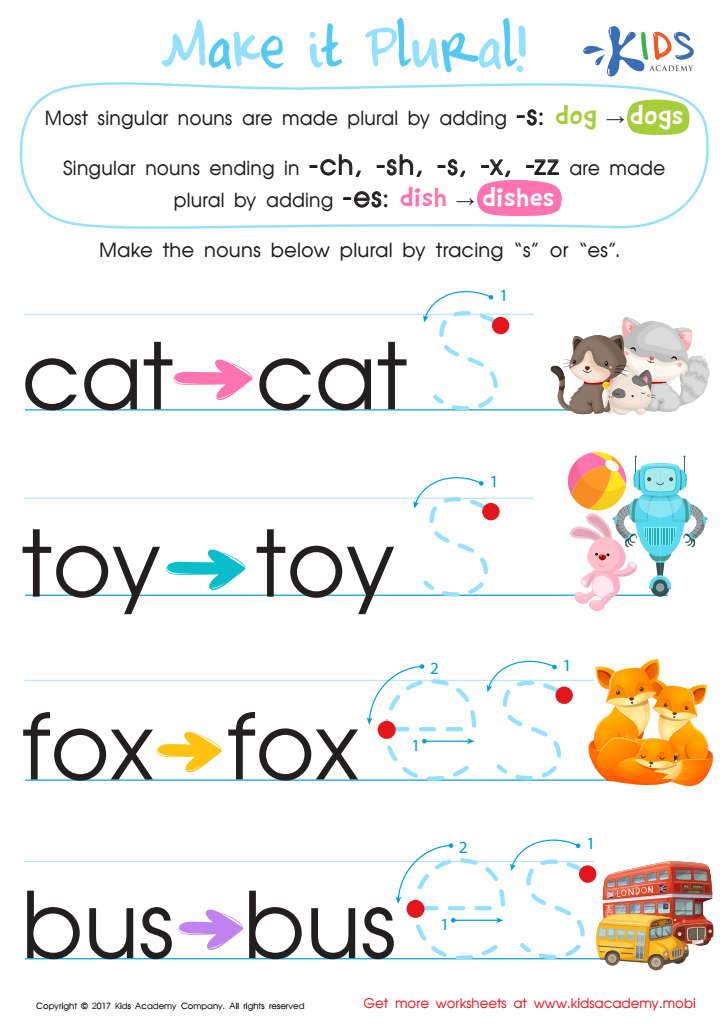
Make it Plural Worksheet
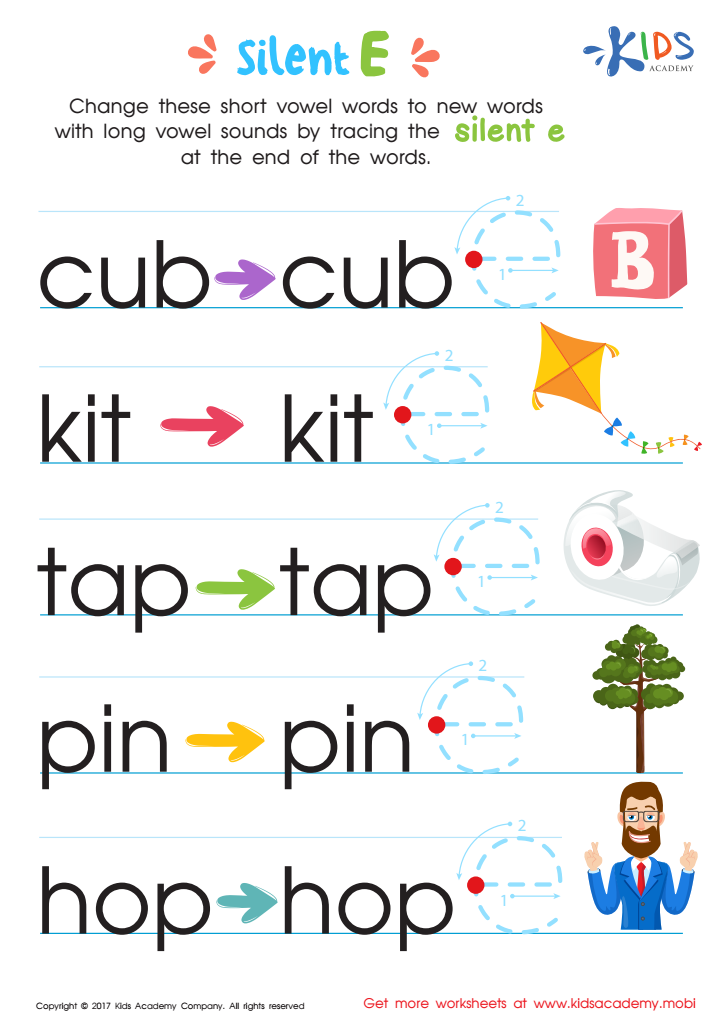
Silent E Words Worksheet








Vocabulary enhancement and tracing letters are crucial components of early childhood education for children aged 3 to 7. At this developmental stage, children are rapidly acquiring language skills, and a rich vocabulary lays the foundation for effective communication and literacy. By introducing new words through engaging activities, parents and teachers can help expand a child's understanding of the world around them, which supports cognitive growth and literacy development.
Tracing letters is equally important as it aids in developing fine motor skills and hand-eye coordination, essential for writing. As children trace letters, they learn proper letter formation while reinforcing their understanding of sounds that letters represent, facilitating the process of reading and writing. This multi-sensory approach keeps children engaged and makes learning playful.
Moreover, enhancing vocabulary and letter tracing encourages positive learning experiences and builds confidence in young learners. Children who have a strong vocabulary are better equipped to express their thoughts, engage in conversations, and understand academic content as they progress in their education. Ultimately, investing time in these foundational skills creates a lifelong love for learning and sets the stage for future academic success. Parents and teachers should prioritize these activities to nurture expressive, competent, and confident communicators.








