Chess strategy understanding Chess Worksheets for Ages 3-7
15 filtered results
-
From - To
Introducing our "Chess Strategy Understanding" worksheets designed specifically for ages 3-7! These engaging activities help young minds grasp fundamental chess strategies through fun and interactive exercises. Our worksheets foster critical thinking and problem-solving skills while making learning chess enjoyable. Each sheet features colorful illustrations and easy-to-follow instructions tailored for early learners. Perfect for both beginners and young chess enthusiasts, these printable worksheets ensure a strong foundation in chess strategy, preparing your child for future challenges on the board. Make learning chess an adventure and watch their strategic thinking blossom with Kids Academy’s specialized chess materials!
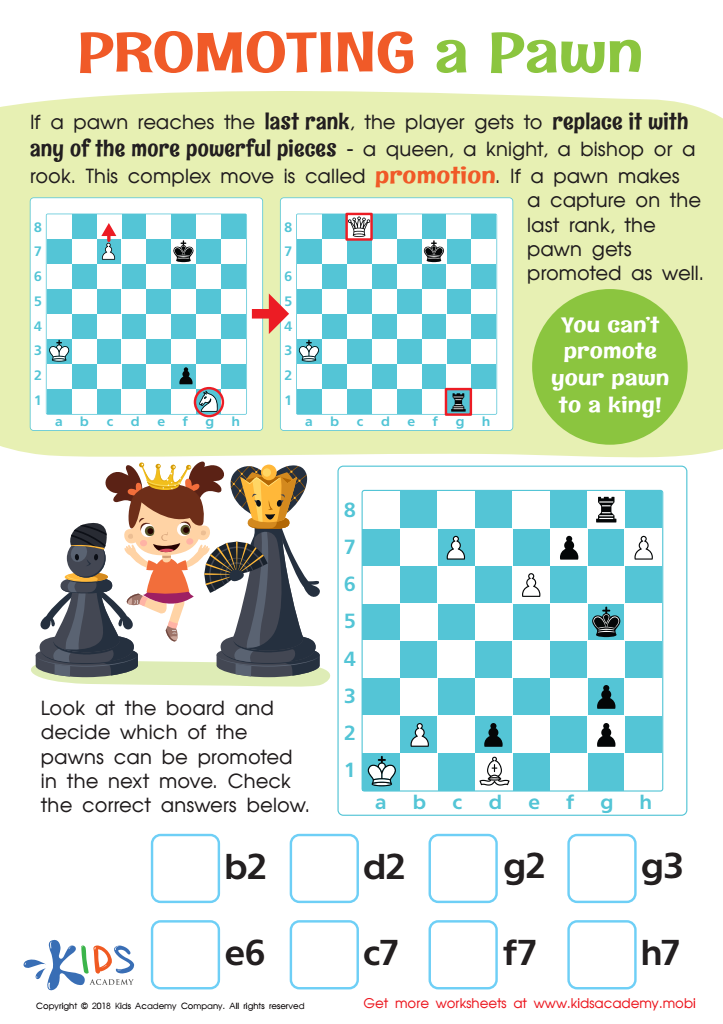
Promoting a Pawn Worksheet
 Assign to My Students
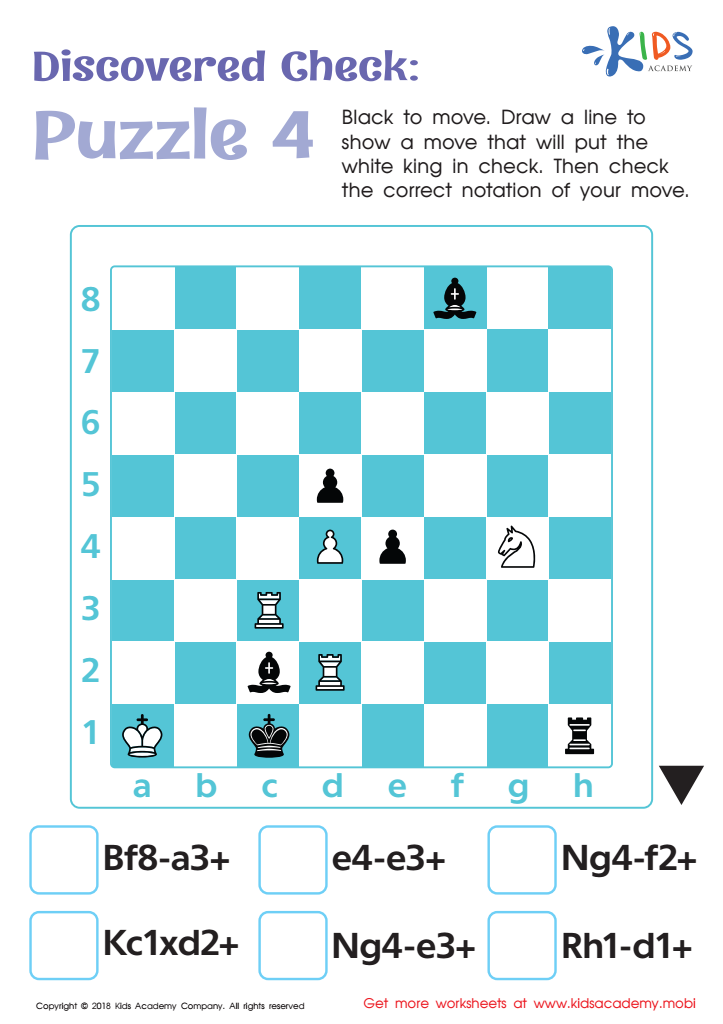
Discovered Check: Puzzle 4 Worksheet
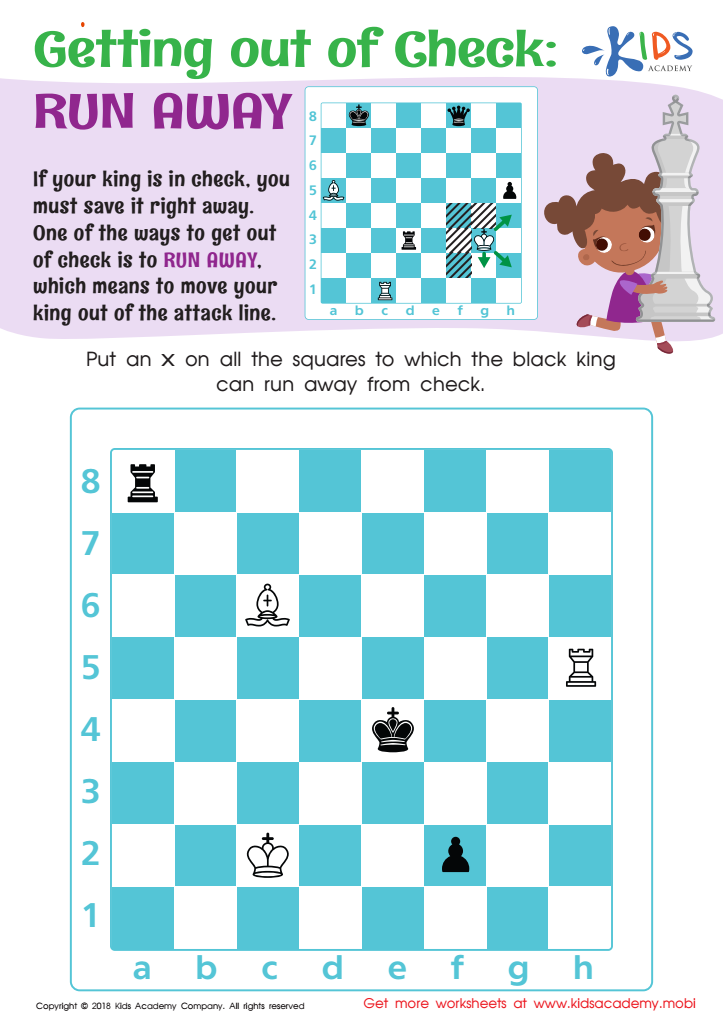
Getting out of Check: Run Away Worksheet
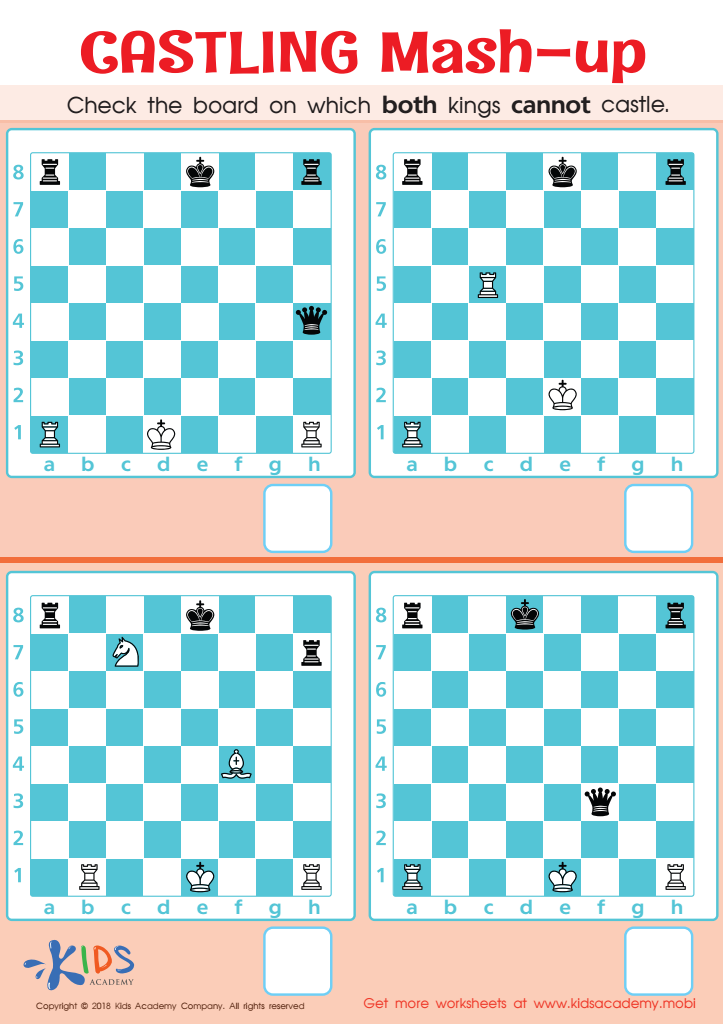
Castling Mash–up Worksheet
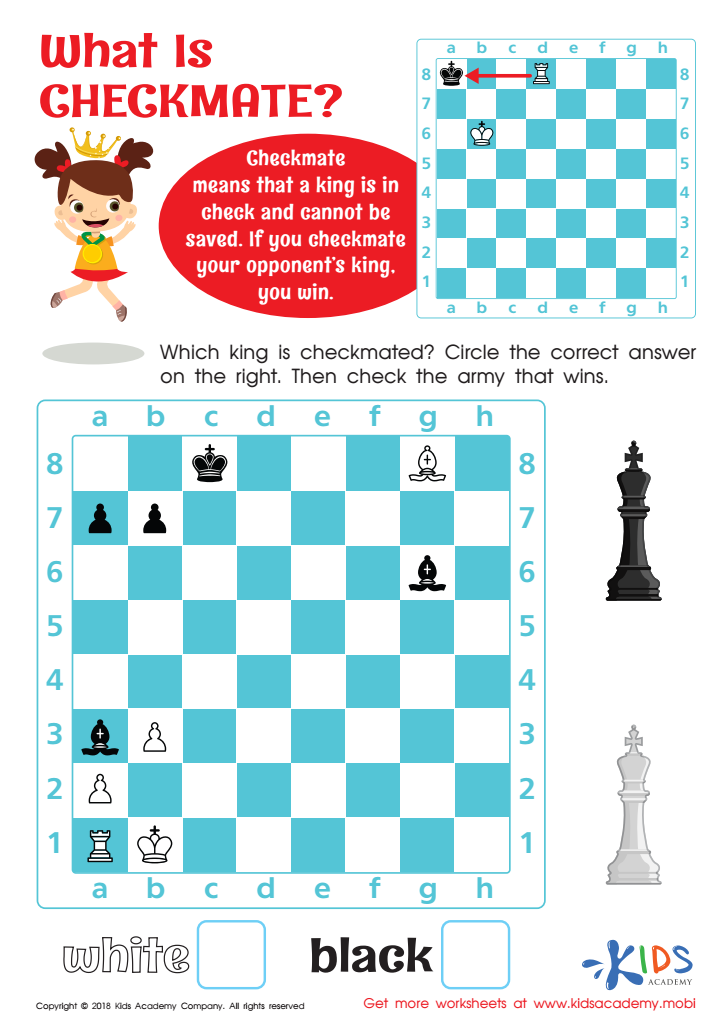
What is Checkmate? Worksheet
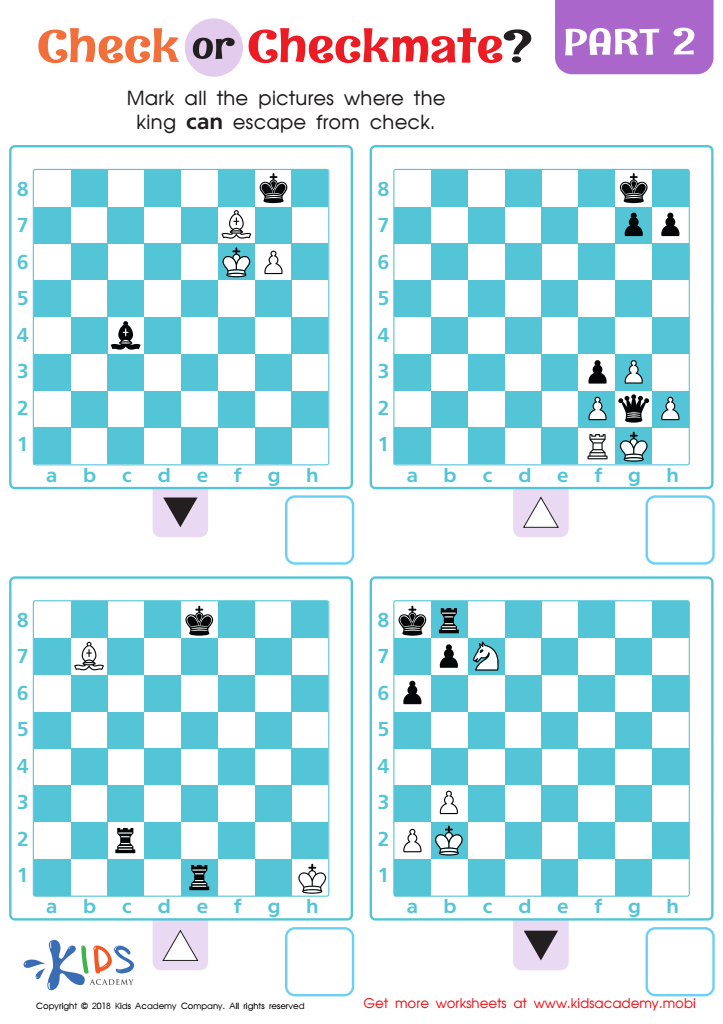
Check or Checkmate: Part 2 Worksheet
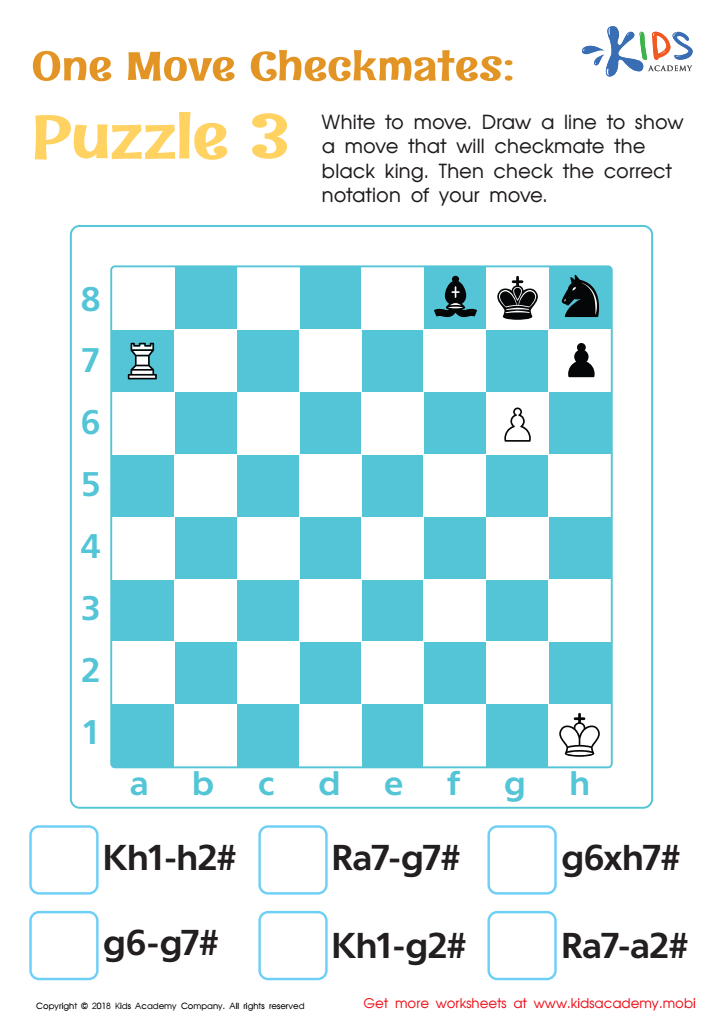
One Move Checkmates: Puzzle 3 Worksheet
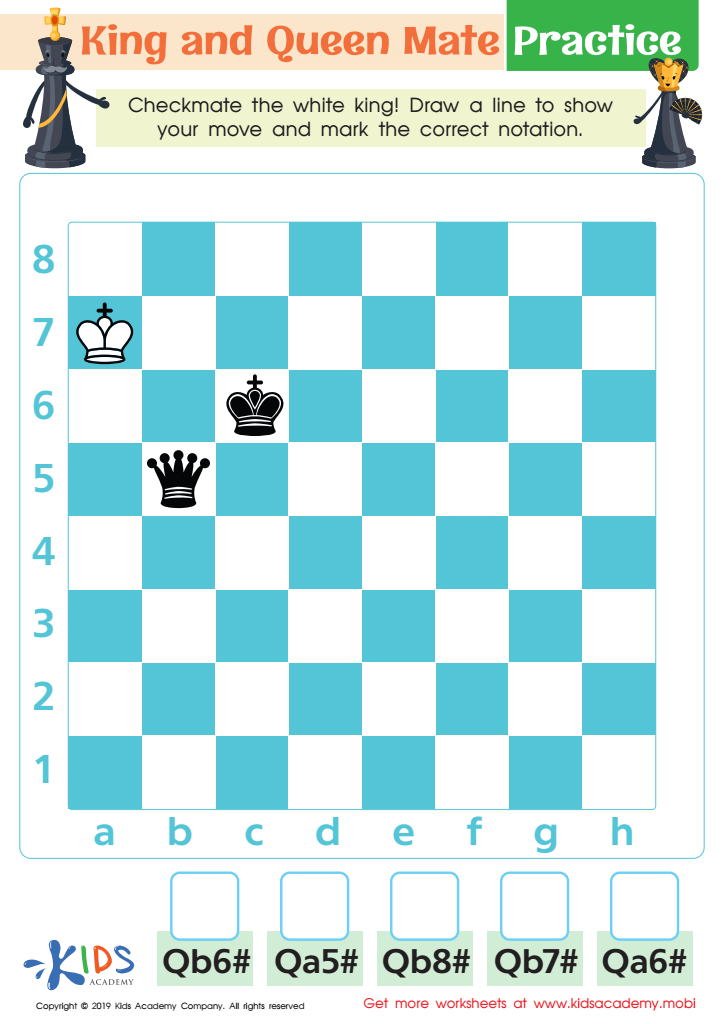
King and Queen Mate Practice Worksheet

Discovered Check: Puzzle 2 Worksheet
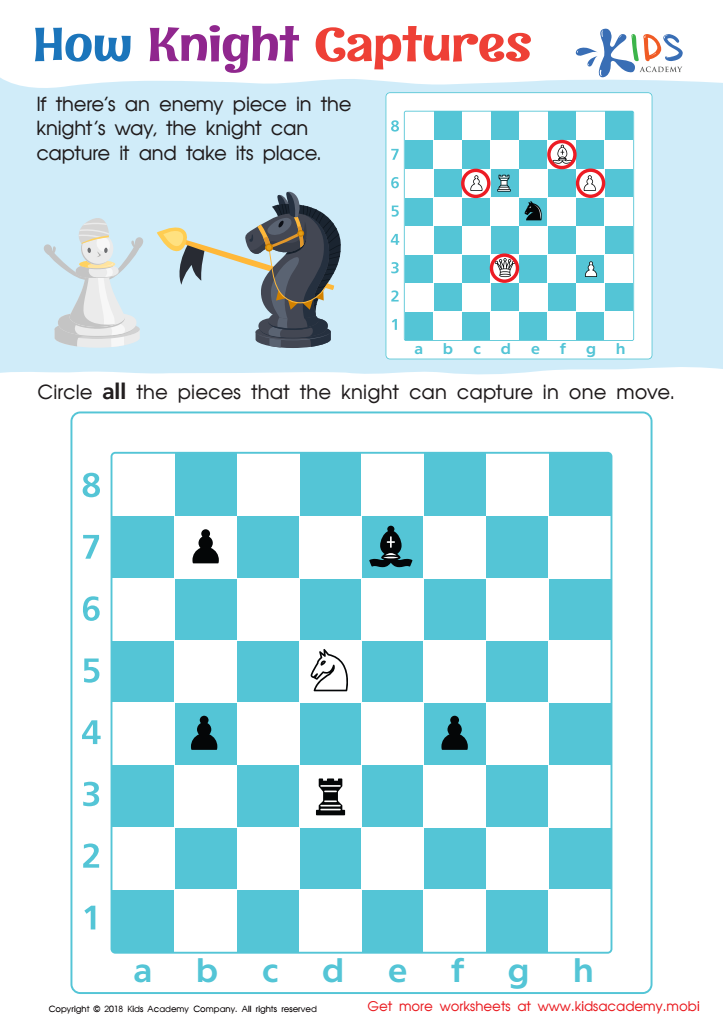
How Knight Captures Worksheet
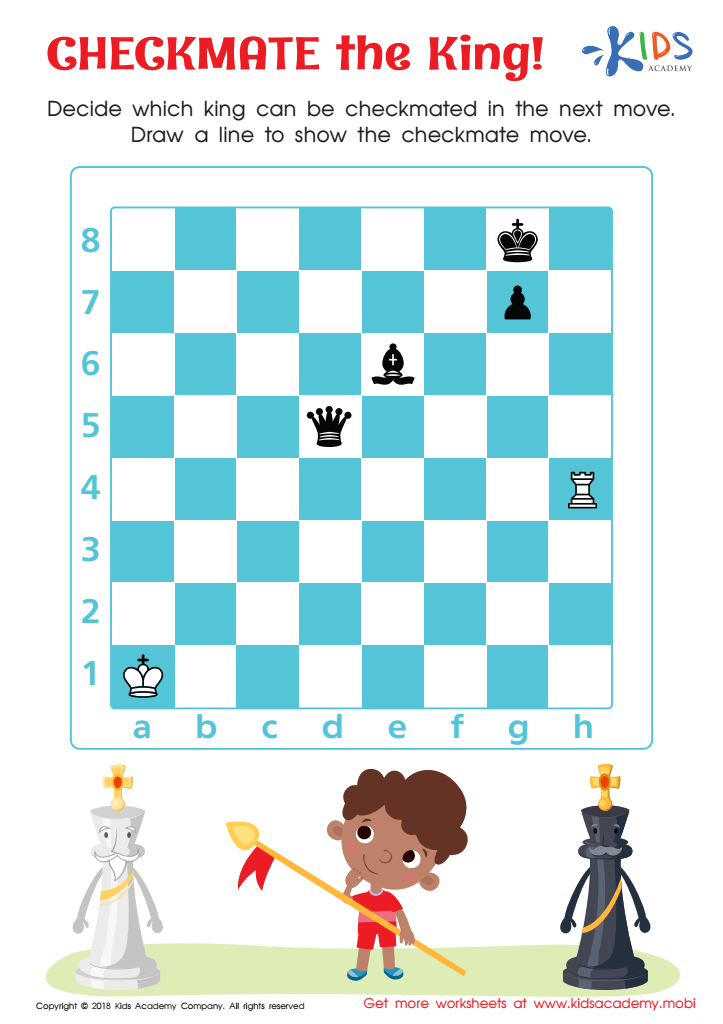
Checkmate the King Worksheet
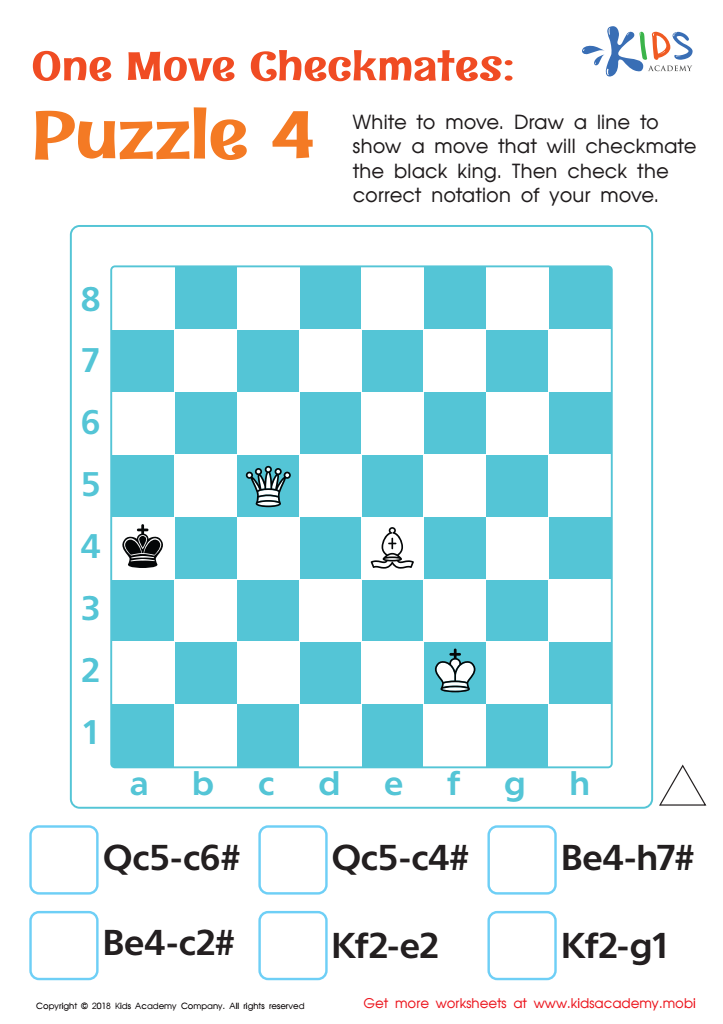
One Move Checkmates: Puzzle 4 Worksheet
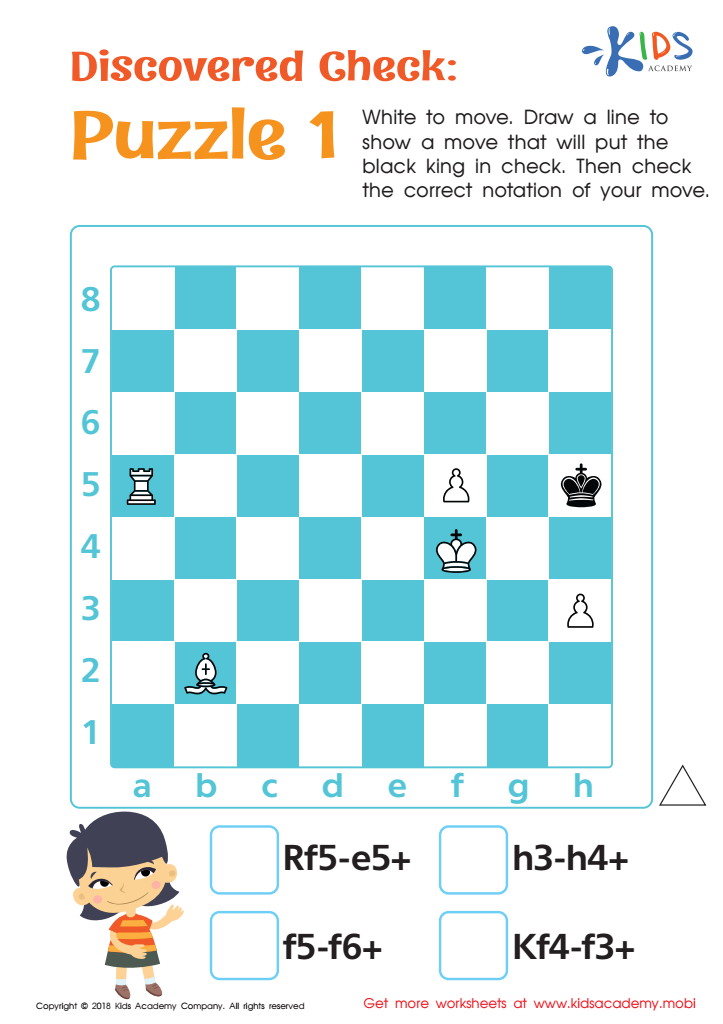
Discovered Check: Puzzle 1 Worksheet
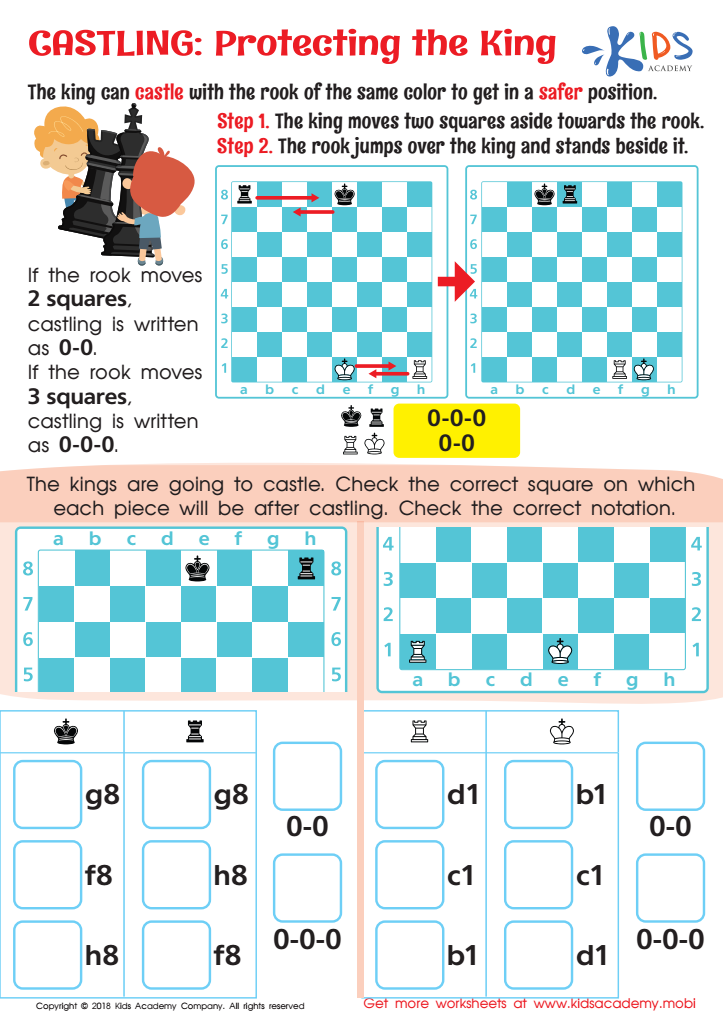
Castling: Protecting the King Worksheet
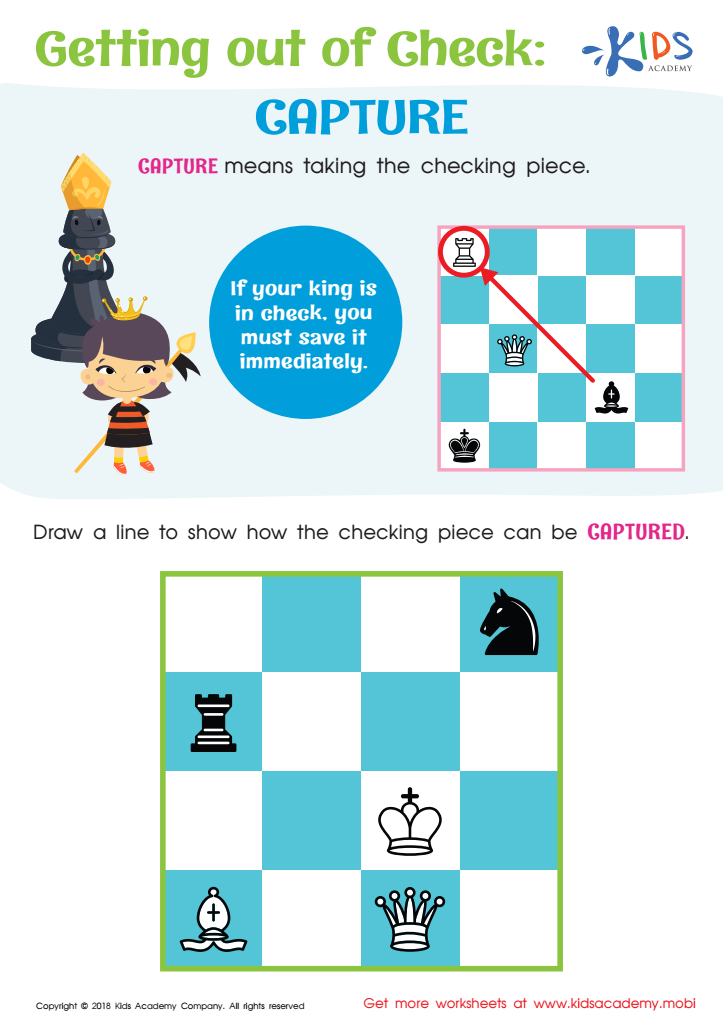
Getting out of Check: Capture




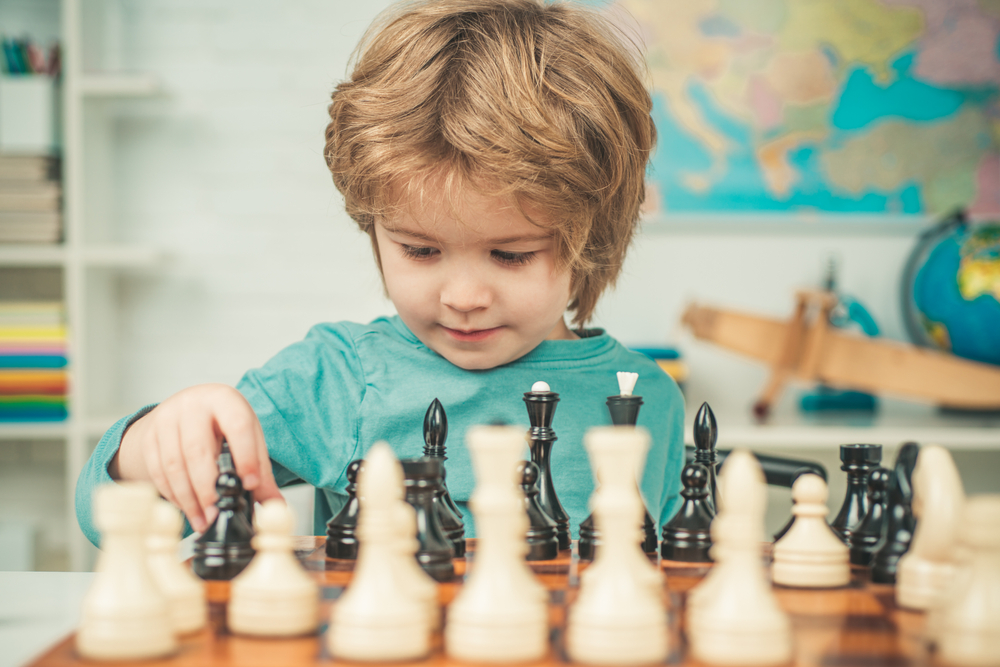
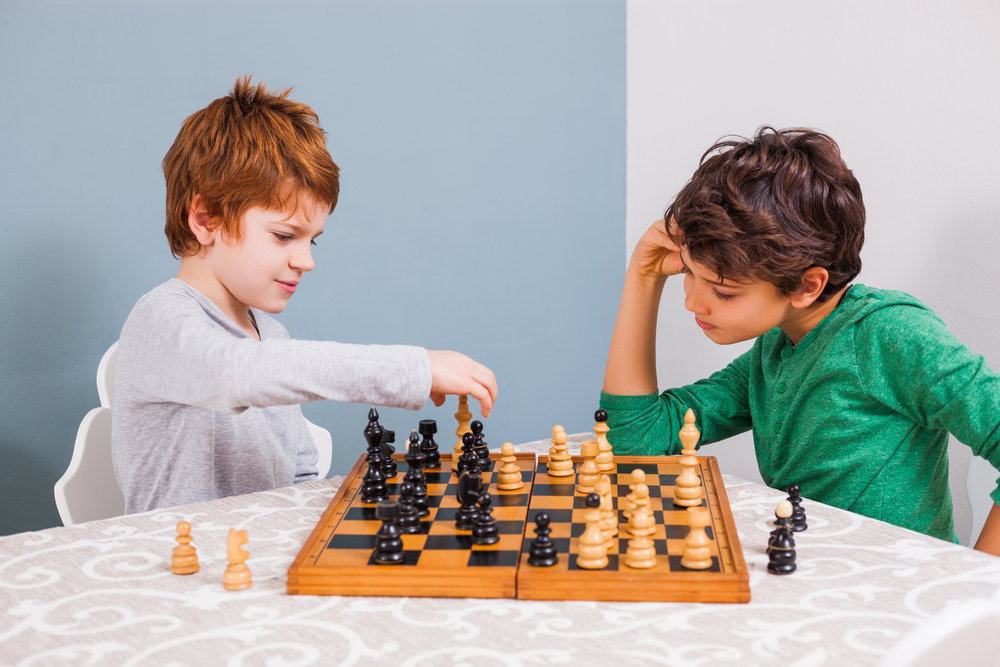

Understanding chess strategy is incredibly beneficial for young children aged 3-7, and parents or teachers should care about it for several compelling reasons. Firstly, learning chess at an early age significantly boosts cognitive development. It enhances critical thinking, problem-solving skills, and pattern recognition, all of which are foundational abilities for academic success. Employing strategies in chess teaches young minds to think ahead and anticipate consequences, promoting forward-thinking and decision-making abilities.
Additionally, chess fosters patience, focus, and concentration. Young children often have short attention spans, but the engaging and challenging nature of chess can help them develop the ability to stay focused on tasks for longer periods. This concentration can translate to improved performance in school and other areas of life.
Social and emotional development is another positive outcome from learning chess. It encourages healthy competition, teaches the values of planning and perseverance, and instills a sense of achievement. It can also teach children to cope with winning and losing gracefully, fostering better sportsmanship.
Moreover, chess is a universal game that can help bridge cultural gaps, providing a common ground for social interaction.
In conclusion, incorporating chess into early education offers a multitude of cognitive, social, and emotional benefits that are invaluable for the holistic development of young children.