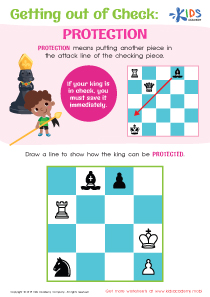
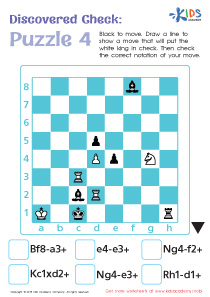
Strategic thinking Chess Worksheets for Ages 3-7
3 filtered results
-
From - To
Discover our engaging "Strategic Thinking Chess Worksheets" designed specifically for children aged 3-7! These thoughtfully crafted worksheets introduce young learners to the fundamental concepts of chess while enhancing their strategic thinking skills. Through fun, age-appropriate activities, children will develop critical problem-solving abilities, improve concentration, and learn the importance of planning ahead. Each worksheet is tailored to capture the imagination, making chess an exciting adventure. Perfect for both classroom and home use, our resources foster a love for the game while nurturing vital cognitive skills. Start your child's chess journey today and watch their strategic brilliance unfold!
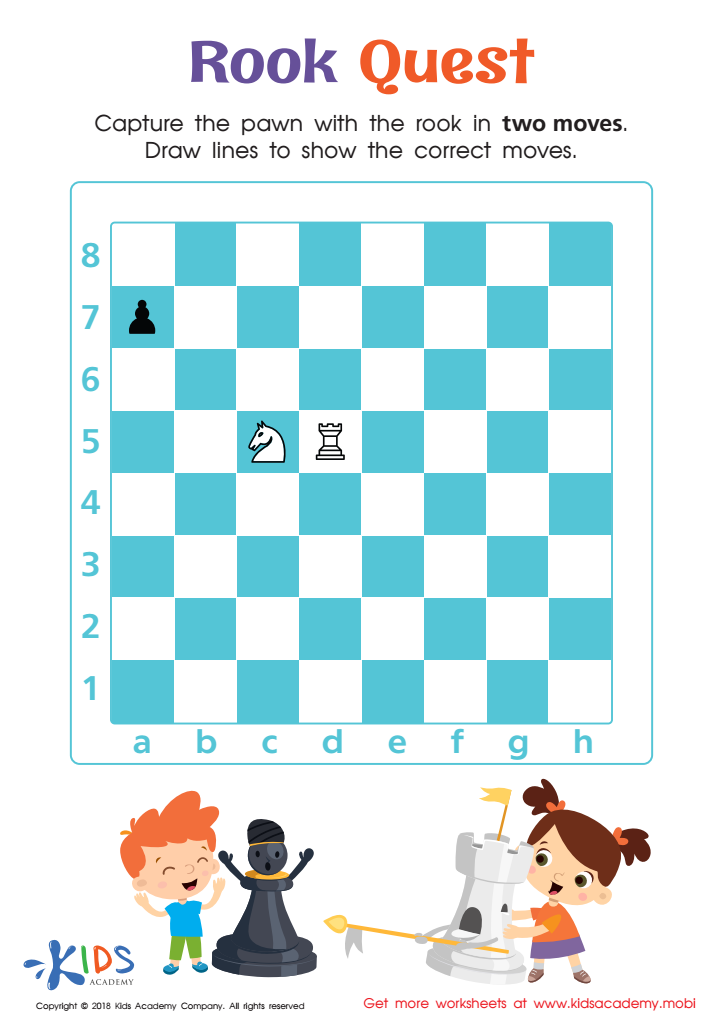
Rook Quest Worksheet
 Assign to My Students
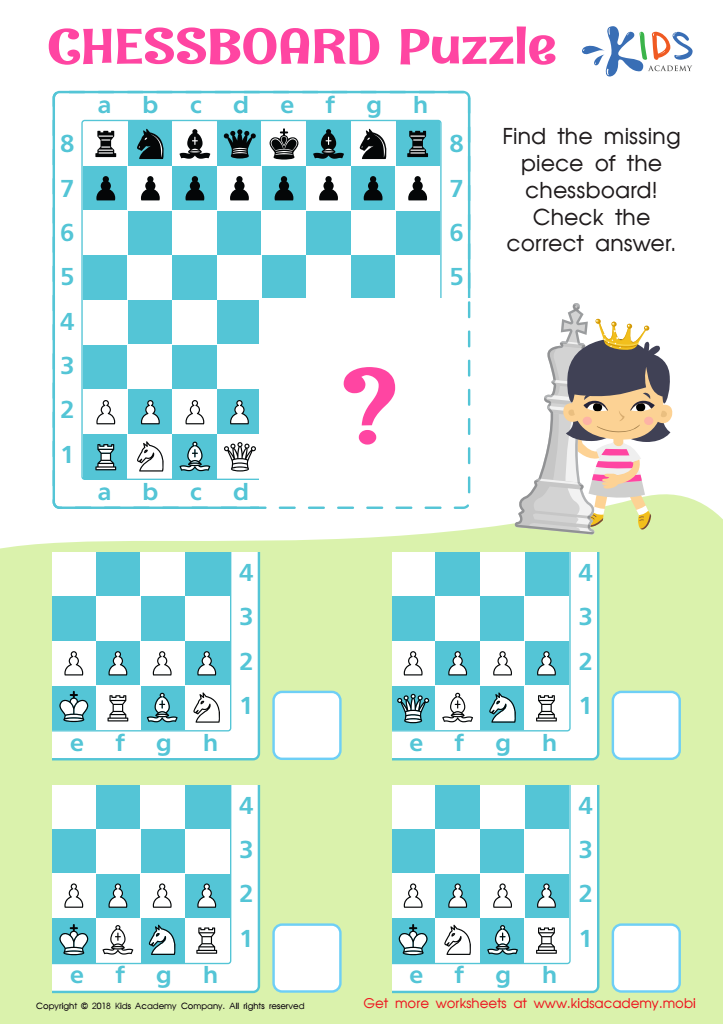
Chessboard Puzzle Worksheet
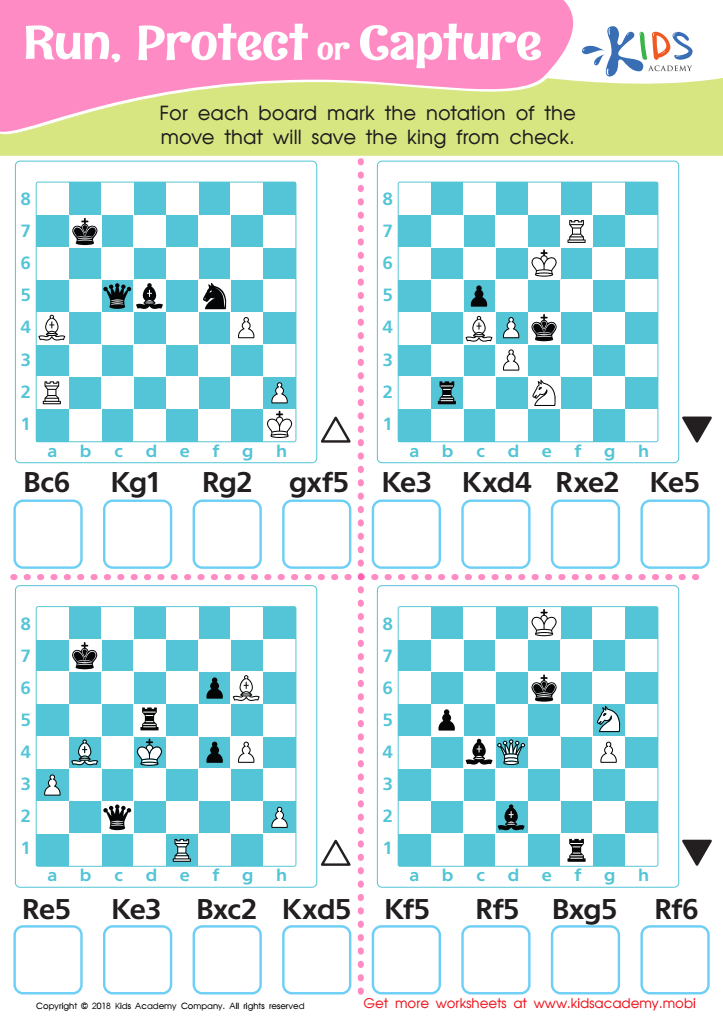
Run, Protect or Capture Worksheet





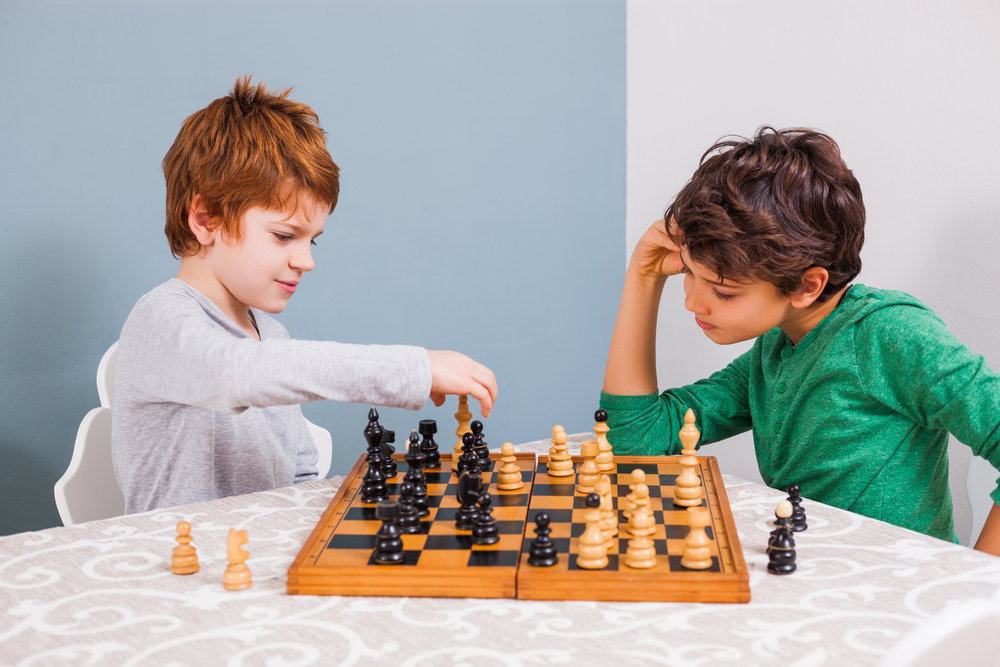

Strategic thinking chess introduces children aged 3-7 to foundational skills in problem-solving, critical thinking, and decision-making. By engaging in chess at an early age, children develop cognitive abilities that are crucial for academic success. The game requires players to analyze situations, anticipate opponents' moves, and plan their strategies—skills that translate to improved performance in subjects like math and reading.
Moreover, chess fosters patience and perseverance. Young players learn to think ahead and understand the consequences of their actions, which nurtures a growth mindset essential for overcoming challenges. Socially, chess encourages interaction, sportsmanship, and respect for opponents, helping children develop crucial interpersonal skills.
For parents and teachers, introducing strategic thinking through chess can serve as a fun and engaging activity that breaks the monotony of traditional learning methods. It provides a unique avenue to bond with children while nurturing key skills in a game format that challenges and entertains. Ultimately, supporting chess education is an investment in children’s future cognitive and social development, equipping them with advantages that extend far beyond the chessboard.