Enhance your child's early math skills with our Addition Skills Worksheets tailored for ages 3-7! Designed to make learning fun and engaging, these printable worksheets provide a variety of colorful exercises that introduce fundamental addition concepts. Through playful activities, children can master basic addition while developing number recognition and problem-solving skills. Each worksheet is crafted to cater to different learning levels, ensuring that your little ones can build confidence in their abilities. Perfect for parents and educators, these resources help nurture a strong mathematical foundation, setting the stage for future success. Discover the joy of learning addition today!

Check out this FREE "Addition skills" Trial Lesson for age 3-7!

Z

Favorites
With answer key
Interactive
  • 3-7
  • Addition skills
Solving Problems: Number Lines Worksheet

Solving Problems: Number Lines Worksheet

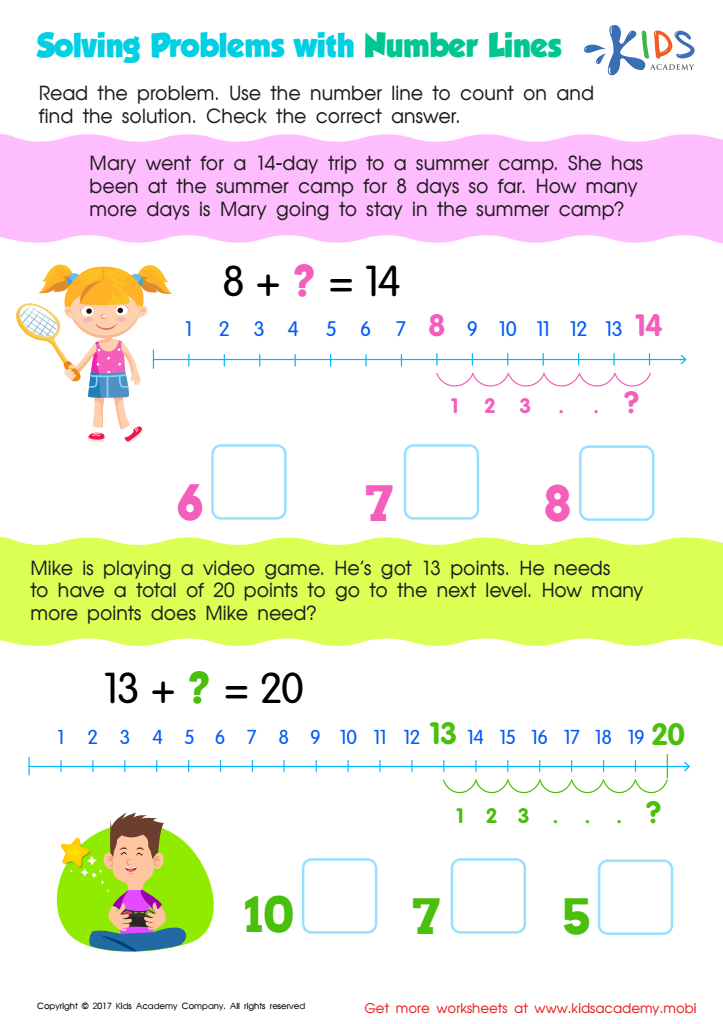
Number lines are fun and help build number sense and reasoning. This worksheet uses them to help students count on to find a solution to an equation. They'll have fun counting with familiar numbers and 10-bases, while also working on algebraic reasoning.
Solving Problems: Number Lines Worksheet
Worksheet
What's the Price? Worksheet

What's the Price? Worksheet

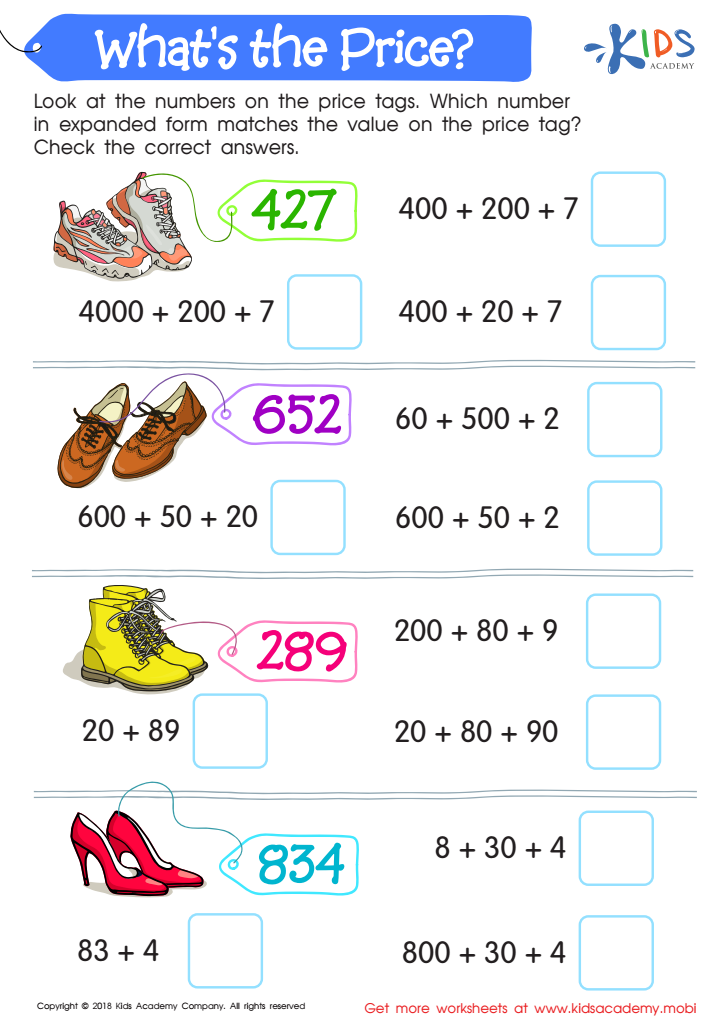
With this price tag worksheet, you and your kids can have some educational fun! Check the numbers on the tags, ask your child to work out their expanded form, and circle the correct answers. It's a great way to teach math and keep them entertained!
What's the Price? Worksheet
Worksheet
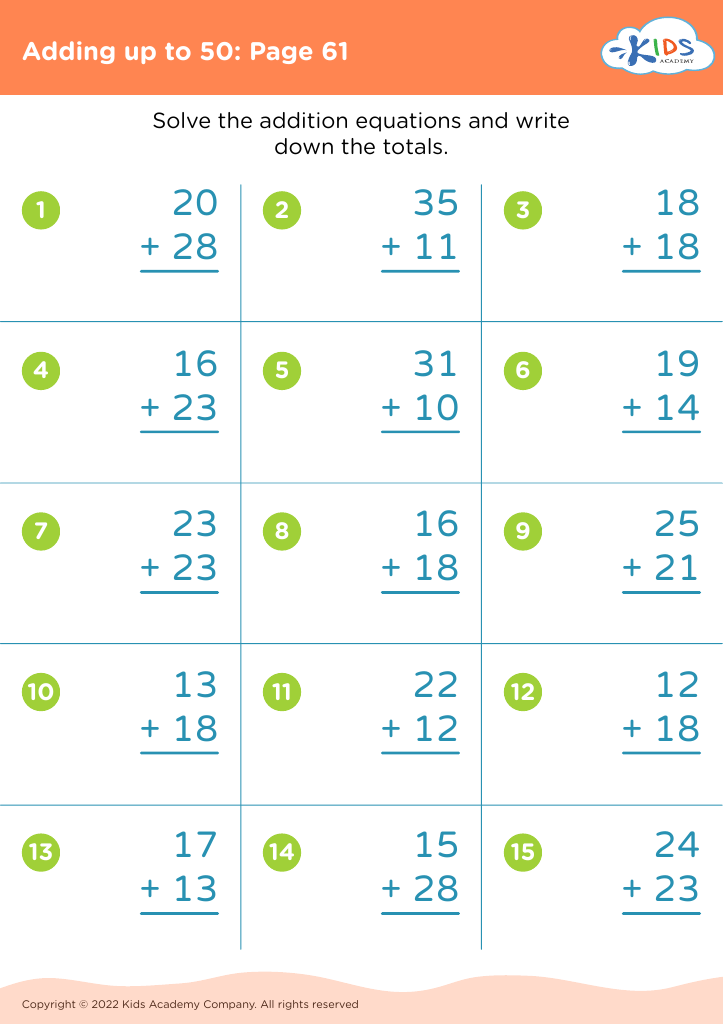
Adding up to 50: Page 61

Adding up to 50: Page 61

Adding up to 50: Page 61
Worksheet
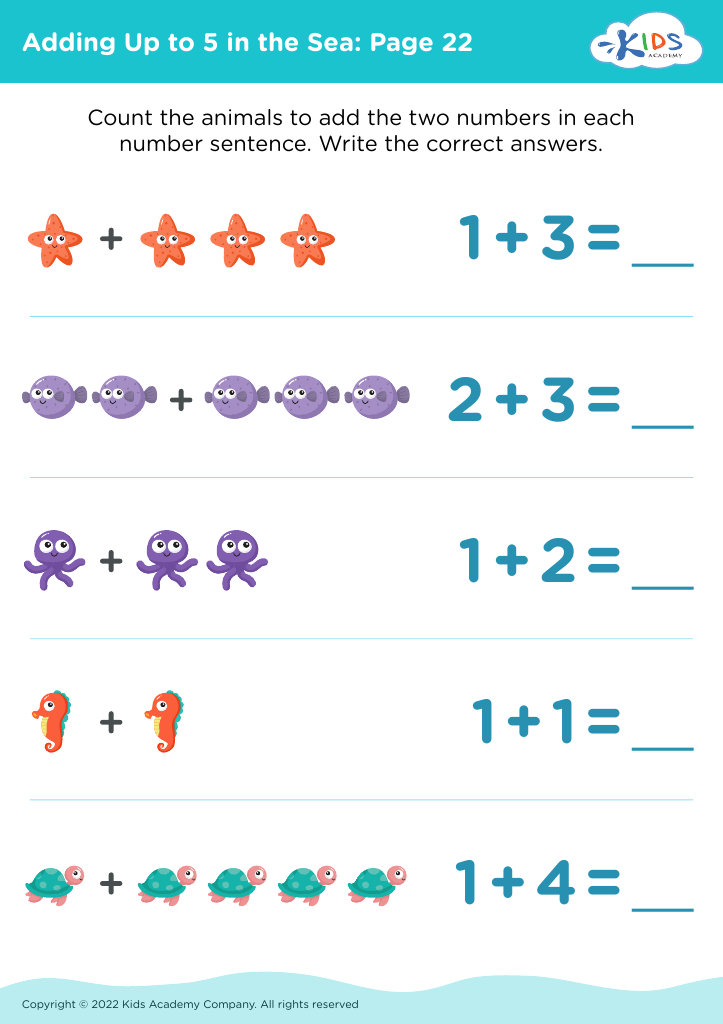
Adding Up to 5 in the Sea: Page 22
Worksheet
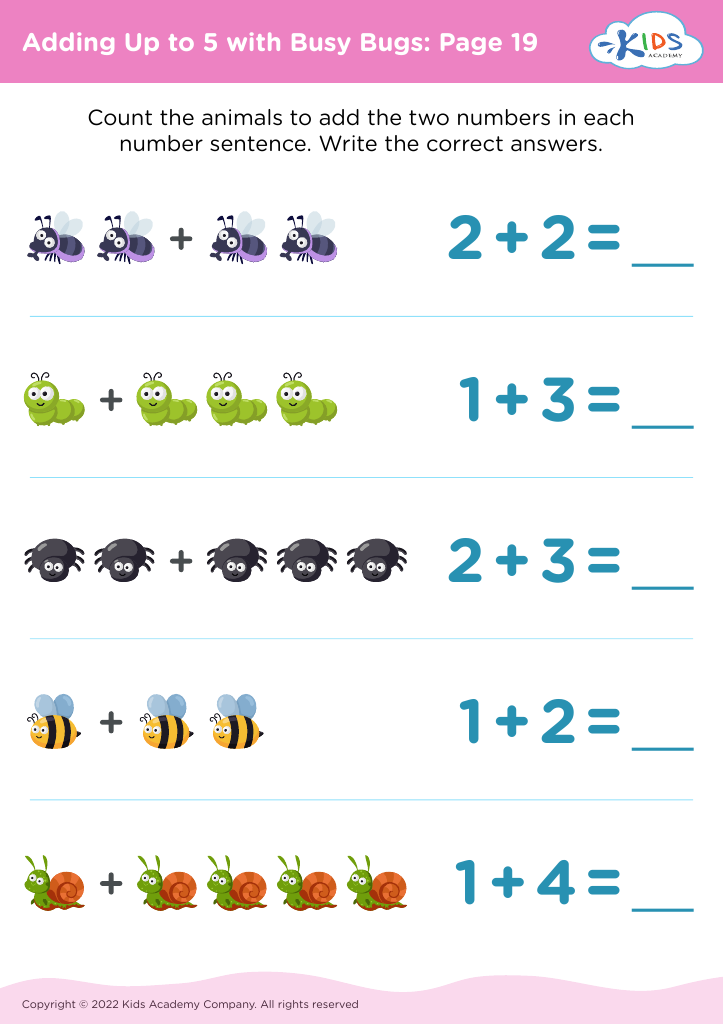
Adding Up to 5 with Busy Bugs: Page 19
Worksheet
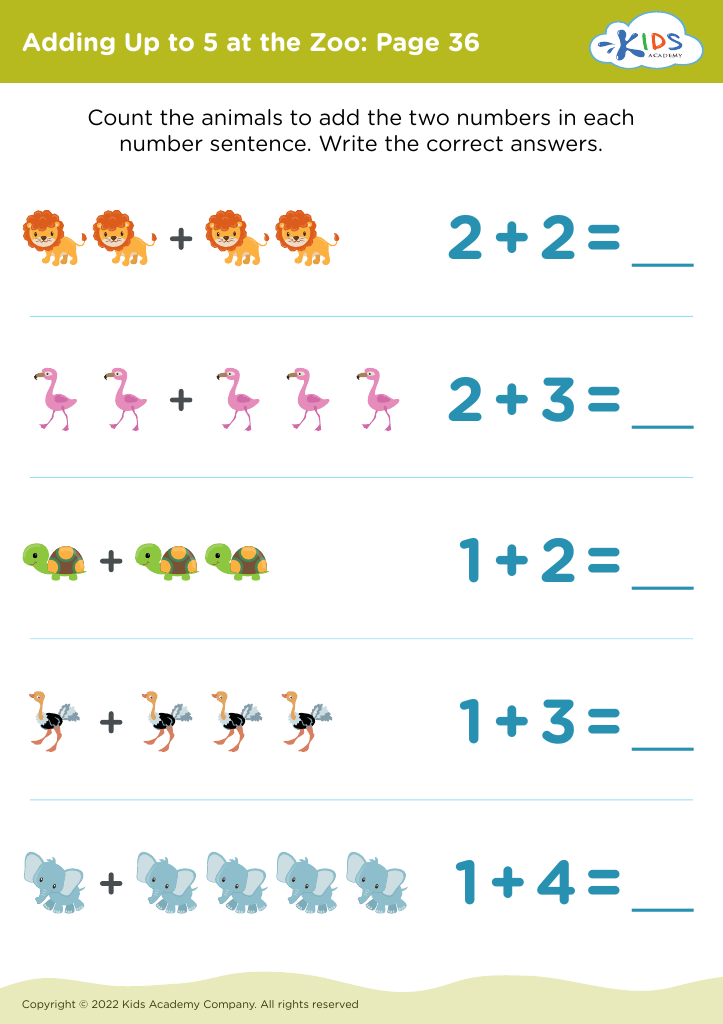
Adding Up to 5 at the Zoo: Page 36
Worksheet
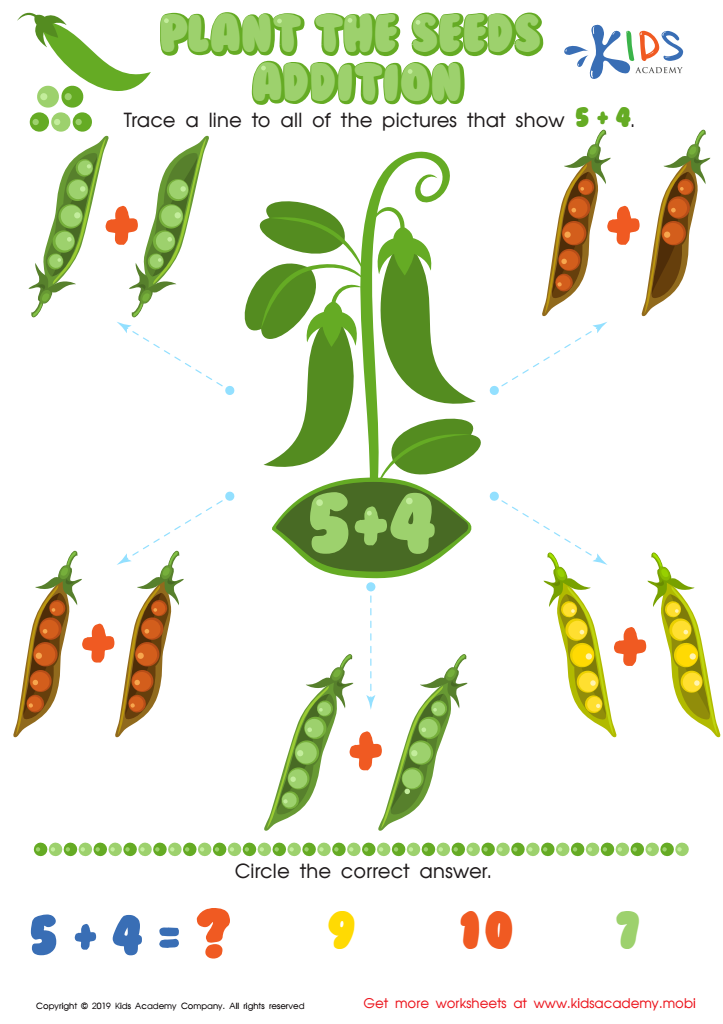
Plant the Seeds Addition Worksheet
Plant the Seeds Addition Worksheet
This worksheet combines math and learning about plants. Ask kids to name their favorite plants and which ones they see the most. Have them trace a line to all pictures in the middle which show the equation 5+4. Enjoy the beauty of plants while introducing math skills!
Plant the Seeds Addition Worksheet
Worksheet
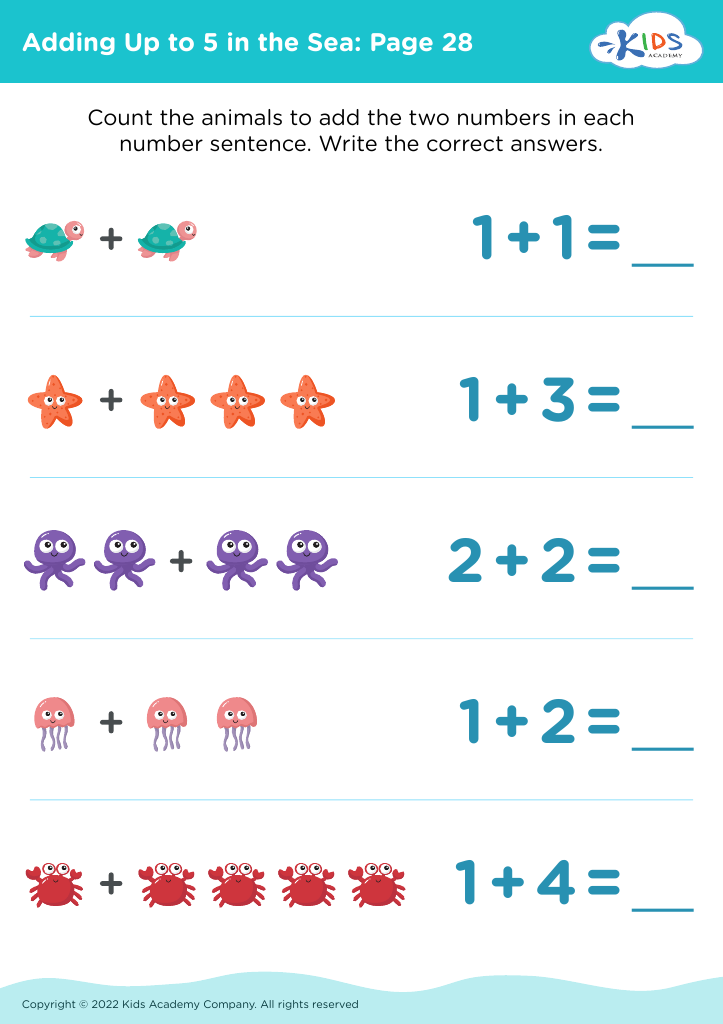
Adding Up to 5 in the Sea: Page 28
Worksheet
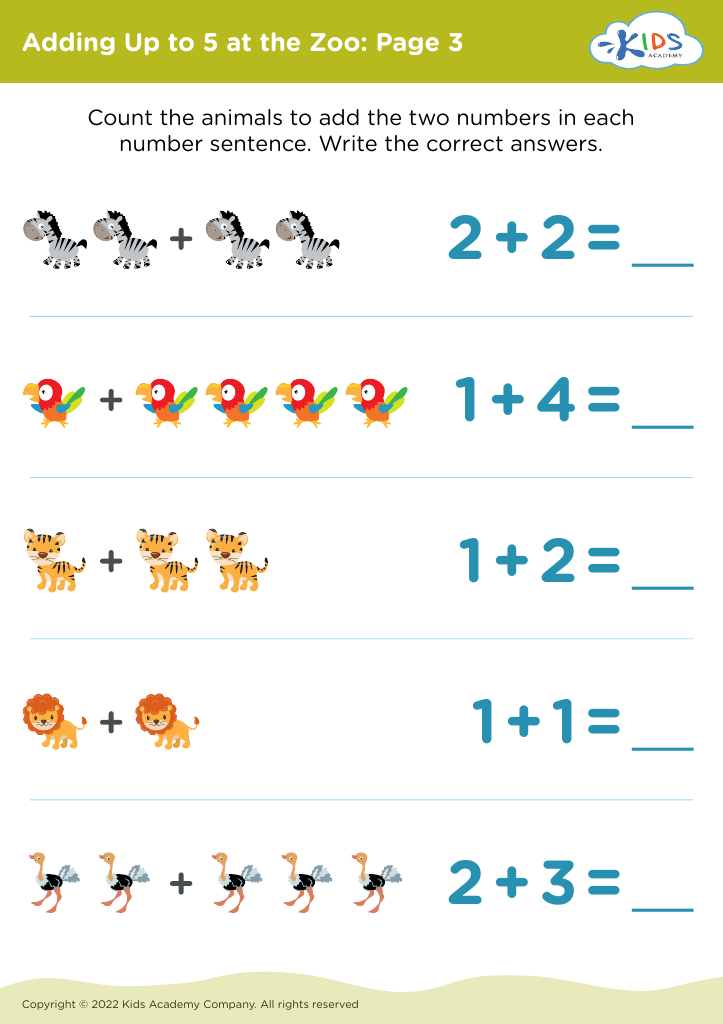
Adding Up to 5 at the Zoo: Page 3

Adding Up to 5 at the Zoo: Page 3

Adding Up to 5 at the Zoo: Page 3
Worksheet
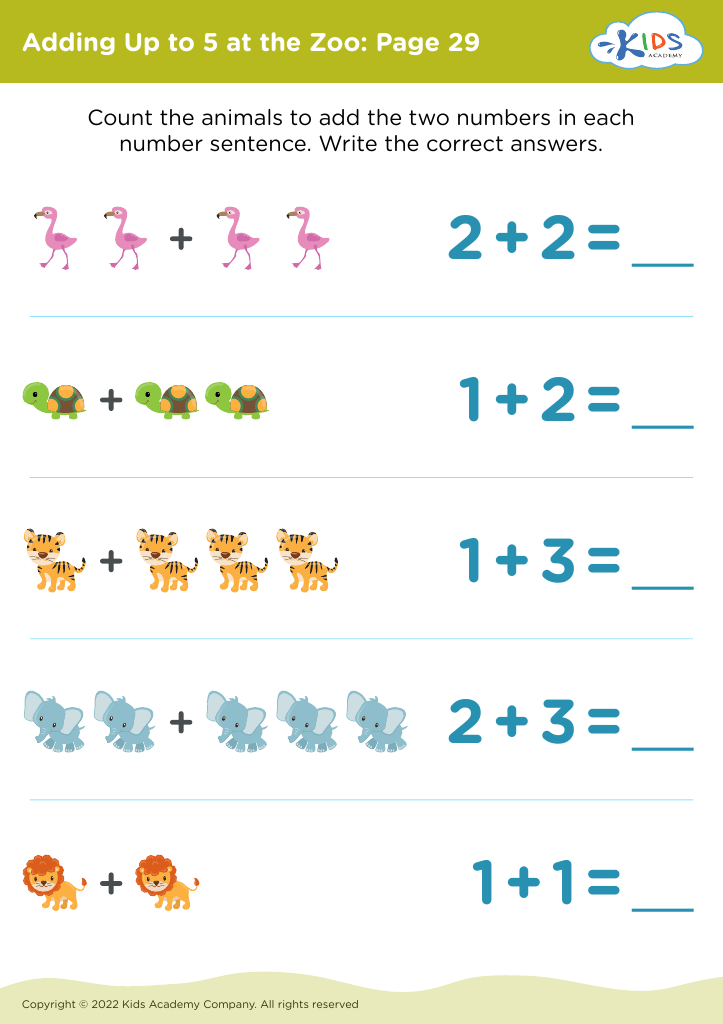
Adding Up to 5 at the Zoo: Page 29
Worksheet
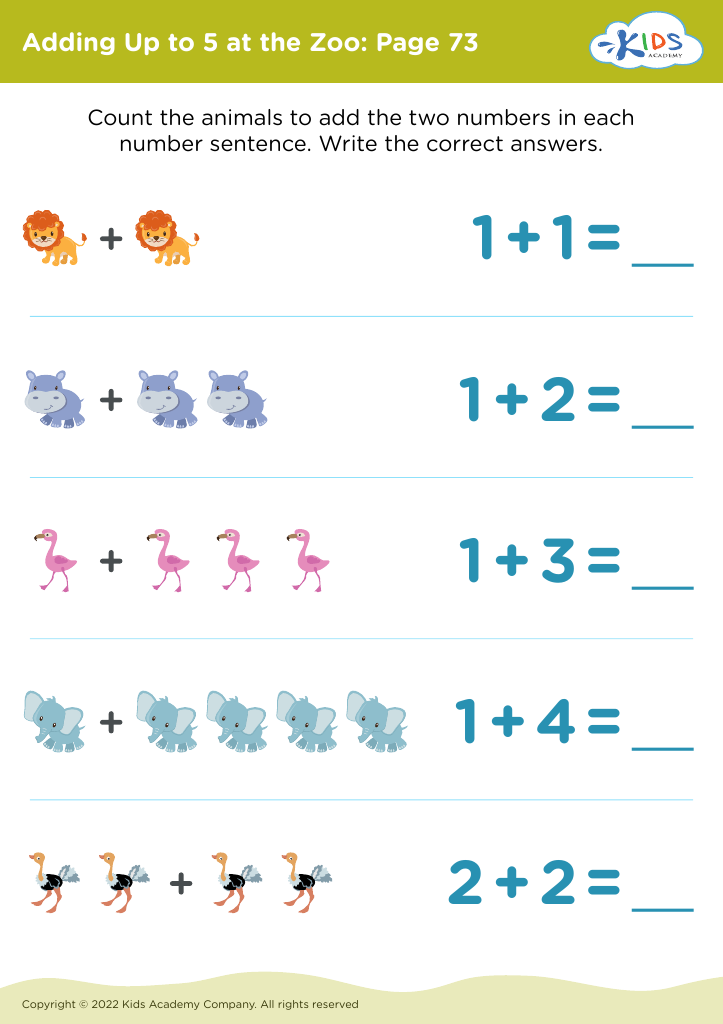
Adding Up to 5 at the Zoo: Page 73
Worksheet
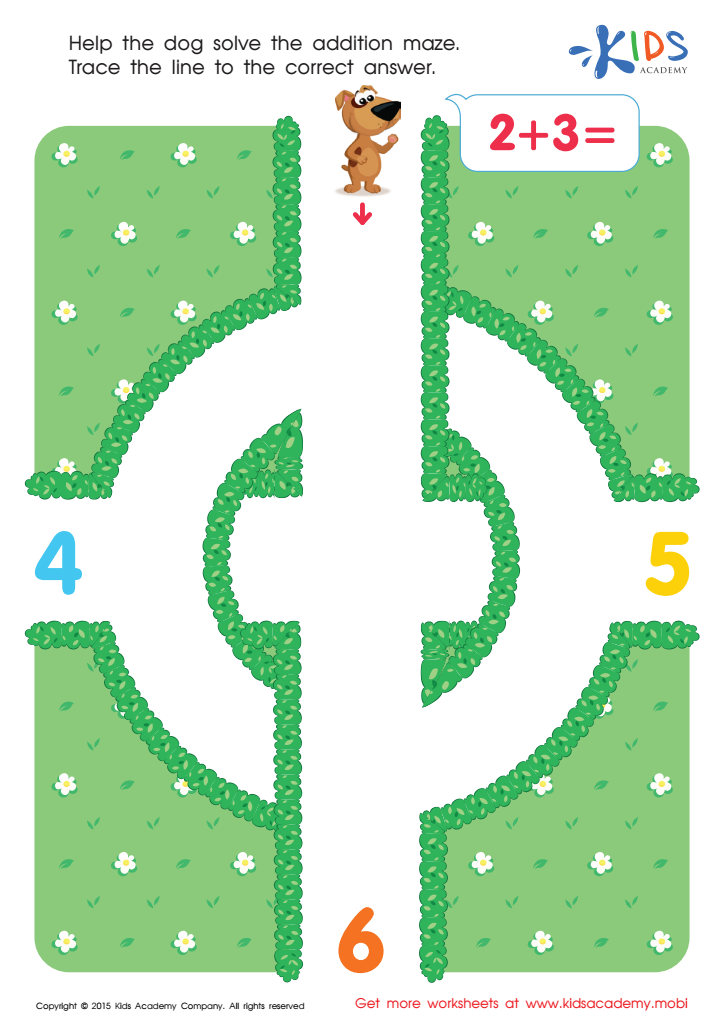
Math: Two And Three Addition PDF Worksheet

Two And Three Addition Worksheet
Give your children the task and let them find the path to the right answer while they make their way through the maze, and don't forget to let them trace the path.
Two And Three Addition Worksheet
Worksheet
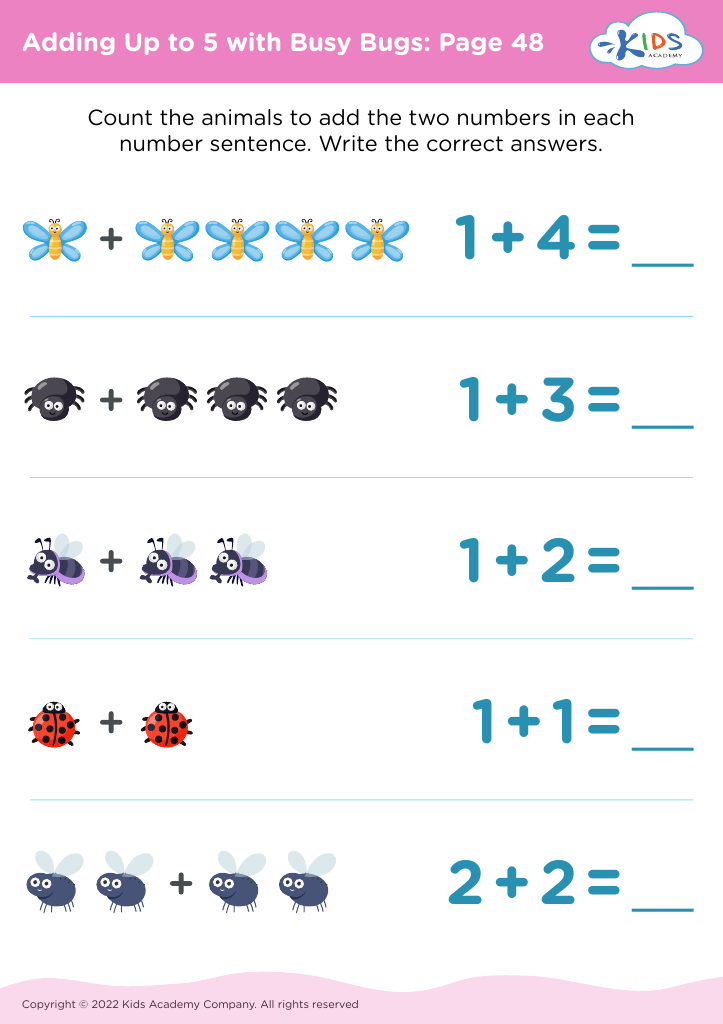
Adding Up to 5 with Busy Bugs: Page 48
Worksheet
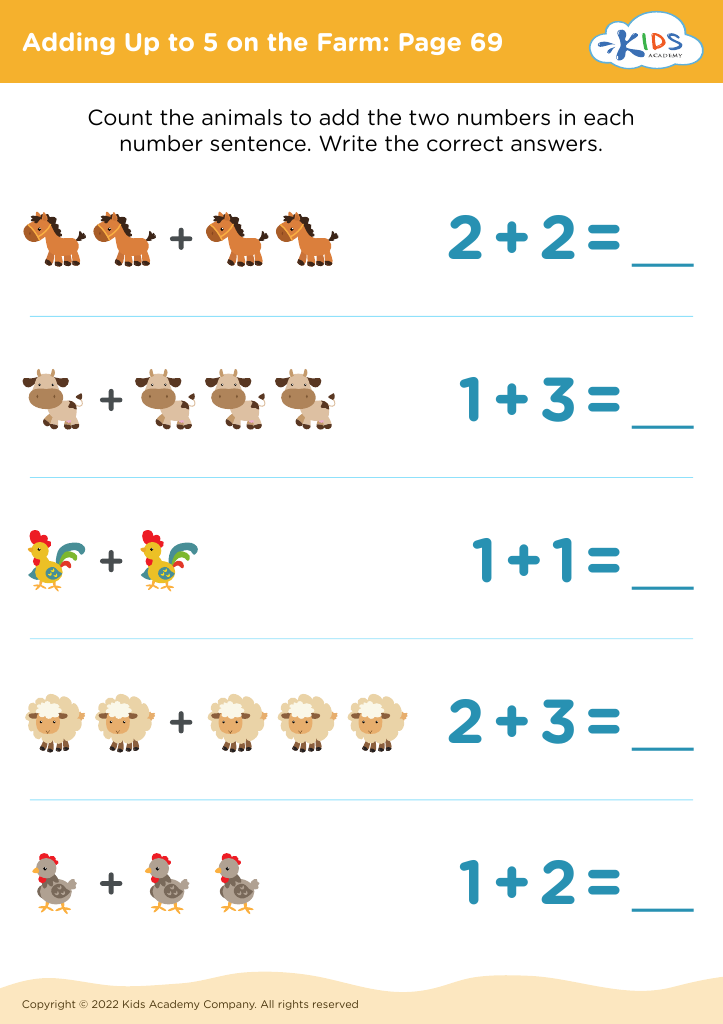
Adding Up to 5 on the Farm: Page 69
Worksheet
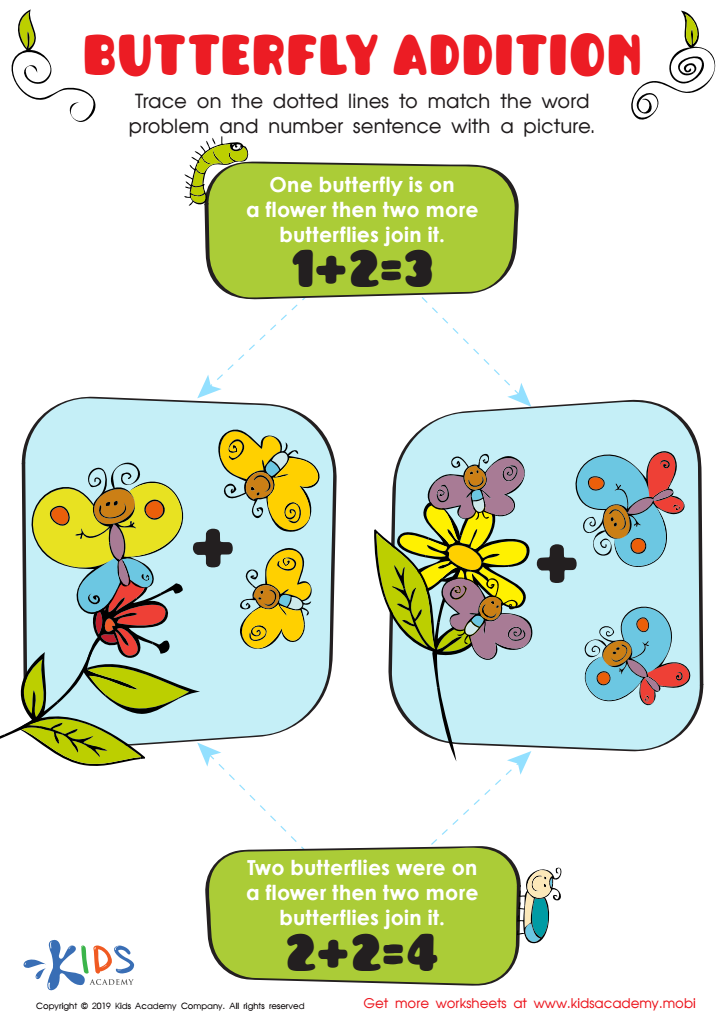
Butterfly Addition Worksheet
Butterfly Addition Worksheet
This tracing sheet is great for kids to work on math skills and have fun too. Read the word problems to them, then help them trace the dotted lines to match the problem and number sentence to a picture. Not only is it educational, it's beautiful too - your kids will love learning about butterflies!
Butterfly Addition Worksheet
Worksheet
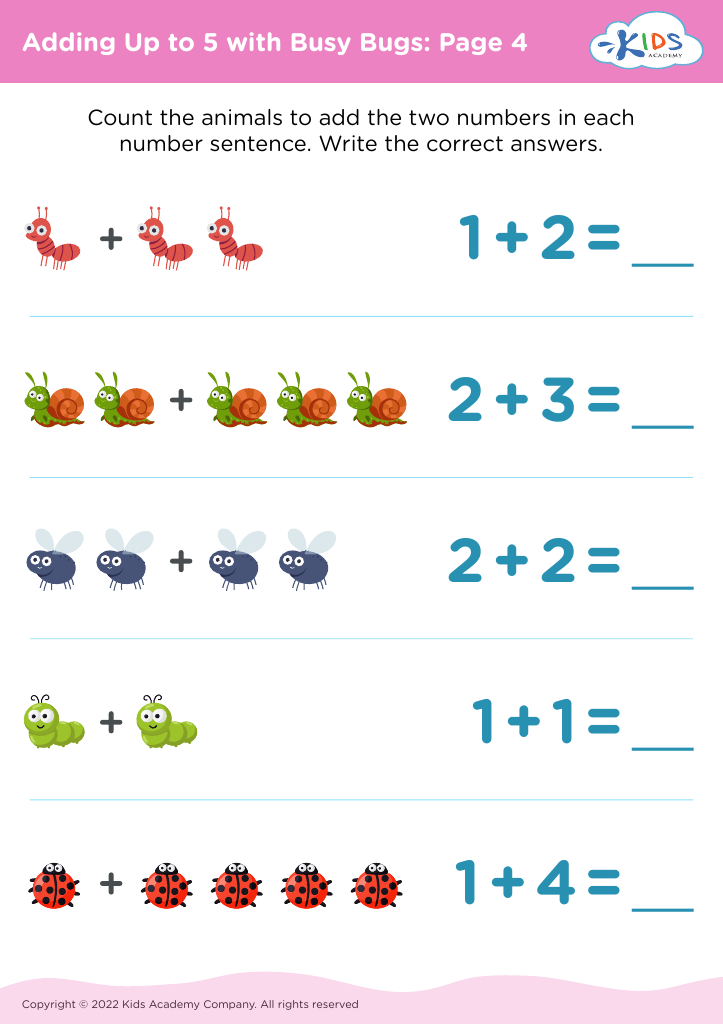
Adding Up to 5 with Busy Bugs: Page 4
Worksheet
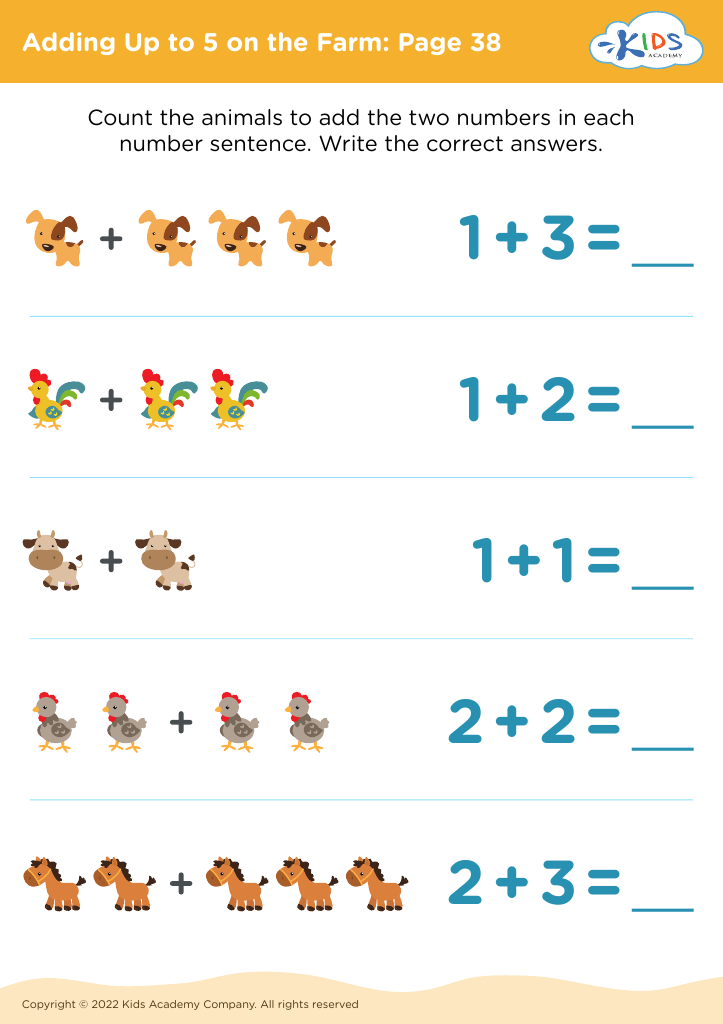
Adding Up to 5 on the Farm: Page 38
Worksheet
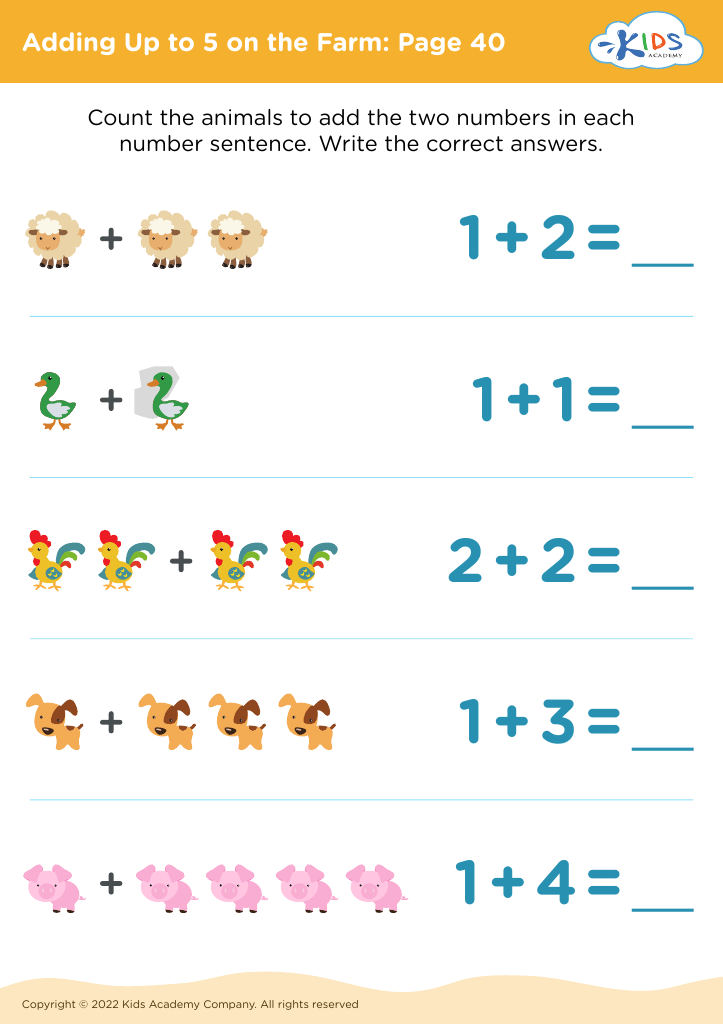
Adding Up to 5 on the Farm: Page 40
Worksheet
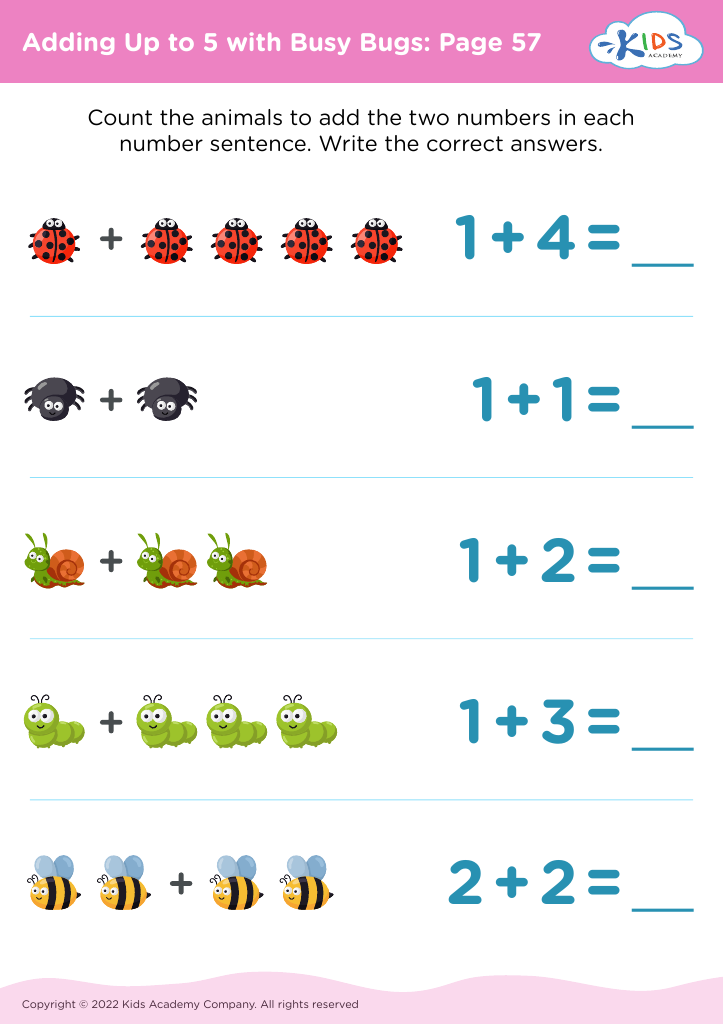
Adding Up to 5 with Busy Bugs: Page 57
Worksheet
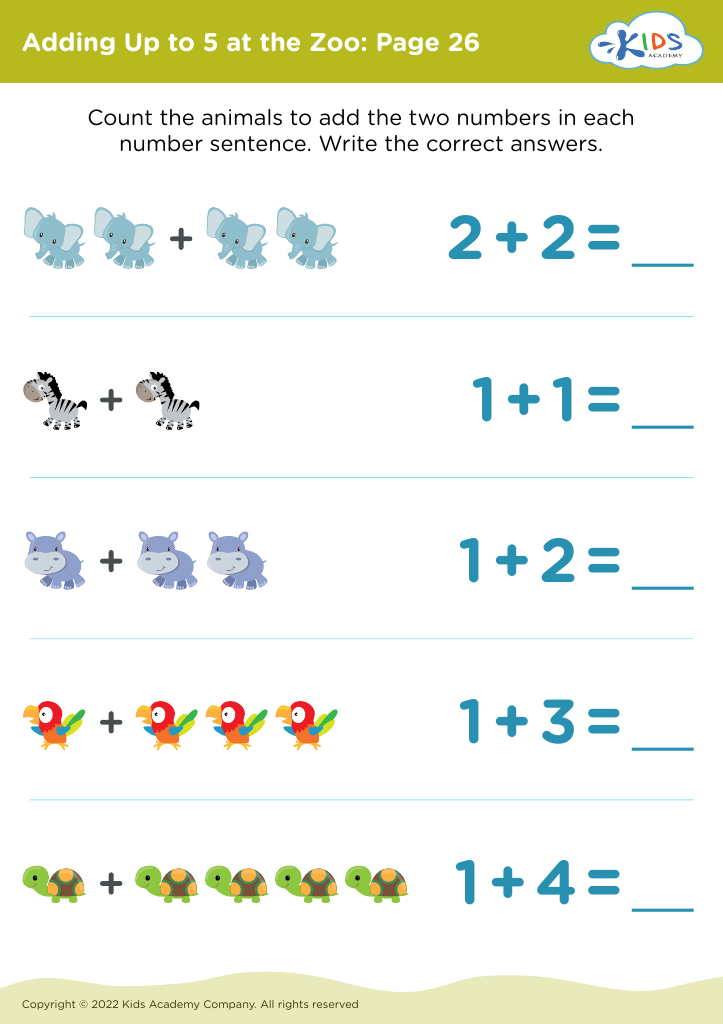
Adding Up to 5 at the Zoo: Page 26
Worksheet
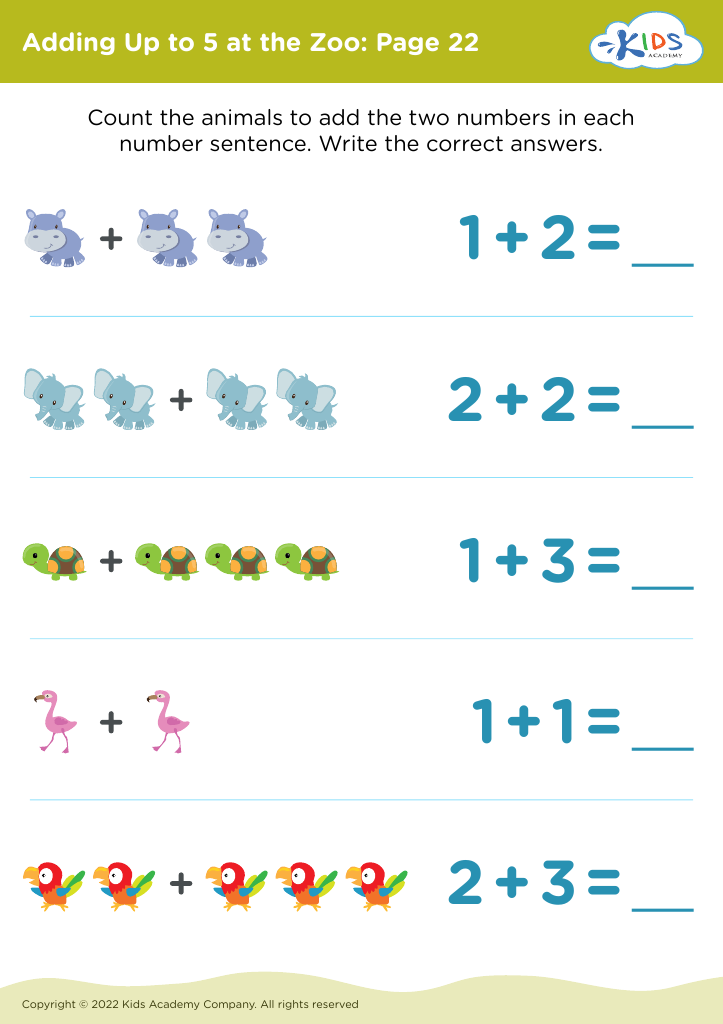
Adding Up to 5 at the Zoo: Page 22
Worksheet
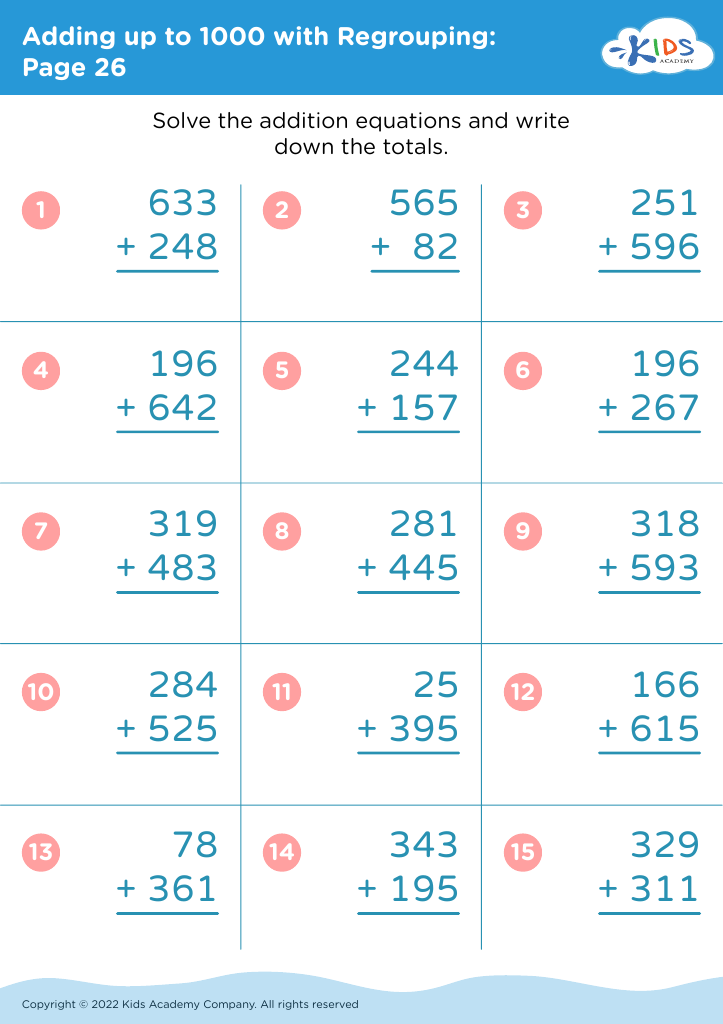
Adding up to 1000 with Regrouping: Page 26
Worksheet
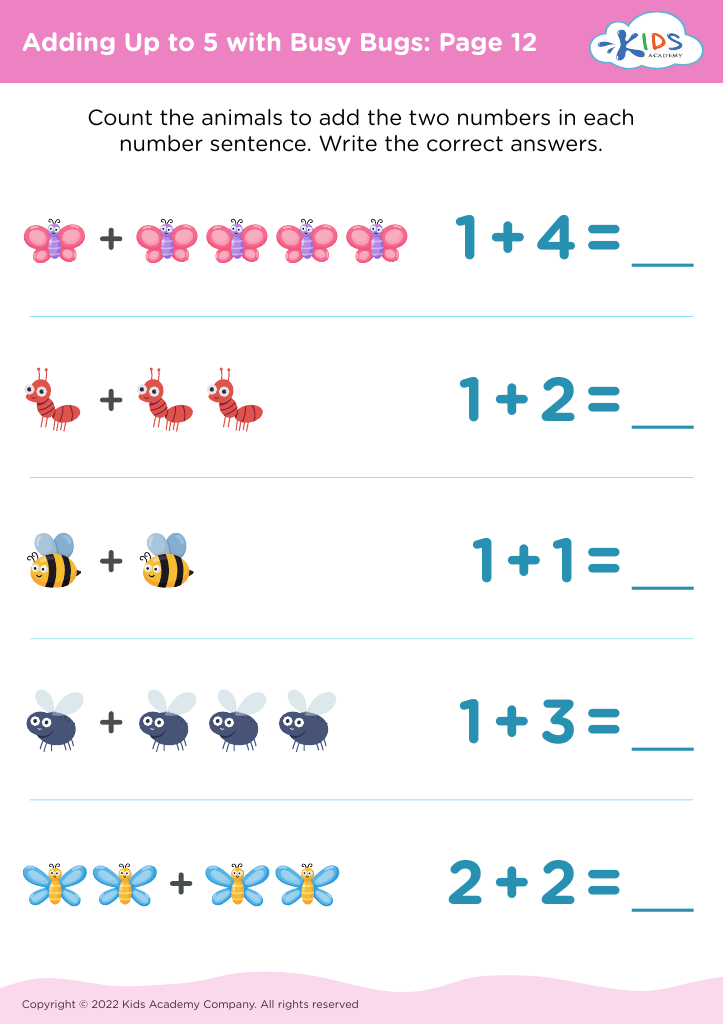
Adding Up to 5 with Busy Bugs: Page 12
Worksheet
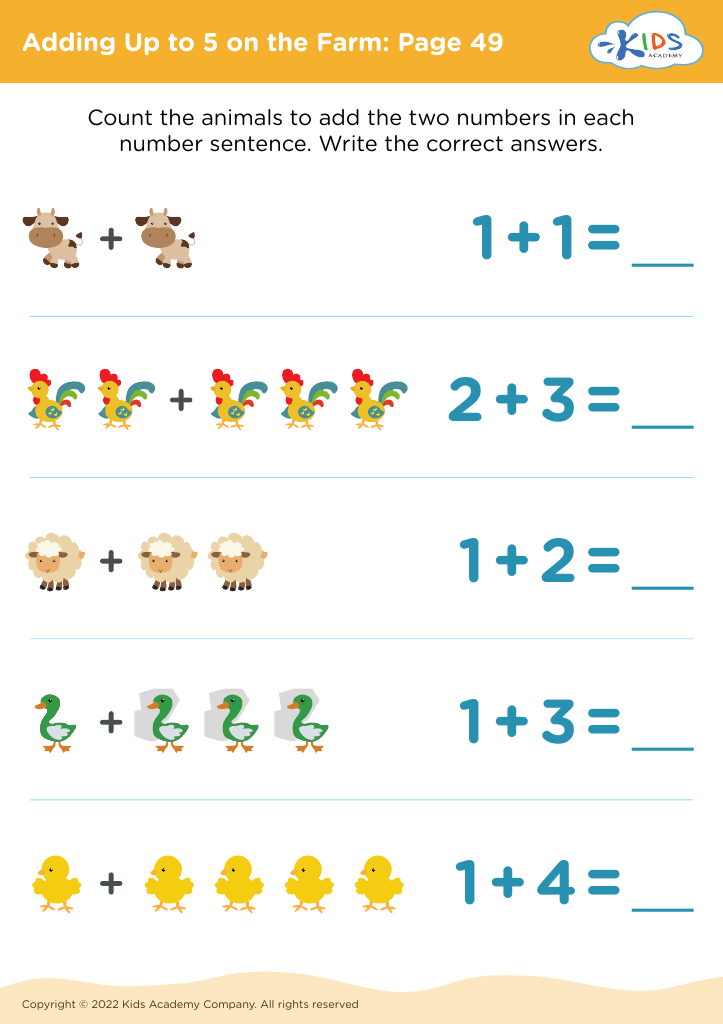
Adding Up to 5 on the Farm: Page 49
Worksheet


Addition skills are fundamental building blocks in a child’s early mathematical development, making them vital for parents and teachers to emphasize for children ages 3-7. At this age, children are forming critical cognitive abilities. Learning addition not only aids in the understanding of numbers but also enhances problem-solving skills, critical thinking, and logical reasoning.

Mastering basic addition lays the groundwork for future mathematical concepts. If children grasp addition, they are more likely to excel in more complex areas such as subtraction, multiplication, and division as they progress through school. Moreover, early success in math contributes to a child’s confidence and positive attitude toward learning.

Additionally, children engage in addition through interactive and playful activities—this nurtures their social skills and promotes cognitive development. Parental involvement in teaching addition, such as through everyday activities like cooking or shopping, helps reinforce lessons in a fun manner, strengthening the parent-child bond.

In essence, addition serves as a gateway for broader learning experiences, equipping children with skills that will serve them throughout their educational journey and beyond. Parents and teachers should prioritize this essential skill to ensure children are well-prepared for academic challenges ahead.