Animal knowledge Worksheets for Ages 3-7
5 filtered results
-
From - To
Introduce young learners to the fascinating world of animals with our "Animal Knowledge Worksheets for Ages 3-7". Designed to captivate and educate, these printable worksheets cover a wide range of animal-related activities, including identification, habitats, sounds, and more. Perfect for preschoolers and early elementary students, our engaging exercises foster curiosity, enhance vocabulary, and develop critical thinking skills. Printable and fun, these worksheets provide an interactive, hands-on learning experience that will delight kids and support their natural love for animals. Jump-start your child's animal adventure today with Kids Academy!
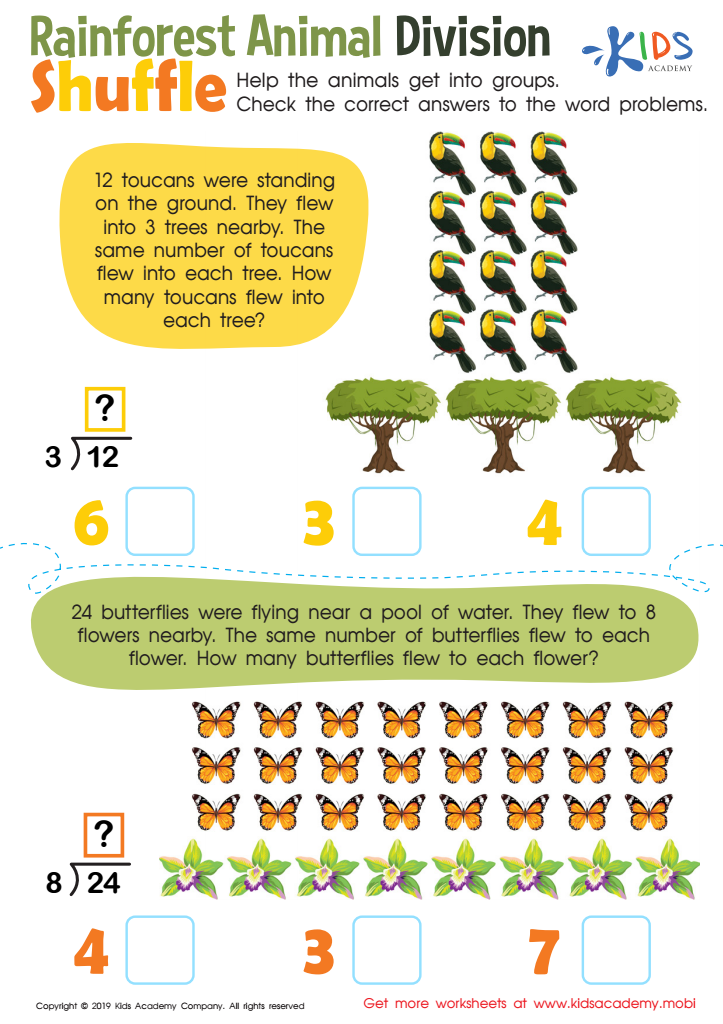
Rainforest Animal Division Worksheet
 Assign to My Students
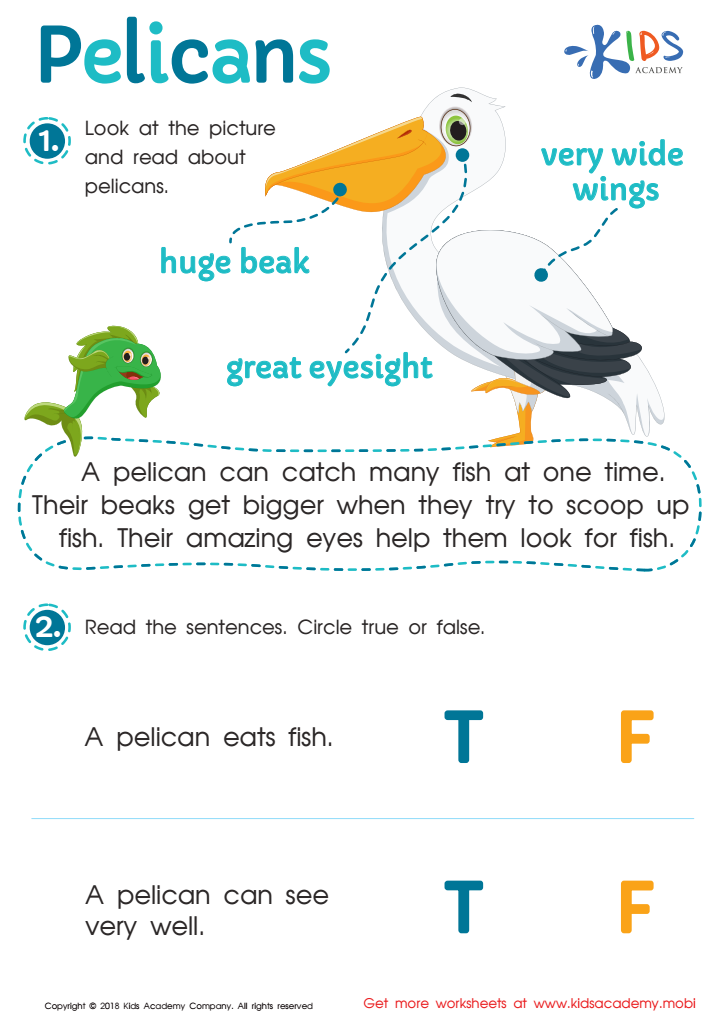
Pelicans Worksheet
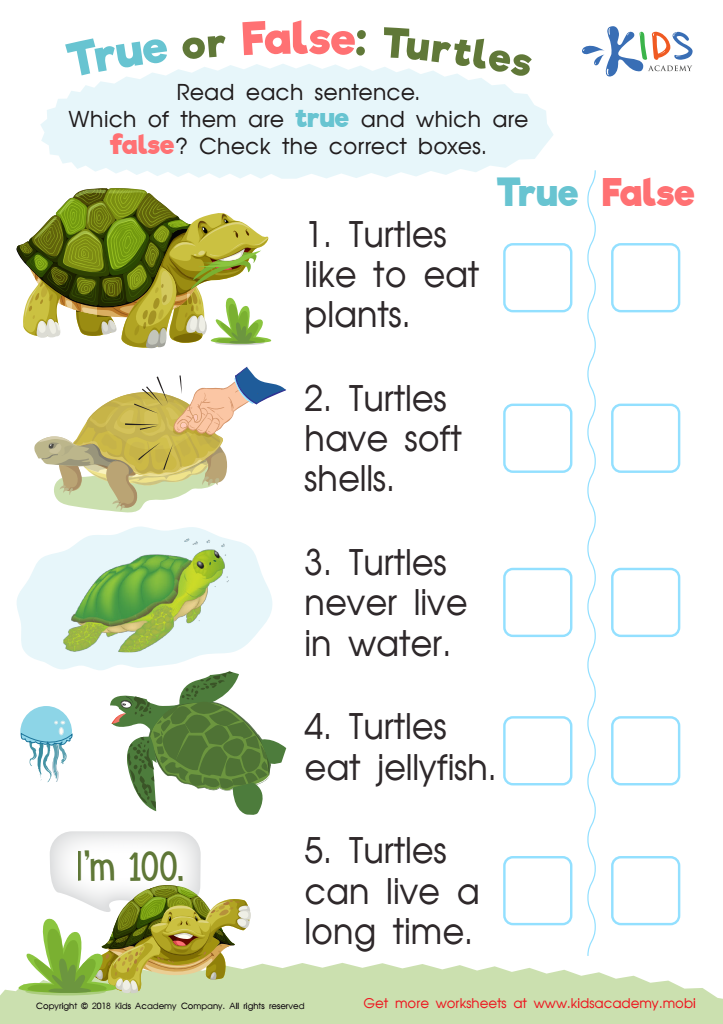
True or False: Turtles Worksheet
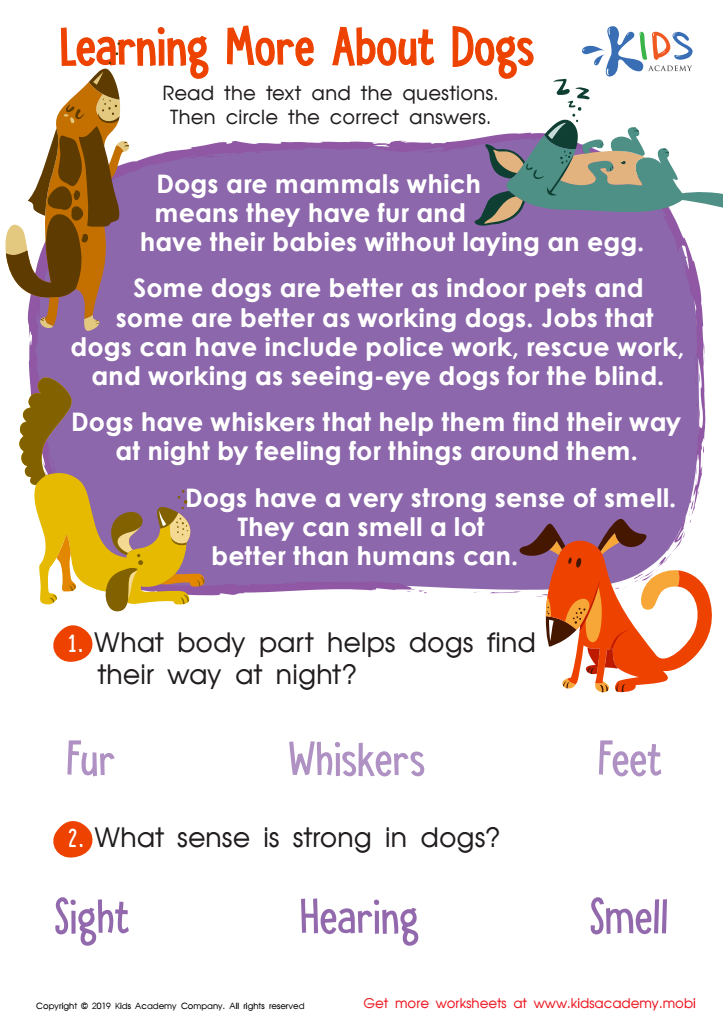
Learning More About Dogs Worksheet
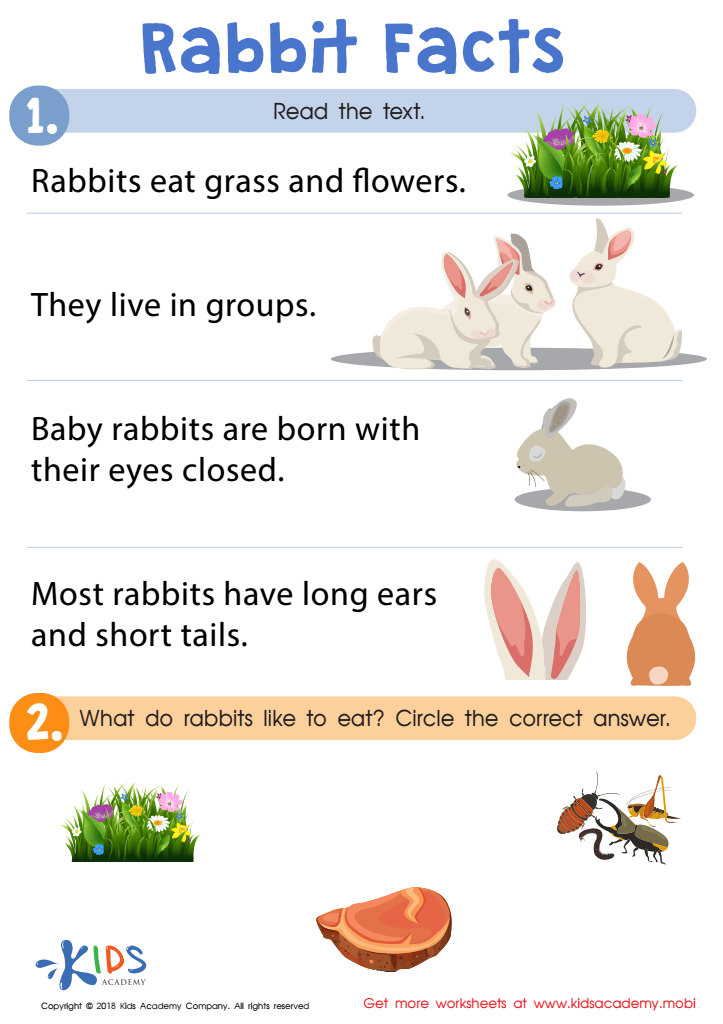
Rabbit Facts Worksheet








Understanding and learning about animals are particularly crucial for children aged 3-7 because this formative period sets the foundation for empathy, curiosity, and environmental awareness. At this age, children's minds are highly impressionable, and instilling a respect for animals fosters compassion and emotional intelligence. Knowing about different animals, their habitats, and behaviors helps young children appreciate biodiversity and the interconnectedness of life.
Moreover, learning about animals can enhance children's cognitive and language skills. Describing animals, mimicking their movements and sounds, and storytelling all contribute to vocabulary expansion and comprehension. Engaging in such activities can motivate children to ask questions and encourage critical thinking.
Animal knowledge also nurtures curiosity and a lifelong love for nature. This explorative learning can lead to outdoor activities where children observe wildlife and engage with their environment firsthand, promoting physical health and sensory development.
Additionally, it helps children understand the roles animals play in the world and why it is crucial to care for them and their habitats—inciting responsible environmental stewardship from an early age. Overall, introducing animal knowledge at this stage helps children develop a more rounded perspective of the world and their role within it.








