Check out this FREE "Basic Addition Skills" Trial Lesson for age 3-7!

Z

Favorites
With answer key
Interactive
  • 3-7
  • Basic Addition Skills
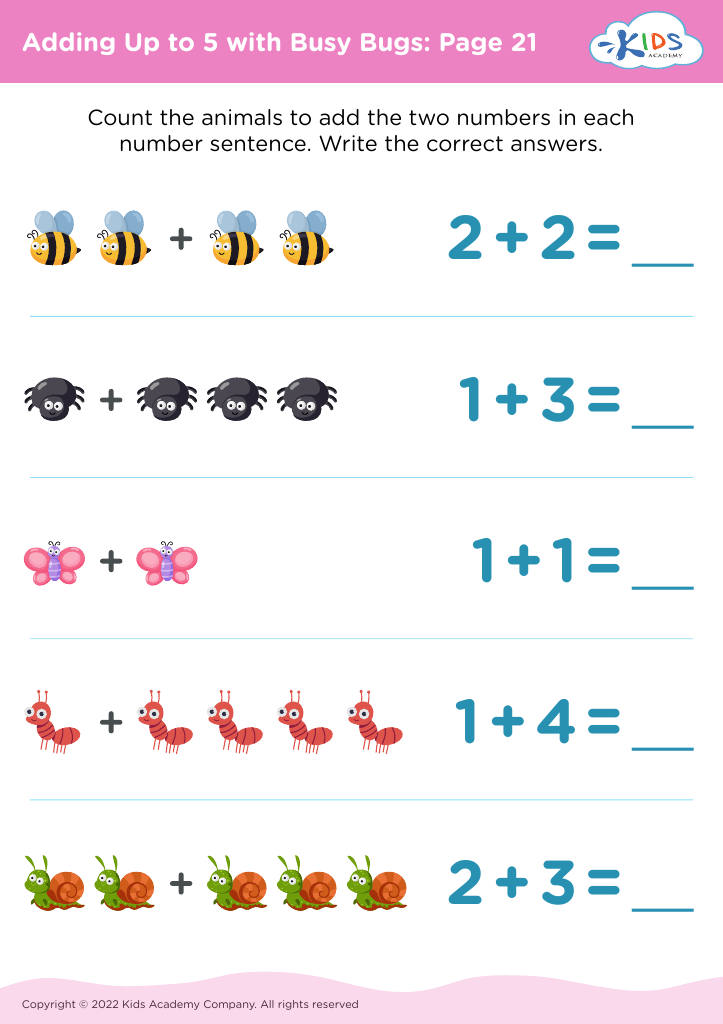
Adding Up to 5 with Busy Bugs: Page 21
Worksheet
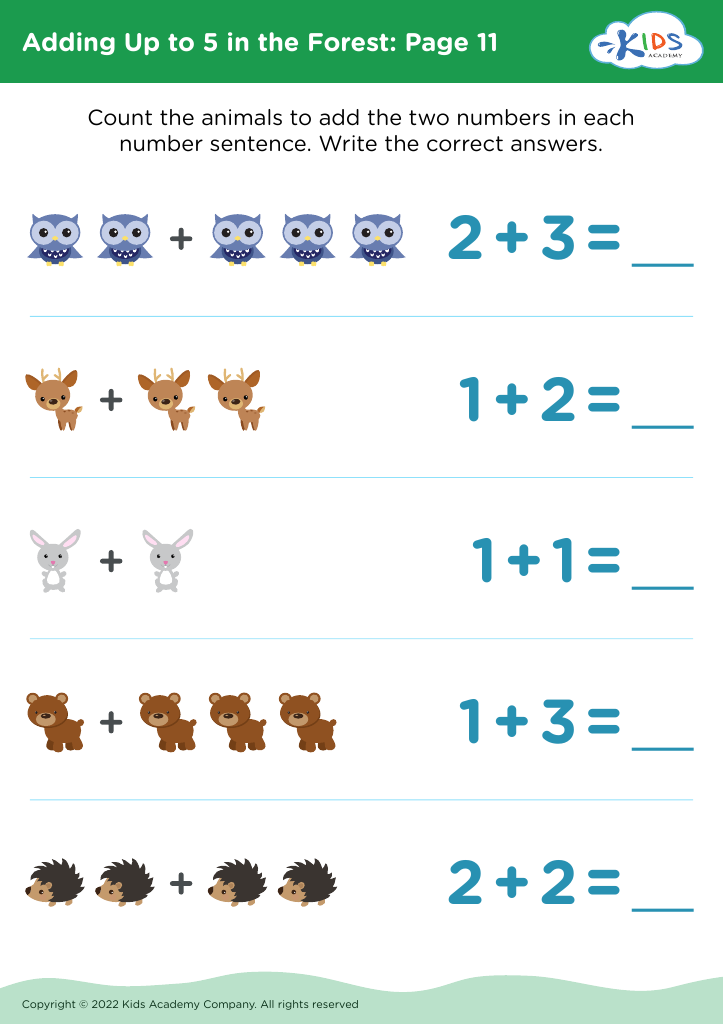
Adding Up to 5 in the Forest: Page 11
Worksheet
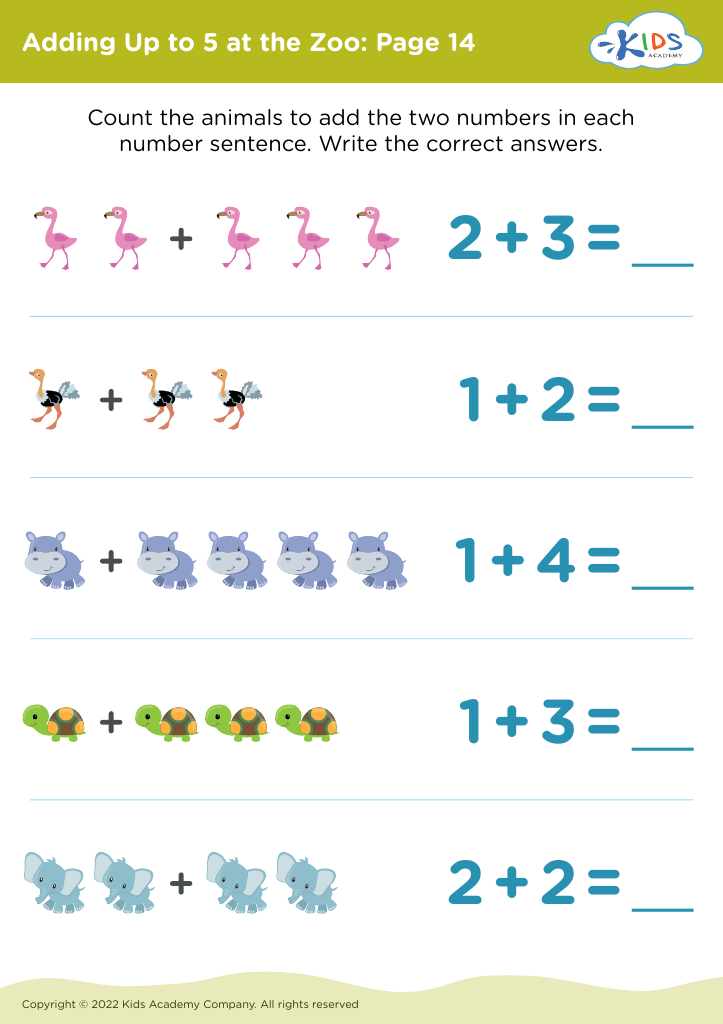
Adding Up to 5 at the Zoo: Page 14
Worksheet
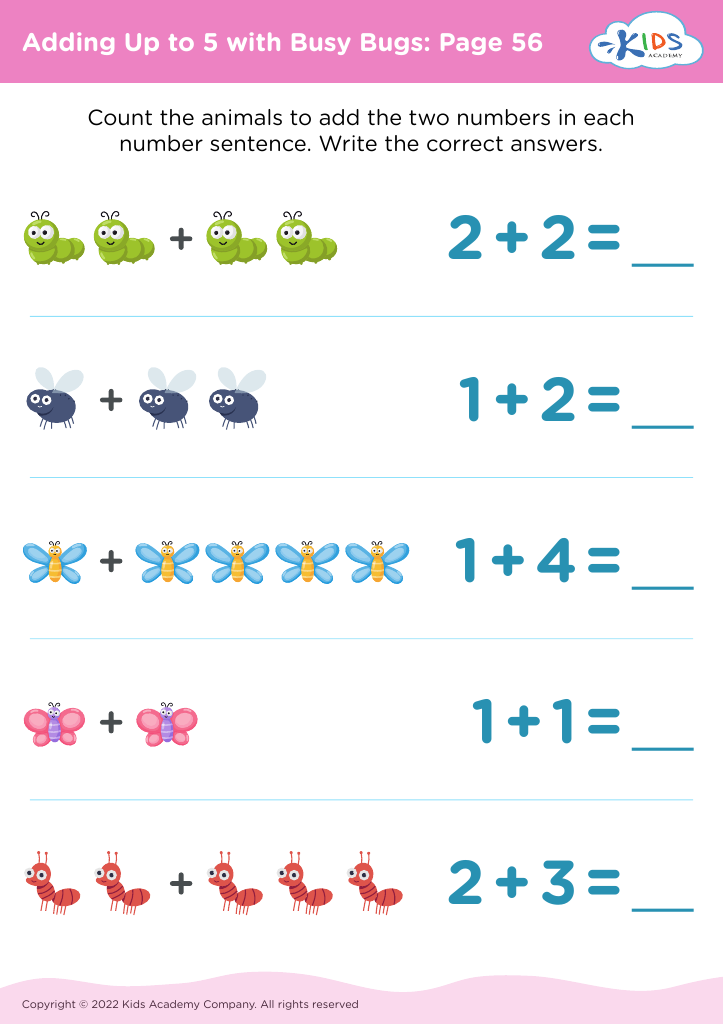
Adding Up to 5 with Busy Bugs: Page 56
Worksheet
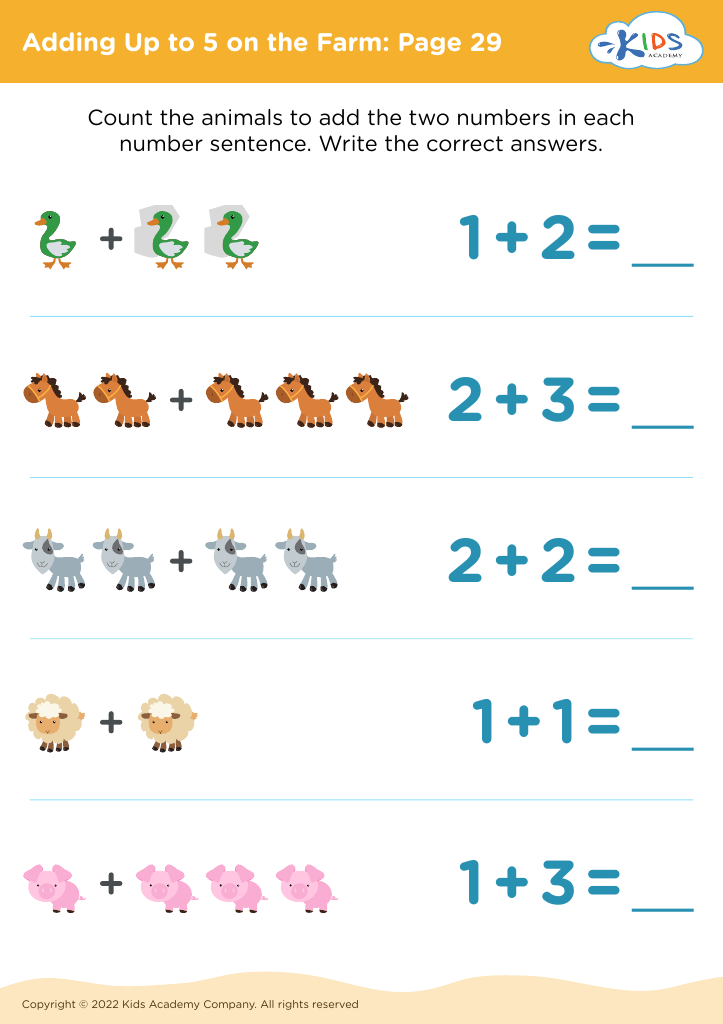
Adding Up to 5 on the Farm: Page 29
Worksheet
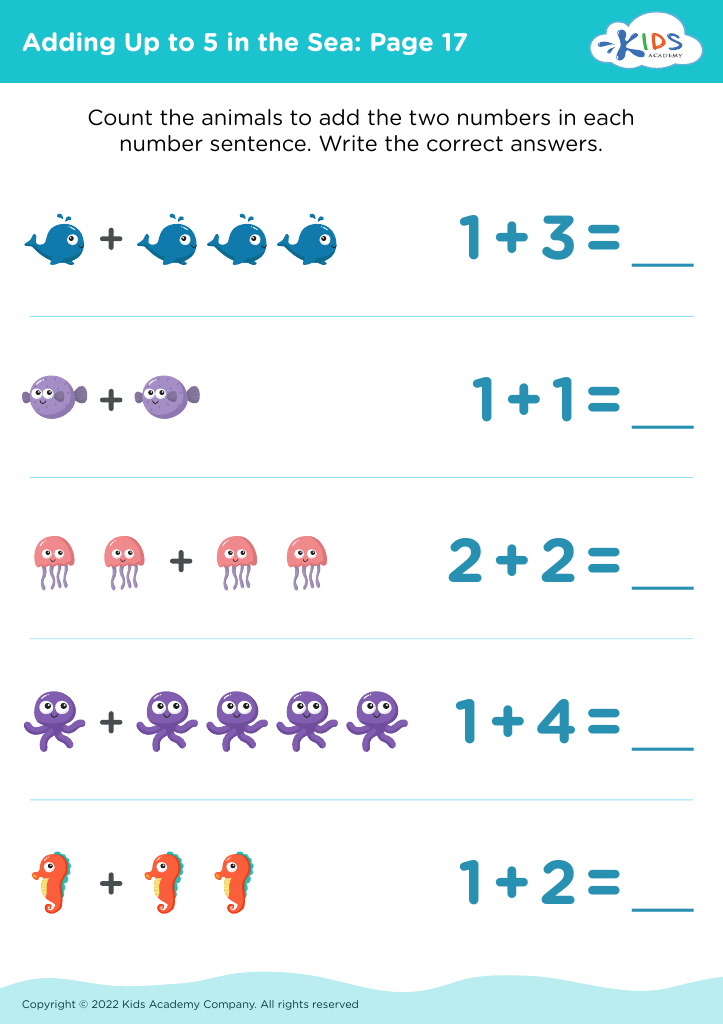
Adding Up to 5 in the Sea: Page 17
Worksheet
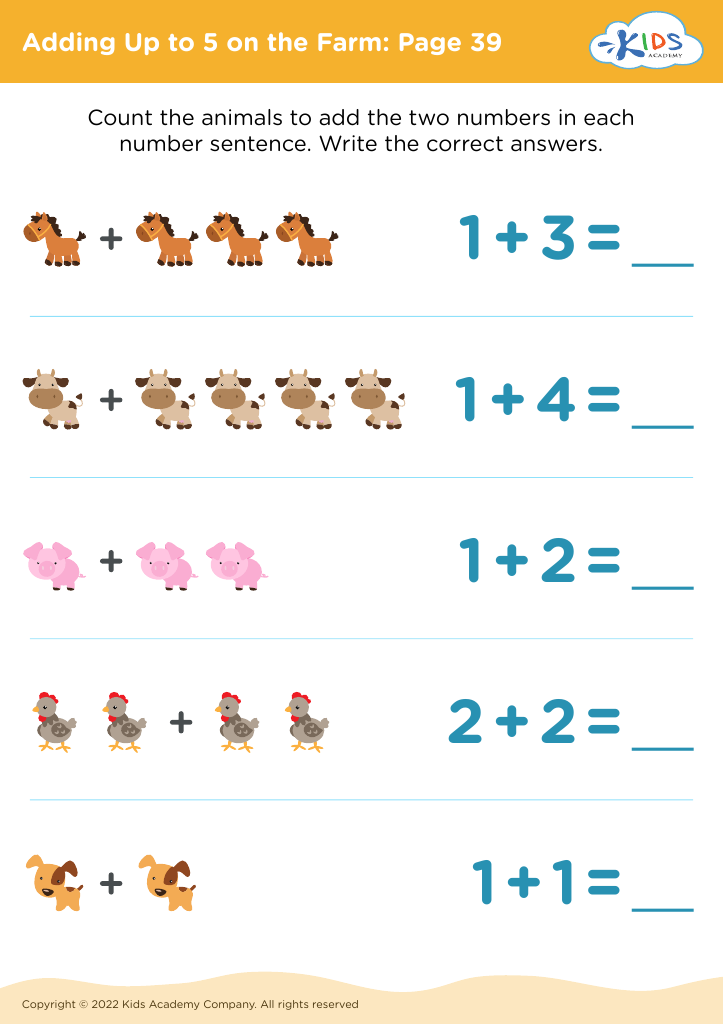
Adding Up to 5 on the Farm: Page 39
Worksheet
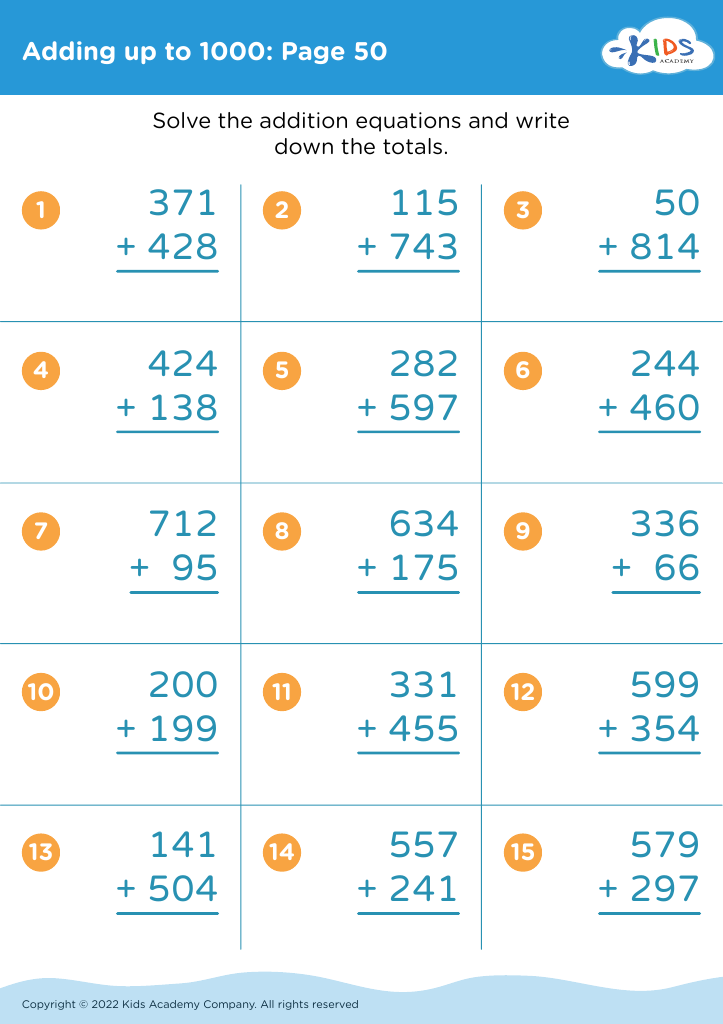
Adding up to 1000: Page 50

Adding up to 1000: Page 50

Adding up to 1000: Page 50
Worksheet
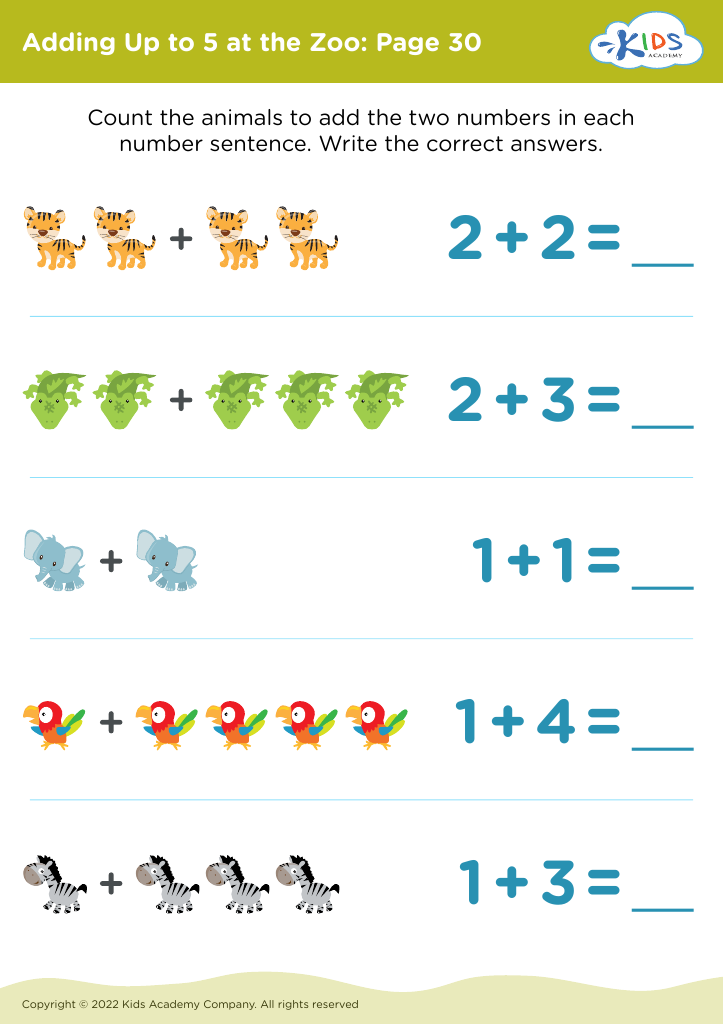
Adding Up to 5 at the Zoo: Page 30
Worksheet
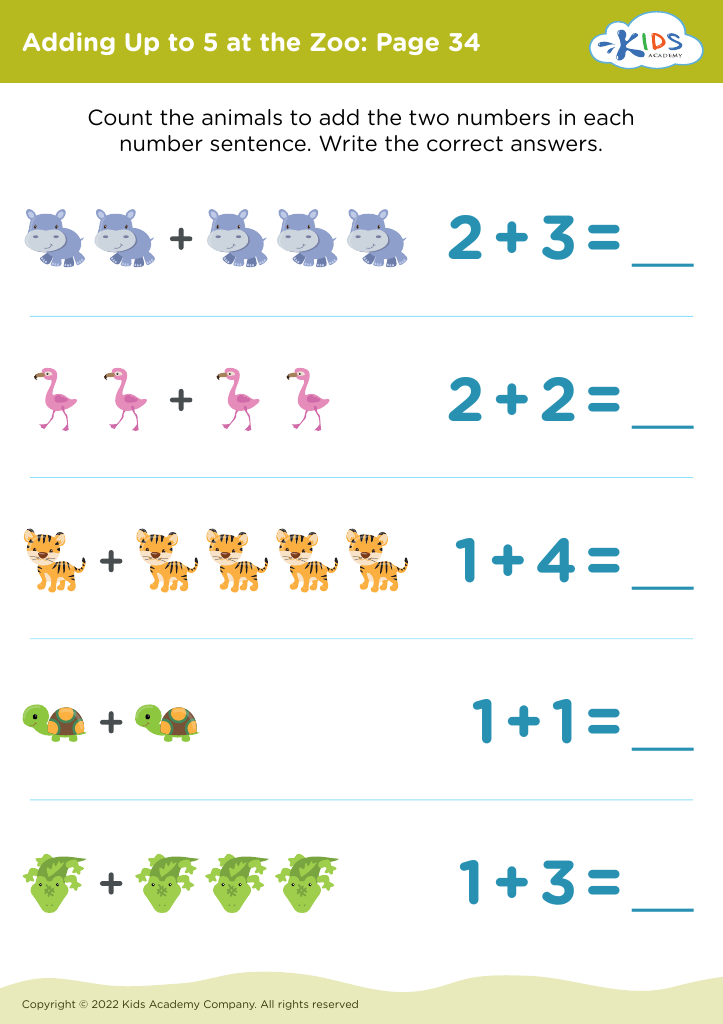
Adding Up to 5 at the Zoo: Page 34
Worksheet
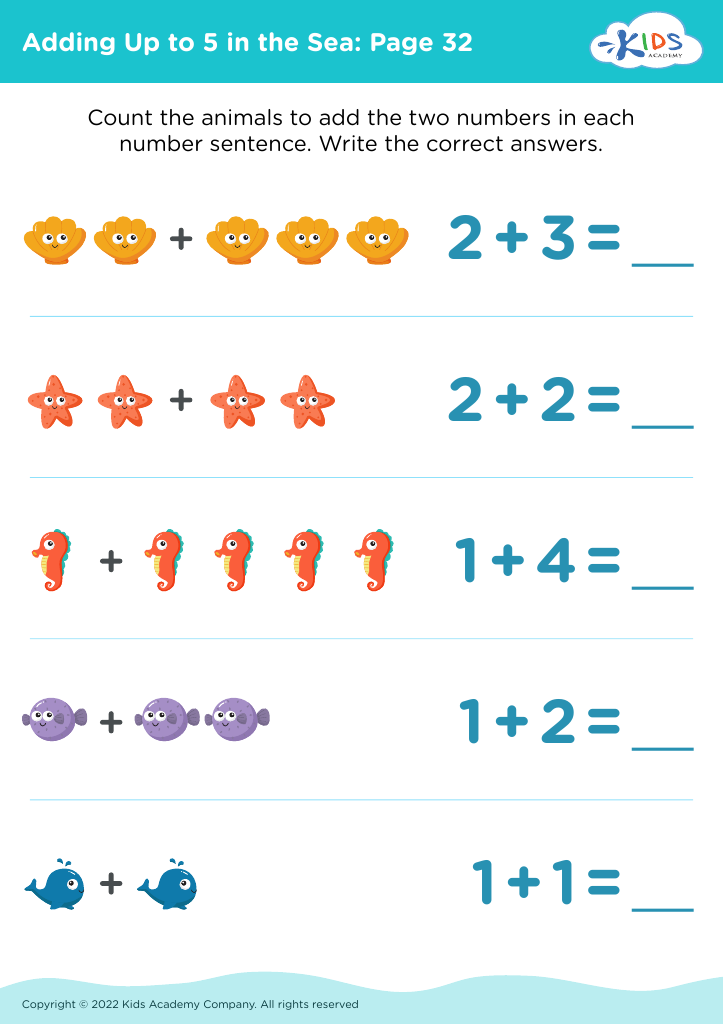
Adding Up to 5 in the Sea: Page 32
Worksheet
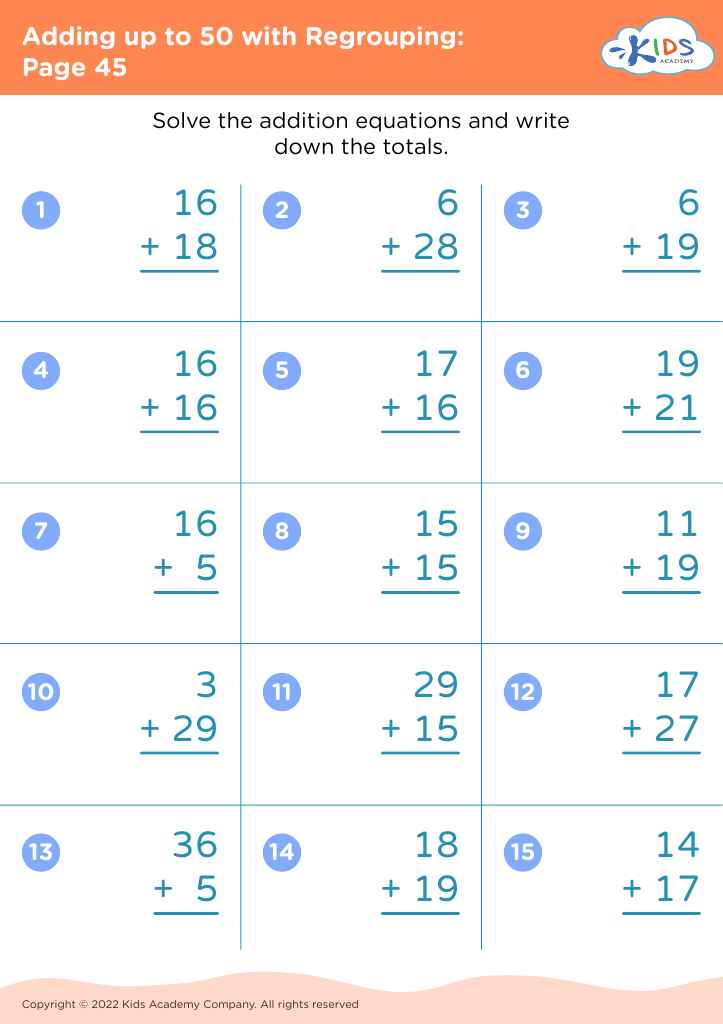
Adding up to 50 with Regrouping: Page 45
Worksheet
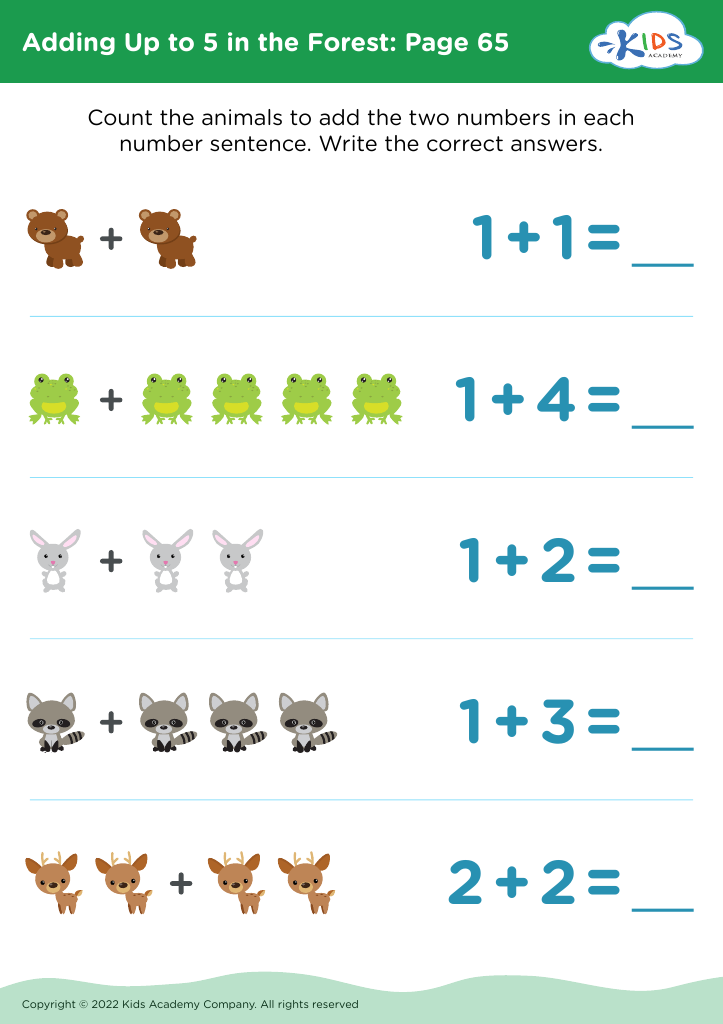
Adding Up to 5 in the Forest: Page 65
Worksheet
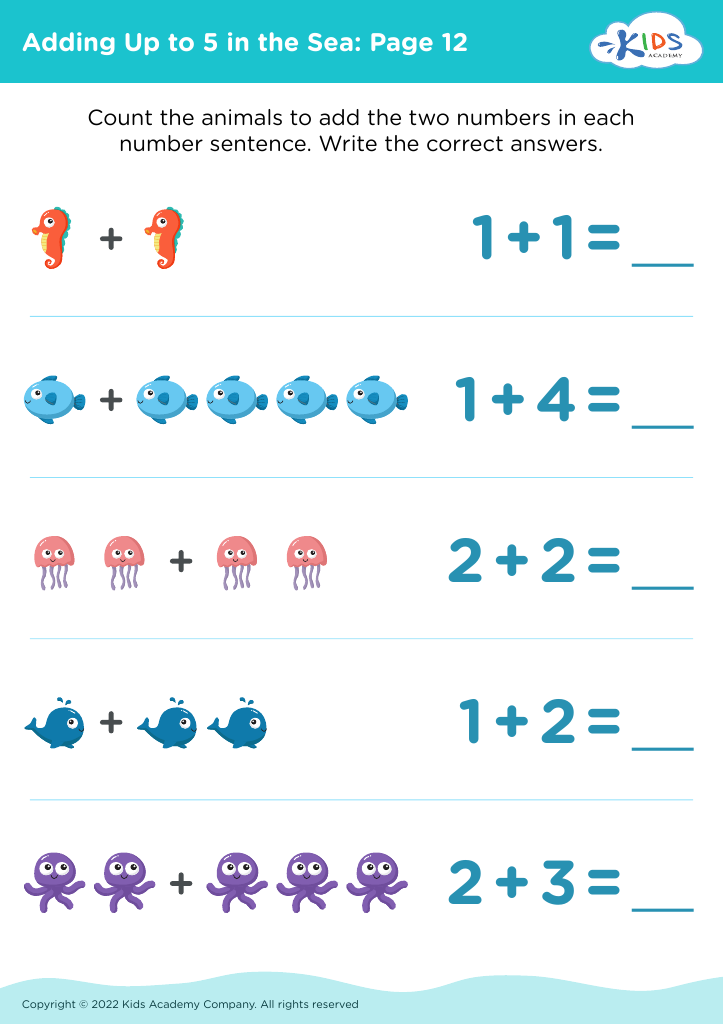
Adding Up to 5 in the Sea: Page 12
Worksheet
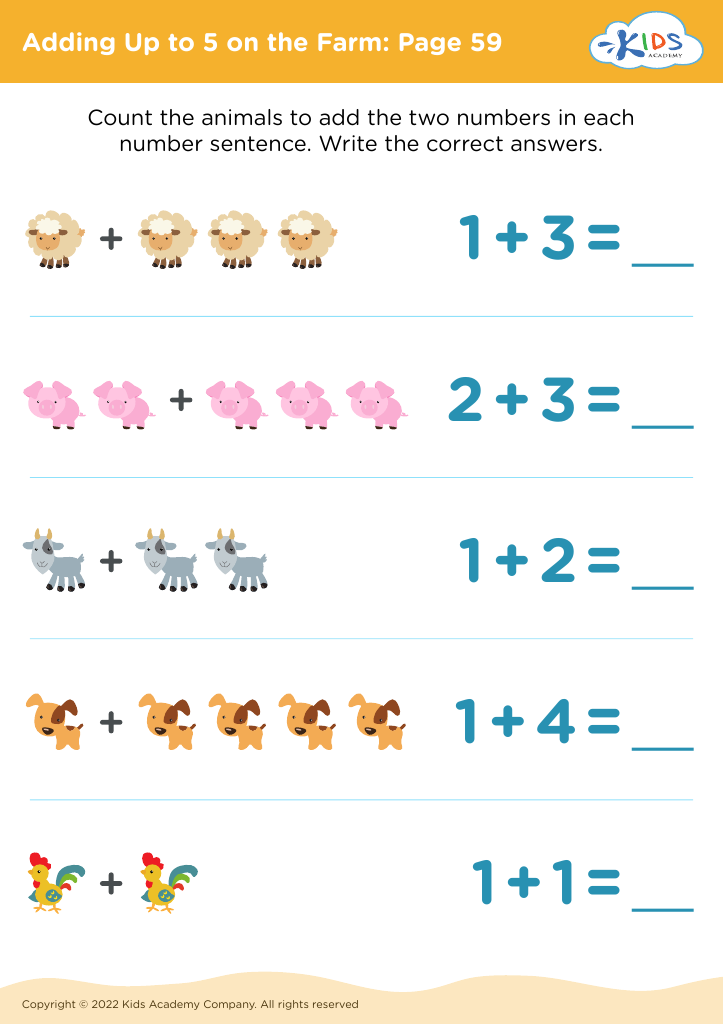
Adding Up to 5 on the Farm: Page 59
Worksheet
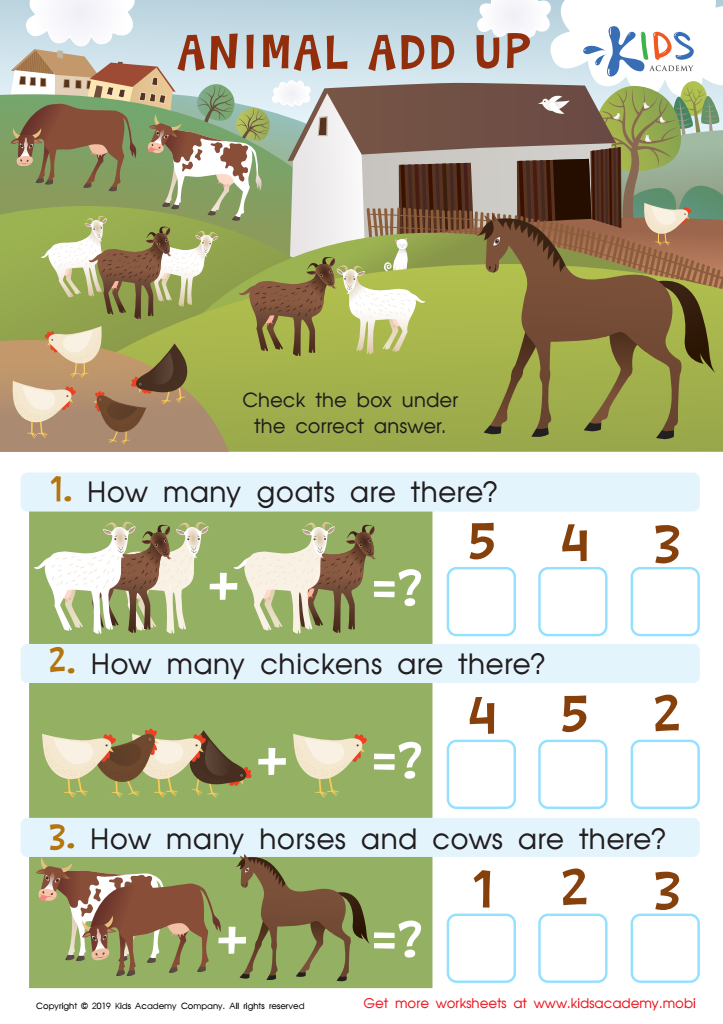
Animal Add Up Worksheet

Animal Add Up Worksheet

Animals are fun to observe and interact with. They can be seen at the zoo, parks, farms and in homes with pets. This worksheet helps kids identify animals, and build addition skills. Look at the picture with them and help name each animal. After that, add the animals up and check the box for the correct answer. 80 words.
Animal Add Up Worksheet
Worksheet
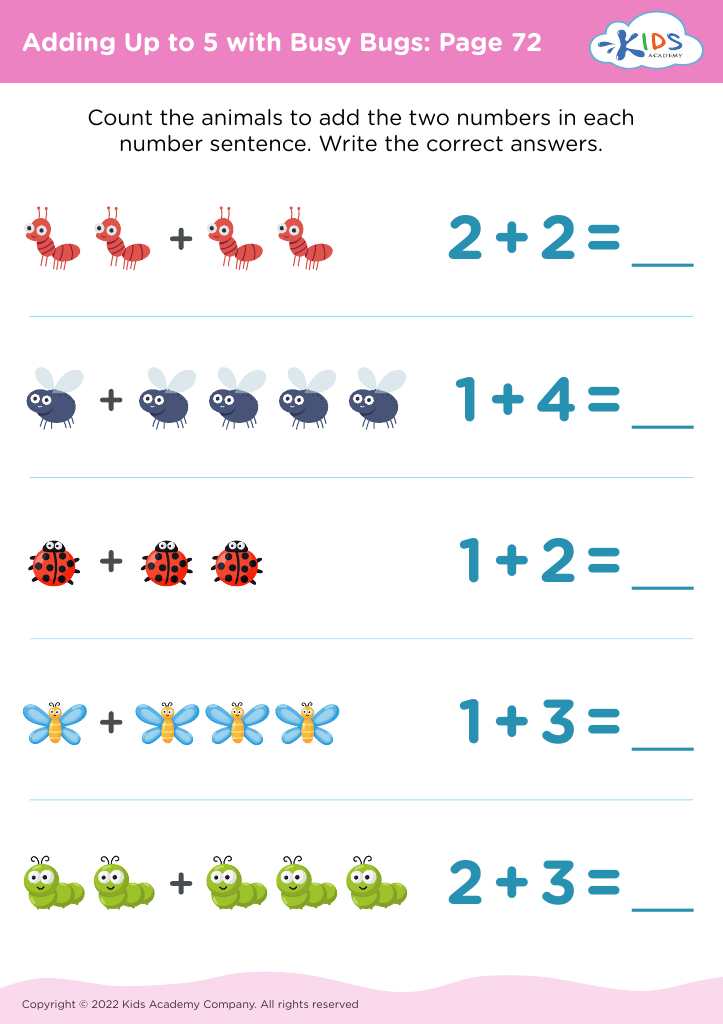
Adding Up to 5 with Busy Bugs: Page 72
Worksheet
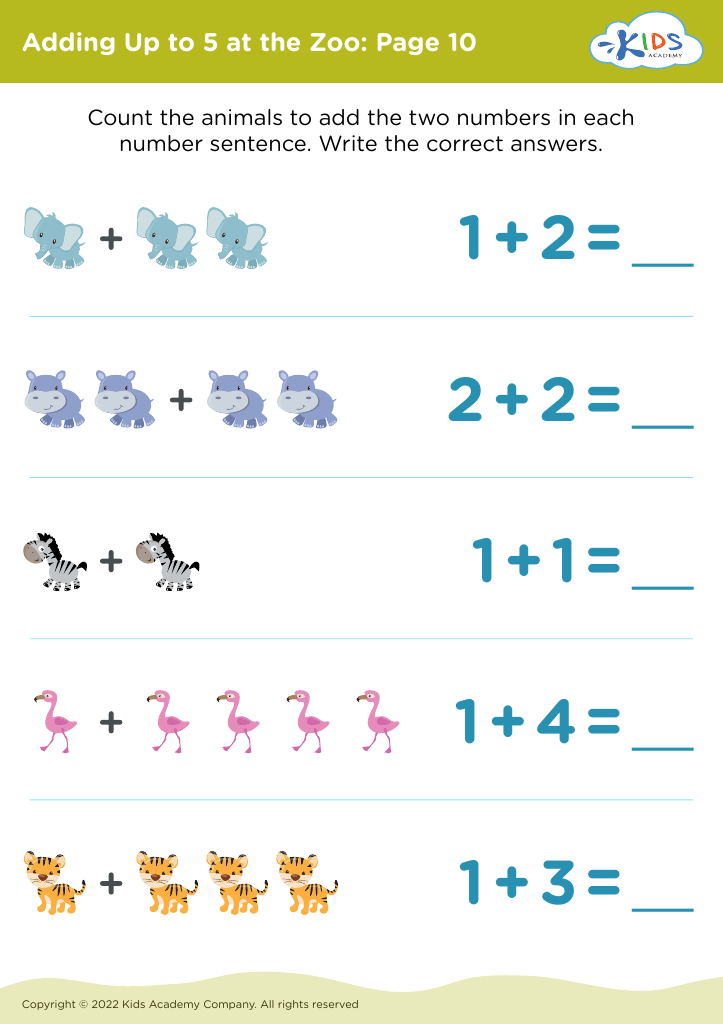
Adding Up to 5 at the Zoo: Page 10
Worksheet
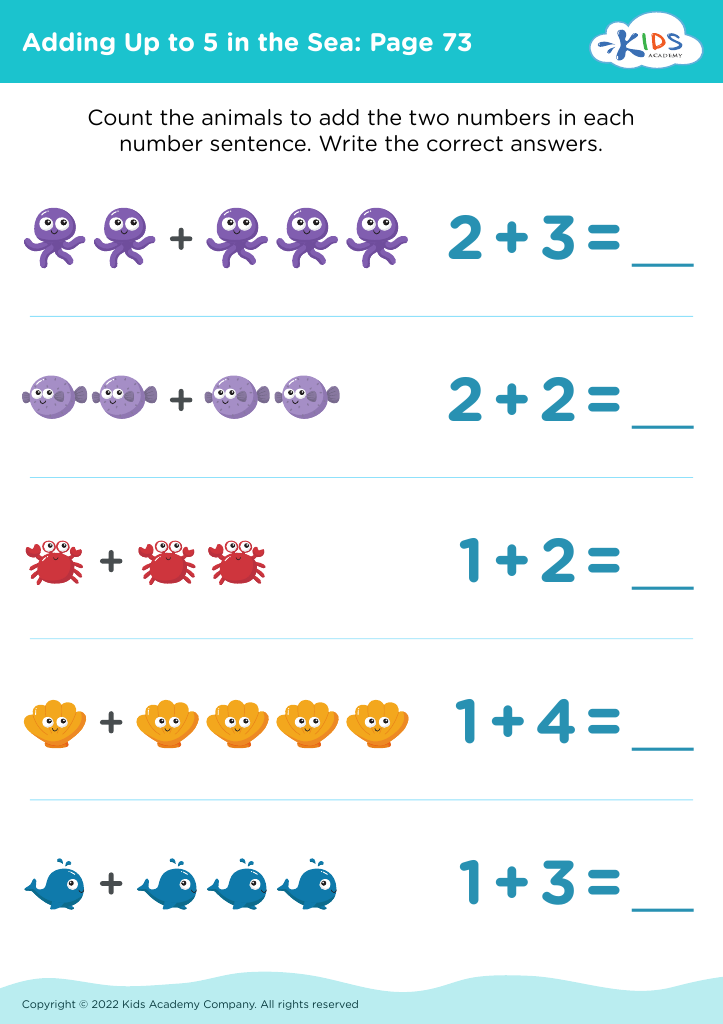
Adding Up to 5 in the Sea: Page 73
Worksheet
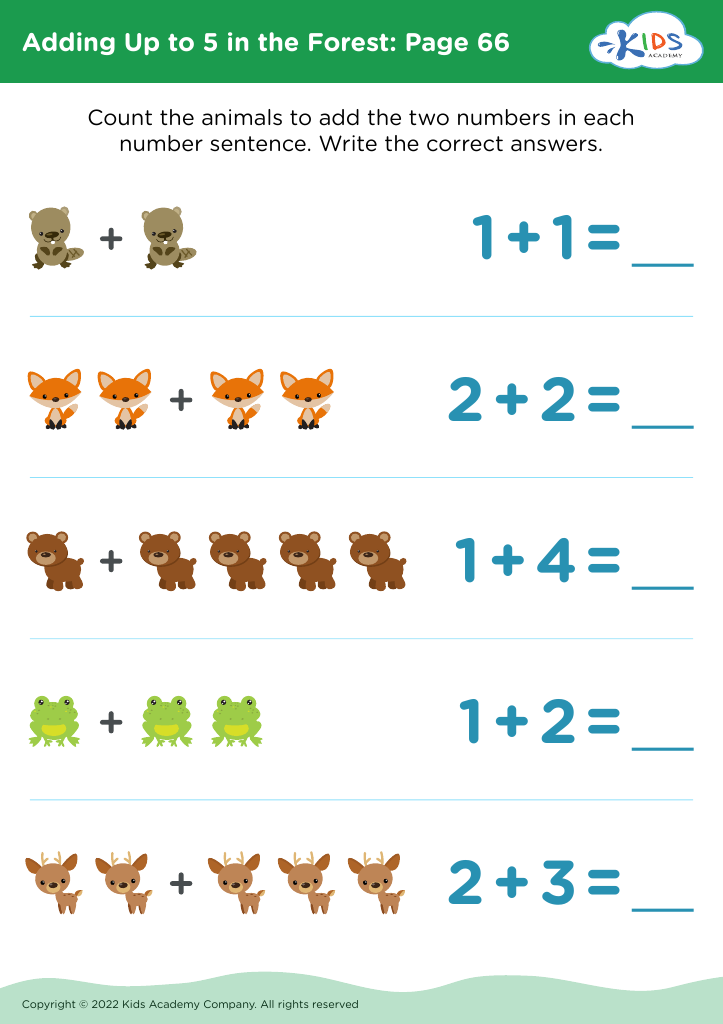
Adding Up to 5 in the Forest: Page 66
Worksheet
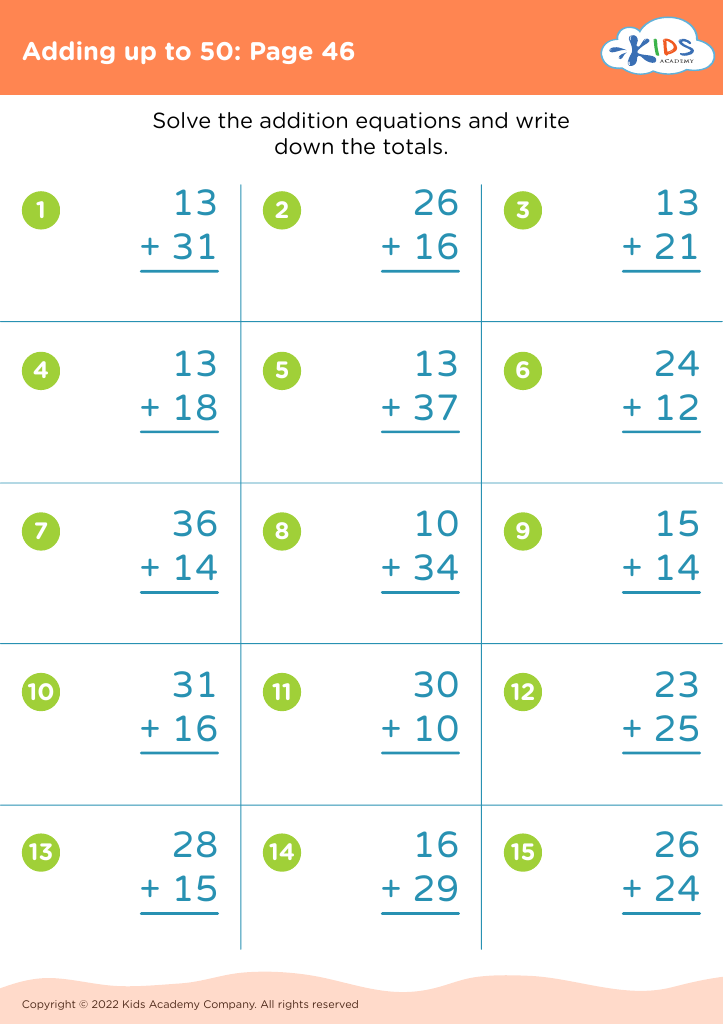
Adding up to 50: Page 46

Adding up to 50: Page 46

Adding up to 50: Page 46
Worksheet
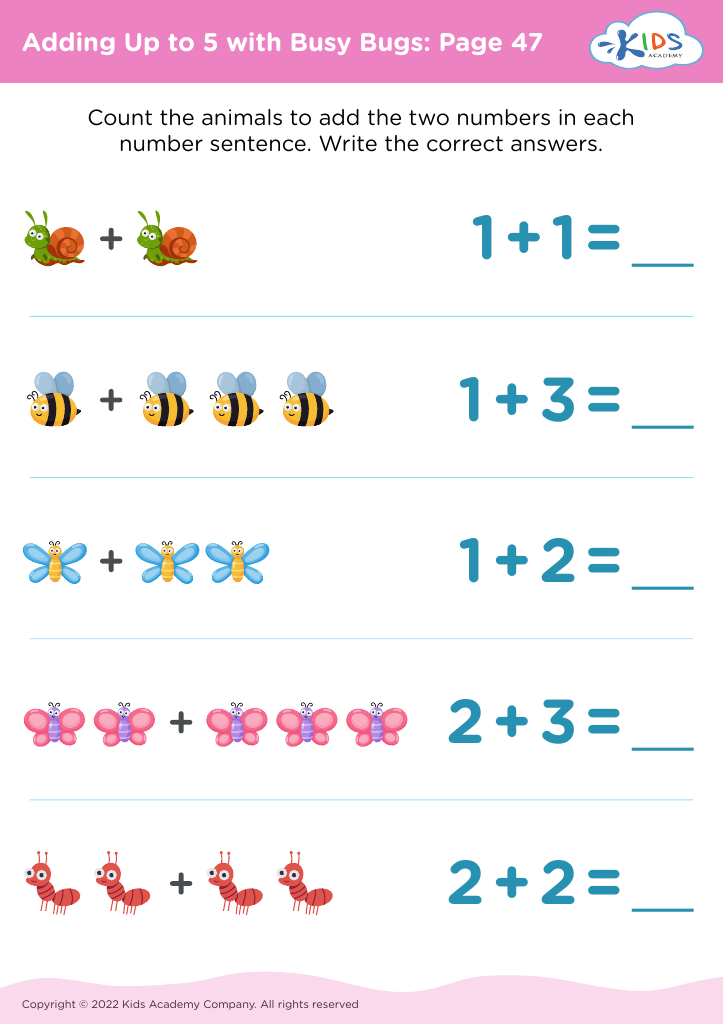
Adding Up to 5 with Busy Bugs: Page 47
Worksheet
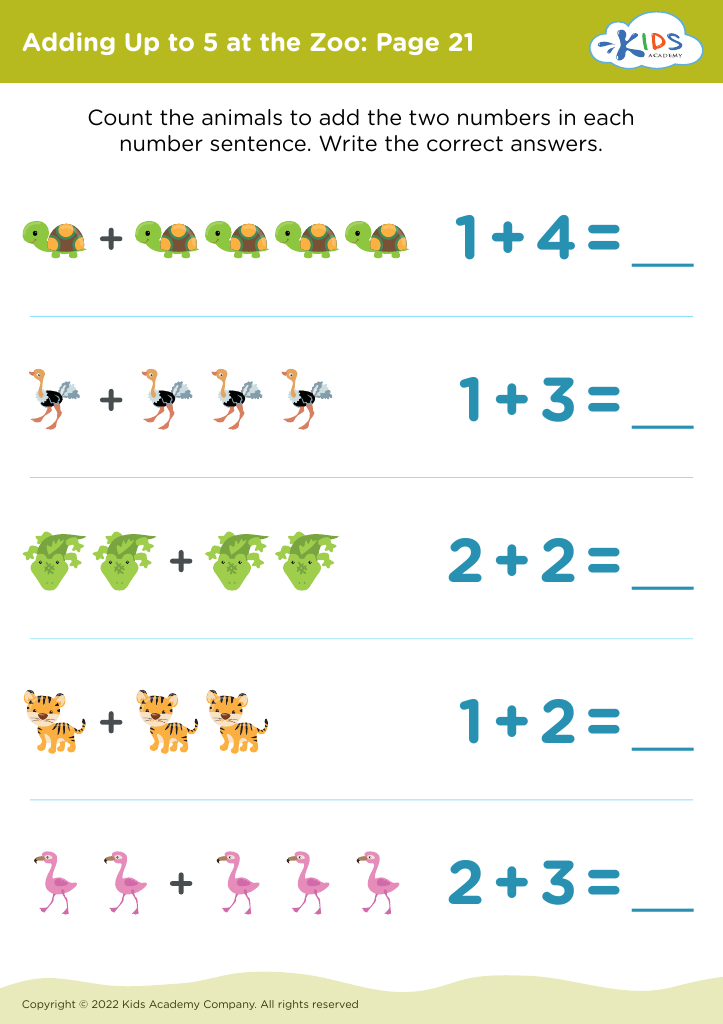
Adding Up to 5 at the Zoo: Page 21
Worksheet
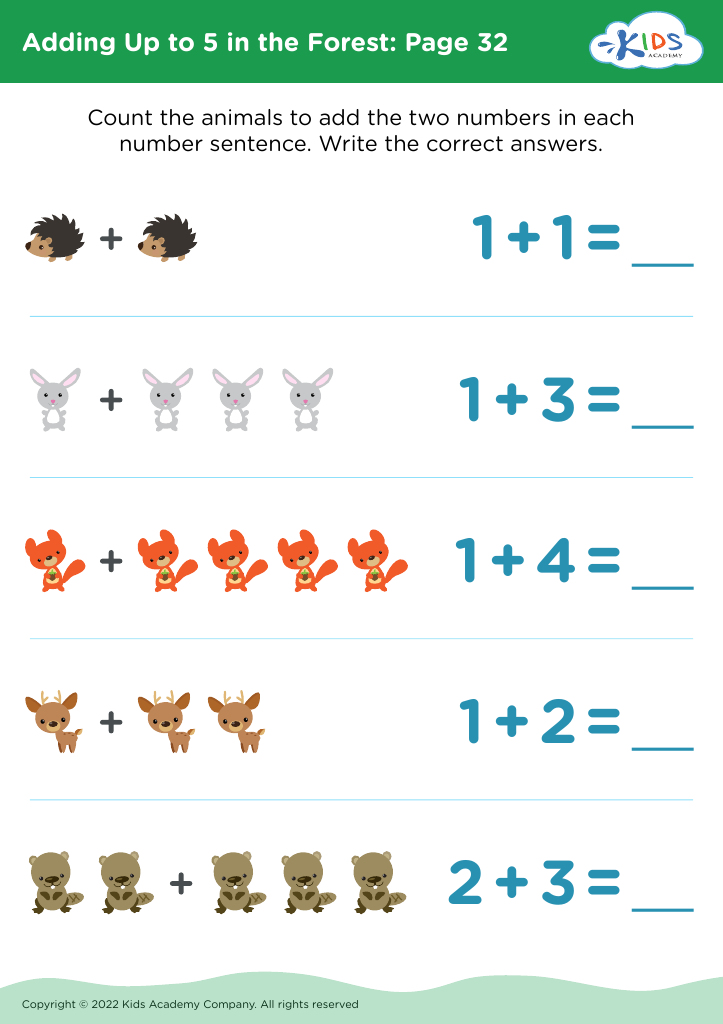
Adding Up to 5 in the Forest: Page 32
Worksheet


Basic addition skills are foundational for children ages 3-7 and play a crucial role in their overall cognitive development. During these early years, children’s brains are particularly receptive to new information and can assimilate foundational mathematical concepts more readily. Basic addition is the stepping stone to more complex mathematical operations such as subtraction, multiplication, and division.

Understanding addition helps young learners make sense of numbers and quantities in their everyday environment, boosting their confidence in handling real-life tasks like sharing items, understanding time, and managing money. Early familiarity with addition also fosters critical thinking and problem-solving abilities, as children learn to recognize patterns, make predictions, and strategize solutions.

From a developmental perspective, mastering addition strengthens memory retention, enhances concentration, and encourages a growth mindset, teaching kids the value of practice and perseverance. Psychologically, early success in math can spur a positive relationship with the subject, significantly affecting academic performance across all disciplines as the child progresses through school.

For the long term, cultivating strong mathematical skills from an early age lays the foundation for careers in science, technology, engineering, and mathematics (STEM). In our increasingly data-driven world, this early investment can spark a lifelong passion for mathematical discovery and career opportunities, positioning children for greater success in the future.