
Basic Math knowledge Worksheets for Ages 3-7
3 filtered results
Difficulty Level
Grade
Age
-
From - To
Subject
Activity
Standards
Discover our engaging Basic Math Knowledge Worksheets, specially designed for children ages 3-7. These resources help young learners grasp essential math concepts in a fun, interactive way. Our worksheets cover a variety of topics, including counting, number recognition, simple addition and subtraction, and shape identification. Each activity is crafted to enhance critical thinking and problem-solving skills, while also providing visual and hands-on learning experiences. Encourage your child's mathematical foundation with colorful, age-appropriate designs that make practicing basic math enjoyable. Explore our collection today and watch your child's confidence and excitement for learning mathematics grow!
Favorites
With answer key
Interactive
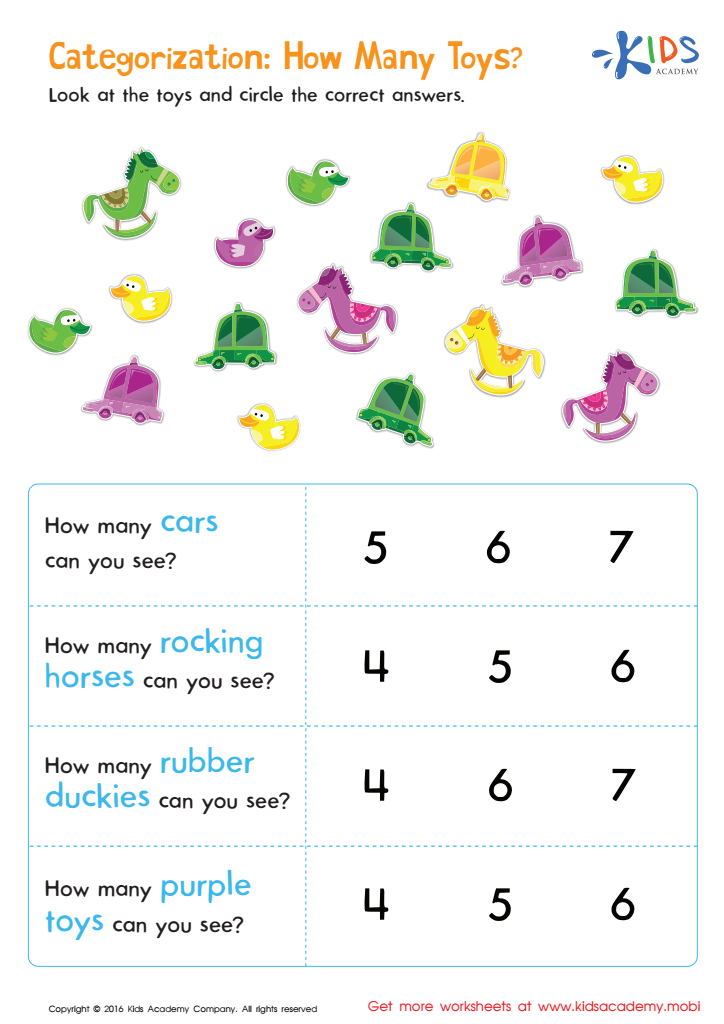
Classifying Toys by Type and Color Sorting Worksheet
Kids Academy offers free math worksheets to help practice counting, categorization & recognition skills. Kids will enjoy counting by color & type while strengthening problem-solving & literacy skills.
 Assign to My Students
Classifying Toys by Type and Color Sorting Worksheet
Worksheet
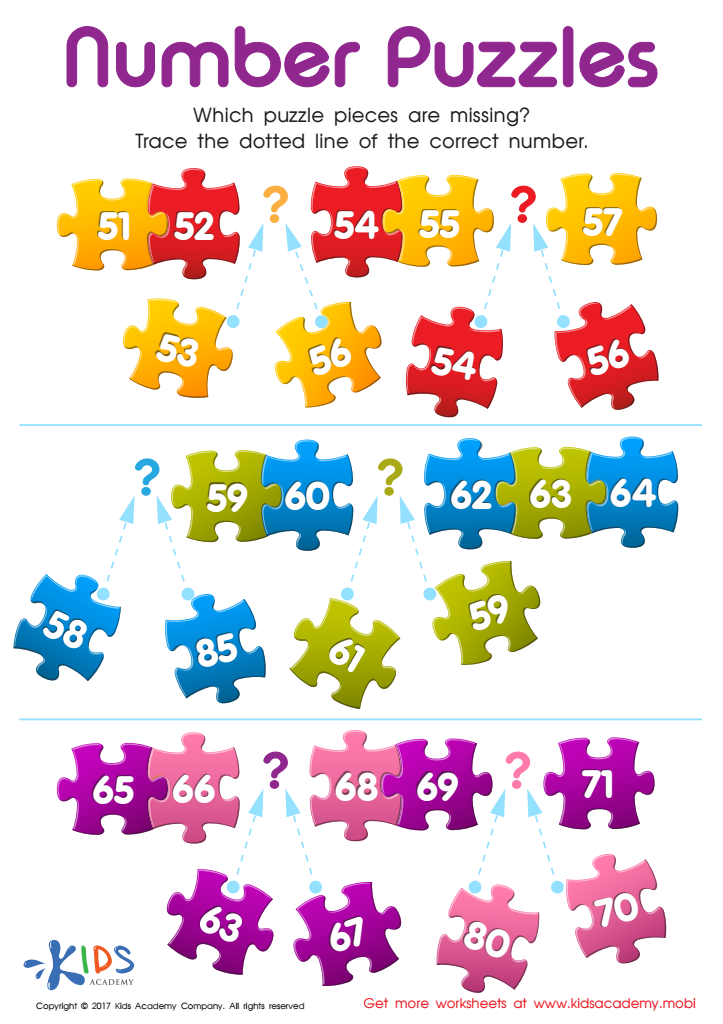
Number Puzzles Worksheet
In this tracing paper, your child must identify the missing numbers in the puzzle. Guide them as they trace the line for the correct number to complete the worksheet. This activity will help boost their problem-solving skills.
Number Puzzles Worksheet
Worksheet
Join Kids Academy for Free
Who is primarily going to use this learning content?







Basic math knowledge for children ages 3-7 is crucial for several reasons. First, this foundational stage is a vital period for cognitive development, as young children are naturally curious and eager to learn. Introducing basic math concepts such as counting, addition, and pattern recognition not only enhances their numerical skills but also strengthens their problem-solving abilities and critical thinking.
Early math exposure is linked to future academic success; children who grasp these concepts early are more likely to excel in later grades. Furthermore, math is not just about numbers but also helps in developing logical reasoning and analytical skills that are applicable in everyday life. Engaging with math-related activities fosters a child's ability to embrace challenges, persist in problem-solving, and cultivate a growth mindset.
Additionally, parents and teachers play a fundamental role in shaping children's attitudes toward math. By promoting a positive learning environment around math, they help demystify the subject and build confidence, making children more willing to tackle complex problems in the future. Ultimately, nurturing math skills during these early years lays a strong foundation, ensuring that children not only succeed academically but also appreciate and enjoy the beauty of mathematics in their everyday lives.








