Categorizing objects Worksheets for Ages 3-7
5 filtered results
-
From - To
Introduce your young learner to the exciting world of categorization with our "Categorizing Objects Worksheets for Ages 3-7". These engaging, age-appropriate worksheets help children classify and sort various objects through fun activities that hone critical thinking and observation skills. Ideal for preschoolers and early elementary students, each worksheet is designed to build foundational cognitive abilities, enhance vocabulary, and boost visual discrimination. From sorting shapes and colors to more complex categories, our printable resources make learning an interactive and enjoyable experience, setting the stage for future academic success. Discover a seamless blend of education and entertainment today!
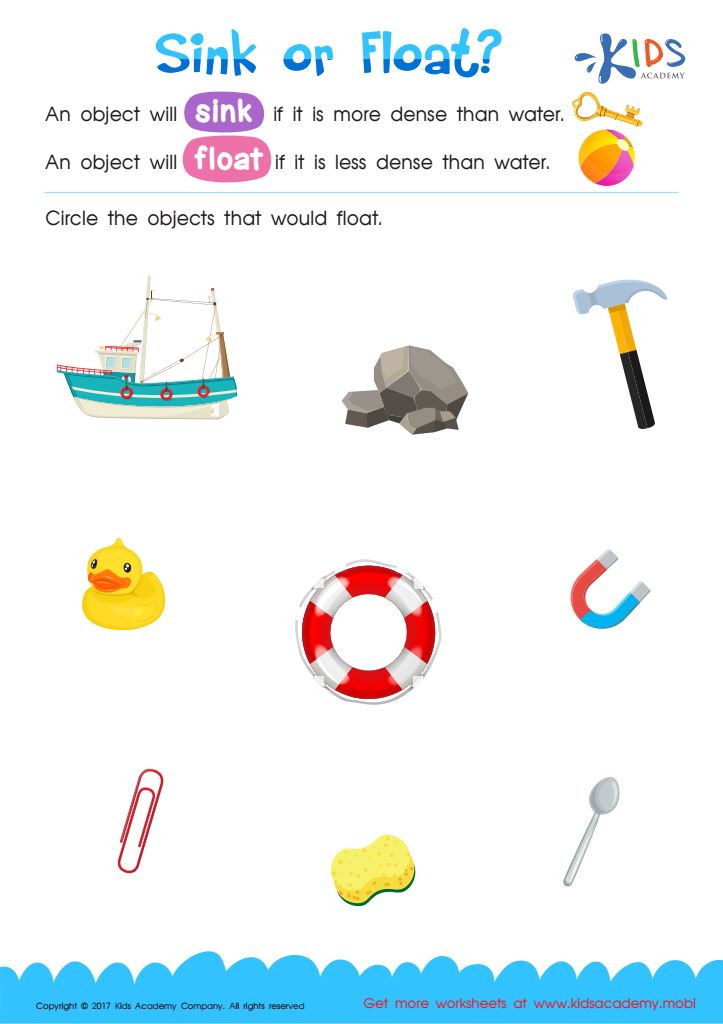
Sink or Float Printable
 Assign to My Students
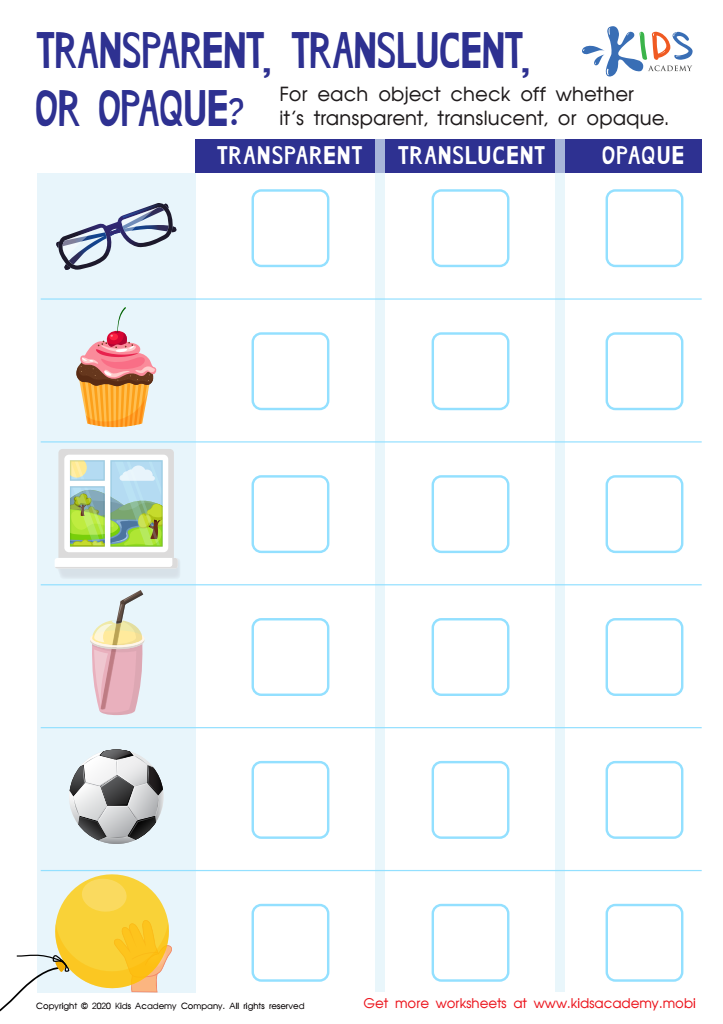
Transparent, Translucent, or Opaque Worksheet
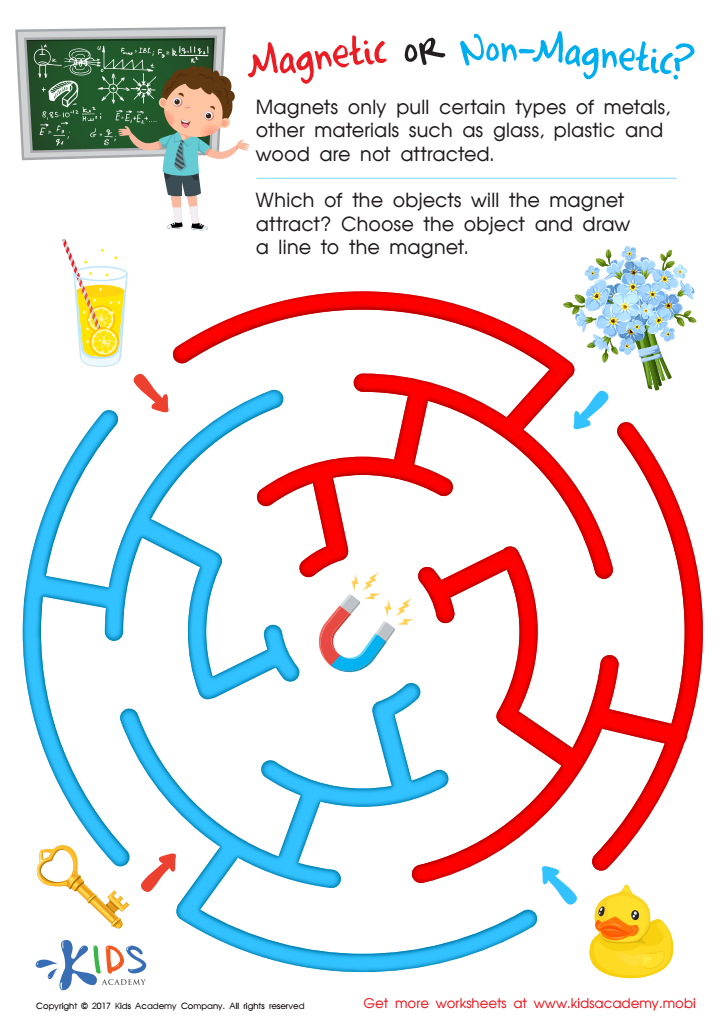
Magnetic or Non–Magnetic Worksheet
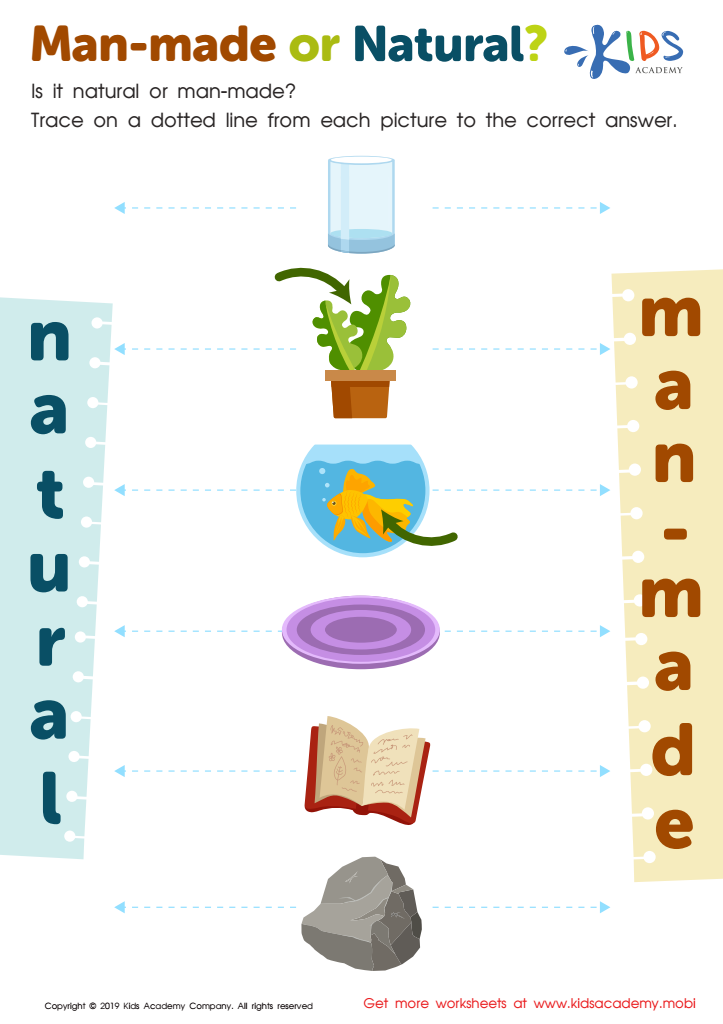
Man-Made or Natural? Worksheet








Categorizing objects is a foundational cognitive skill crucial for children ages 3-7, as it significantly contributes to their overall development. When parents and teachers engage children in categorization activities, they help boost the child's ability to organize, recognize patterns, and make sense of diverse information. This ability lays the groundwork for more advanced cognitive tasks such as problem-solving, logical reasoning, and mathematical thinking.
For instance, when children group objects by color, shape, size, or function, they practice critical thinking and develop sorting and classification skills. These tasks enhance a child's memory and attention to detail, which are vital for future academic achievement. In a classroom setting, teachers can use categorizing activities to create engaging and interactive learning experiences that make complex concepts more accessible and relatable.
Moreover, categorization helps in developing language skills. Discussing the attributes of objects and explaining their grouping fosters richer vocabulary and better communication skills. Socially, children learn to collaborate, share ideas, and respect others' perspectives during group categorization activities.
In sum, emphasizing categorization skills in early childhood equips children with essential tools for lifelong learning, making it imperative for parents and teachers to integrate these activities into daily routines and educational curricula.








