Converting units Worksheets for Ages 3-7
4 filtered results
-
From - To
Introduce young learners to the world of measurement with our engaging "Converting Units Worksheets for Ages 3-7". Our printable worksheets, tailored for preschoolers and early elementary students, make learning fun with colorful, easy-to-follow activities. From comparing lengths and weights to understanding volume, these exercises help children grasp fundamental measurement concepts. Designed with playful themes and intuitive instructions, our worksheets support the development of math and problem-solving skills. Perfect for both classroom use and at-home practice, they provide a solid foundation for your child's educational journey. Download now to start converting units with confidence and ease!
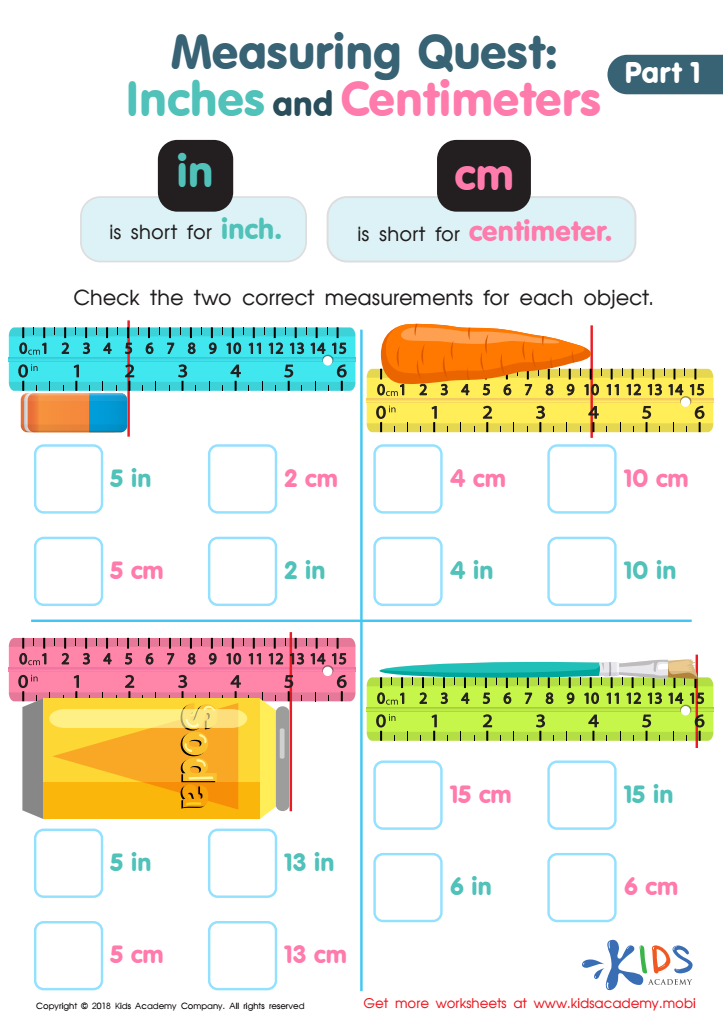
Measuring Quest: Inches and Centimeters Worksheet
 Assign to My Students
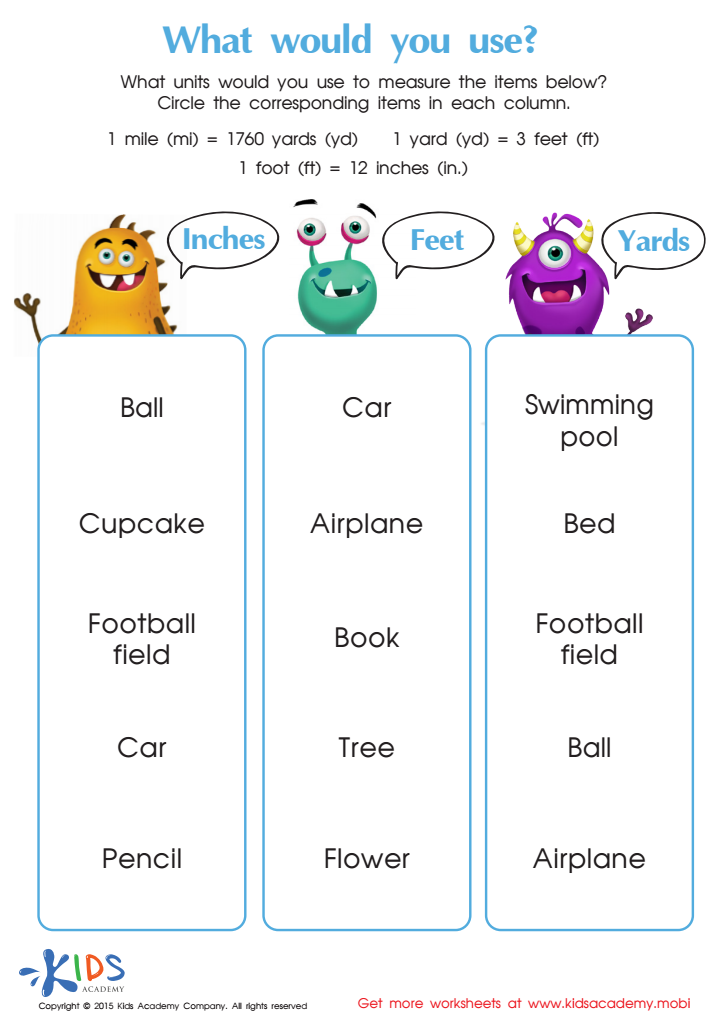
Learning about measuring objects in inches, feet and yards Worksheet
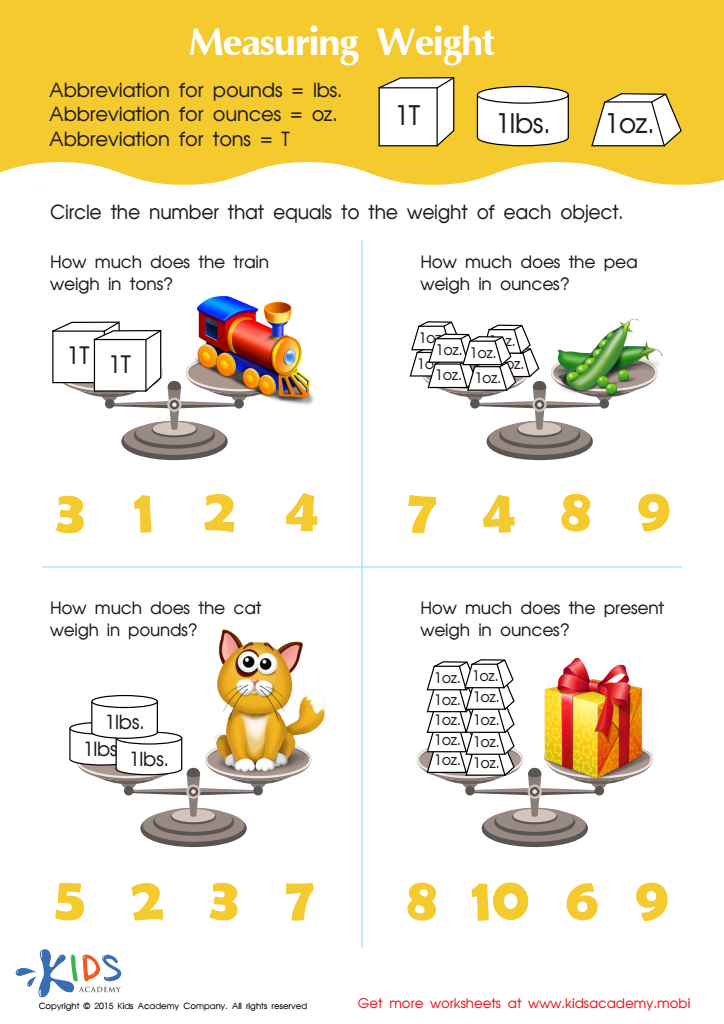
Measuring Weight in Ounces, Pounds and Tons Worksheet
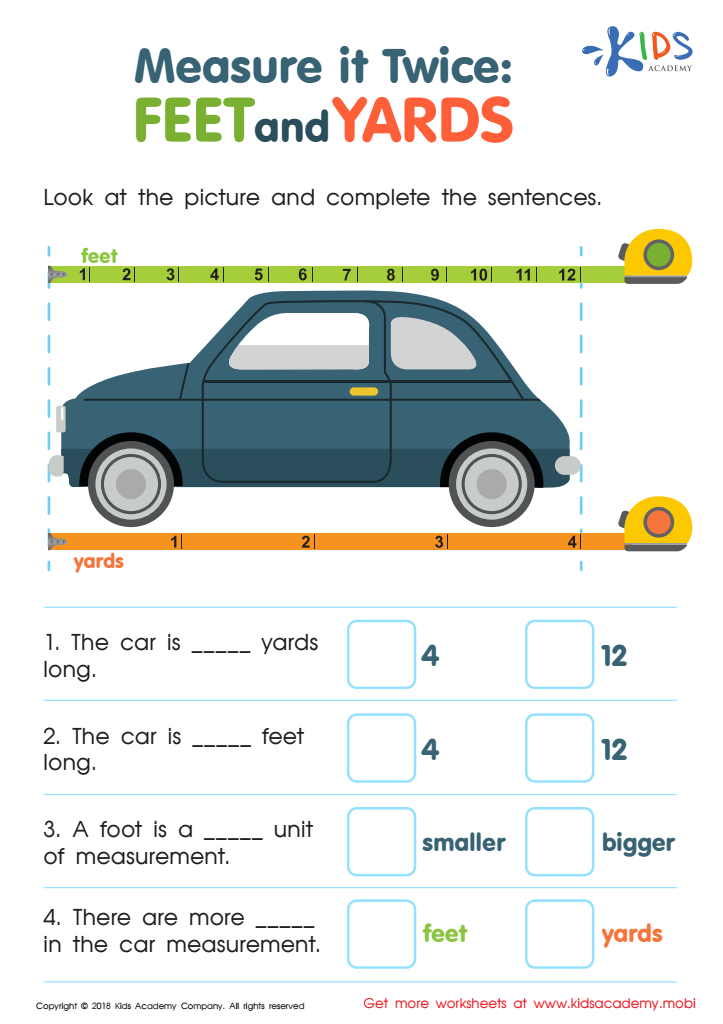
Measure It Twice: Feet and Yards Worksheet







Introducing the concept of converting units to children aged 3-7 has significant benefits that merit attention from both parents and teachers. At this foundational stage of cognitive development, children are highly receptive to new ideas and skills. Teaching them how to convert units, even in its simplest form, lays the groundwork for essential math skills that they will build upon in later years.
Unit conversion exercises help strengthen fundamental mathematical concepts such as measurement, counting, and the understanding of quantity, all of which are critical to their overall numeracy. For instance, concepts like halves, doubles, or transforming between units, such as inches to centimeters or grams to kilograms, broaden a child's understanding of size and volume. This also helps their problem-solving skills, since many real-world problems require accurate measurement and unit conversion.
Furthermore, fostering an early comfort with these concepts can build confidence and instill a positive attitude toward math. Moreover, these lessons build practical life skills, crafting a bridge between classroom knowledge and everyday experiences, such as understanding temperatures, cooking measurements, or distances.
Ultimately, an early grounding in unit conversion nurtures critical thinking, adaptability, and practical application of math—the key skills for any successful learner. So parents and teachers should give due importance to these essential building blocks of a child's education.








