Filters

384 filtered results

Clear all filters
Favorites
With answer key
Interactive

384 filtered results

Difficulty Level

Grade


Check out this FREE "Counting practice" Trial Lesson for age 3-7!

Arrange up to 9 Objects

Favorites
With answer key
Interactive
  • 3-7
  • Counting practice
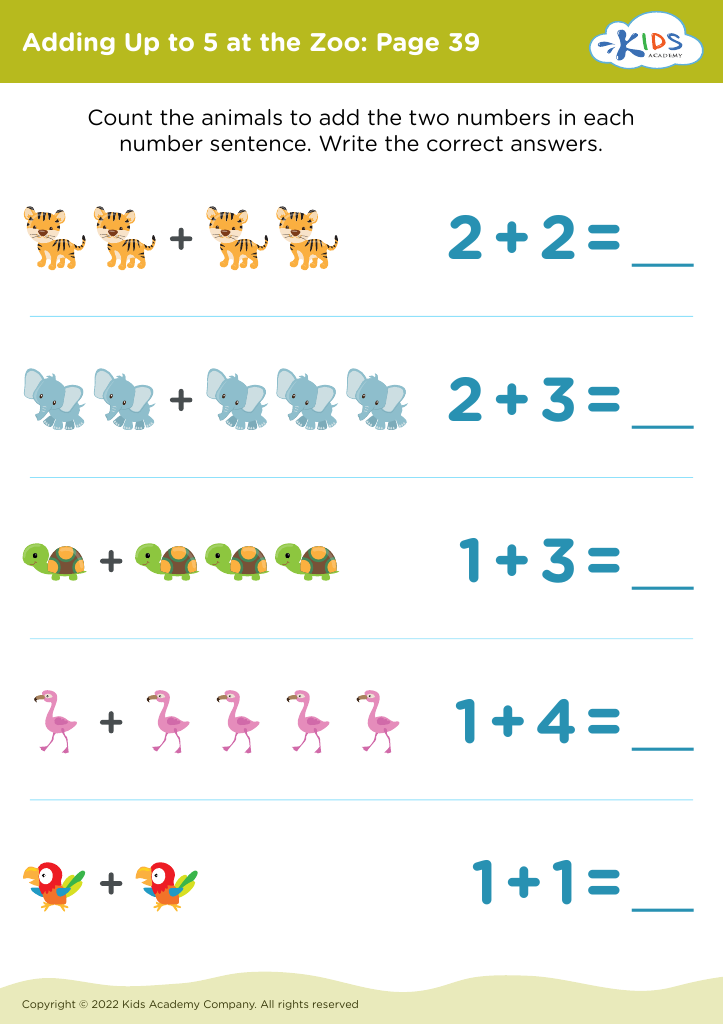
Adding Up to 5 at the Zoo: Page 39
Worksheet
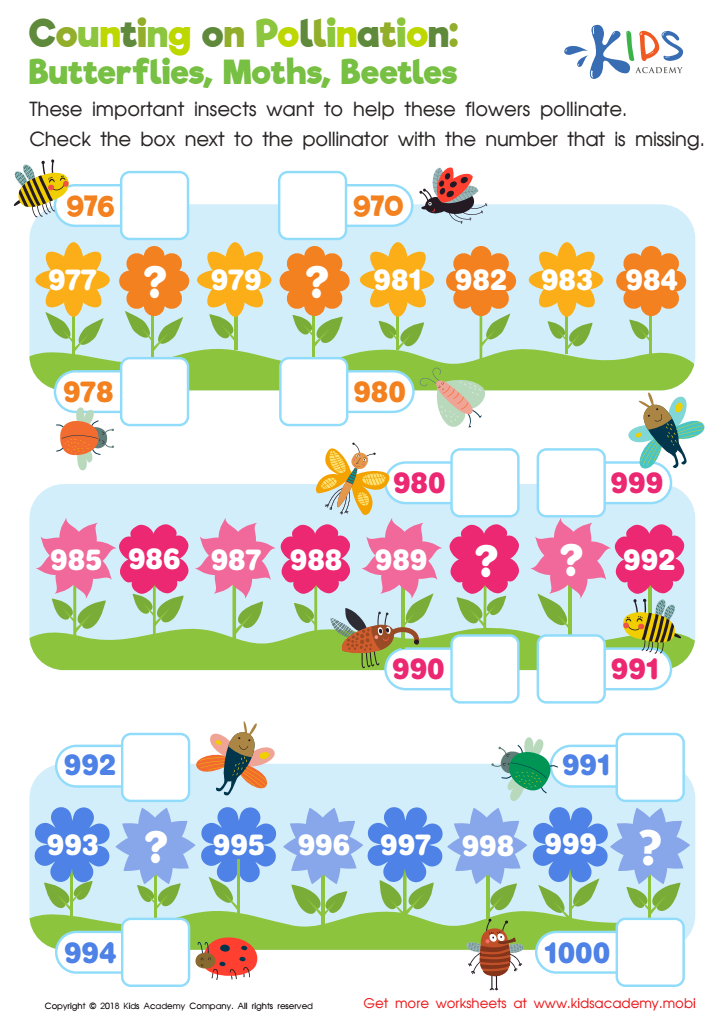
Counting on Pollination: Butterflies, Moths, Beetles Worksheet

Counting on Pollination: Butterflies, Moths, Beetles Worksheet

A number line can help boost computation accuracy and efficiency. It can also be used with more advanced numbers. Help your child practice by having them identify missing numbers in sequences. This fun worksheet lets them help the pollinators in the process, as they strengthen their number sense.
Counting on Pollination: Butterflies, Moths, Beetles Worksheet
Worksheet
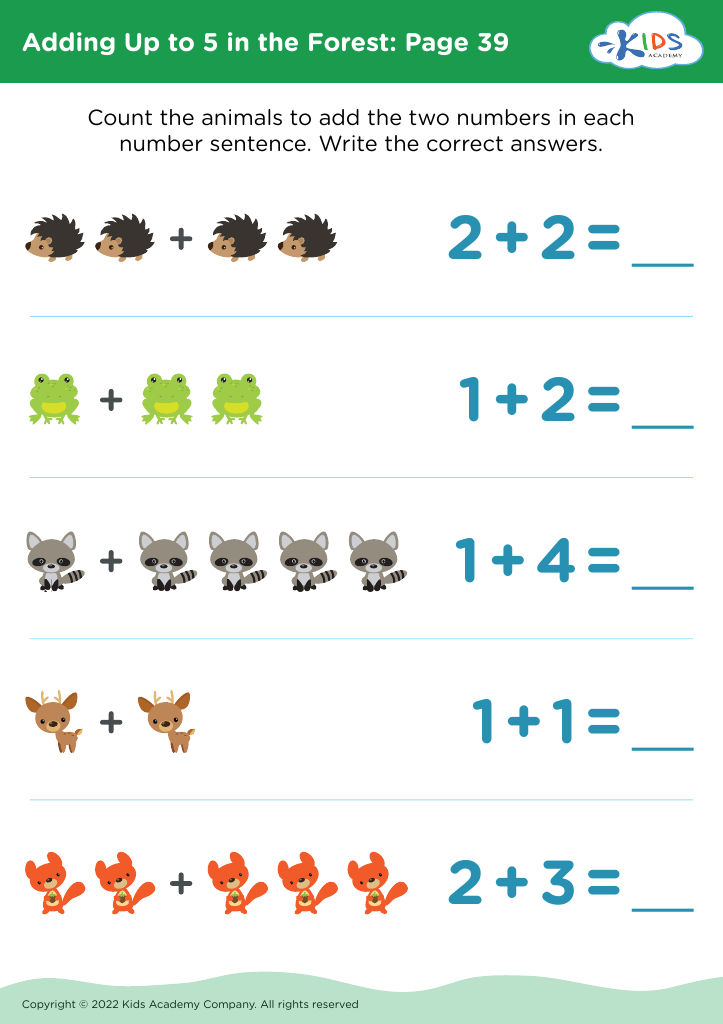
Adding Up to 5 in the Forest: Page 39
Worksheet
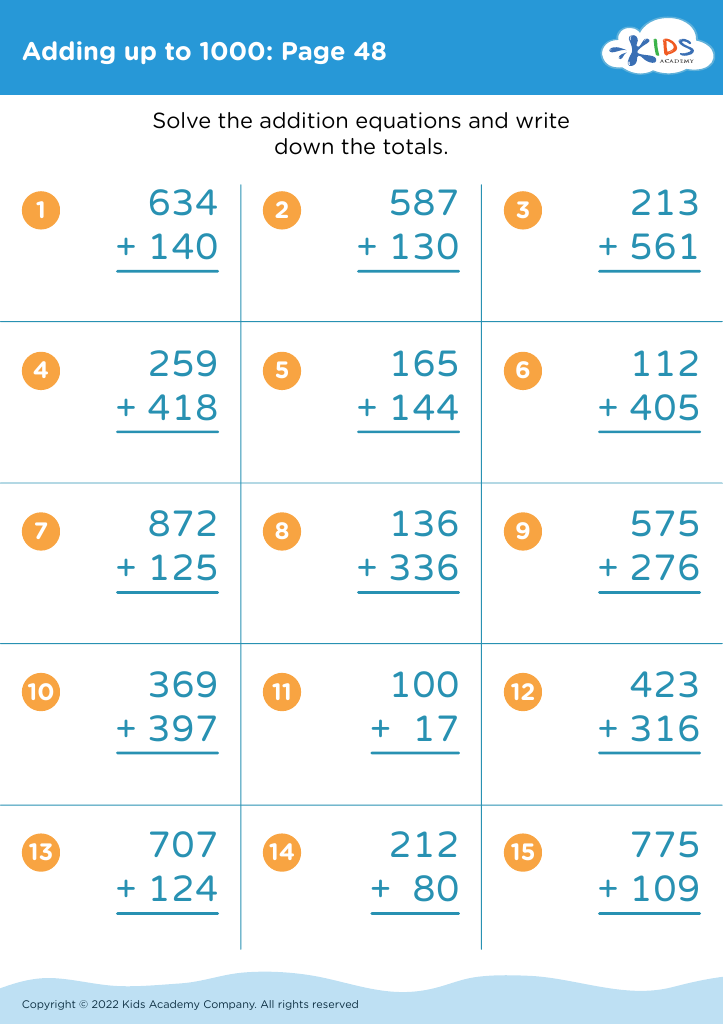
Adding up to 1000: Page 48

Adding up to 1000: Page 48

Adding up to 1000: Page 48
Worksheet
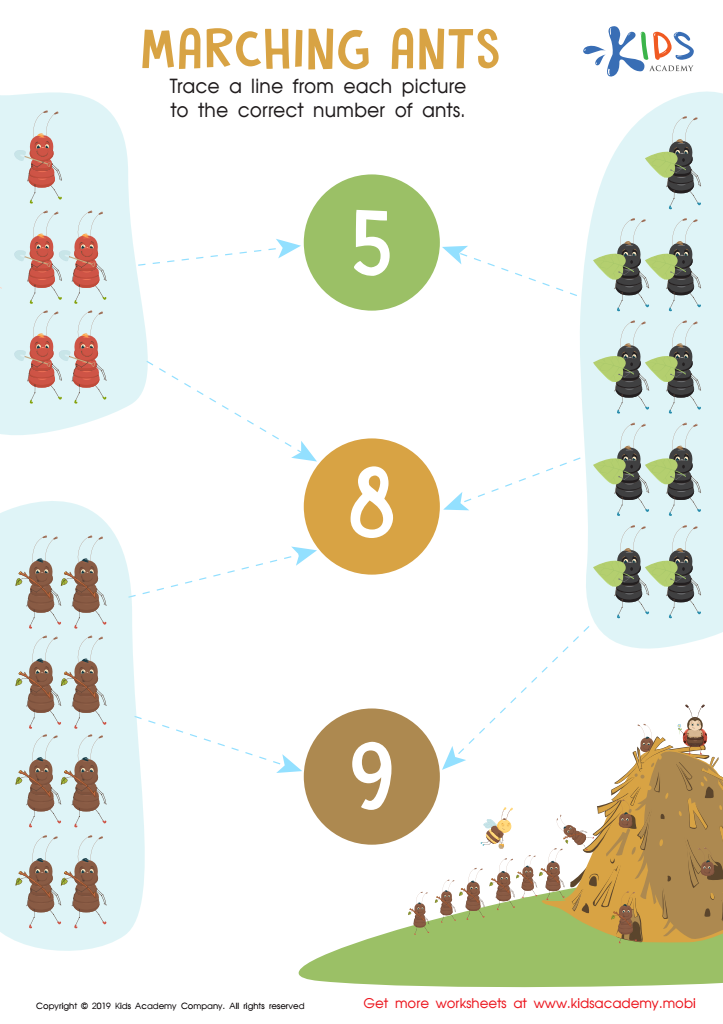
Marching Ants Worksheet

Marching Ants Worksheet

Assess and help your kids practice counting with this worksheet. Ask them to identify the four groups of ants in the picture. Guide them as they count each group and trace the lines to the corresponding number.
Marching Ants Worksheet
Worksheet
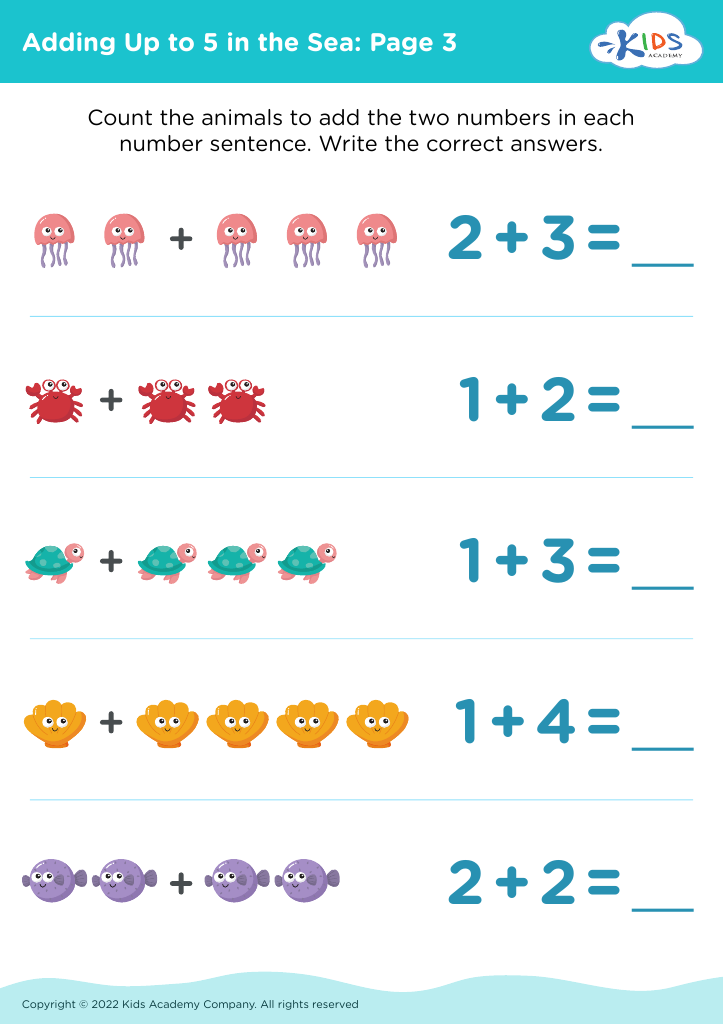
Adding Up to 5 in the Sea: Page 3

Adding Up to 5 in the Sea: Page 3

Adding Up to 5 in the Sea: Page 3
Worksheet
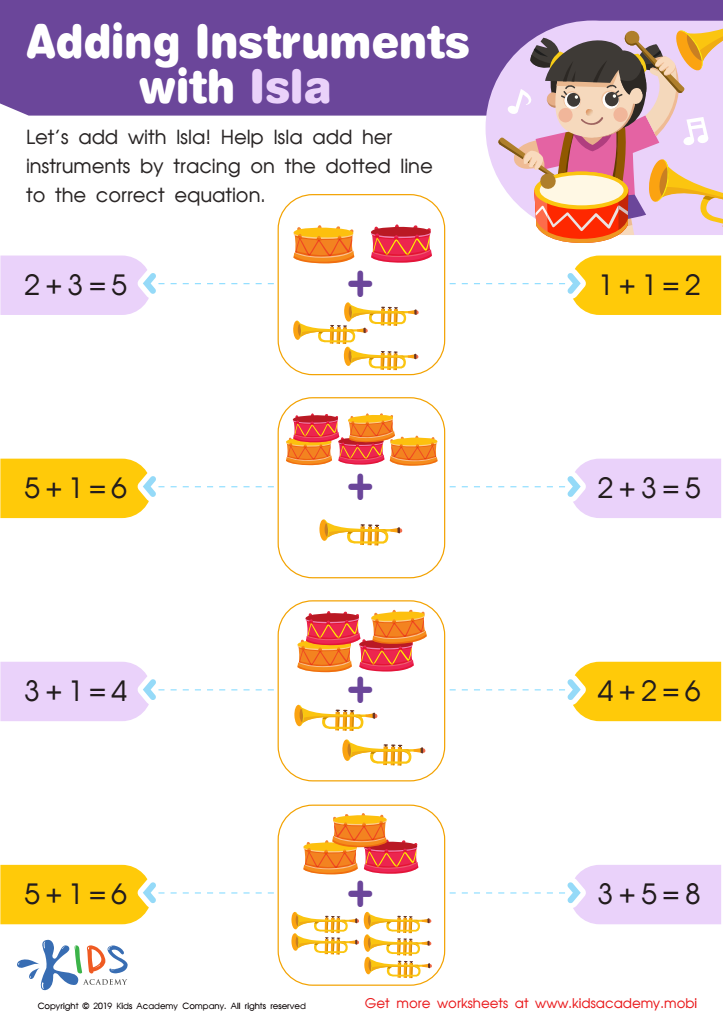
Adding Instruments with Isla Worksheet
Adding Instruments with Isla Worksheet

Your kids can have fun helping Isla add her musical instruments. With colorful pics and one-to-one representation, they can pick the correct addition sentence. They can connect each pic with traceable lines and get to the right sum up to 10.
Adding Instruments with Isla Worksheet
Worksheet
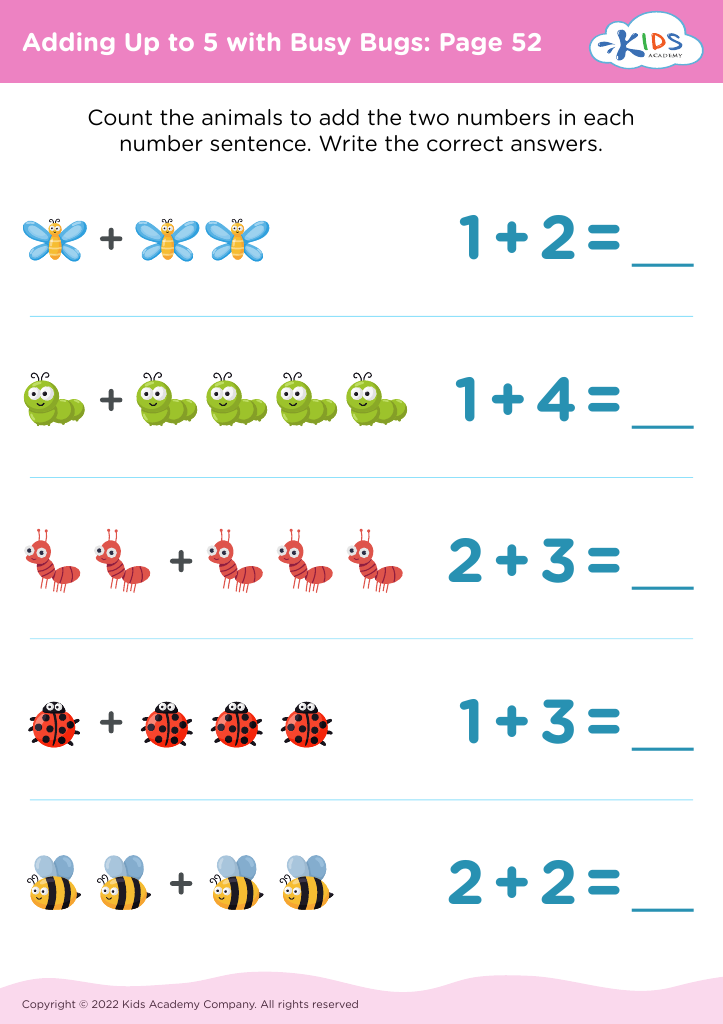
Adding Up to 5 with Busy Bugs: Page 52
Worksheet
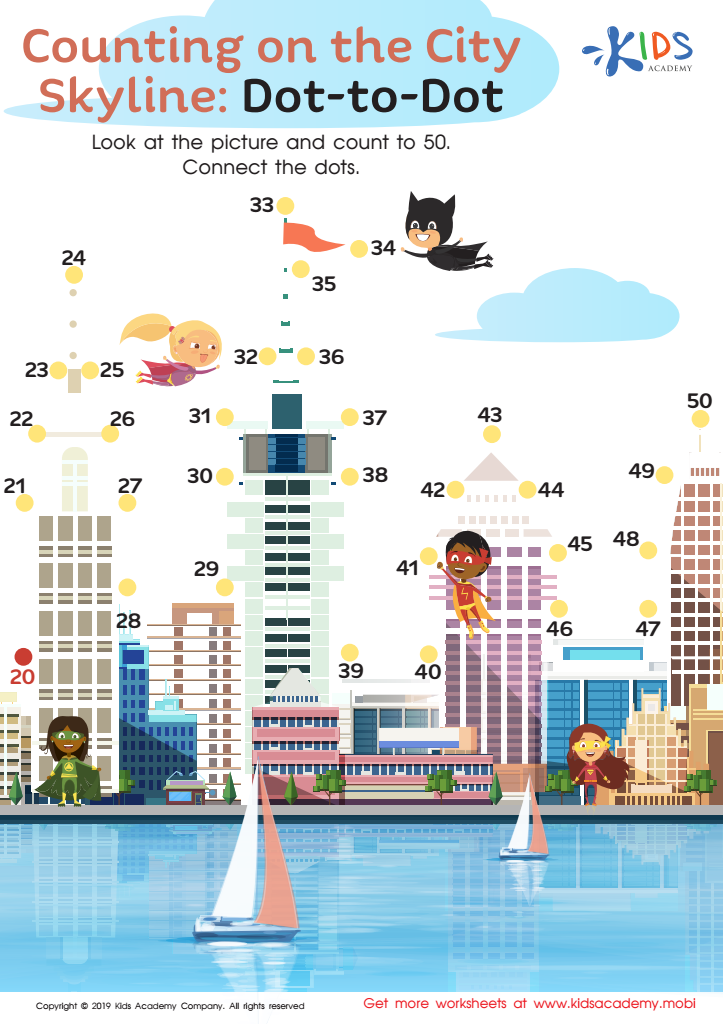
Counting on the City Skyline: Dot-to-Dot Worksheet

Counting on the City Skyline: Dot-to-Dot Worksheet

Kids will love connecting the dots to make a superhero skyline! They'll reinforce their number line thinking and number sense while building fine-motor skills. Watch them beam with pride as the cityscape reveals itself, all thanks to some math practice.
Counting on the City Skyline: Dot-to-Dot Worksheet
Worksheet
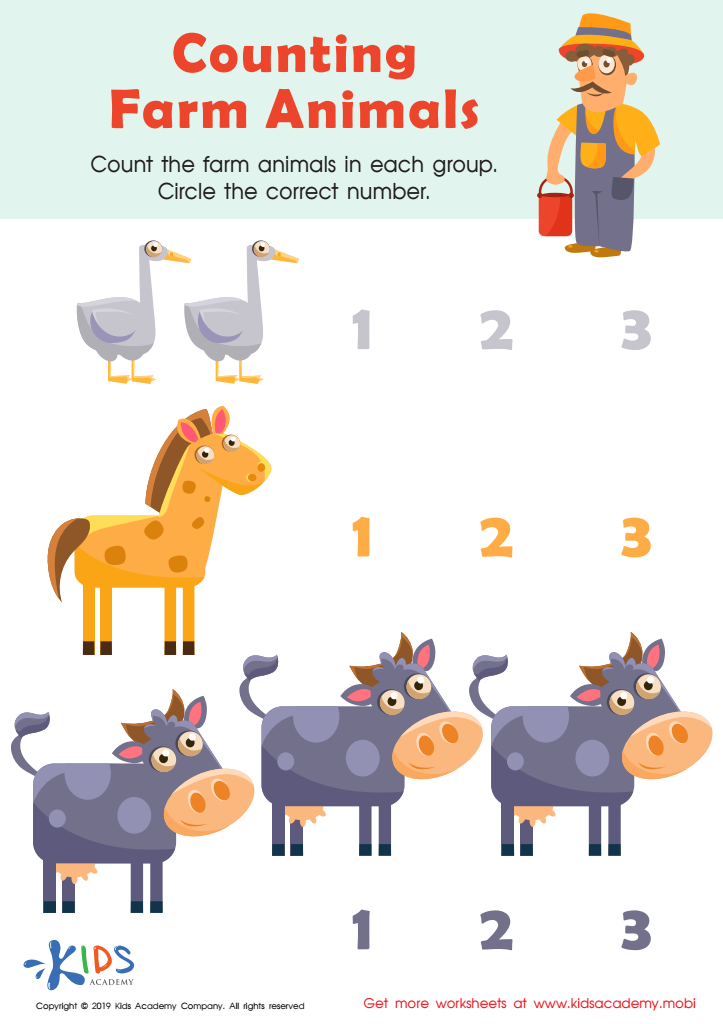
Counting Farm Animals Worksheet
Counting Farm Animals Worksheet

Kids love farms! That's why this free farm animals counting worksheet is great for building number sense and counting skills. Have your young mathematician count the pictures, then circle the corresponding number. It's a fun and meaningful way to practice counting.
Counting Farm Animals Worksheet
Worksheet
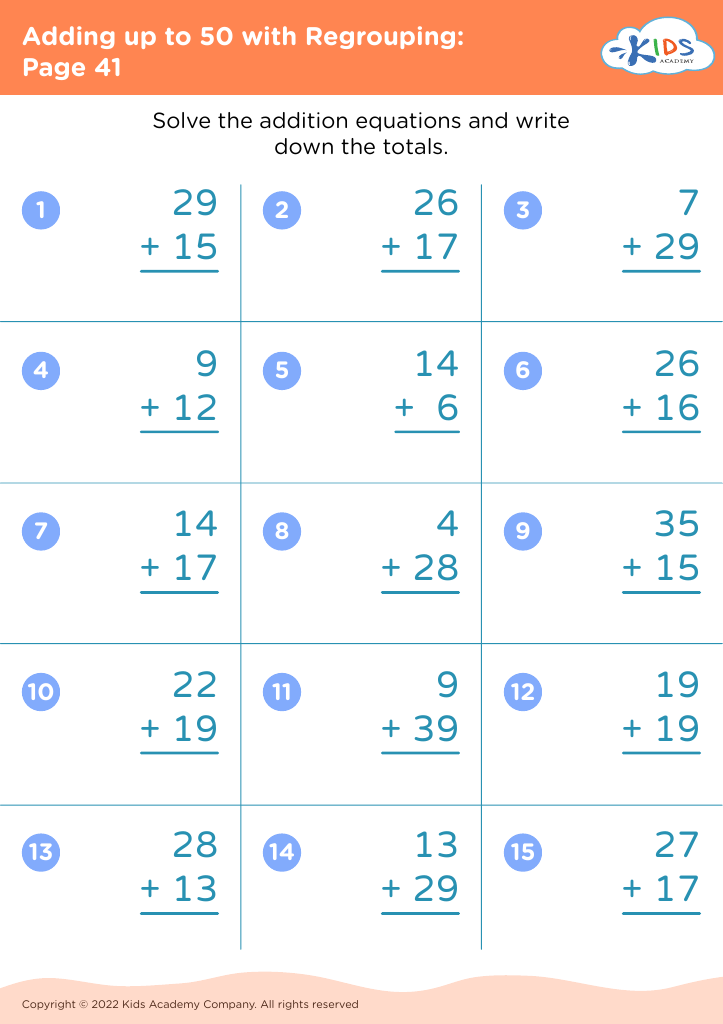
Adding up to 50 with Regrouping: Page 41
Worksheet
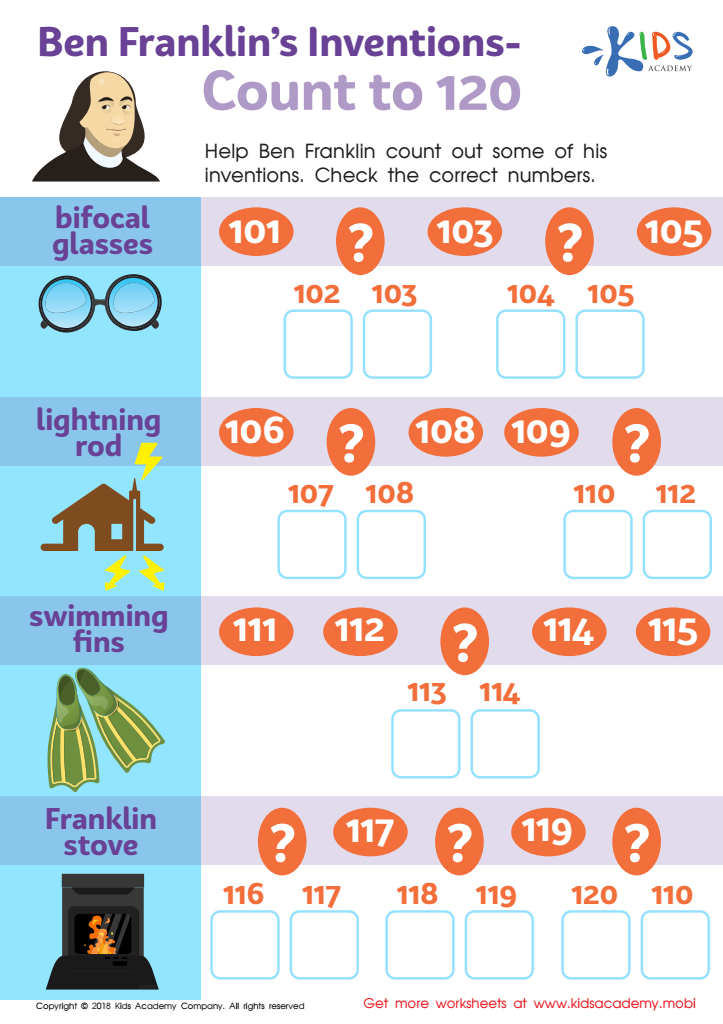
Ben Franklin’s Inventions – Count to 120 Worksheet
Ben Franklin’s Inventions – Count to 120 Worksheet
Benjamin Franklin is a significant figure in US history. He invented objects we use daily. If your child is interested in object history and invention, they'll love this worksheet. See if they can help Mr Franklin count his inventions and check their answers. It's a simple and enjoyable task!
Ben Franklin’s Inventions – Count to 120 Worksheet
Worksheet
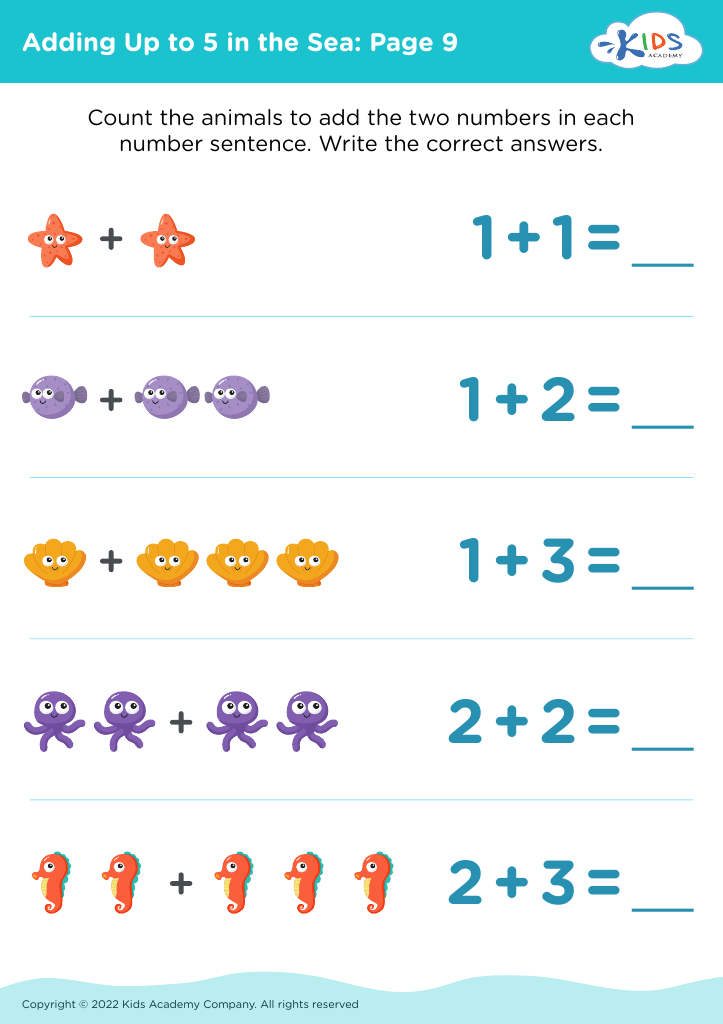
Adding Up to 5 in the Sea: Page 9

Adding Up to 5 in the Sea: Page 9

Adding Up to 5 in the Sea: Page 9
Worksheet
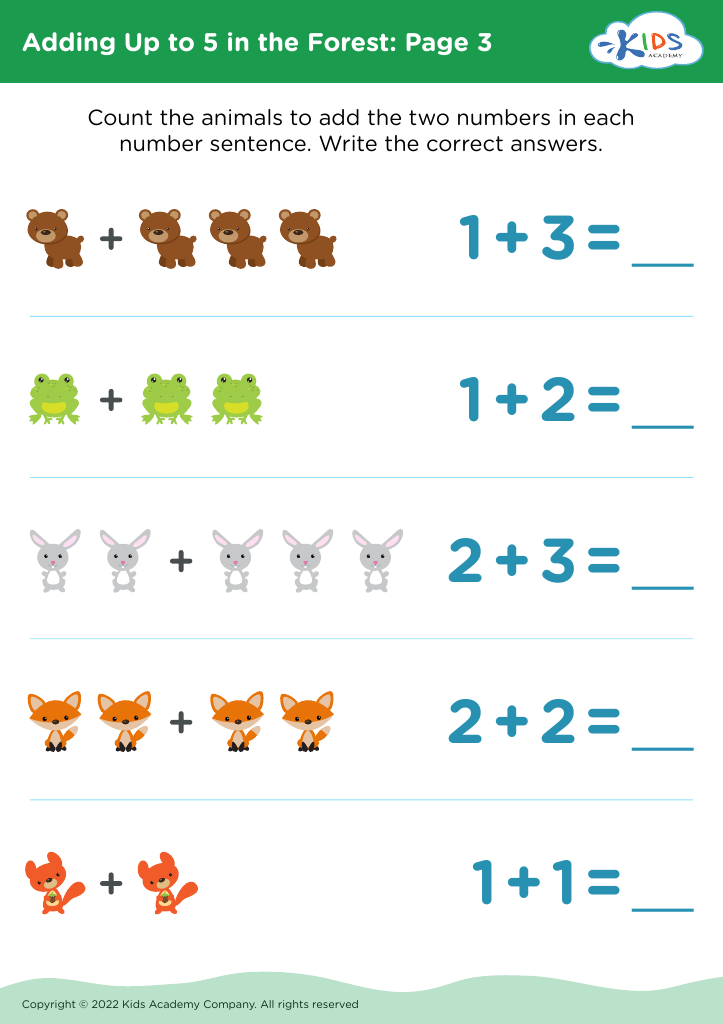
Adding Up to 5 in the Forest: Page 3
Worksheet
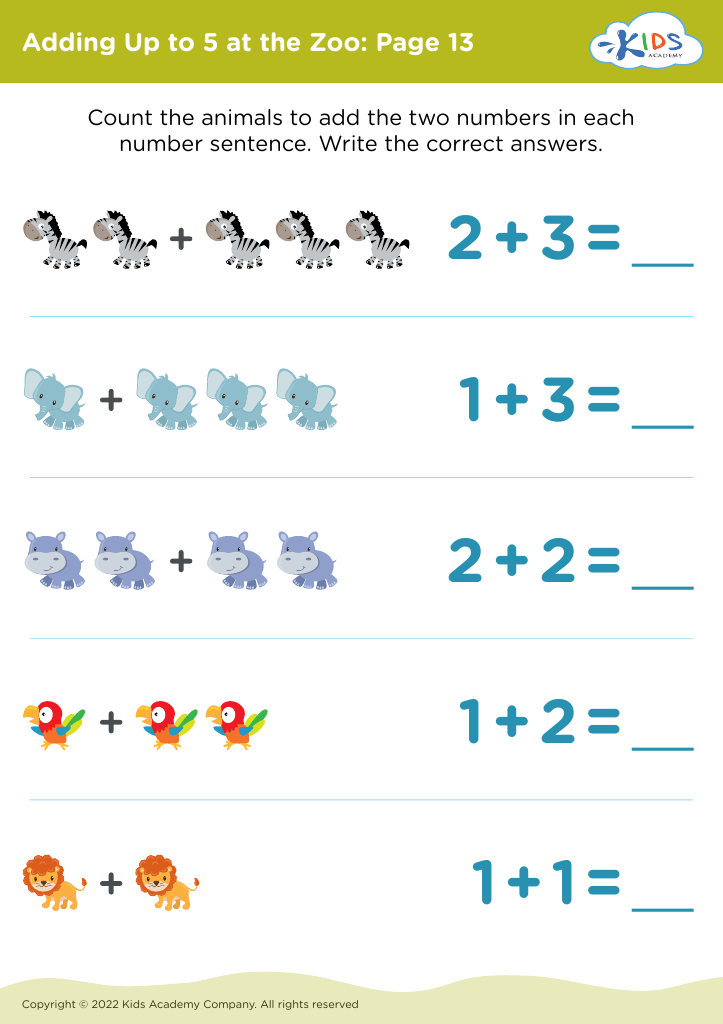
Adding Up to 5 at the Zoo: Page 13
Worksheet
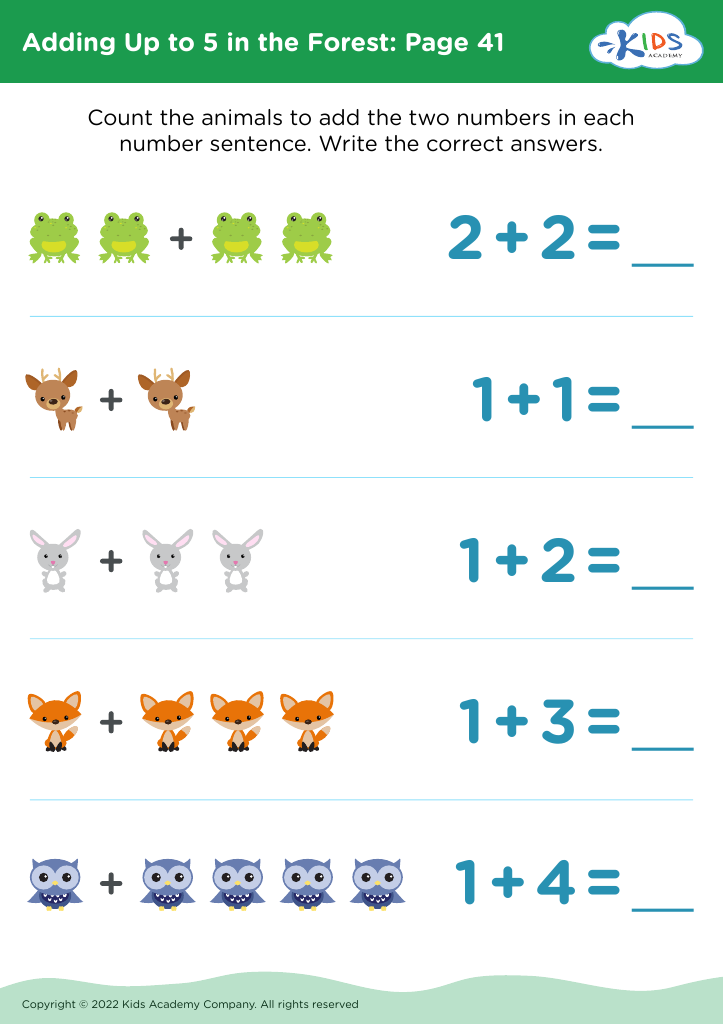
Adding Up to 5 in the Forest: Page 41
Worksheet
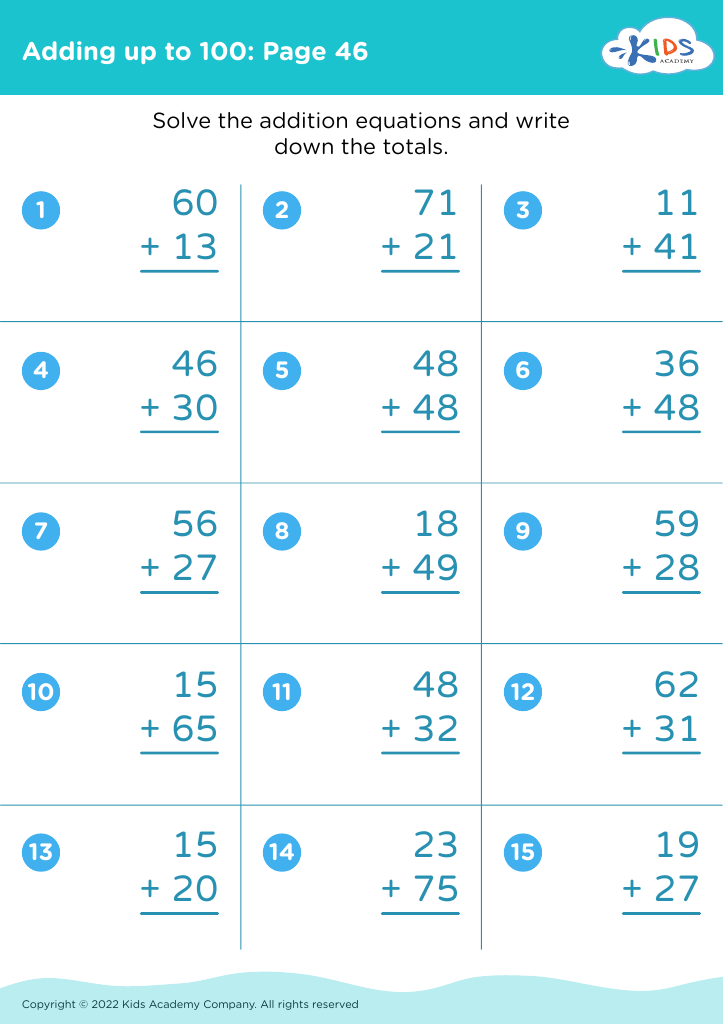
Adding up to 100: Page 46

Adding up to 100: Page 46

Adding up to 100: Page 46
Worksheet
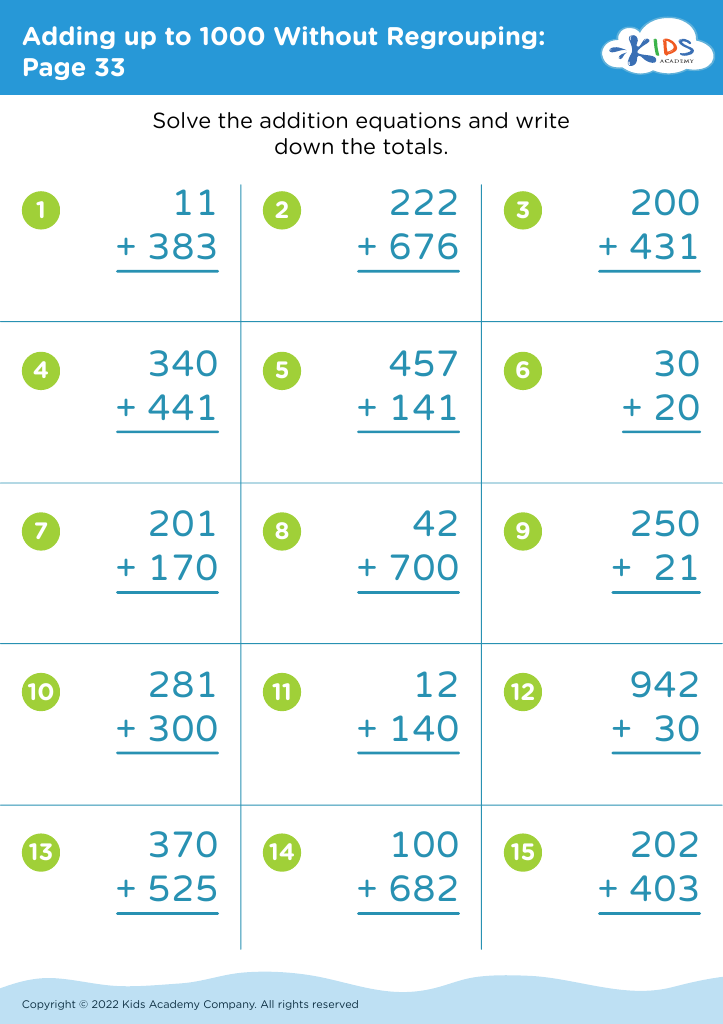
Adding up to 1000 Without Regrouping: Page 33
Worksheet
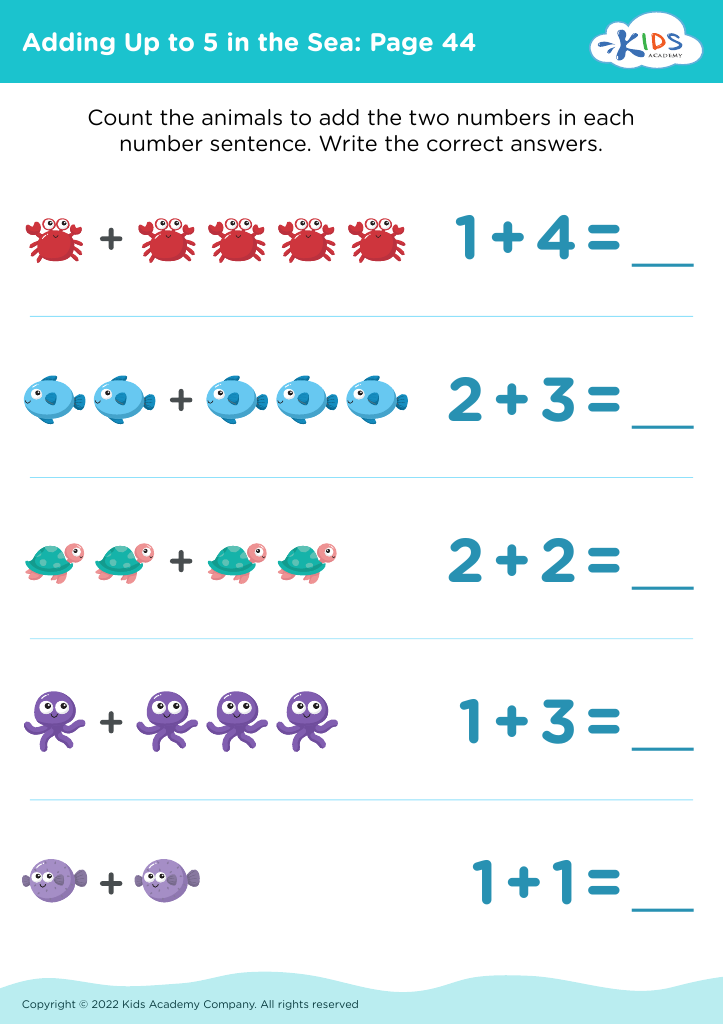
Adding Up to 5 in the Sea: Page 44
Worksheet
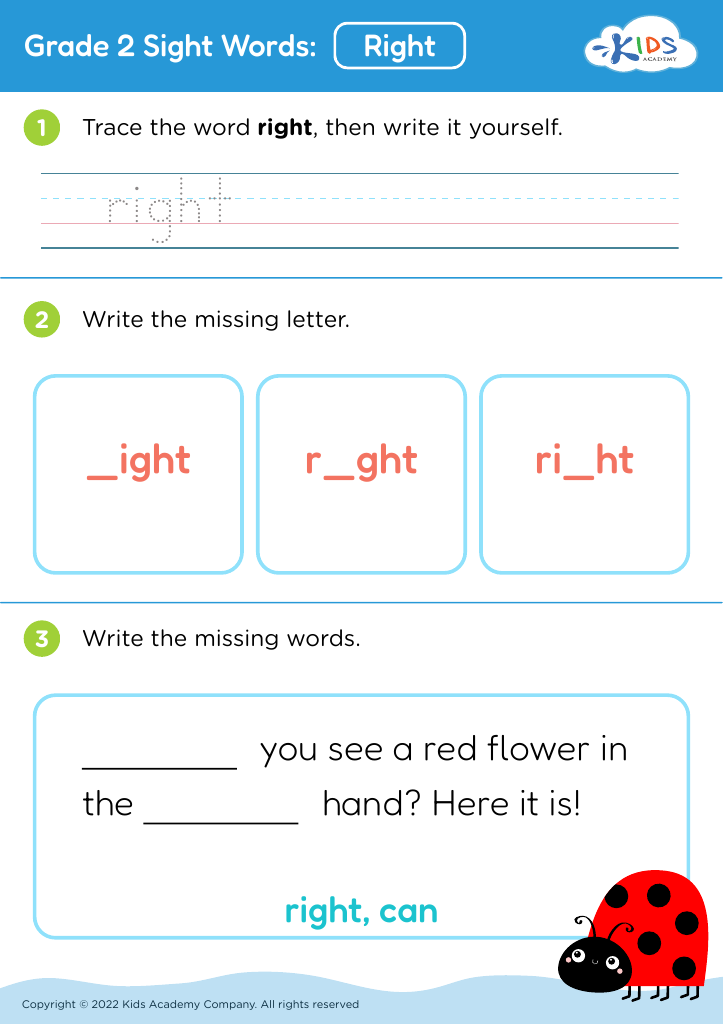
Grade 2 Sight Words: Right

Grade 2 Sight Words: Right

Grade 2 Sight Words: Right
Worksheet
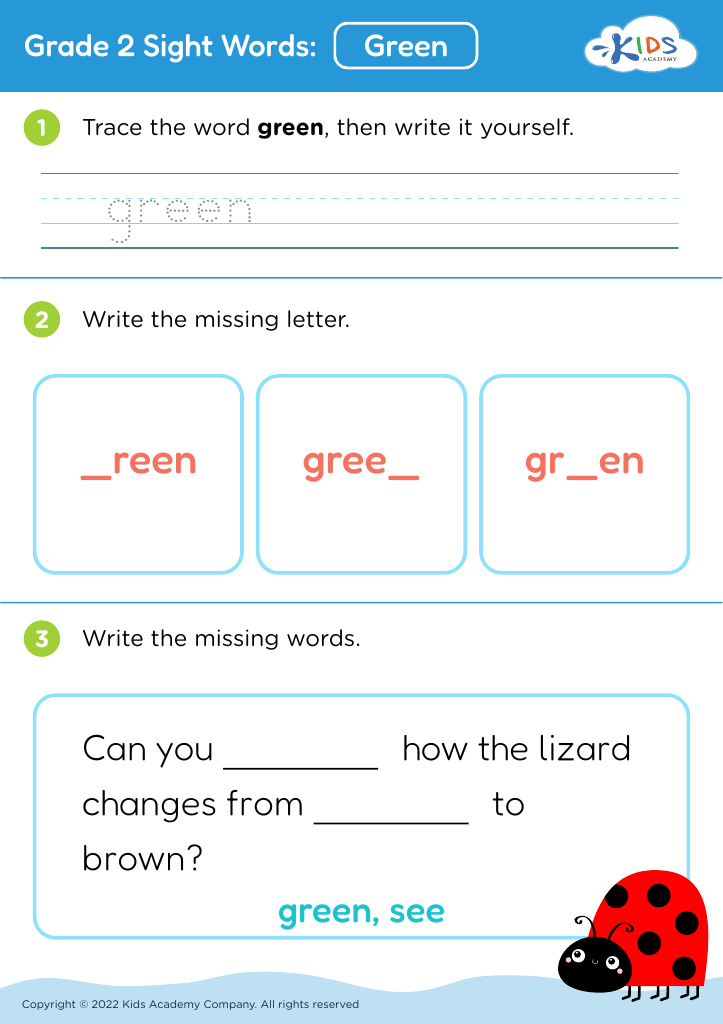
Grade 2 Sight Words: Green

Grade 2 Sight Words: Green

Grade 2 Sight Words: Green
Worksheet
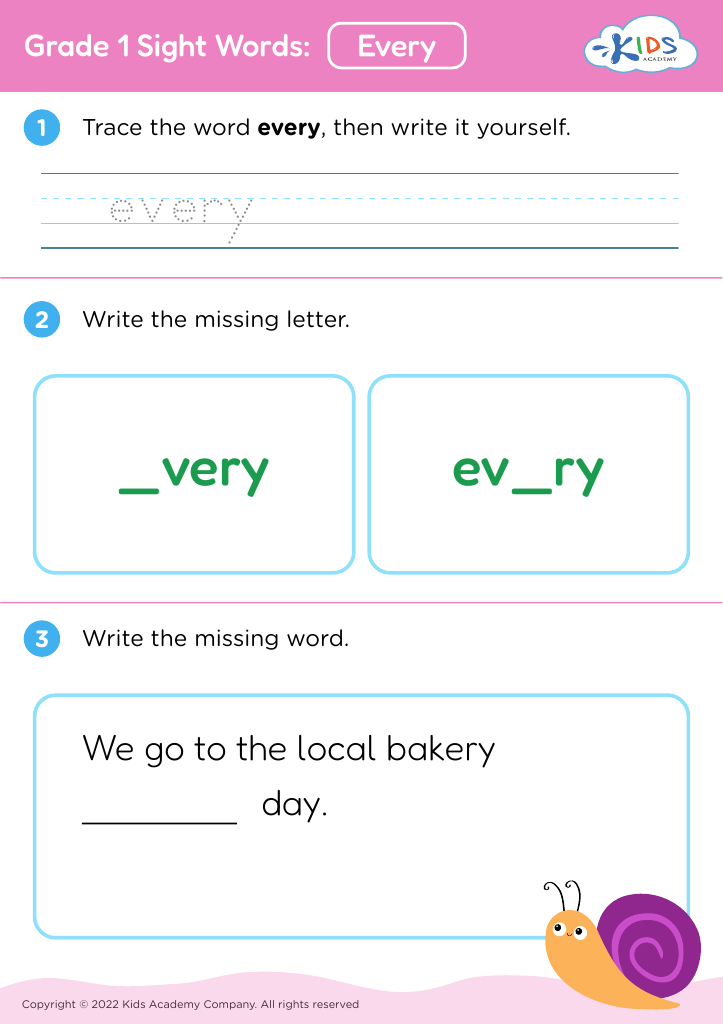
Grade 1 Sight Words: Every

Grade 1 Sight Words: Every

Grade 1 Sight Words: Every
Worksheet
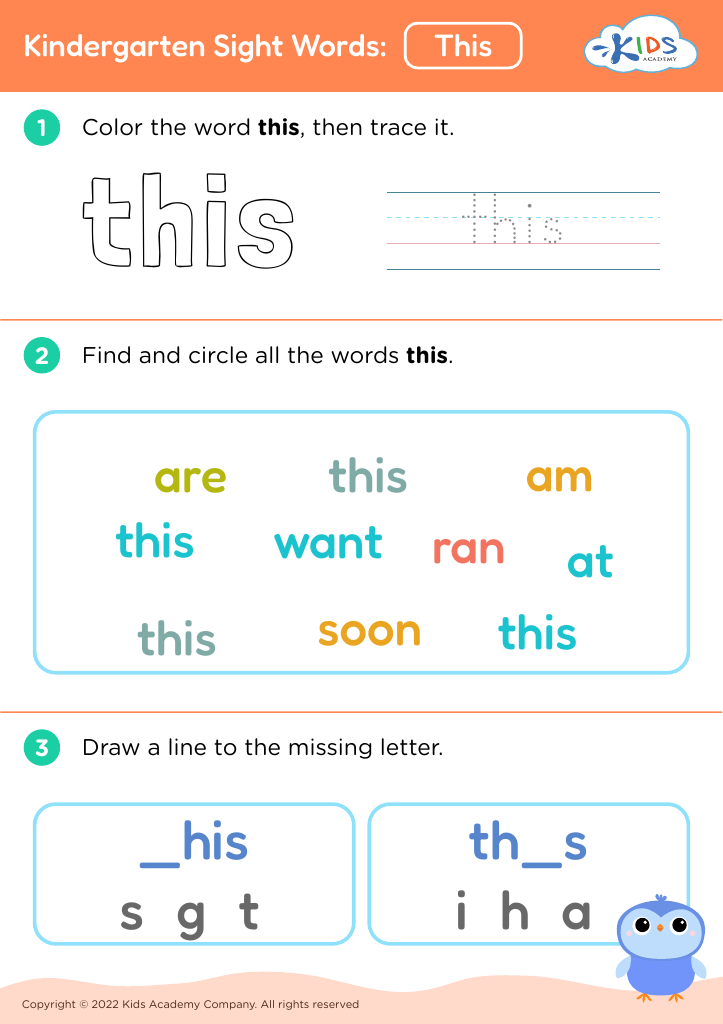
Kindergarten Sight Words: This

Kindergarten Sight Words: This

Kindergarten Sight Words: This
Worksheet
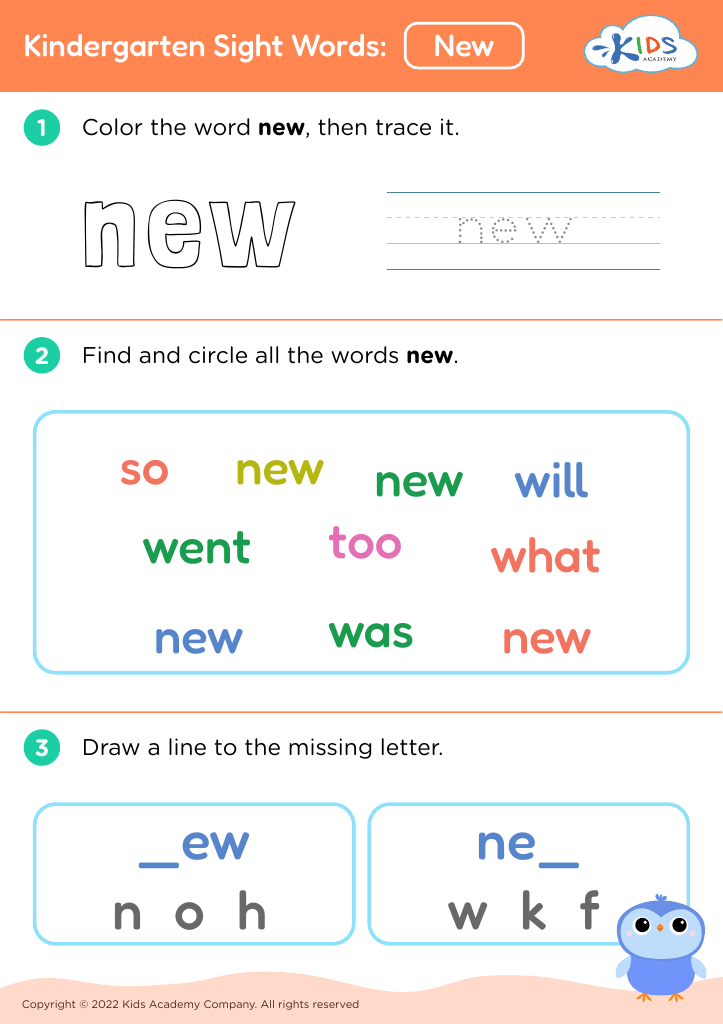
Kindergarten Sight Words: New

Kindergarten Sight Words: New

Kindergarten Sight Words: New
Worksheet


... 15 16

Counting practice for children aged 3-7 is crucial for early cognitive development and lays the foundation for future math skills. During these formative years, children are naturally curious and eager to explore numbers. Engaging in counting activities enriches their understanding of one-to-one correspondence, quantity recognition, and number sequencing.

Parents and teachers should recognize that counting is more than just memorizing numbers; it encourages critical thinking and problem-solving skills. Through counting, children learn to classify objects, which enhances their organizational skills and mathematical reasoning. Additionally, incorporating counting into daily routines, such as counting toys or snacks, makes learning fun and relevant.

Moreover, regular counting practice fosters a sense of accomplishment and confidence in children. As they master counting skills, they gain a positive attitude towards math, which can help alleviate math anxiety in later years. Early engagement with numbers also supports language development, as children learn to articulate numbers and quantities.

In summary, counting practice is essential for fostering a strong numerical foundation, promoting cognitive and social skills, and building a positive relationship with mathematics, making it a priority for both parents and teachers in a child's learning journey.