Detail identification Worksheets for Ages 3-7
3 filtered results
-
From - To
Our Detail Identification Worksheets for Ages 3-7 are expertly designed to cultivate critical observation skills in young learners. Featuring engaging and colorful activities, these printables help children recognize and differentiate key details in various images and patterns, enhancing their attention to detail. Ideal for preschool and early elementary students, our worksheets support cognitive development while making learning both fun and effective. These activities not only lay the foundation for academic success but also prepare kids for real-world problem-solving, making them indispensable tools for parents and teachers alike who aim to foster a keen sense of observation in their little ones.
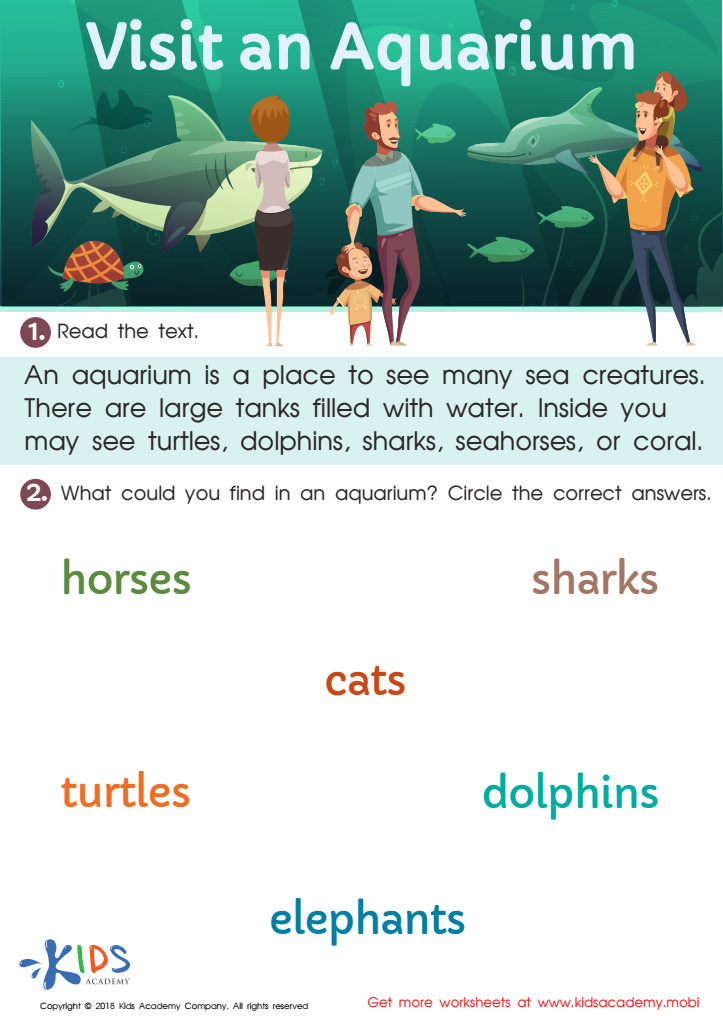
Visit an Aquarium Worksheet
 Assign to My Students
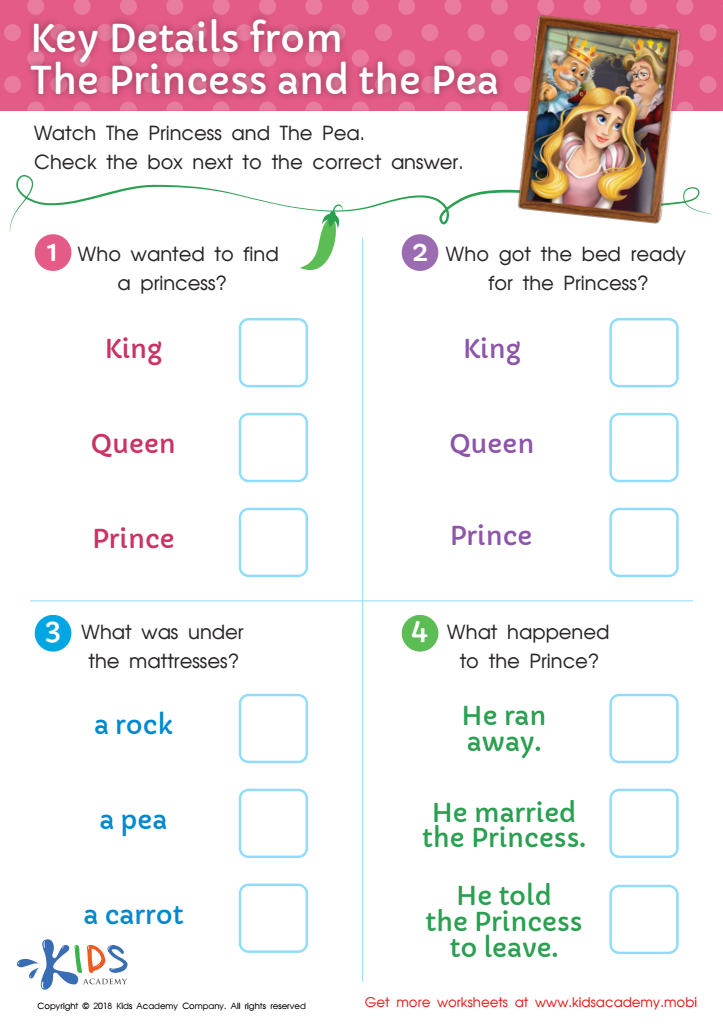
Key Details from the Princess and the Pea Worksheet
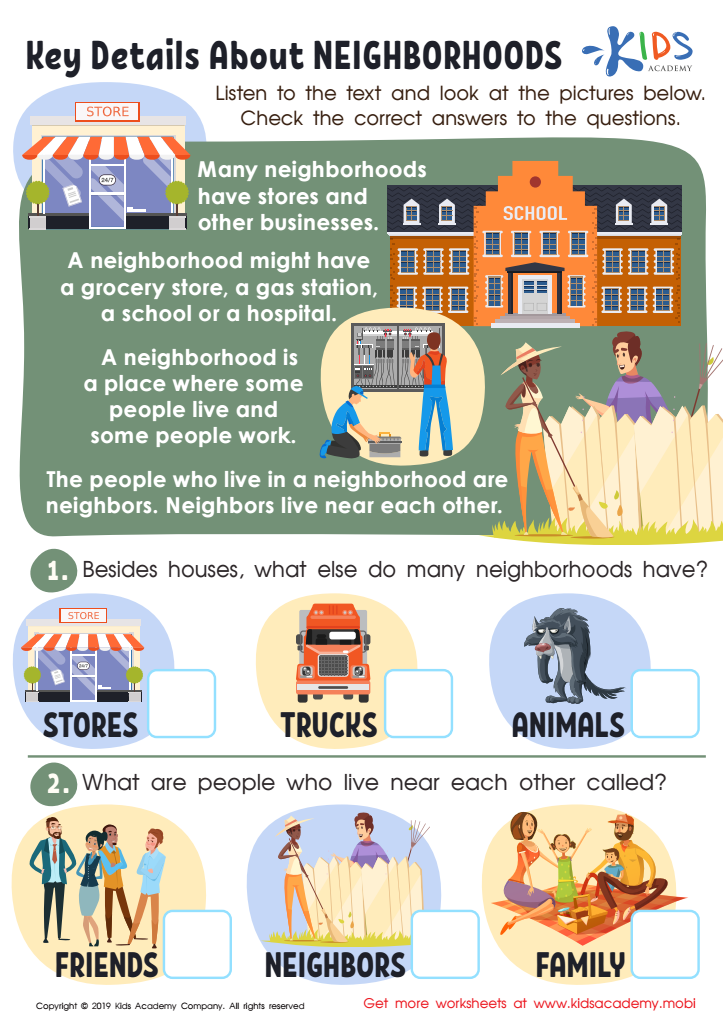
Key Details Neighborhoods Worksheet







Detail identification is crucial for young children aged 3-7, both for parents and teachers, because it underpins several foundational skills vital for their overall development. At this developmental stage, children are rapidly growing their cognitive abilities, and recognizing details plays a pivotal role. Detail identification helps improve observation skills, fostering curiosity and the ability to note subtle differences and uniqueness in their surroundings. This skill lays the groundwork for reading readiness, as children learn to recognize letters, numbers, shapes, and patterns which are essential components of literacy and numeracy.
Focusing on details also enhances children's concentration and attention span. In a classroom setting, these skills are imperative for following instructions and completing tasks efficiently. For parents, nurturing this ability at home can lead to a more inquisitive and observant child, eager to explore and learn continuously.
Moreover, detail identification aids in developing problem-solving skills. As children figure out puzzles or notice discrepancies, they learn critical thinking and resilience. This encourages an attitude that challenges can be approached systematically and creatively.
In summary, detail identification provides a scaffold for future academic success and personal growth, fostering skills essential for effective learning and interaction with the world. Parents and teachers who emphasize this skill equip children with vital tools for lifelong curiosity and cognitive development.








