Division practice Worksheets for Ages 3-7
7 filtered results
-
From - To
Enhance your child's math skills with our engaging Division Practice Worksheets specifically designed for ages 3-7. These worksheets provide a fun and interactive way to introduce division concepts through colorful visuals and age-appropriate activities. Children will develop their understanding of sharing, grouping, and basic division through lively exercises tailored to their learning pace. Ideal for at-home learning or classroom settings, these worksheets encourage critical thinking and strengthen foundation math skills while retaining the attention of young learners. Download our Division Practice Worksheets today, and watch your child's confidence and love for math grow! Explore educational fun and empower your child's learning journey!
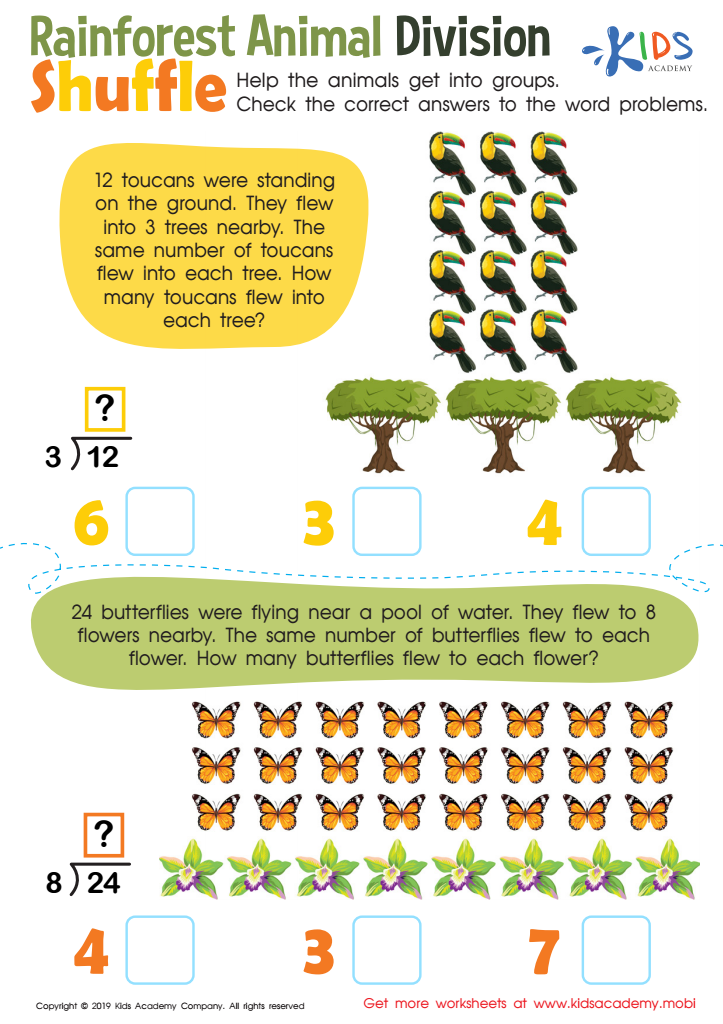
Rainforest Animal Division Worksheet
 Assign to My Students
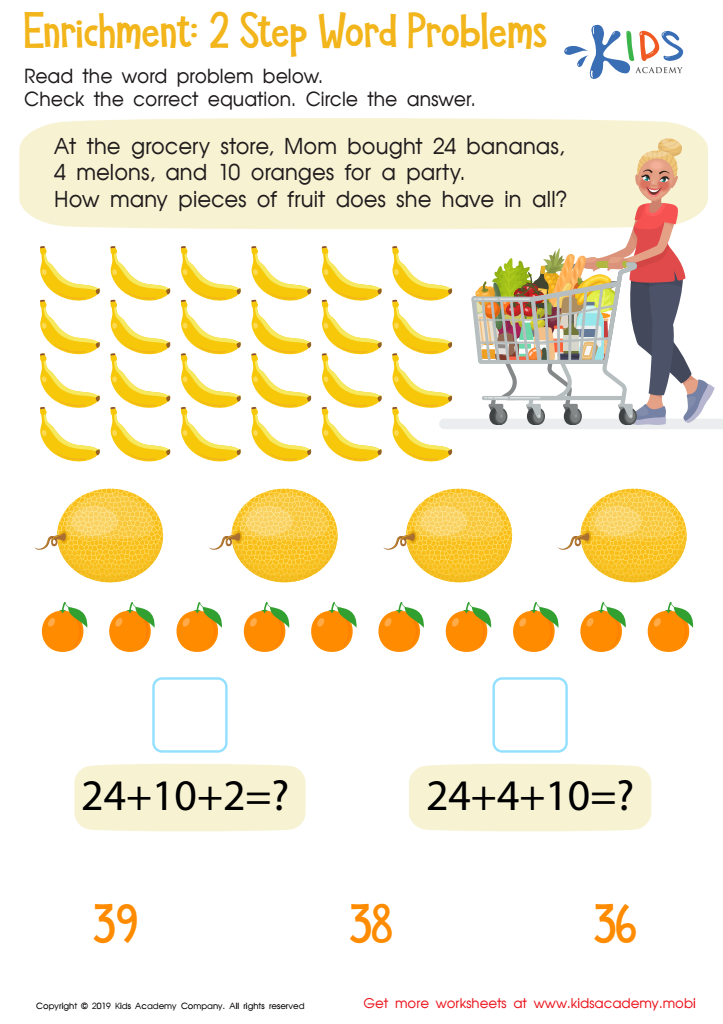
Enrichment -2 Step Word Problems Worksheet
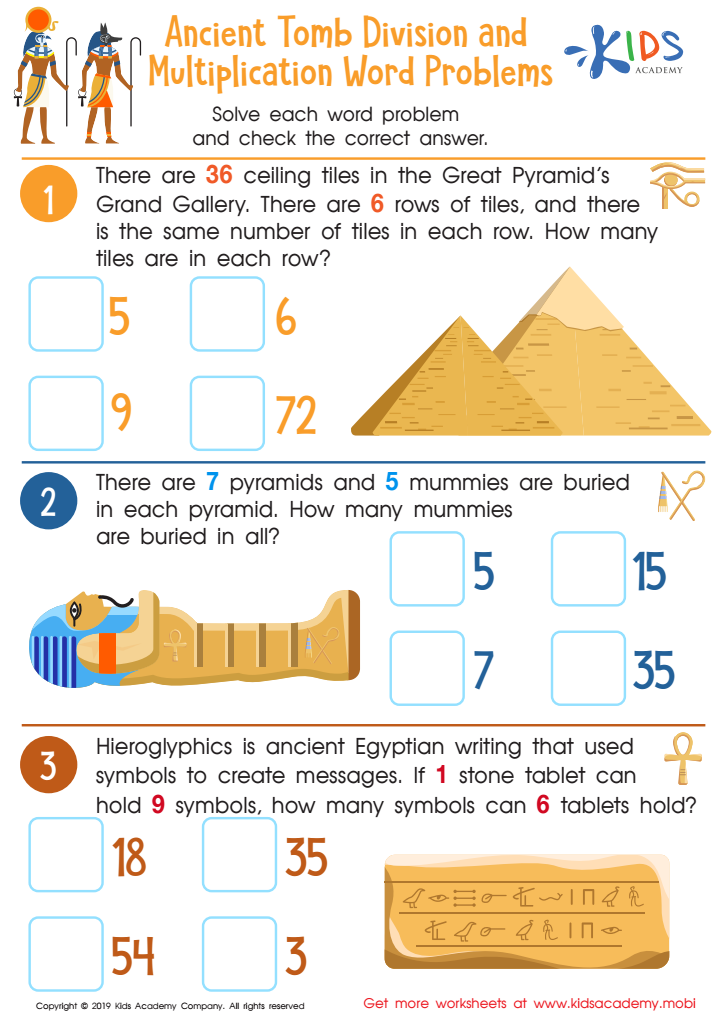
Ancient Tomb Division and Multiplication Word Problems Worksheet
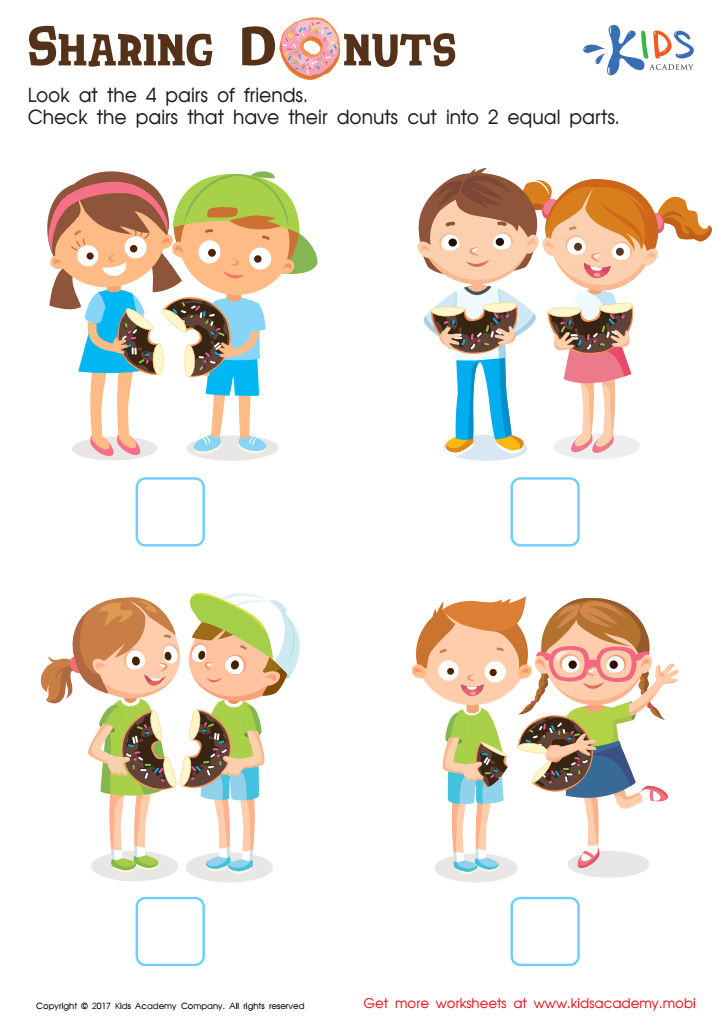
Sharing Donuts Worksheet
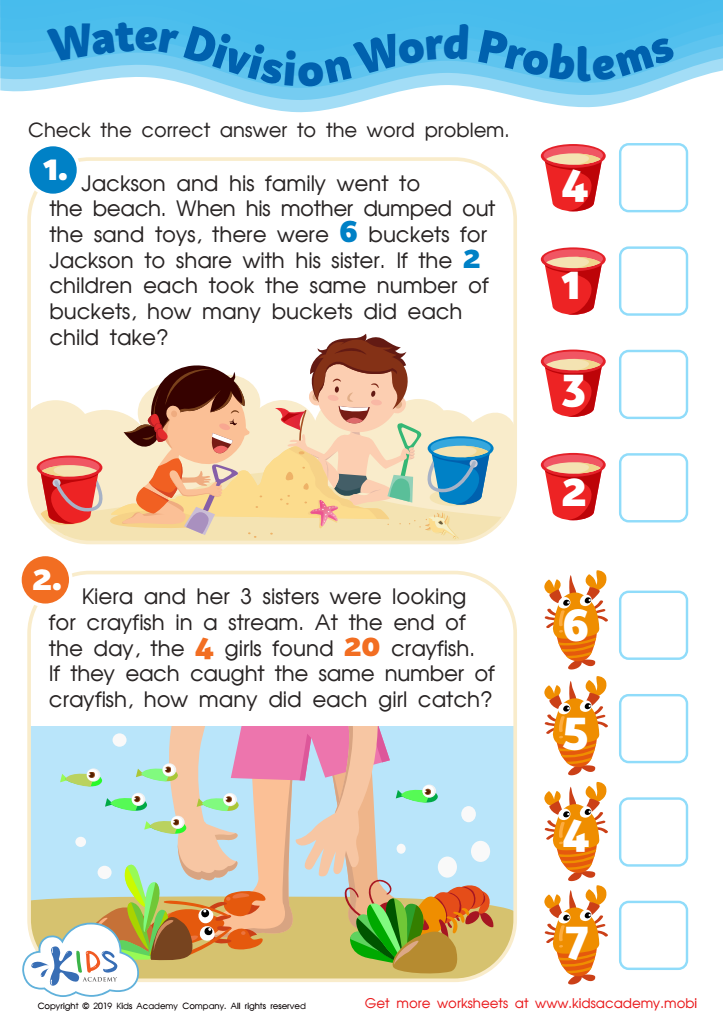
Water Division Word Problems Worksheet
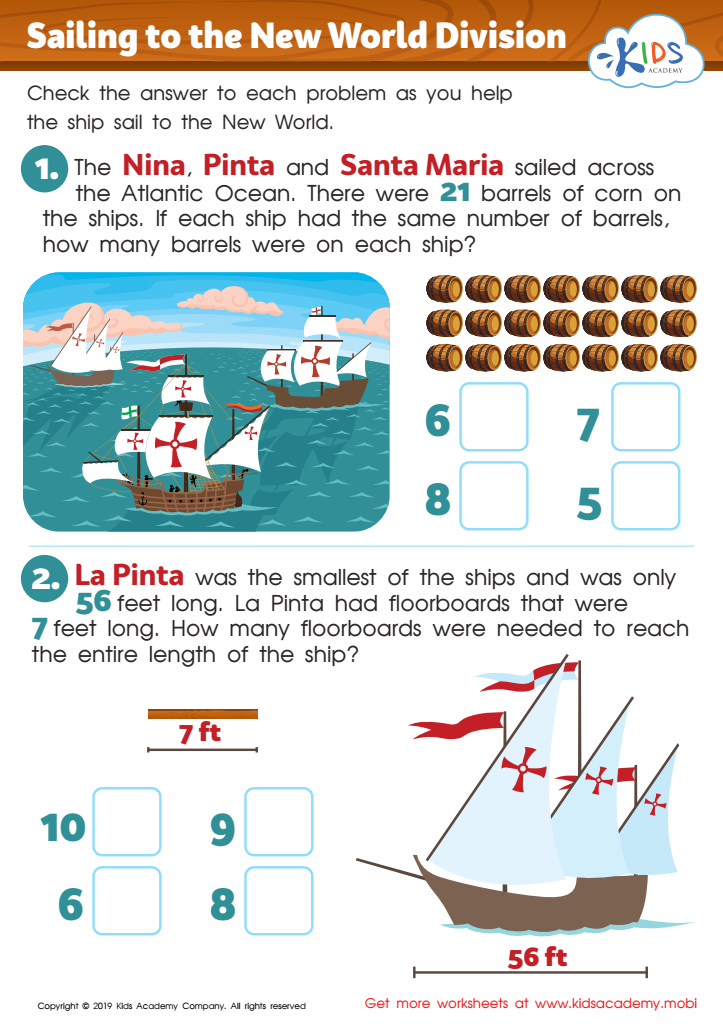
Sailing to the New World Division Worksheet






.jpg)

Division practice for children ages 3-7 is crucial as it lays the foundation for their mathematical understanding. During these formative years, children develop essential cognitive skills. Introducing division concepts, even in simple forms, promotes logical thinking and problem-solving abilities crucial for future math education.
Division is not just about numbers; it helps children understand sharing and fairness in real-life scenarios. By engaging children in playful activities that involve dividing objects (like toys or food), parents and teachers can make learning relevant and enjoyable. This hands-on approach enhances their comprehension and retention of concepts.
Moreover, mastery of early division skills can build confidence in young learners. When children actively participate in problem-solving, they feel empowered, which boosts their enthusiasm for learning. Additionally, a solid grasp of division aids in more complex mathematical operations encountered later in school, thereby minimizing anxiety around math.
Encouraging division practice fosters critical thinking and social skills as children collaborate on problem-solving tasks. Overall, prioritizing division practice cultivates a strong mathematical foundation essential for academic success and shapes a positive attitude toward learning. It is an investment in their cognitive development that will serve them well into the future.








