
Enhance fine motor skills Worksheets for Ages 3-7
6 filtered results
Difficulty Level
Grade
Age
-
From - To
Subject
Activity
Standards
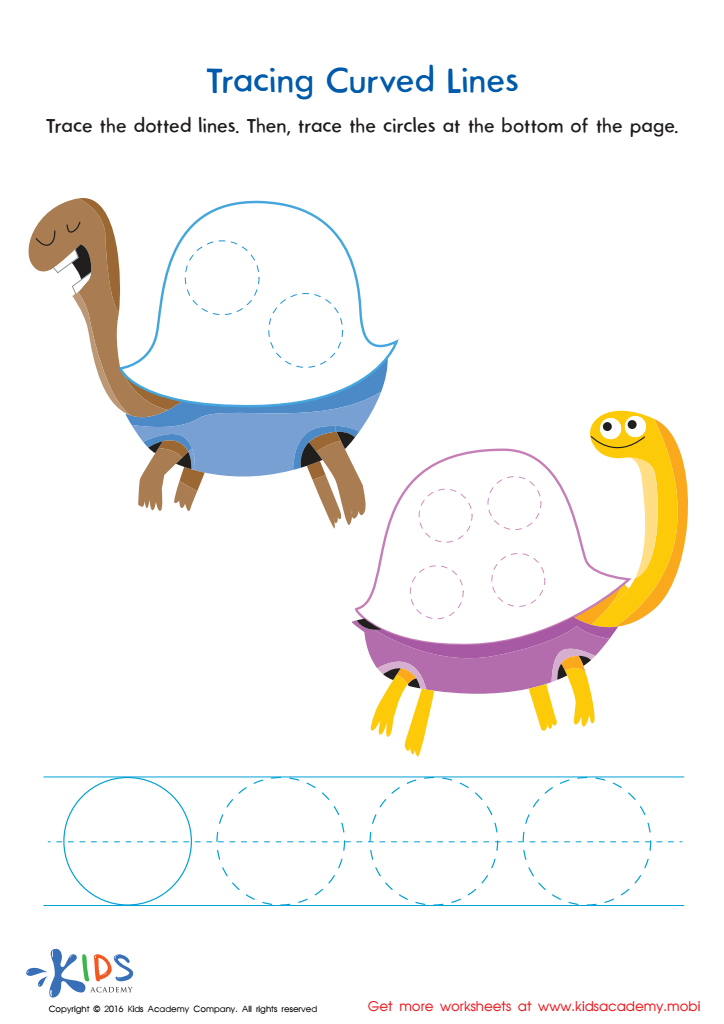
Unlock your child's potential with our "Enhance Fine Motor Skills Worksheets for Ages 3-7" at Kids Academy! Designed specifically for young learners, these engaging worksheets help develop crucial fine motor skills through fun and interactive activities. From tracing shapes and cutting along lines to simple puzzles and drawing exercises, each worksheet aims to improve hand-eye coordination, grip strength, and dexterity. Our expertly crafted resources ensure your little one gains the essential skills needed for writing, self-care, and more. Empower your child's dexterity and confidence—explore our diverse range of printable fine motor skills worksheets today!
Favorites
With answer key
Interactive
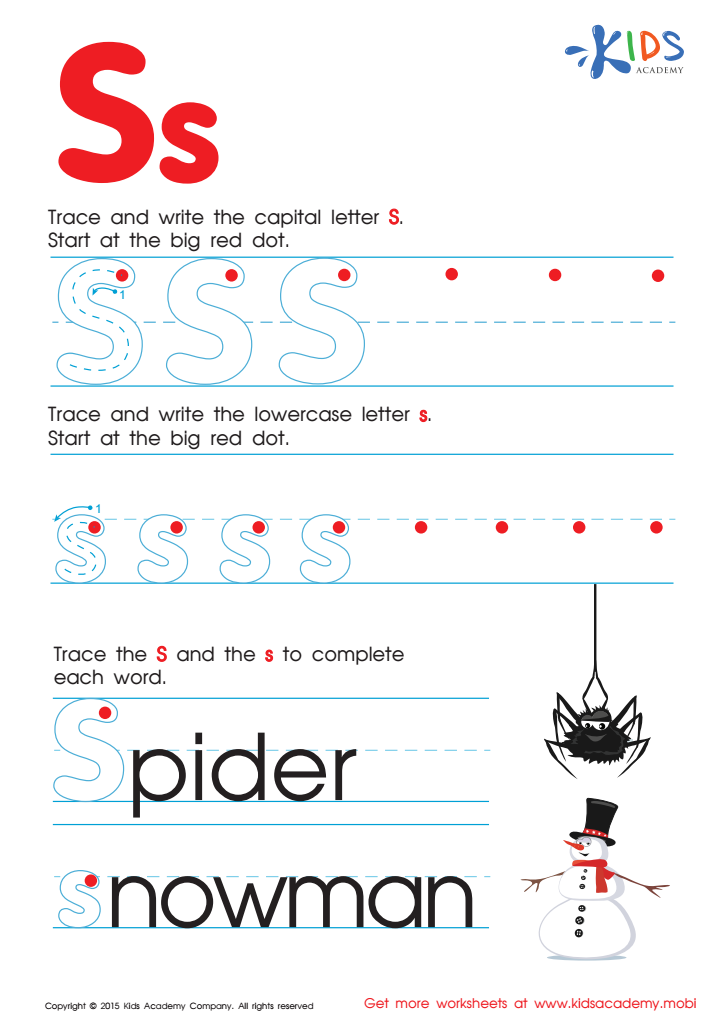
Letter S Tracing Page
Trace and write the capital and lowercase "S" on this ABC worksheet for kindergarten. Start with the big red dot and be careful. When you finish, help the spider and snowman in the pictures restore their words with the capital and lowercase letters. Continue learning the alphabet with Kids Academy.
 Assign to My Students
Letter S Tracing Page
Worksheet
Join Kids Academy for Free
Who is primarily going to use this learning content?







Developing fine motor skills in children aged 3-7 is crucial for numerous aspects of their growth and overall academic achievement. These skills, which involve the coordination of small muscles in the hands and fingers, are foundational for tasks such as writing, buttoning clothes, and tying shoelaces. Strengthening fine motor skills during early childhood facilitates greater independence and self-confidence, essential for day-to-day life.
When children develop strong fine motor skills, they are more adept at participating in classroom activities. Improved pencil grip and control make learning to write smoother and less frustrating, allowing them to concentrate on the content rather than the mechanics of writing. Early art and craft activities, which heavily utilize fine motor skills through cutting, coloring, and pasting, also enhance creativity and imagination.
Moreover, adequate fine motor development is interlinked with cognitive and educational growth. Activities like puzzles and building blocks not only exercise these muscles but also develop problem-solving abilities and spatial awareness. Teachers and parents who focus on activities that improve fine motor skills—such as drawing, using scissors, or playing with small objects—are setting children up for success both academically and personally. Cultivating these skills early ensures that children are better prepared for future challenges, fostering a love for learning and boosting overall development.








