Check out this FREE "Fine motor skills (writing)" Trial Lesson for age 3-7!

Traditions

Favorites
With answer key
Interactive
  • 3-7
  • Fine motor skills (writing)
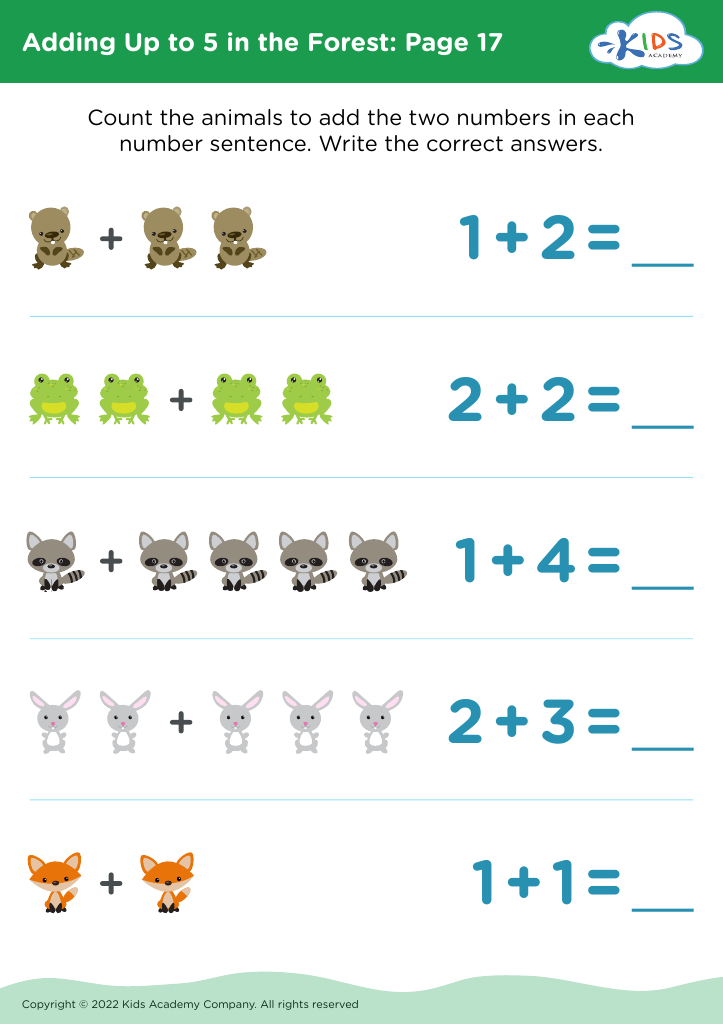
Adding Up to 5 in the Forest: Page 17
Worksheet
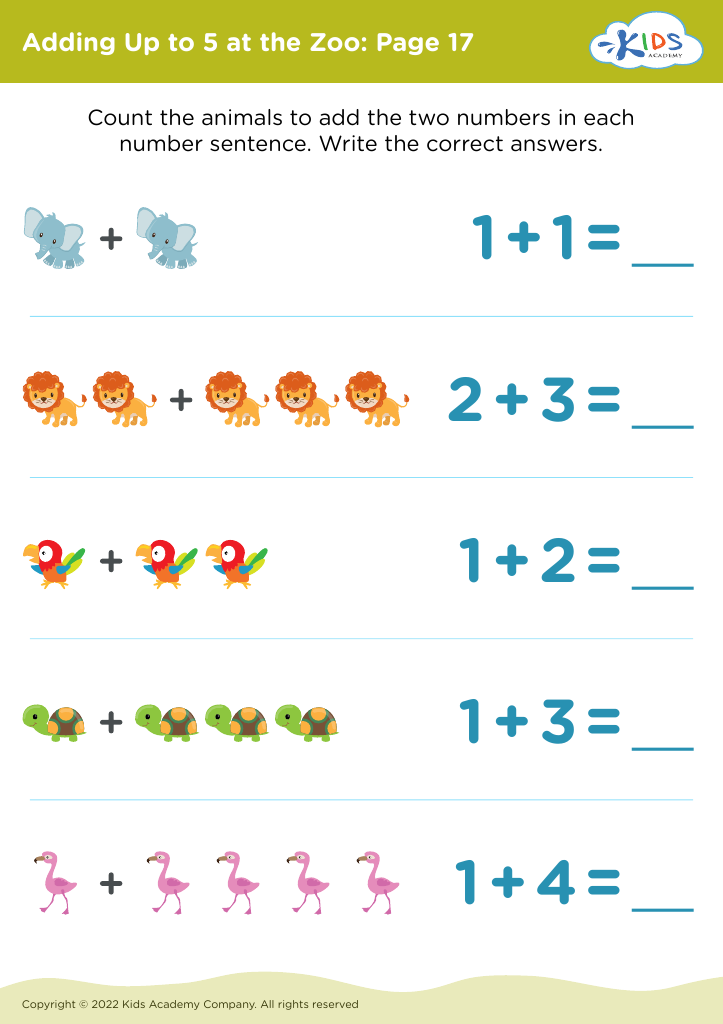
Adding Up to 5 at the Zoo: Page 17
Worksheet
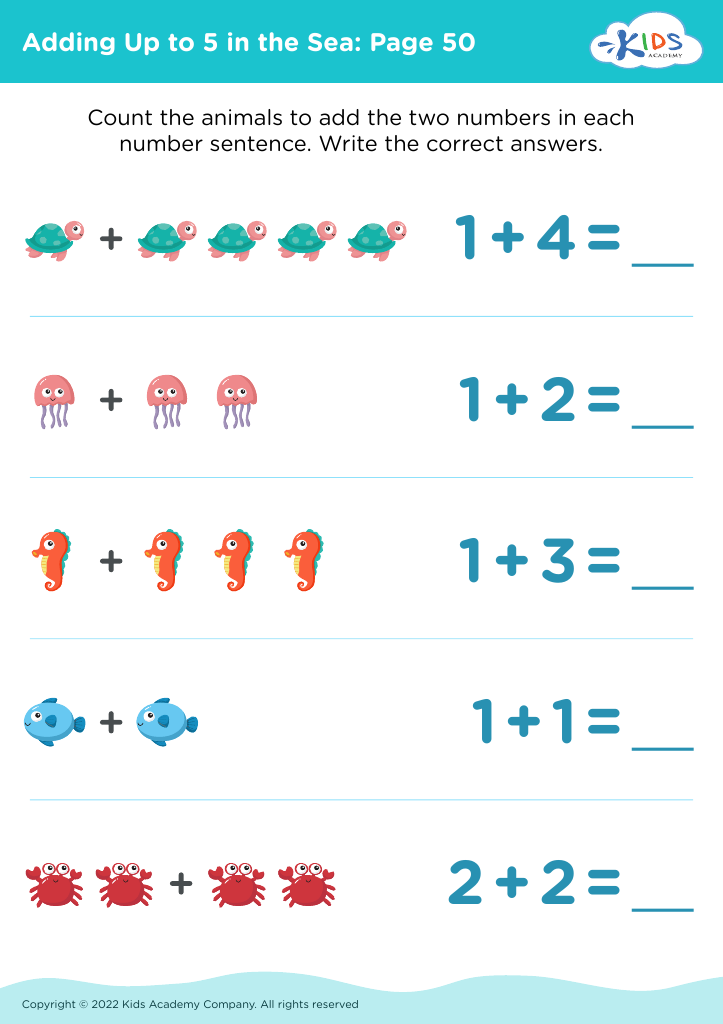
Adding Up to 5 in the Sea: Page 50
Worksheet
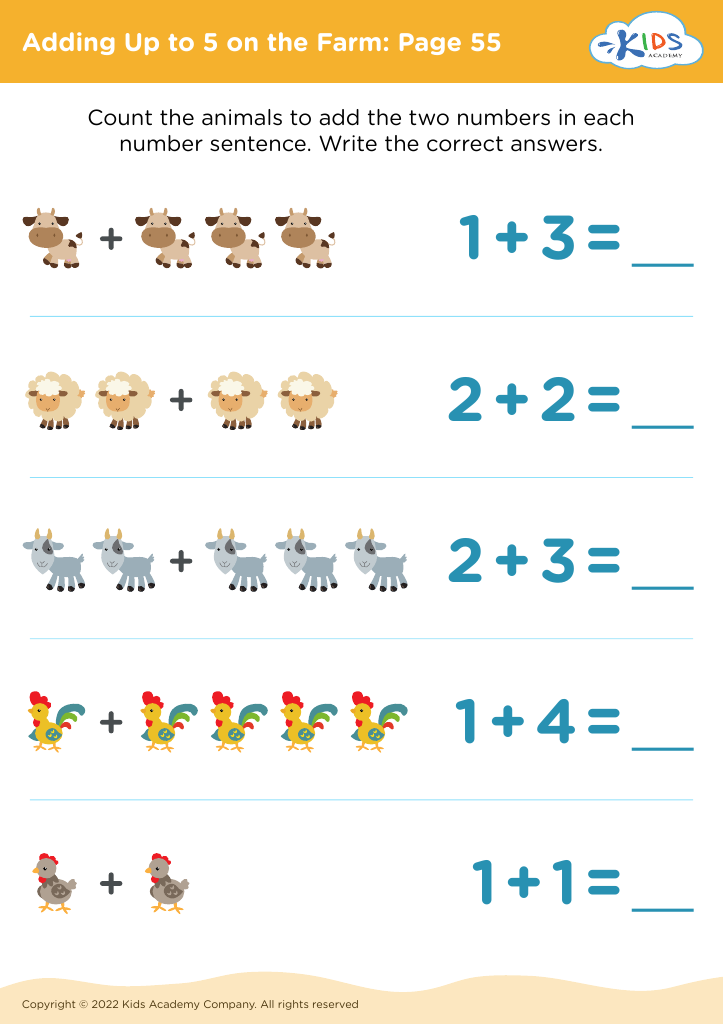
Adding Up to 5 on the Farm: Page 55
Worksheet
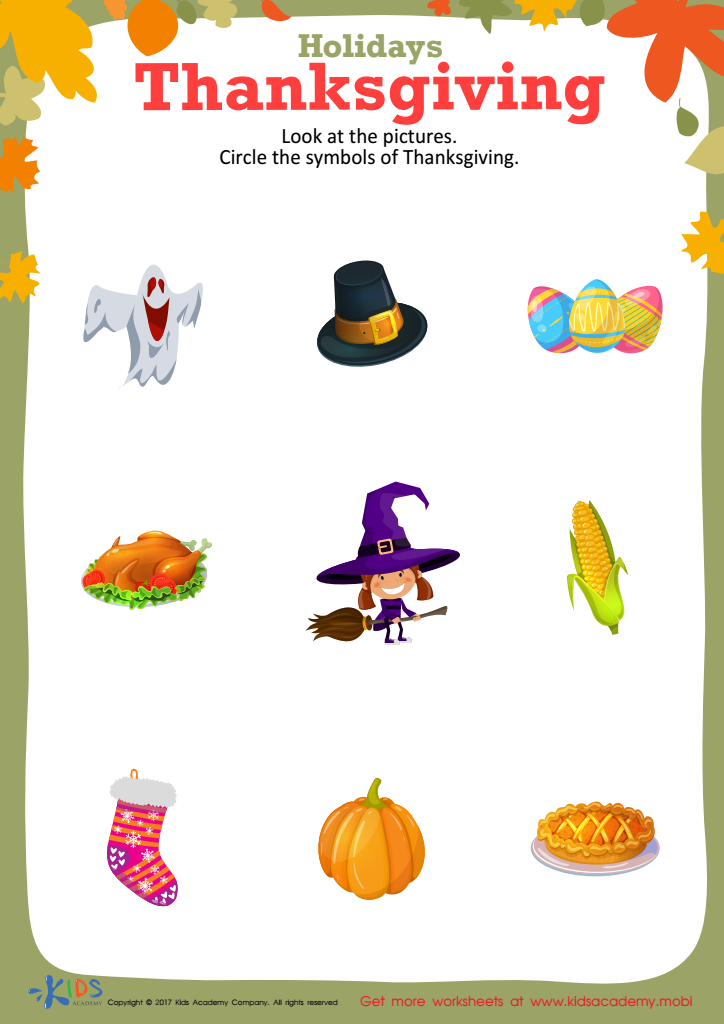
Free printable Thanksgiving worksheet

Thanksgiving Holiday Printable

Thanksgiving is here! Celebrate by showing appreciation and giving thanks. Teach your kids about the iconic symbols of the holiday with this free printable worksheet. Enjoy America's most famous feast!
Thanksgiving Holiday Printable
Worksheet
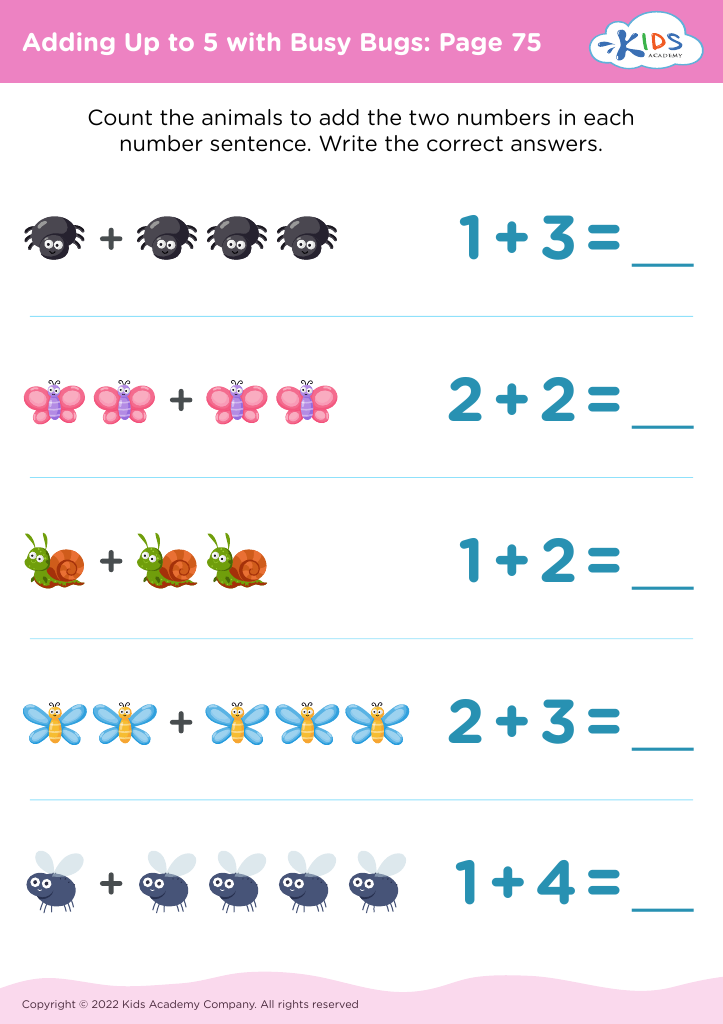
Adding Up to 5 with Busy Bugs: Page 75
Worksheet
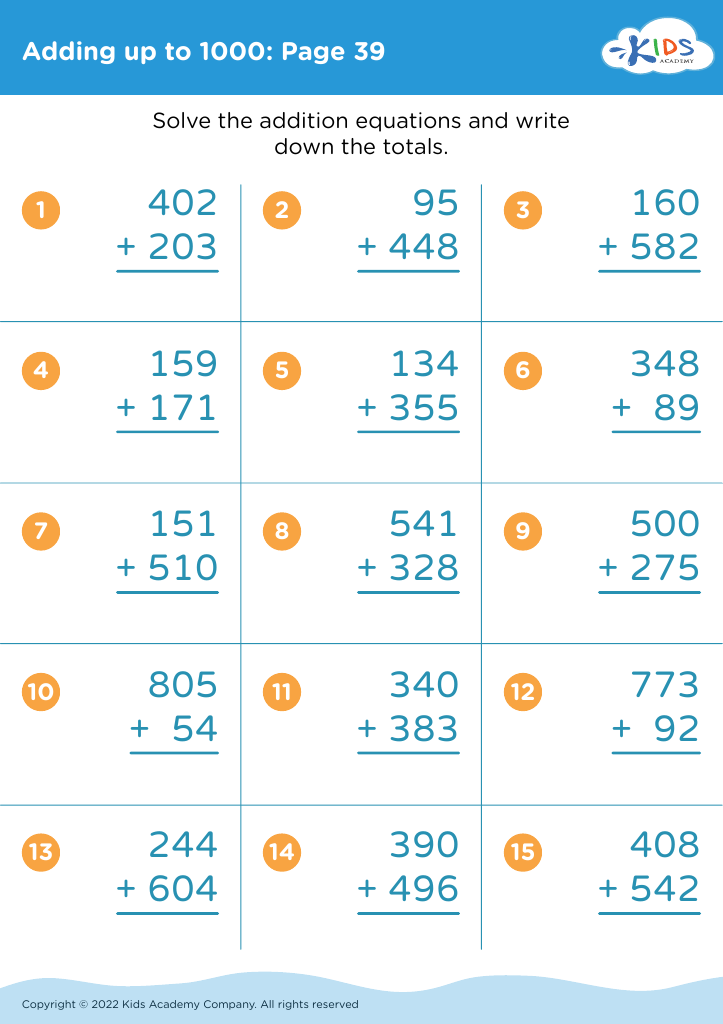
Adding up to 1000: Page 39

Adding up to 1000: Page 39

Adding up to 1000: Page 39
Worksheet
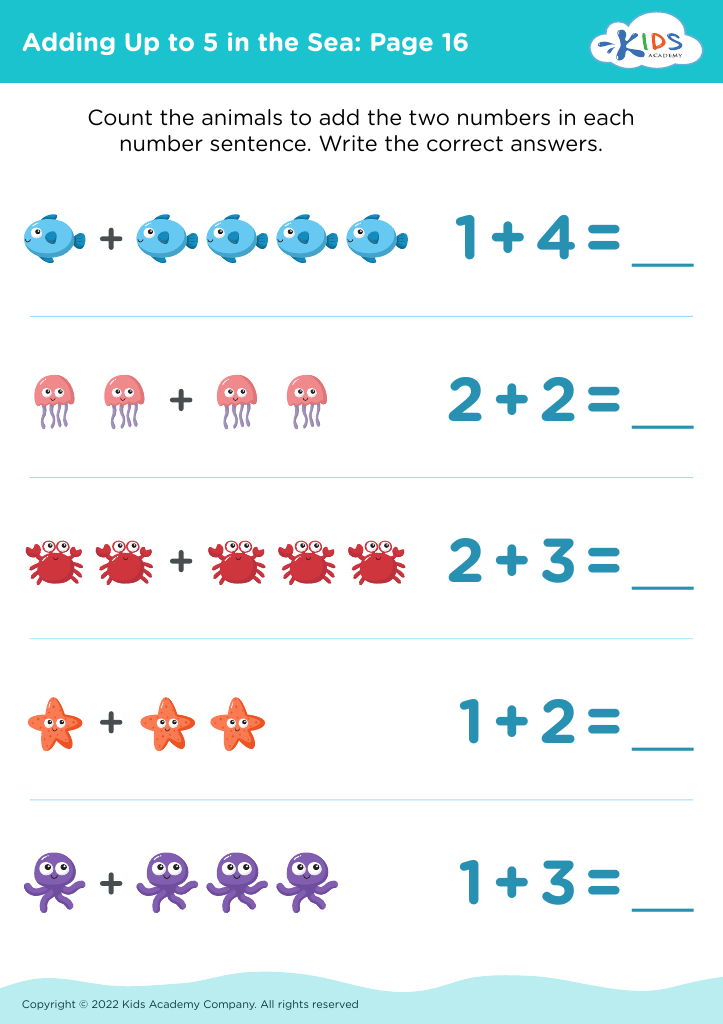
Adding Up to 5 in the Sea: Page 16
Worksheet
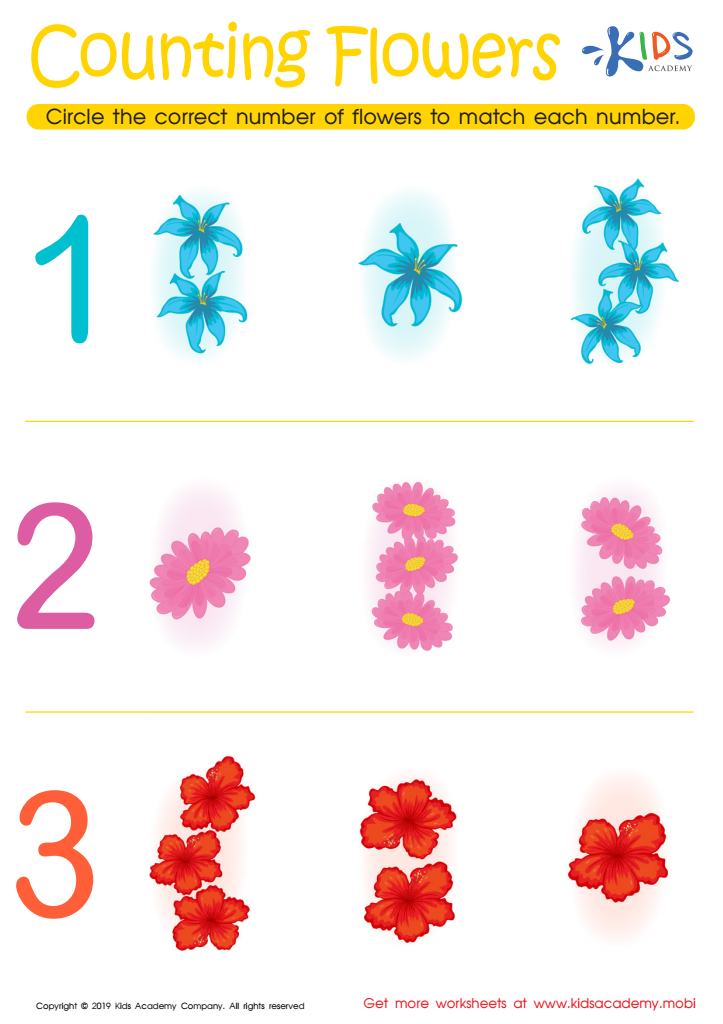
Counting Flowers Worksheet
Counting Flowers Worksheet
Kids love Flower Power! This free PDF helps kids practice basic number sense and counting. They match the correct number of colorful flowers to the corresponding numeral. An enjoyable game that improves basic number sense - perfect!
Counting Flowers Worksheet
Worksheet
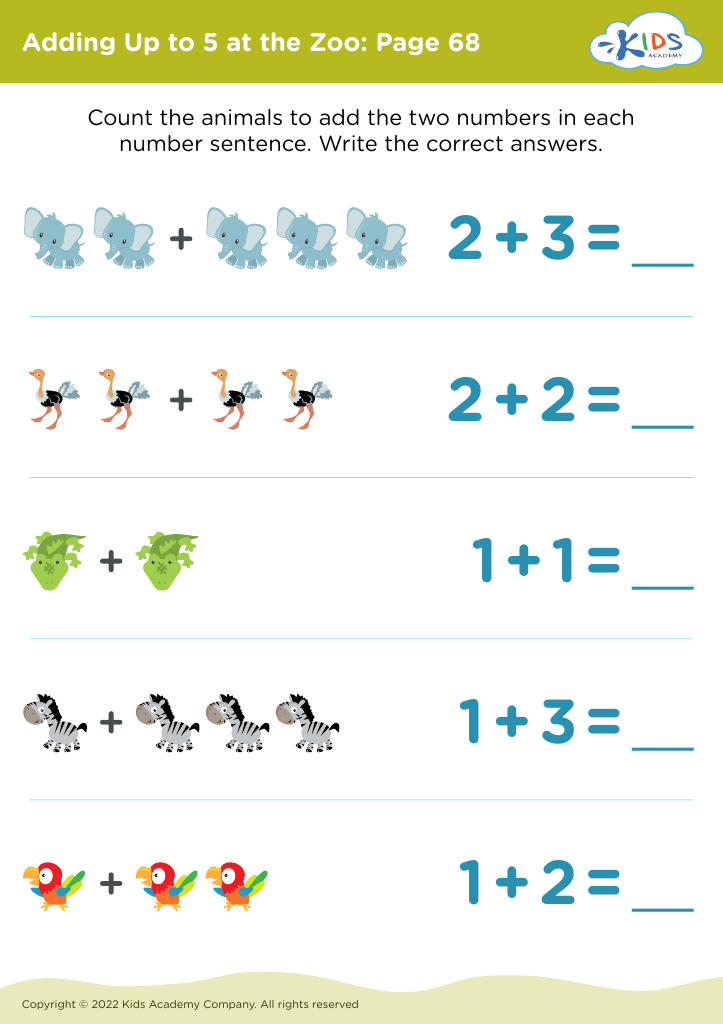
Adding Up to 5 at the Zoo: Page 68
Worksheet
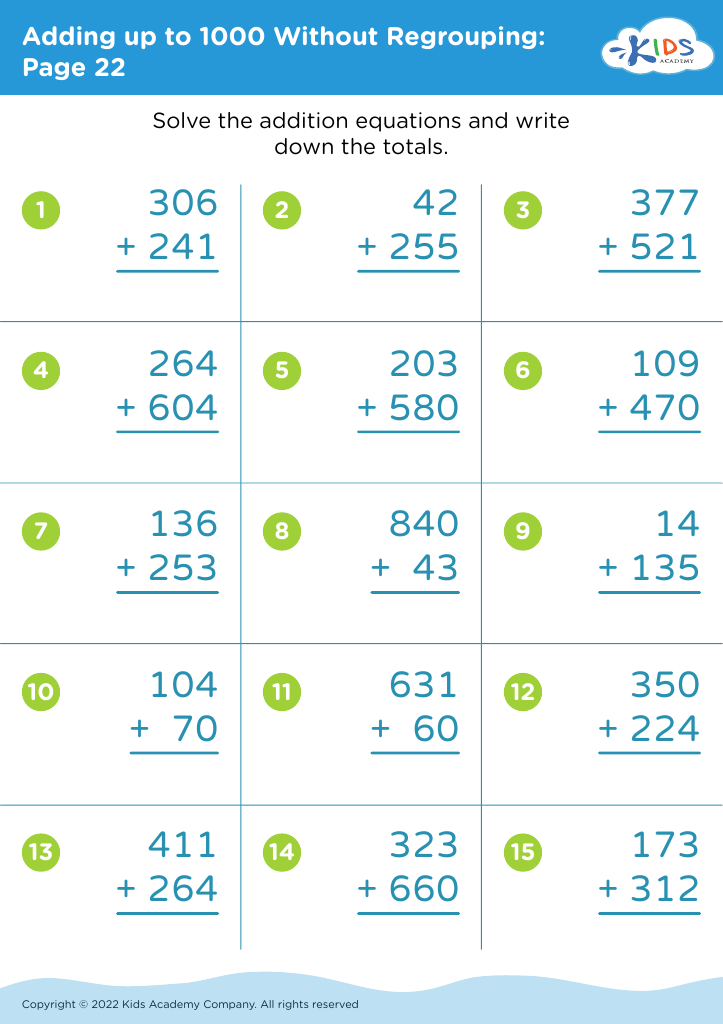
Adding up to 1000 Without Regrouping: Page 22
Worksheet
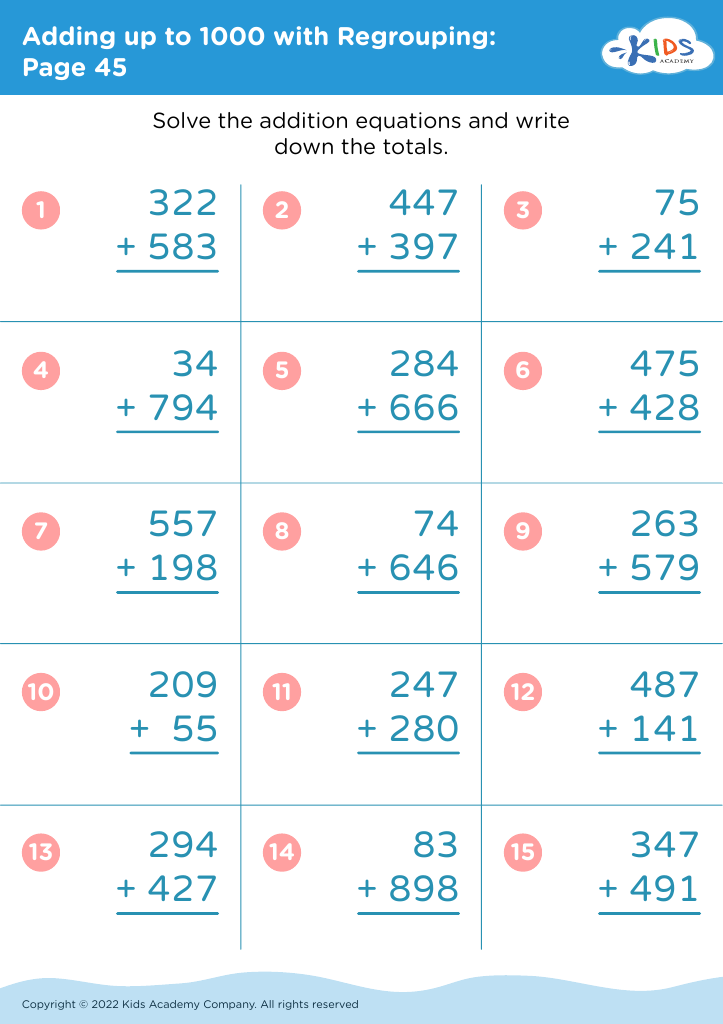
Adding up to 1000 with Regrouping: Page 45
Worksheet
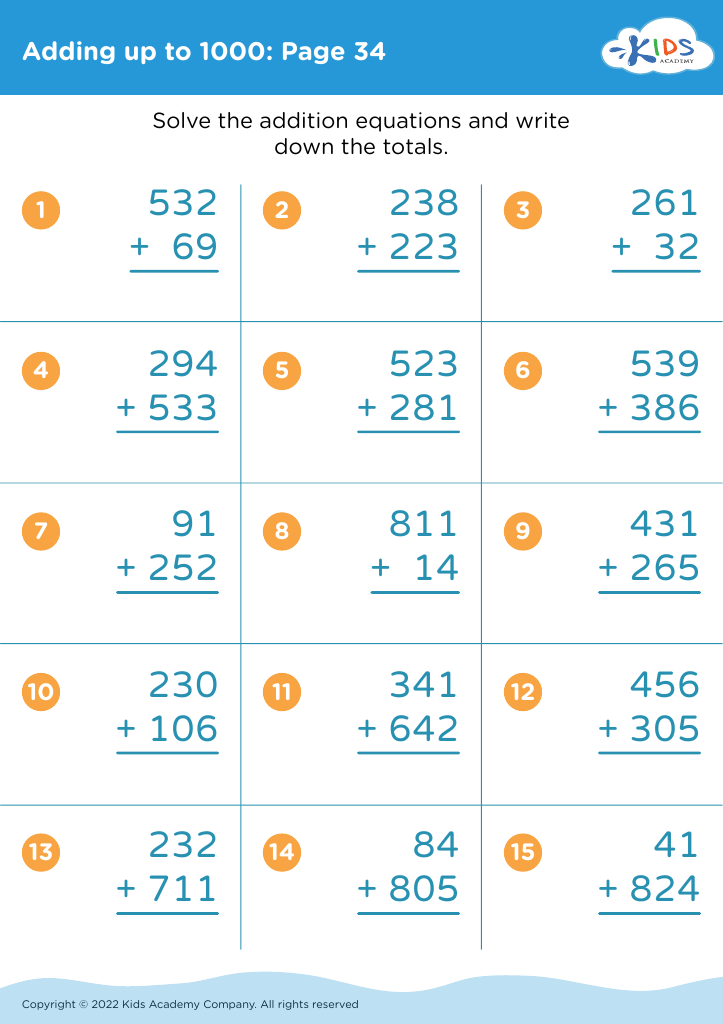
Adding up to 1000: Page 34

Adding up to 1000: Page 34

Adding up to 1000: Page 34
Worksheet
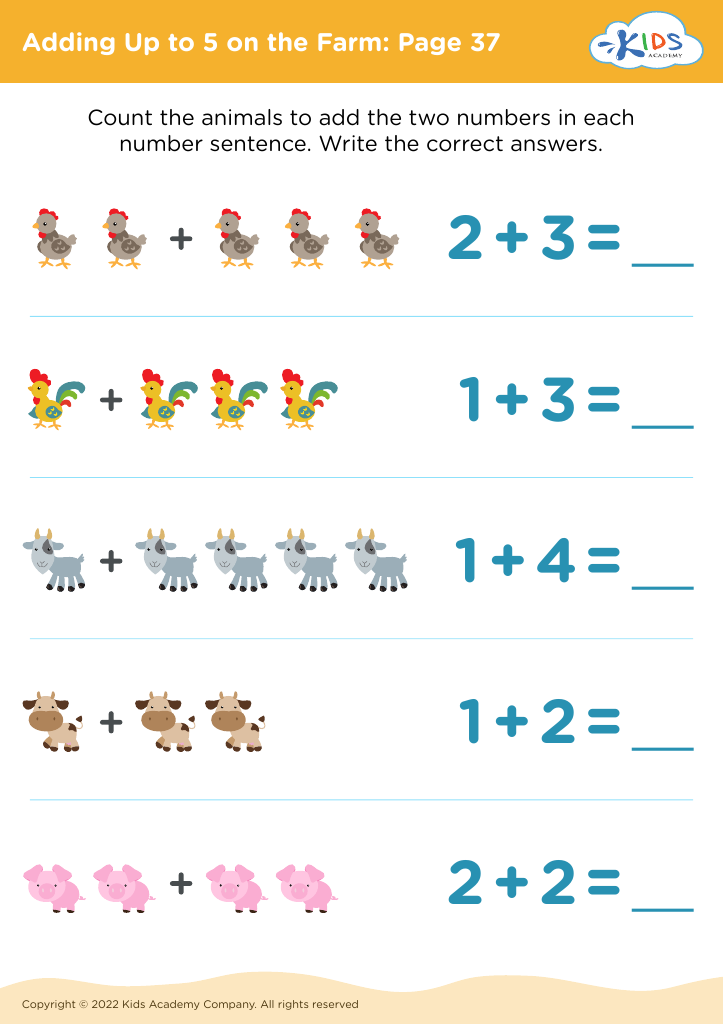
Adding Up to 5 on the Farm: Page 37
Worksheet
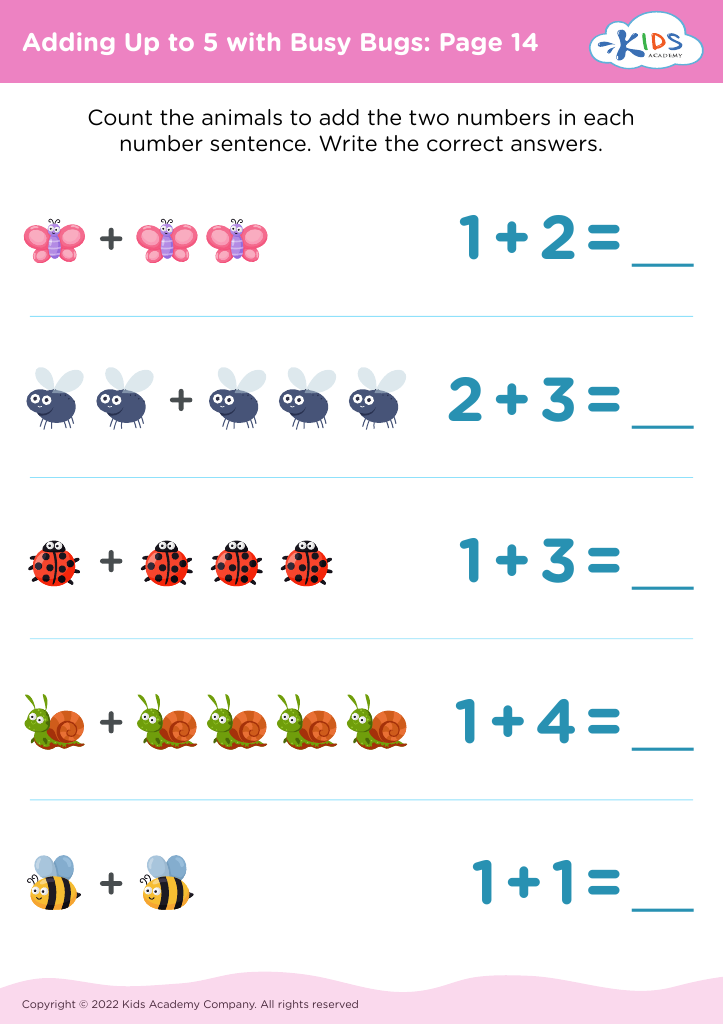
Adding Up to 5 with Busy Bugs: Page 14
Worksheet
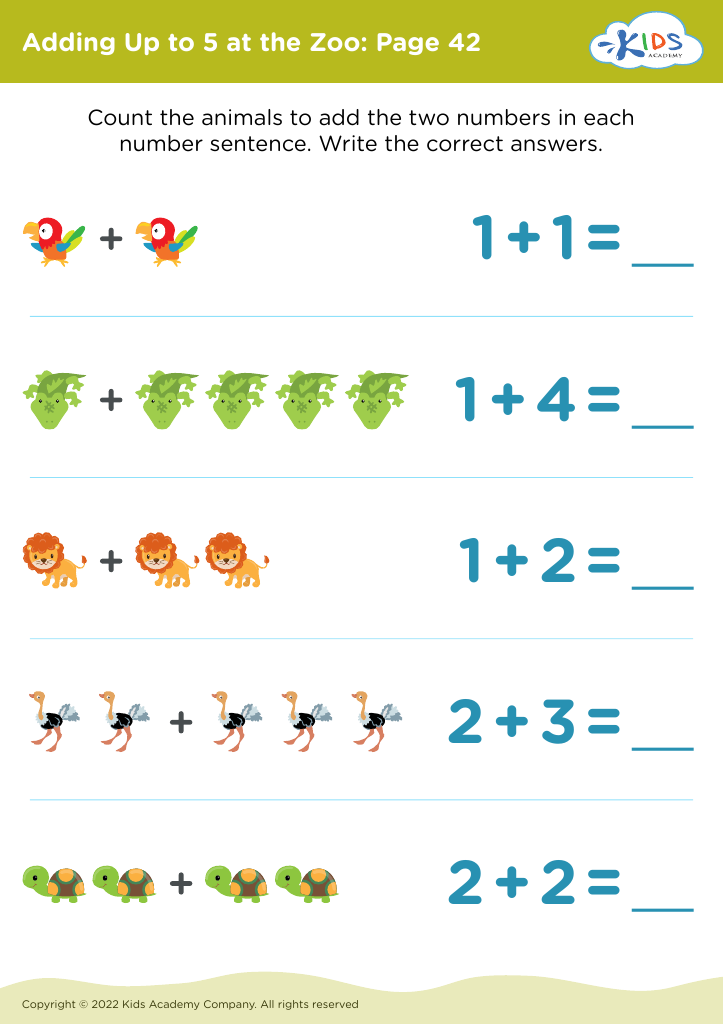
Adding Up to 5 at the Zoo: Page 42
Worksheet
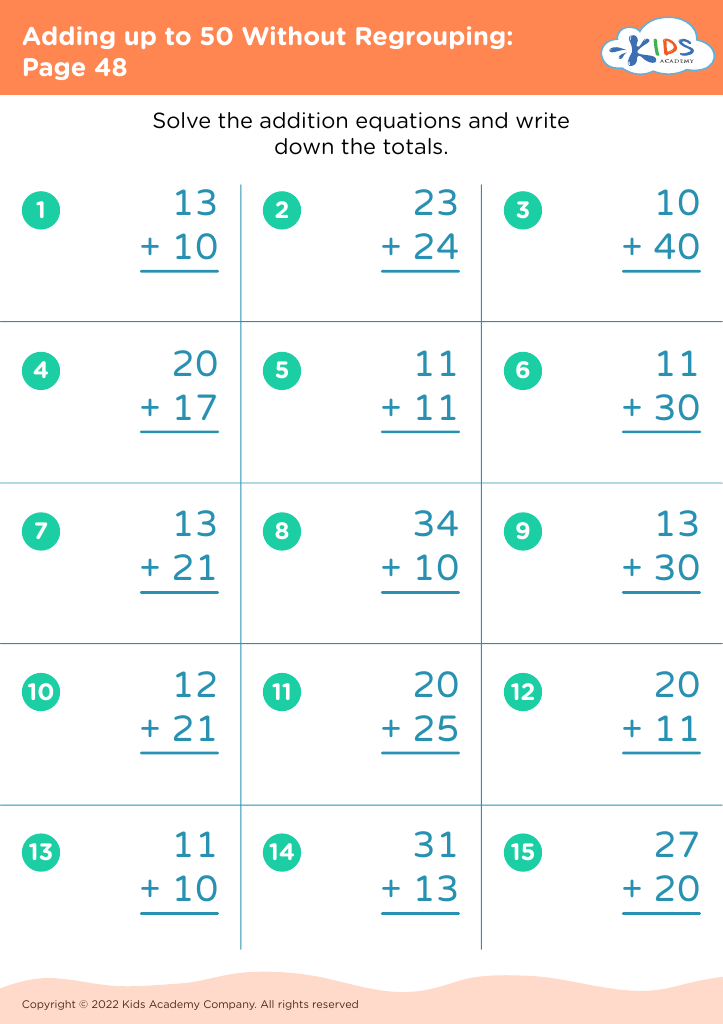
Adding up to 50 Without Regrouping: Page 48
Worksheet
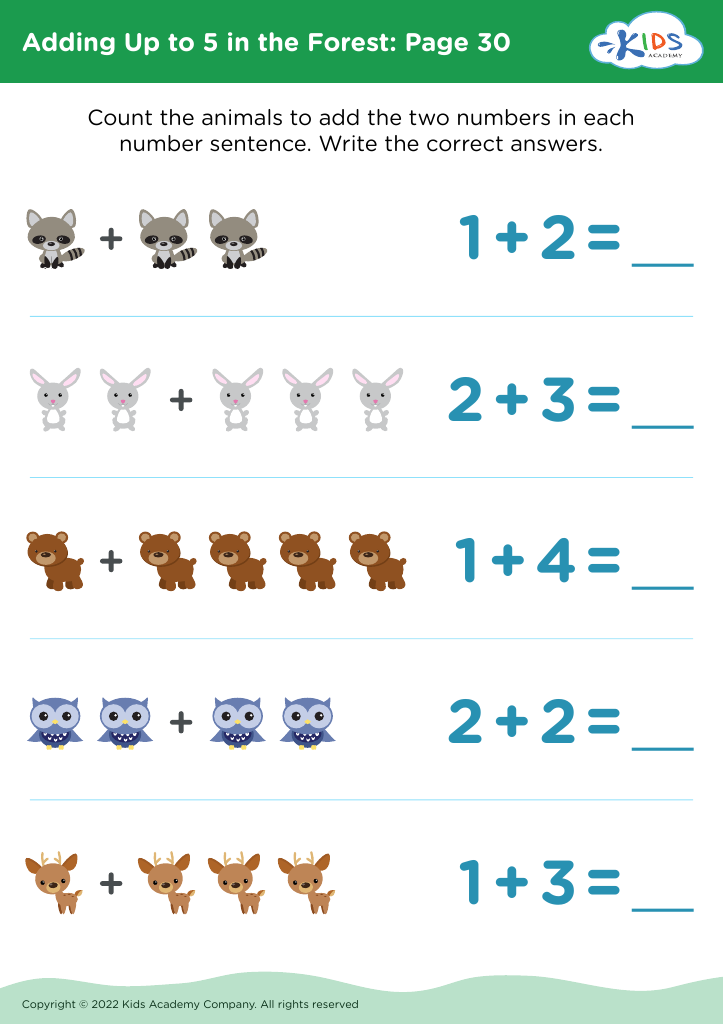
Adding Up to 5 in the Forest: Page 30
Worksheet
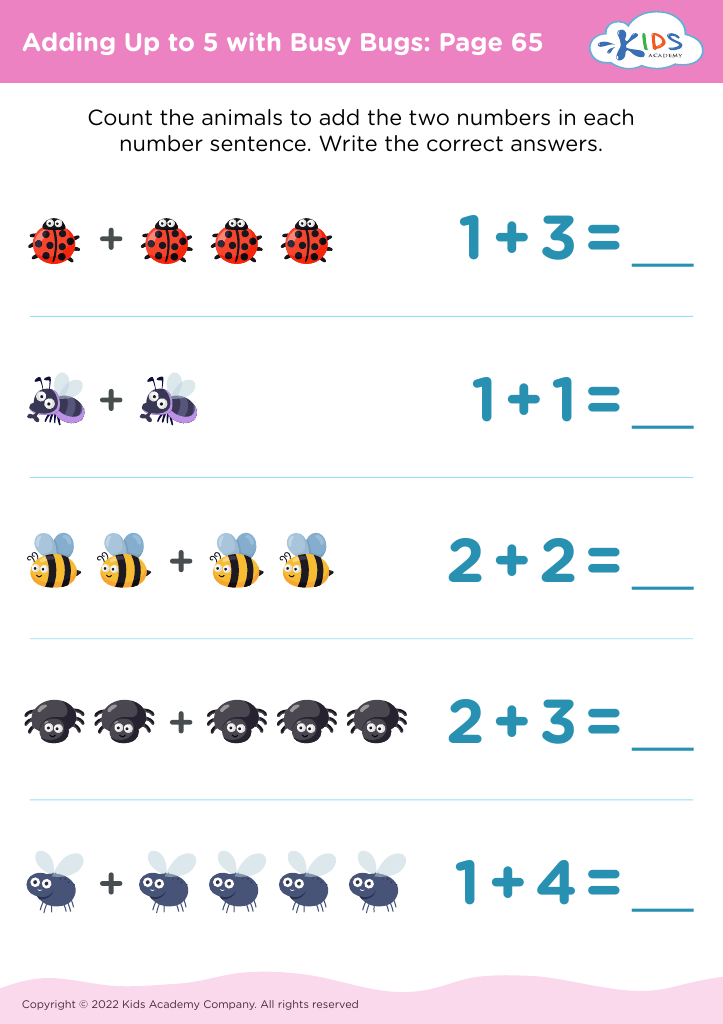
Adding Up to 5 with Busy Bugs: Page 65
Worksheet
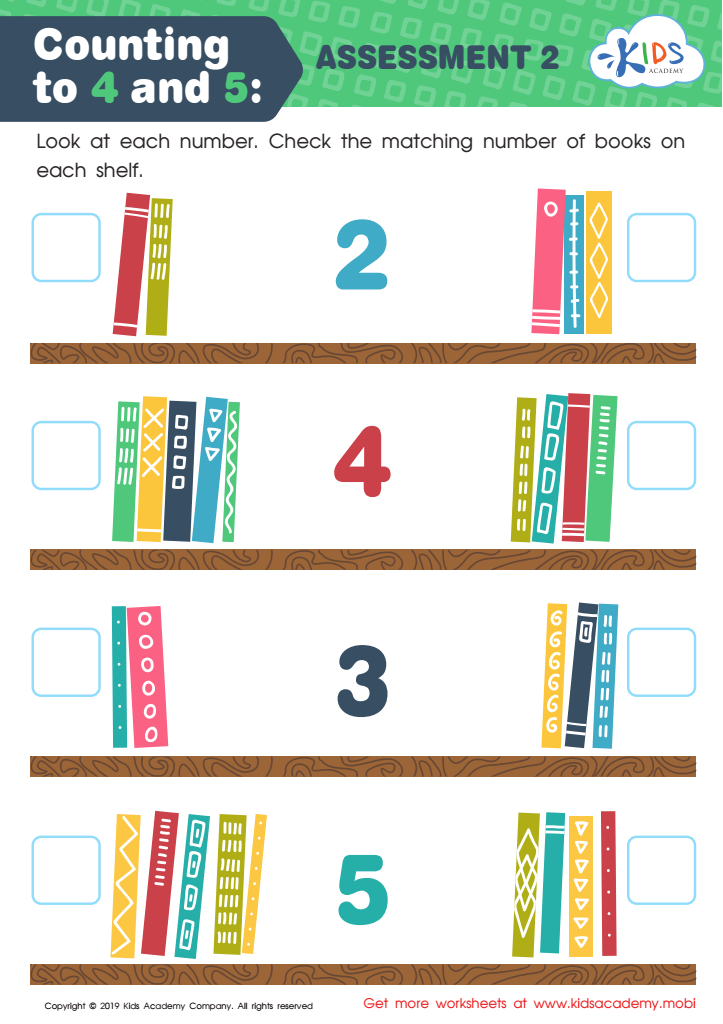
Counting to 4 and 5: Assessment 2 Worksheet

Counting to 4 and 5: Assessment 2 Worksheet

Counting is a key skill for math success. Help your kids get off to a good start by counting the books on each shelf in the pictured printout. Point to each set of books, counting aloud, and then look for the matching number in the centre. With this simple worksheet, your kids can get the practice they need before taking on more advanced math skills.
Counting to 4 and 5: Assessment 2 Worksheet

Worksheet
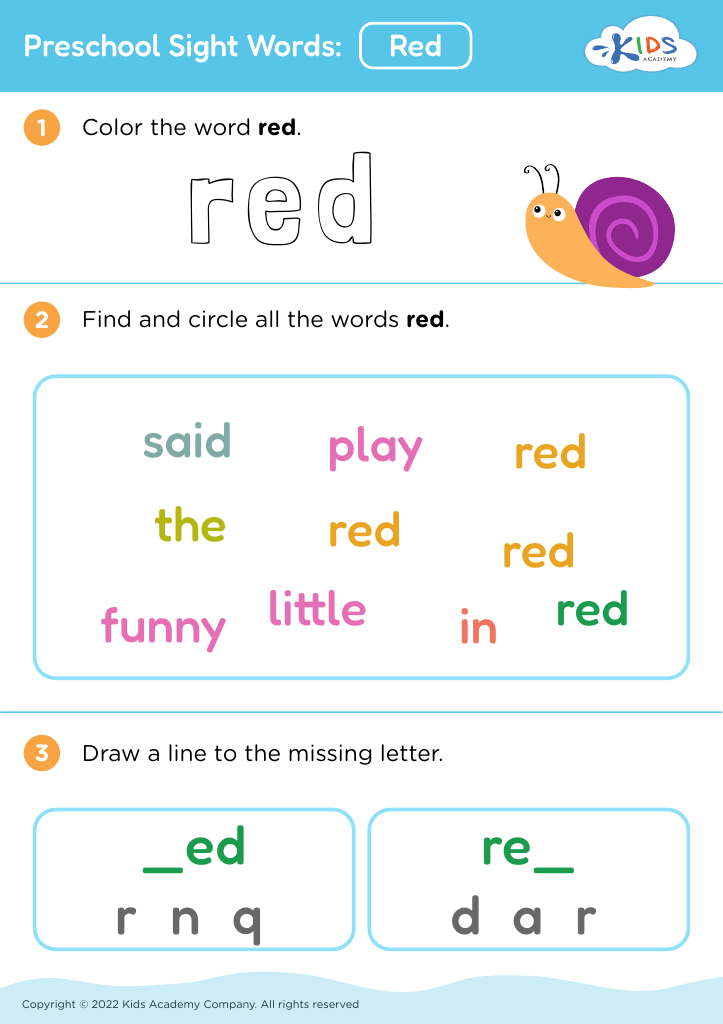
Preschool Sight Words: Red

Preschool Sight Words: Red

Preschool Sight Words: Red
Worksheet


Fine motor skills, particularly writing, are crucial for children aged 3-7 because they form the foundation for important academic and life activities. Developing these skills is essential as they enable children to perform tasks such as holding a pencil, writing letters, and cutting with scissors, which are fundamental components of the early education curriculum.

For parents and teachers, fostering fine motor skills is important because they directly affect a child's ability to learn and progress in school. When children have well-developed fine motor skills, they can write neatly and efficiently, facilitating their ability to express thoughts, complete assignments, and engage in creative tasks. Writing, in particular, is not just about forming letters and words; it involves cognitive engagement where children plan and organize their thoughts, a skill that is integral to overall academic success.

Moreover, fine motor skills are linked to daily activities beyond academics like dressing, tying shoelaces, and feeding themselves, fostering independence and confidence. Neglecting these skills can lead to difficulties in learning, frustration, and diminished self-esteem.

Early attention to and support for the development of fine motor skills ensures that children build a strong foundation for both their academic futures and everyday tasks, setting them up for success in various aspects of life.